
Loading, please wait...
LOT 1325
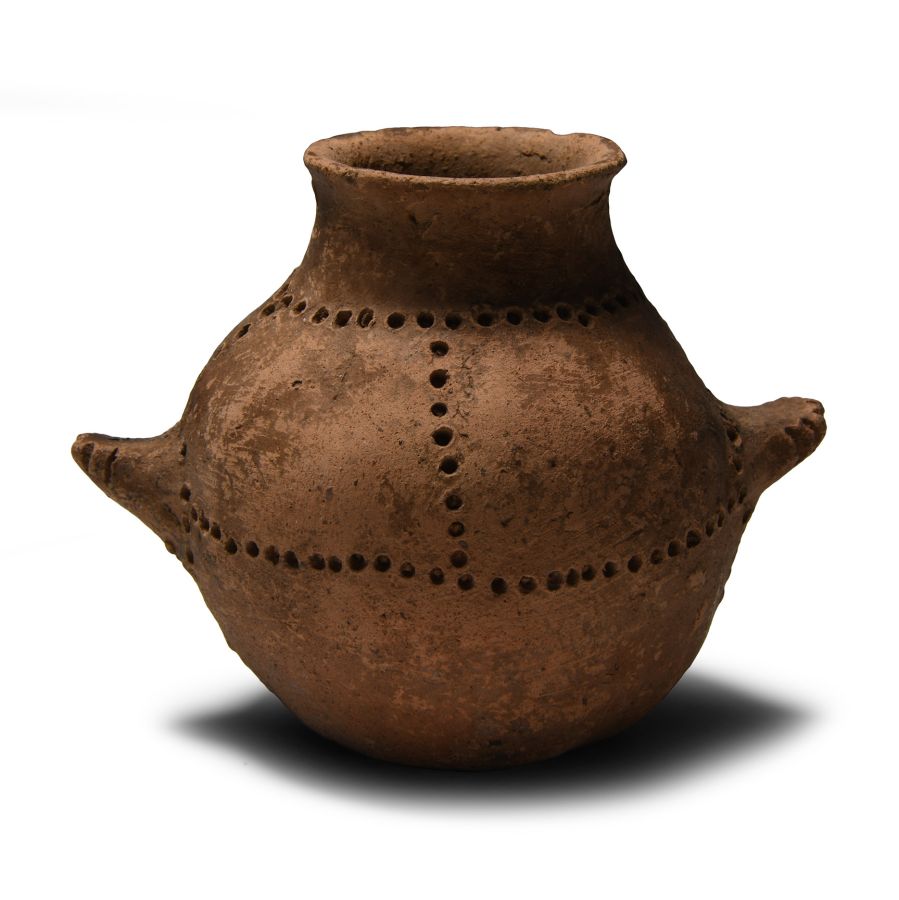
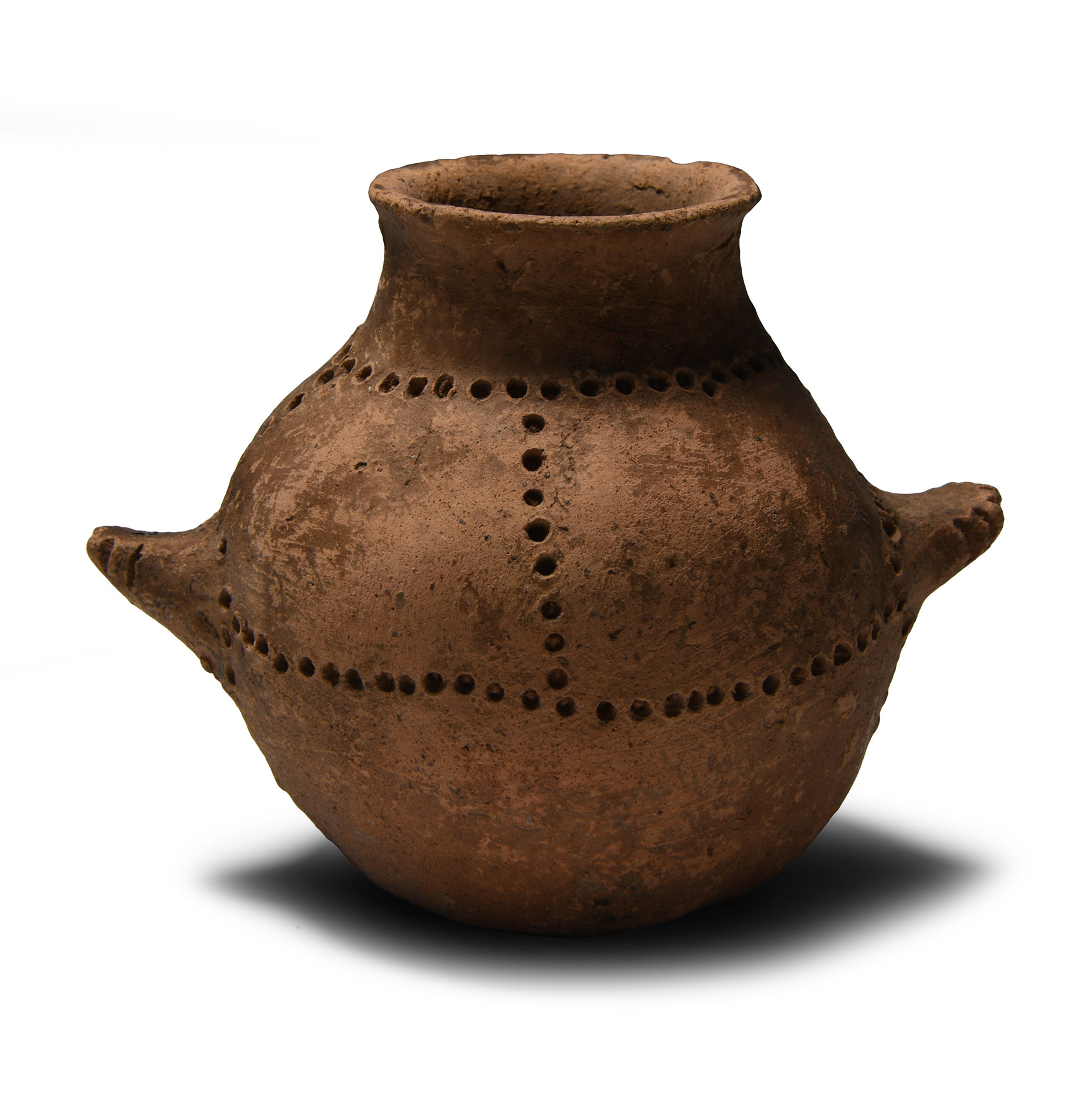
Holy Land Terracotta Vessel with Pie-Crust Handles
MIDDLE BRONZE AGE, EARLY 3RD MILLENNIUM B.C.
3 1/4 in. (96 grams, 84 mm wide).
With bulbous body, flared rim to the mouth, lateral pie-crust ledge handles, pointillé segmentation lines. [No Reserve]
ProvenanceFrom a collection acquired on the UK art market from various auction houses and collections mostly before 2000.
From an important Cambridgeshire estate; thence by descent.
TimeLine Auctions follows a vetting process to ensure the authenticity and legality of all items, reinforcing our commitment to integrity and responsible trading. Each antiquity, antique, and coin lot undergoes thorough examination by a vetting committee of at least ten external specialists, professional trade association members, scientists, and archaeologists: Our Vetting Process
AUCTIONS:
TimeLine is a leading auction house specialising in antiquities, ancient art, collectables, natural history, coins, medals, and books. Our auctions offer museums, collectors, historians, and enthusiasts the opportunity to acquire unique and historically significant pieces.
-

Luristan Bronze Openwork Poppyhead Finial
13th-7th century B.C.Sold for (Inc. bp): £52
Hollow-formed with voids and scroll detailing, ferrous shank. 52 grams, 75 mm
From a collection acquired on the UK art market from various auction houses and collections mostly before 2000. From an important Cambridgeshire estate; thence by descent. -
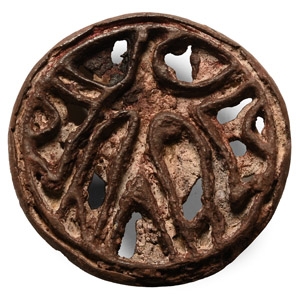
West Central Asian Bronze Stamp Seal with Human Figure
23rd-19th century B.C.Estimate: £250 - 350 (+bp*)
Opening Bid: £125
Openwork discoid seal with anthropomorphic motif; accompanied by an old scholarly note, typed and signed by W.G. Lambert, late Professor of Assyriology, University of Birmingham, 1970-1993, which states: 'Stamp Seal of Bronze. 57x59x17 mm. This is round, with flat compartmented and open-work face. The back has a stout suspension loop. The design on the face is of a standing creature -- human with bird's head -- and filling shapes. This comes from West Central Asia and dates to c. 2300-1900 B.C. It is a rare design and the seal is in fair condition: some of the edge of the plain outer band is lost.' 53 grams, 58 mm
Ex Signo collection, the property of a West London businessman, formed in the late 1980s-early 1990s; collection number Y-905, academically researched and catalogued by the late Professor Lambert in the early 1990s. -
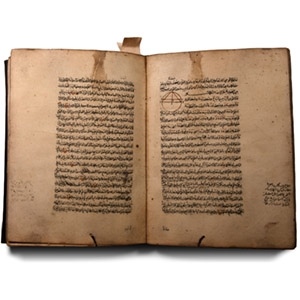
Islamic Leather-Bound Manuscript, A Summary of Astronomy by Musa bin Muhammad Qadhi Zada al-Rumi
942 A.H.Estimate: £4,000 - 6,000 (+bp*)
Opening Bid: £2,000
Rebound as a hardback with full leather binding, gilt central arabesque foliage panel and drypoint borders, fore-edge and envelope flap; title page with naskh script text in a triangular block with circular stamp and other notation; text pages each typically 21 lines of dense naskh script text with red titles, blocks of marginal notation. 418 grams, 15.5 x 20.5 cm
From an important family collection started in the late 1950s. Property of a West London, UK, gentleman. This lot has been checked against the Interpol Database of stolen works of art and is accompanied by a search certificate number no.12273-220406.
The text is an explanation of the book 'Summary of Astronomy' written by the engineer Musa bin Muhammad Qadhi Zada al-Rumi who died in 840 A.H. (1436 A.D.). The work is a footnote in the clarification of the minister, astronomical engineer Sinan al-Din Pasha, Yusuf bin Khadr bin Jalal Al-Din Al-Rumi who died in 891 A.H. (1486 A.D.) by order of Sultan Muhammad Al-Fateh bin Murad, a student of the author. This version dates to 952 A.H. (1535 A.D.).
