
Loading, please wait...
LOT 0914
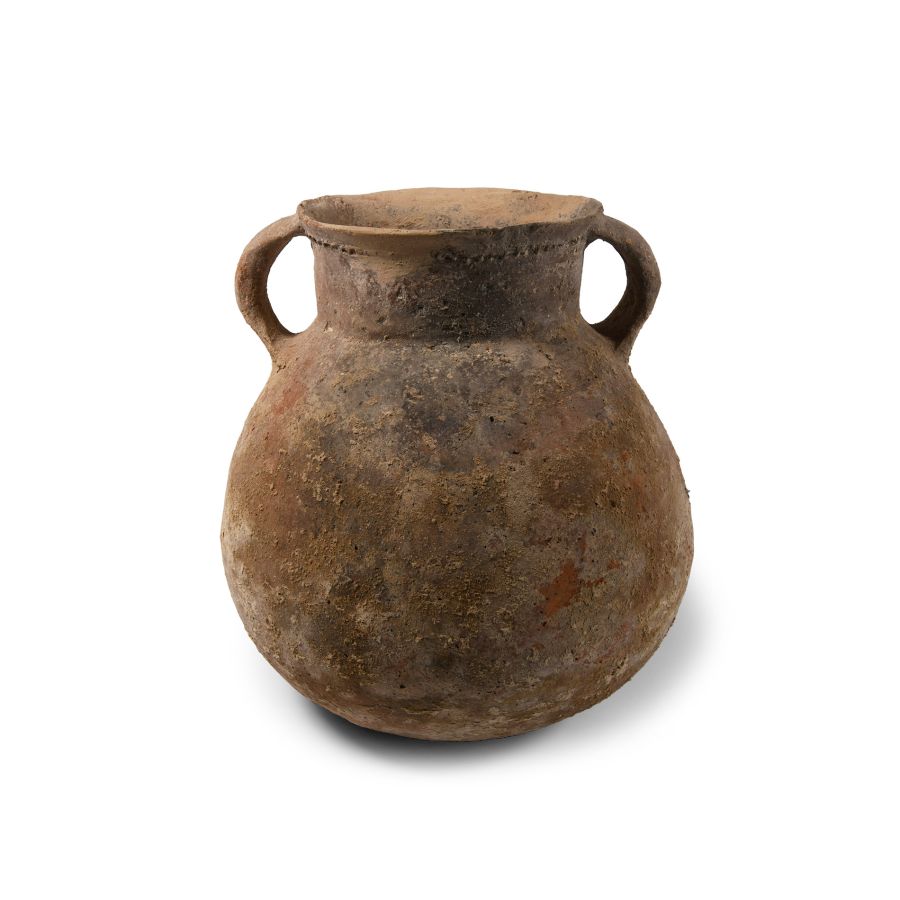
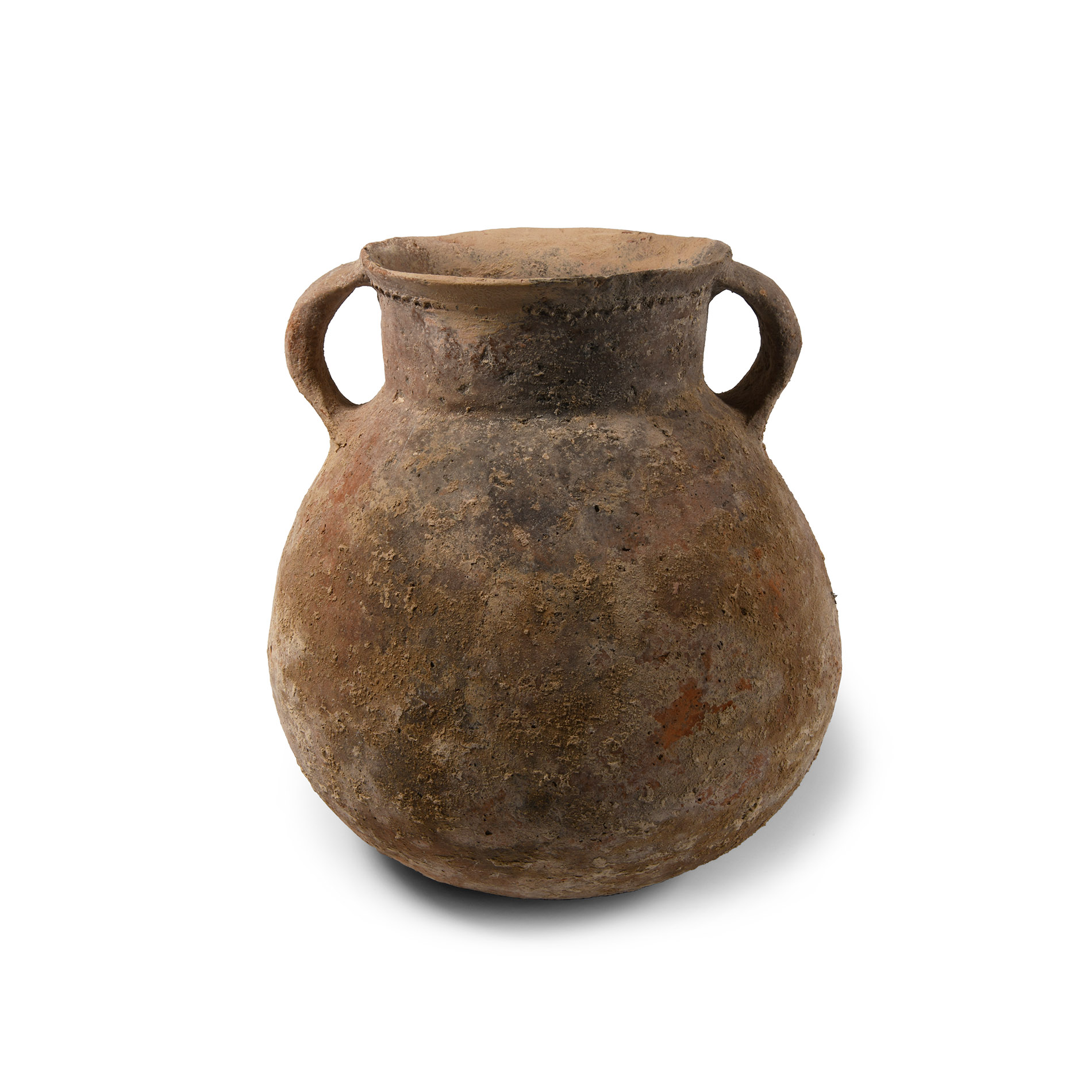
Holy Land Pottery Jar
EB I, CIRCA 3000 B.C.
7 in. (650 grams, 18 cm).
Bulbous ceramic body with rounded underside, broad neck and flared rim, two lateral strap handles, band of impressed points below the rim.
ProvenanceFrom an important specialist collection formed in London, UK, before 1988.
CONDITIONTimeLine Auctions follows a vetting process to ensure the authenticity and legality of all items, reinforcing our commitment to integrity and responsible trading. Each antiquity, antique, and coin lot undergoes thorough examination by a vetting committee of at least ten external specialists, professional trade association members, scientists, and archaeologists: Our Vetting Process
AUCTIONS:
TimeLine is a leading auction house specialising in antiquities, ancient art, collectables, natural history, coins, medals, and books. Our auctions offer museums, collectors, historians, and enthusiasts the opportunity to acquire unique and historically significant pieces.
-
.jpg)
Western Asiatic Geometric Iron Age Ceramic Chalice
2nd-1st millennium B.C.Sold for (Inc. bp): £260
The bowl of hemispherical form with C-section neck and everted rim, ribbed stem and everted foot; the rim, neck and bowl painted with solid lines, dashes and circumferential bands of chevrons, X-motifs and other geometric forms. 780 grams, 20.5 cm wide
Ex Rabi Gallery, Mayfair, London, UK. Ex private collection. -
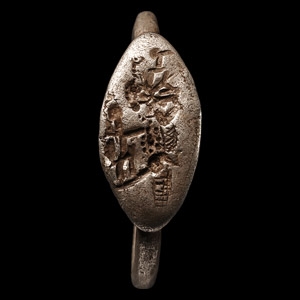
Achaemenid Silver Ring with Warriors
7th-4th century B.C.Sold for (Inc. bp): £176
With scaphoid bezel, incuse image of an armoured warrior with shield and spear, a horseman and a hatched gate or wall. 4.12 grams, 25.84 mm overall, 21.41 mm internal diameter (approximate size British V, USA 10 1/2, Europe 23.77, Japan 22)
Acquired 1980-2015. Ex Abelita family collection. -
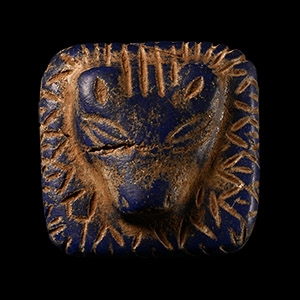
Western Asiatic Lapis Lazuli Animal Face Plaque
1st millennium B.C. or laterSold for (Inc. bp): £169
Carved as a lion with stylised detailing in relief on a square-shaped plaque. 9 grams, 24 mm
Ex private collection, 1980s. Acquired on the UK art market in the 1990s.
