
Loading, please wait...
LOT 1363
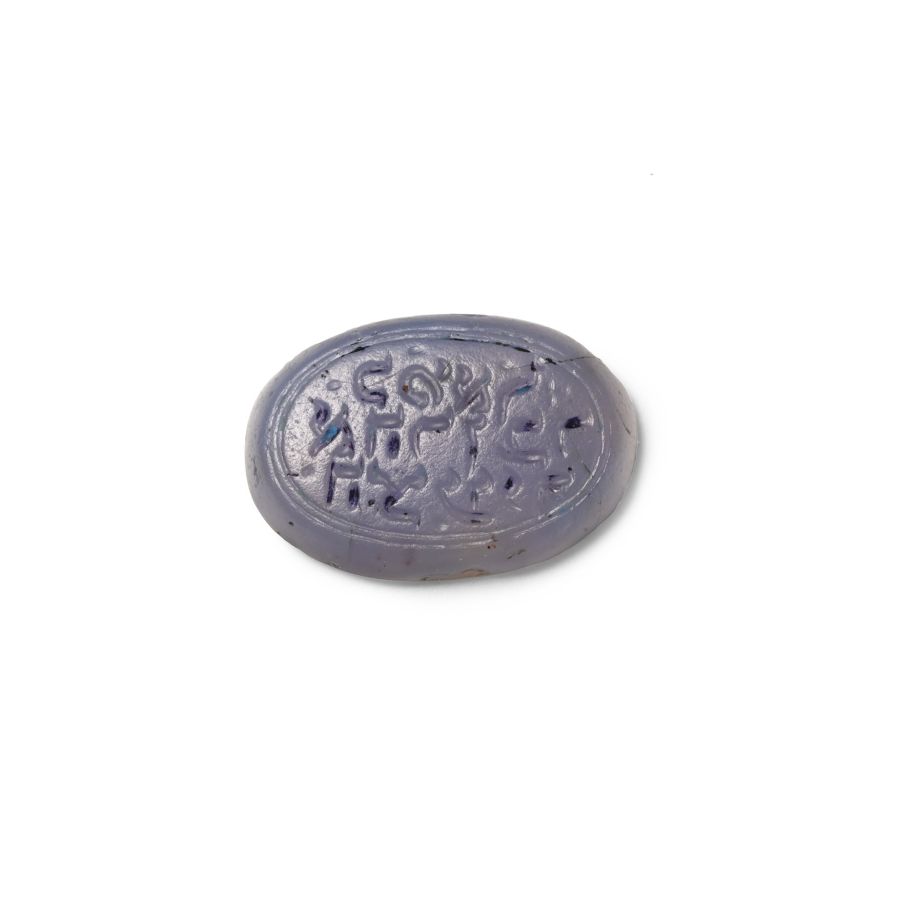
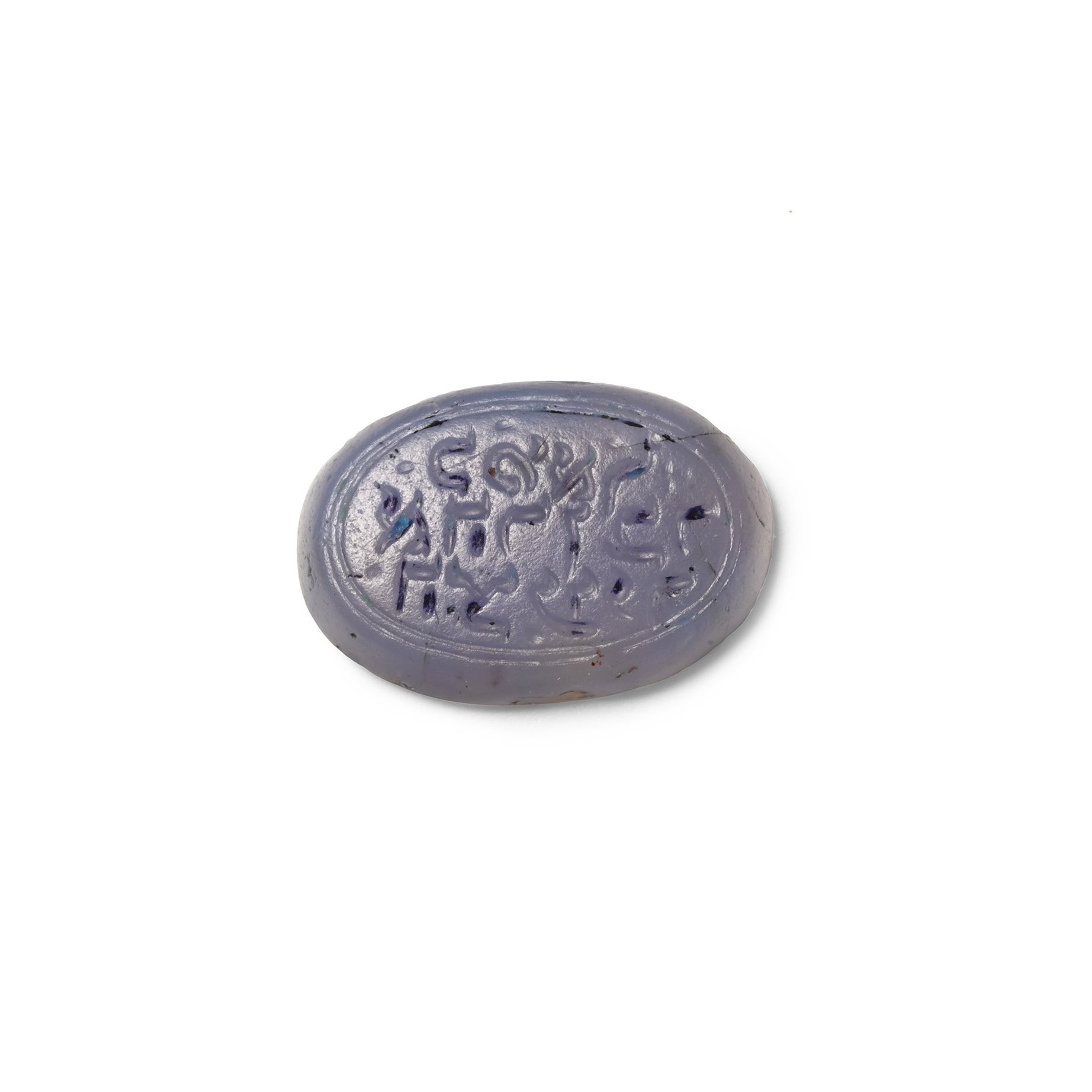
Holy Land Chalcedony Gemstone with Hebrew Inscription
CIRCA 15TH CENTURY A.D.
5/8 in. (1.24 grams, 16 mm).
Oval, slightly domed body carved from translucent light blue stone, three lines of inscription within a simple border giving a personal name Aharon (Aaron) bar Hatzair. [No Reserve]
ProvenanceFrom the private collection of Rev. Nathaniel Evans, Worthing, Sussex, UK, thence by descent.
CONDITIONTimeLine Auctions follows a vetting process to ensure the authenticity and legality of all items, reinforcing our commitment to integrity and responsible trading. Each antiquity, antique, and coin lot undergoes thorough examination by a vetting committee of at least ten external specialists, professional trade association members, scientists, and archaeologists: Our Vetting Process
AUCTIONS:
TimeLine is a leading auction house specialising in antiquities, ancient art, collectables, natural history, coins, medals, and books. Our auctions offer museums, collectors, historians, and enthusiasts the opportunity to acquire unique and historically significant pieces.
-
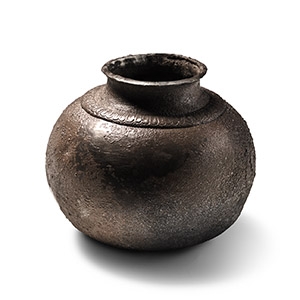
Achaemenid Silver Jar with Lotus Flower
Circa 500 B.C.Sold for (Inc. bp): £910
Squat in profile with basal disc, raised panel to the shoulder with lotus flower detailing, low neck and everted rim. 117 grams, 78 mm
London art market, 1980s-2000s. Private collection, London, UK. -
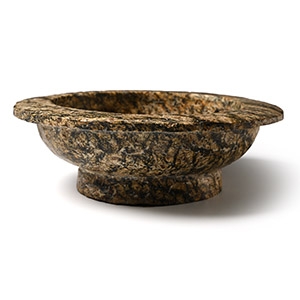
Achaemenid Serpentine Dish
6th-4th century B.C.Sold for (Inc. bp): £338
With broad bowl and slightly chamfered rim, basal ring. 222 grams, 10.8 cm
Acquired in the mid 1980s-1990s. Private collection, Switzerland, thence by descent. Private collection, since the late 1990s. -
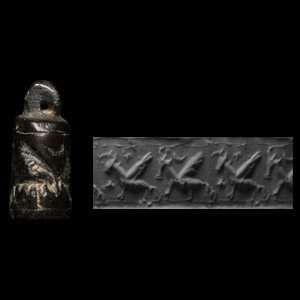
Urartu Black Stone Stamp-Cylinder Seal with Winged Quadruped
Circa 900-700 B.C.Sold for (Inc. bp): £910
With two winged monsters, accompanied by museum quality impressions and a copy of an old scholarly note, typed and signed by W.G. Lambert, late Professor of Assyriology, University of Birmingham, 1970-1993, which states: 'Description of Stamp-Cylinder Seal of black stone, 31 x 14 mm. Sides: two winged monsters of slightly differing type; lunar crescent and other fillers, the design between rules. Base: winged quadruped. The stamp-cylinder is from the ancient Urartu, the area around lake Van, and dates c. 900-700 B.C. It has a pierced lug at the top which allows the base to be used as a stamp seal. Such monsters as are depicted are typical of Urartian art, not only of their seals. Condition very good.' 7.88 grams, 30 mm
UK private collection, acquired 1990-1993. Accompanied by a copy of a scholarly note, typed and signed by Professor Wilfrid George Lambert in 1987.
