
Loading, please wait...
LOT 1340
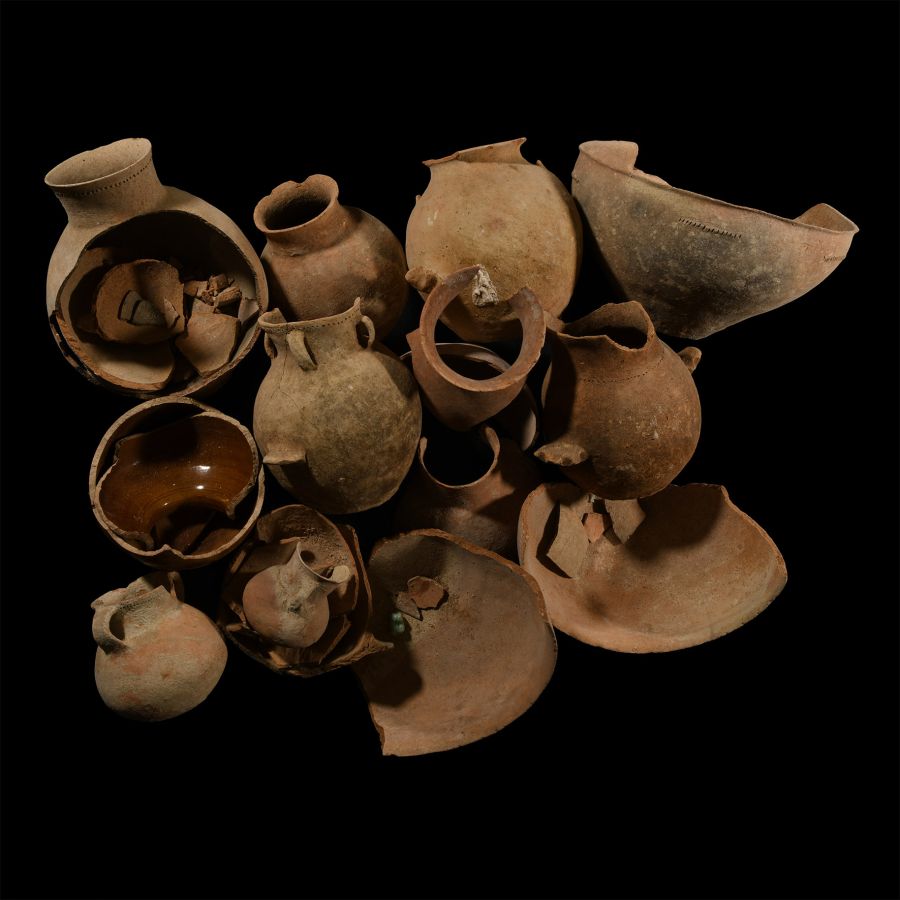
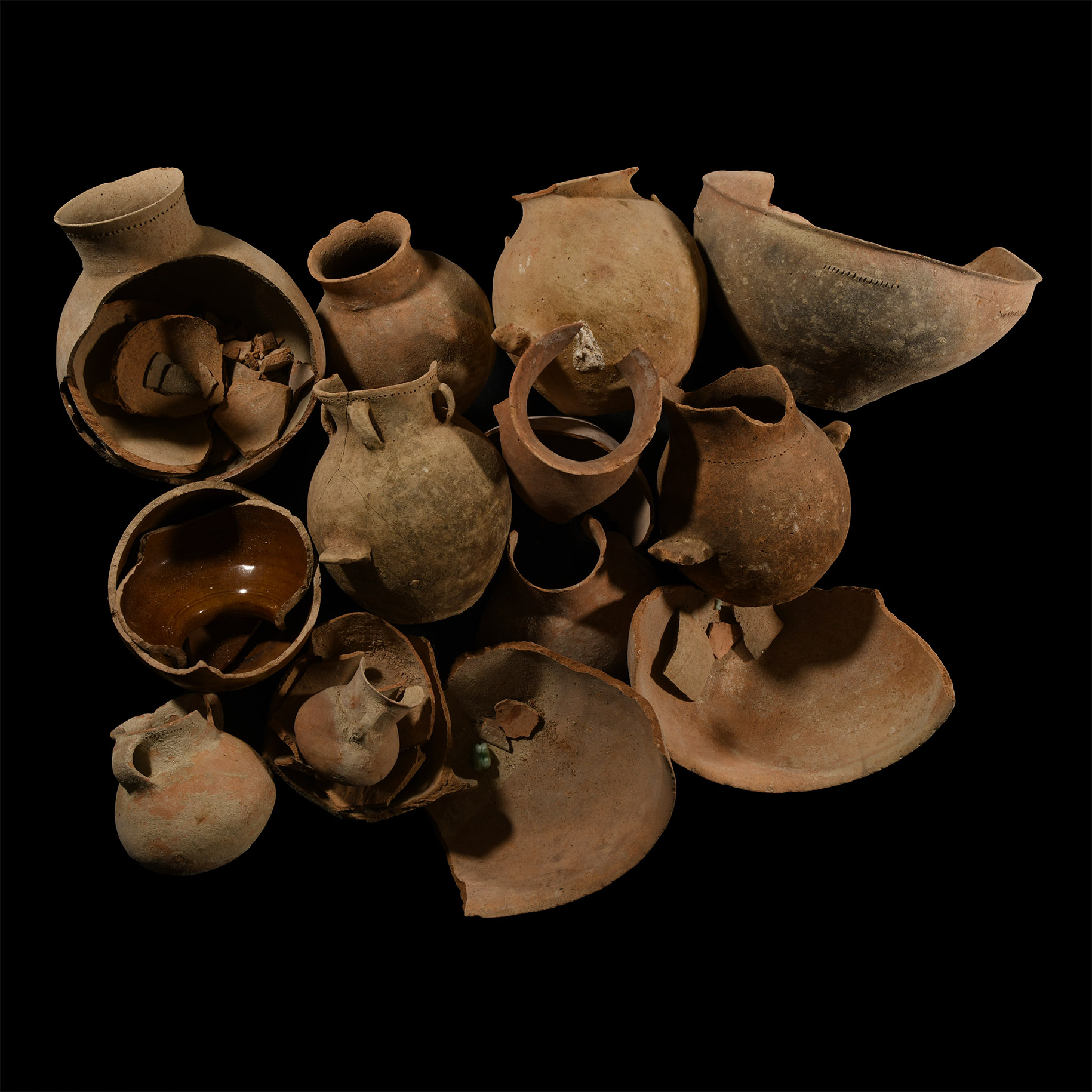
Holy Land and Other Terracotta Pottery Group
3RD-1ST MILLENNIUM B.C.
1 1/8 - 12 5/8 in. (16 kg total, 3-32 cm).
Fragments including bulbous jug with strap handles, bowl with ledge handles and other types. [30+, No Reserve]
ProvenanceEx London, UK, gallery, 1980-1990s.
CONDITIONTimeLine Auctions follows a vetting process to ensure the authenticity and legality of all items, reinforcing our commitment to integrity and responsible trading. Each antiquity, antique, and coin lot undergoes thorough examination by a vetting committee of at least ten external specialists, professional trade association members, scientists, and archaeologists: Our Vetting Process
AUCTIONS:
TimeLine is a leading auction house specialising in antiquities, ancient art, collectables, natural history, coins, medals, and books. Our auctions offer museums, collectors, historians, and enthusiasts the opportunity to acquire unique and historically significant pieces.
-
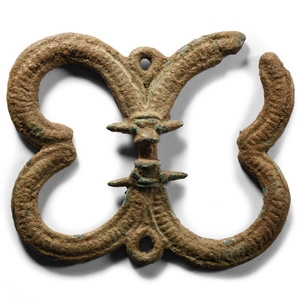
Luristan Bronze Horse Trapping with Animal Decoration
13th-7th century B.C.Sold for (Inc. bp): £65
Formed as two waisted loops with ribbed detailing, central slot framed by facing ibex heads, small loops in the spandrels. 93 grams, 10 cm
Acquired 1980-2015. Ex Abelita family collection. Accompanied by an earlier catalogue identification card. -
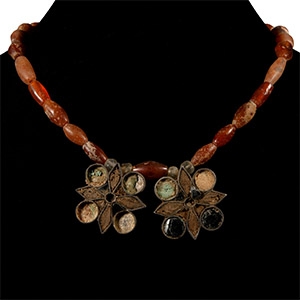
Elamite Silver Flower Pendant
1st millennium B.C.Estimate: £400 - 600 (+bp*)
Opening Bid: £200
A restrung necklace of fusiform and tubular carnelian beads with two silver cloisonné pendant quatrefoils with haematite discs in the spandrels, inset glass and other panels, oval rock crystal beads flanking. 59 grams, 43 cm
Fine condition.
Acquired 1990s. With a London gallery. Property of a London collector; from her family's private collection. -
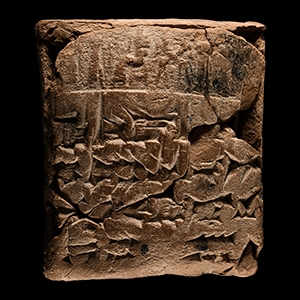
Sumerian Tablet within Envelope with Cylinder Seal Impressions
3rd millennium B.C.Sold for (Inc. bp): £2,470
Comprising an envelope with intact tablet within, the outer face covered with cylinder seal impressions, small part opening to reveal the tablet inside. 115 grams, 55 mm
Specialised collection of cuneiform texts, the property of a London gentleman and housed in London before 1992. Thence by descent to family members. Examined by Professor Wilfrid George Lambert FBA (1926-2011), historian, archaeologist, and specialist in Assyriology and Near Eastern archaeology, in the late 1980s and early 1990s. The collection is exceptional for the variety of types, including some very rare and well preserved examples.
