
Loading, please wait...

LOT 2176
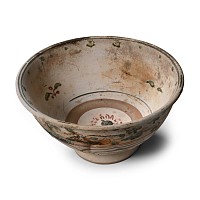
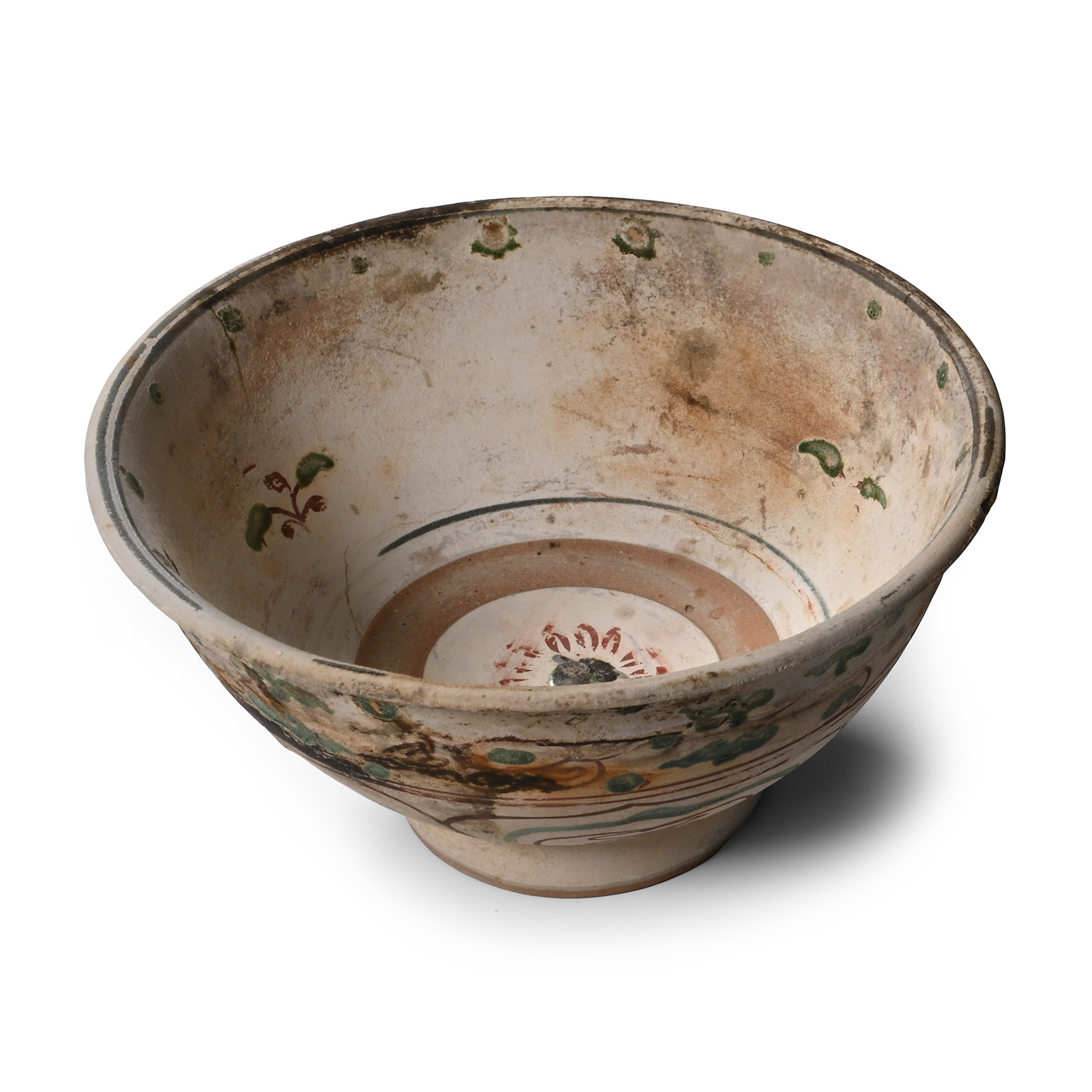
Hoi An Cargo Shipwreck Glazed Polychrome Bowl
15TH CENTURY A.D.
5 5/8 in. (310 grams, 14.2 cm).
A polychrome bell-shaped bowl with floral motifs and tendrils to the inner and outer face. [No Reserve]
ProvenanceEx Butterfield and Butterfield auction with official Hoi An Hoard labels.
Accompanied by an illustrated information sheet about the Hoi An shipwreck.
This lot is accompanied by an illustrated lot declaration signed by the Head of the Antiquities Department, Dr Raffaele D'Amato.
Cf. Bach, N., Vietnamese Ceramics in Asian Maritime Trade between 14th and 17th centuries, Hanoi, 2014, figs.4,8, for similar bowls with high feet.
FootnotesIn the mid 15th century, a freighting junk loaded with fine Vietnamese pottery sank in an area of the South China Sea called the 'Dragon’s Embrace.' This vessel is part of the shipwreck cargo recovered off the coast of Vietnam at Hoi An. The ceramics themselves were probably made in the area of Chu Dau.
CONDITIONTimeLine Auctions follows a vetting process to ensure the authenticity and legality of all items, reinforcing our commitment to integrity and responsible trading. Each antiquity, antique, and coin lot undergoes thorough examination by a vetting committee of at least ten external specialists, professional trade association members, scientists, and archaeologists: Our Vetting Process
AUCTIONS:
TimeLine is a leading auction house specialising in antiquities, ancient art, collectables, natural history, coins, medals, and books. Our auctions offer museums, collectors, historians, and enthusiasts the opportunity to acquire unique and historically significant pieces.
-
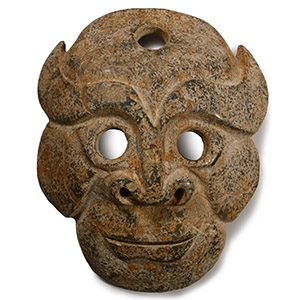
Life-Size Tibetan Style Buddhist Stone Mask
20th century A.D.Sold for (Inc. bp): £91
Depicting a lion-dog with pierced eyes and nostrils, expressive eyebrows and slit mouth. 937 grams, 21 cm
From the family collection of a Hampstead gentleman; formerly acquired in the 1980s. This lot is accompanied by an illustrated lot declaration signed by the Head of the Antiquities Department, Dr Raffaele D'Amato. -
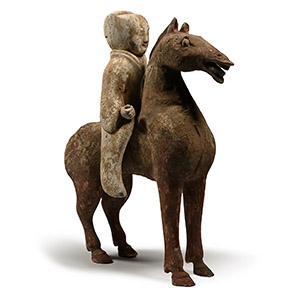
Chinese Han Style Terracotta Horse and Rider
19th-20th century A.D.Estimate: £180 - 240 (+bp*)
Opening Bid: £100
Comprising a horse standing erect with arched neck, hole to the centre of the back to accept an attachment pin; separate hollow-formed rider figure with painted facial detailing. 3.35 kg total, 38 cm high
Ex West Country, UK, collection, 1990s. This lot is accompanied by an illustrated lot declaration signed by the Head of the Antiquities Department, Dr Raffaele D’Amato. This lot is accompanied by an illustrated lot declaration signed by the Head of the Antiquities Department, Dr Raffaele D'Amato. -
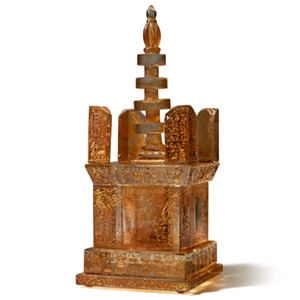
Chinese Gilt Two-Piece Stupa
20th century A.D.Sold for (Inc. bp): £91
With a cylindrical recess to the base, intricate engraved gilt decoration to the base and lid comprising peacocks, deer, elephants, and images of seated Buddha; probably glass. 1.27 kg total, 21 cm high
From the family collection of a Hampstead gentleman; formerly acquired in the 1980s. This lot is accompanied by an illustrated lot declaration signed by the Head of the Antiquities Department, Dr Raffaele D'Amato.
