
Loading, please wait...
_900x900.jpg "Hittite Terracotta Fertility Figure")
_200x200.jpg "Hittite Terracotta Fertility Figure")
.jpg "Hittite Terracotta Fertility Figure")
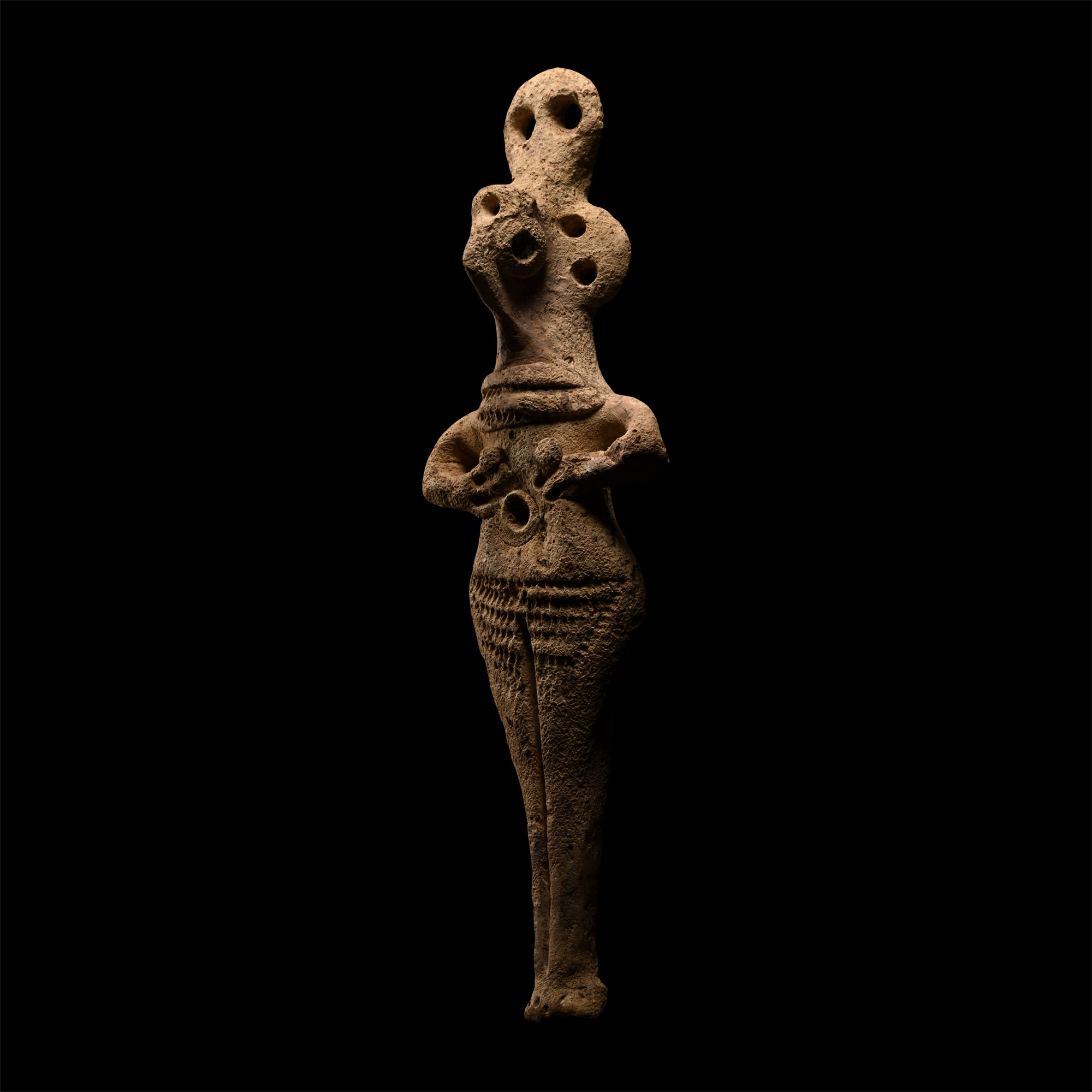
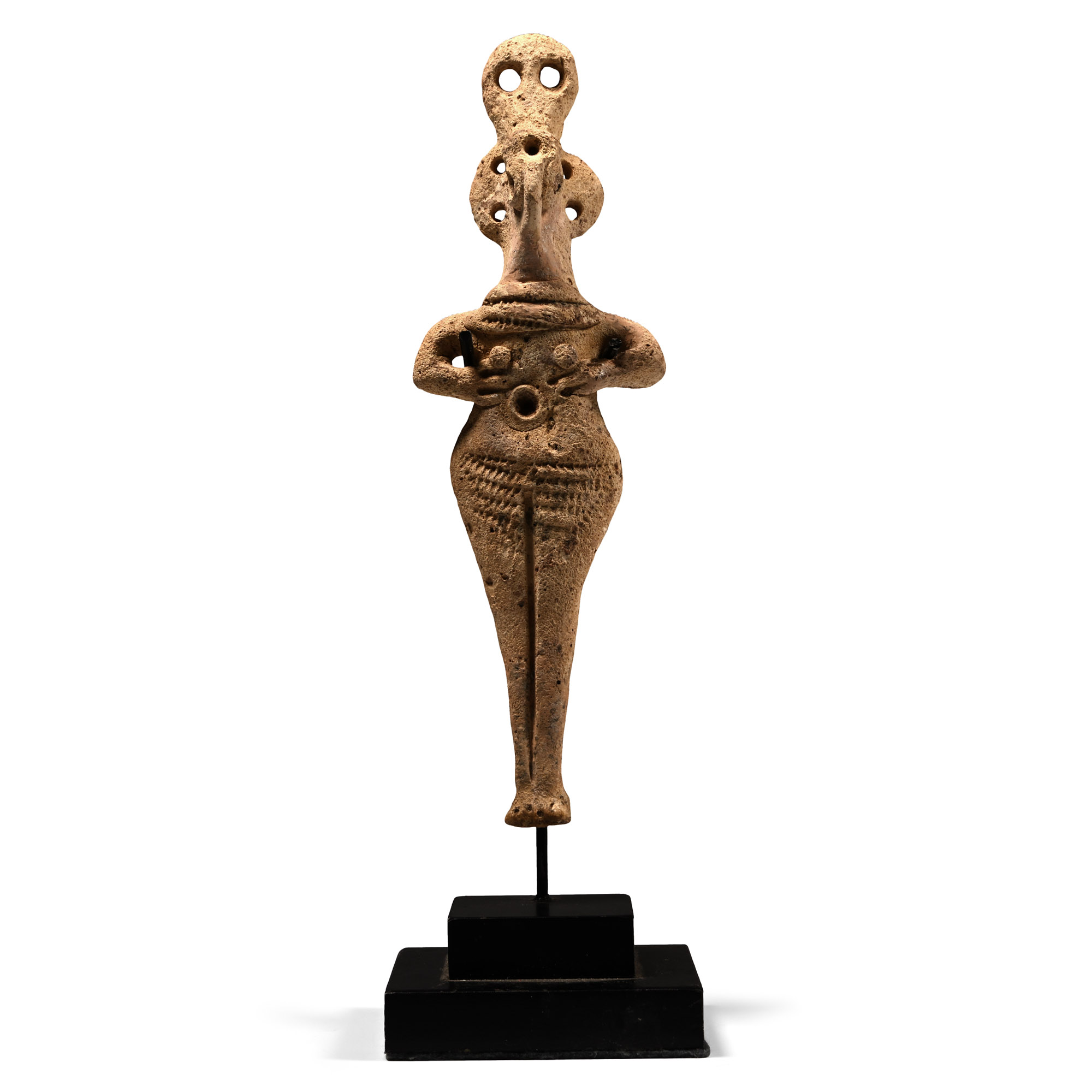
LOT 0259
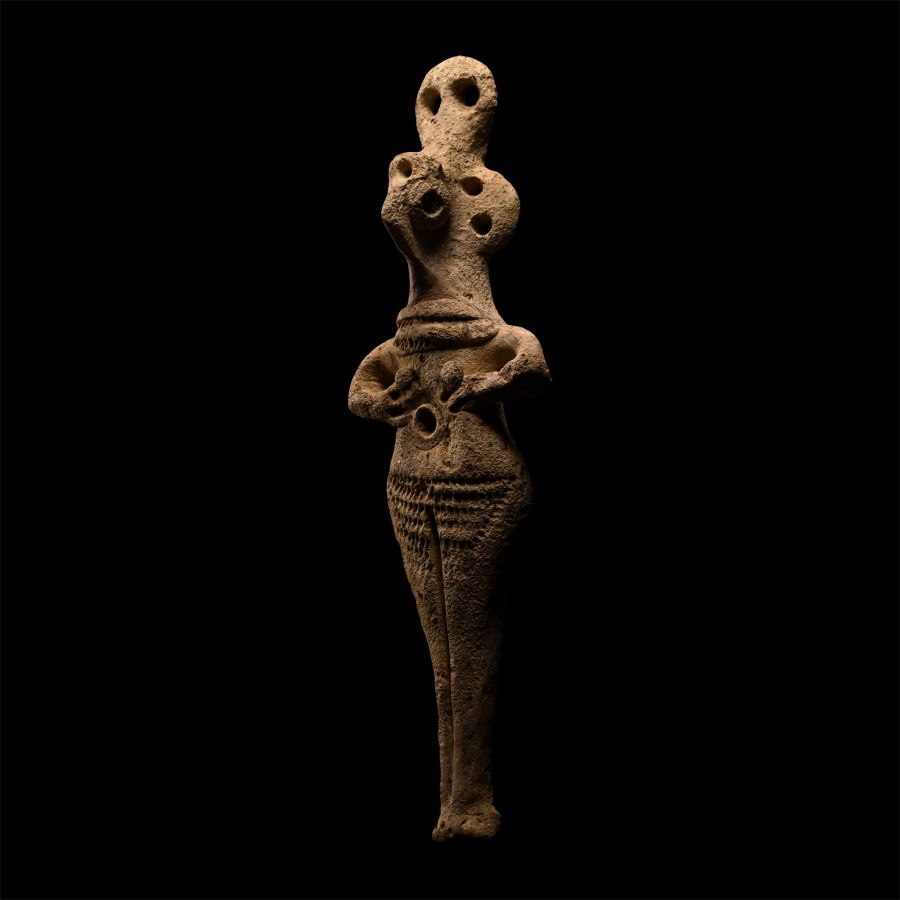
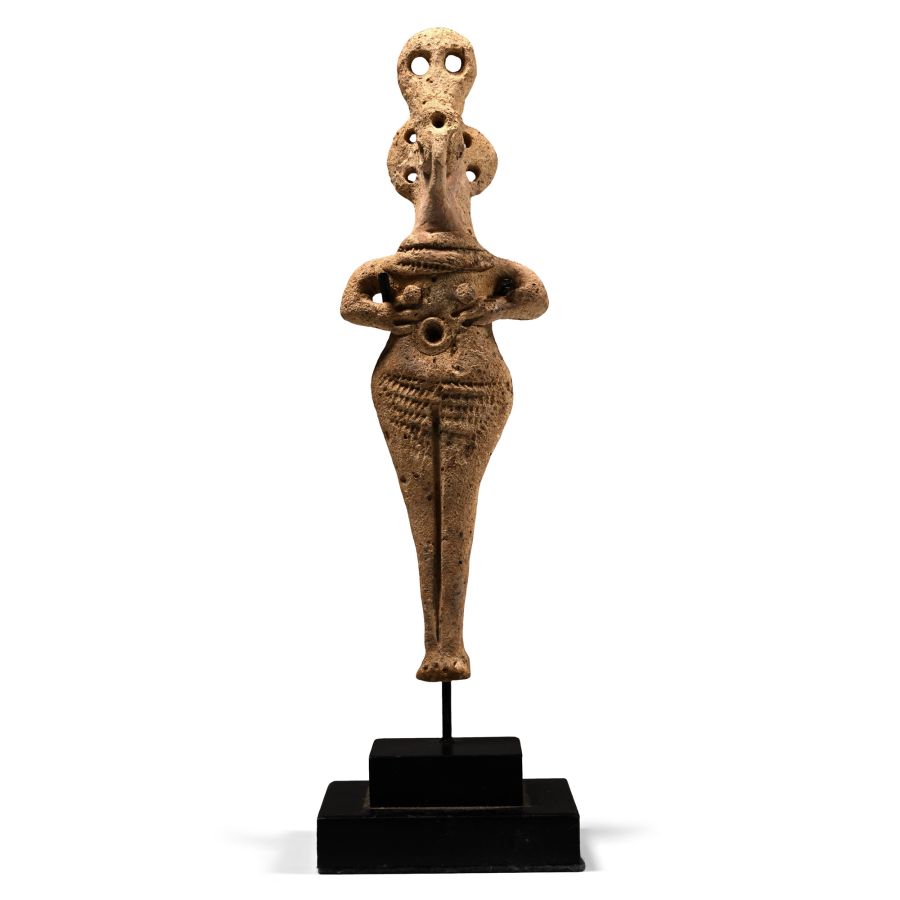
Hittite Terracotta Fertility Figure
12TH-8TH CENTURY B.C.
6 1/4 in. (7 7/8 in.) (52.3 grams, 16 cm (515 grams total, 20 cm including stand)).
D-section figurine with elaborate pierced headdress and navel, applied annular eyes, pinched nose, applied segmented collar and pointillé detailing to the hips; mounted on a custom-made stand.
ProvenanceEx collection of the late Mr S.M., London, UK, 1970-1990s.
Accompanied by a copy of a thermoluminescence test report from Oxford Authentication with sample no.N124j52.
This lot has been cleared against the Art Loss Register database, and is accompanied by an illustrated lot declaration signed by the Head of the Antiquities Department, Dr Raffaele D'Amato.
See Zahlhaas, G., Idole - Frühe Götterbilder und Opfergaben, München, 1985, for discussion.
CONDITIONTimeLine Auctions follows a vetting process to ensure the authenticity and legality of all items, reinforcing our commitment to integrity and responsible trading. Each antiquity, antique, and coin lot undergoes thorough examination by a vetting committee of at least ten external specialists, professional trade association members, scientists, and archaeologists: Our Vetting Process
AUCTIONS:
TimeLine is a leading auction house specialising in antiquities, ancient art, collectables, natural history, coins, medals, and books. Our auctions offer museums, collectors, historians, and enthusiasts the opportunity to acquire unique and historically significant pieces.
-
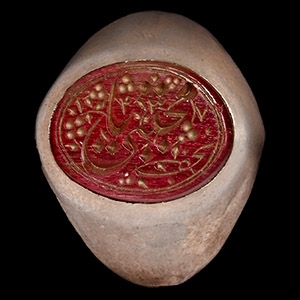
Large Western Asiatic Silver-Coloured Metal Ring with Calligraphic Gemstone
20th century A.D.Sold for (Inc. bp): £338
Comprising a substantial keeled hoop expanding at the shoulders, raised bezel set with an oval red intaglio engraved with calligraphic text and floral motifs. 25.03 grams, 32.19 mm overall, 19.94 mm internal diameter (approximate size British U 1/2, USA 10 1/4, Europe 23.15, Japan 22)
From the family collection of a Hampstead gentleman; formerly acquired in the 1980s. This lot has been cleared against the Art Loss Register database, and is accompanied by an illustrated lot declaration signed by the Head of the Antiquities Department, Dr Raffaele D'Amato. -
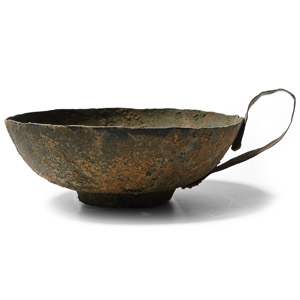
Achaemenid Bronze Handled Cup
6th-4th century B.C.Estimate: £100 - 140 (+bp*)
Opening Bid: £50
Comprising a wide shallow body with repoussé foot and separately applied strap handle. 50 grams, 12.6 cm
Acquired 1980-2015. Ex Abelita family collection. This lot has been cleared against the Art Loss Register database, and is accompanied by an illustrated lot declaration signed by the Head of the Antiquities Department, Dr Raffaele D'Amato. -
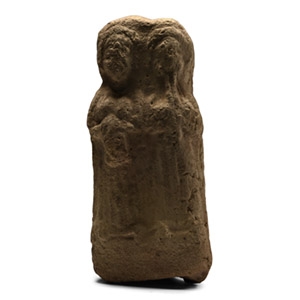
Western Asiatic Ceramic Musician Figure
1st millennium B.C.Estimate: £180 - 240 (+bp*)
Opening Bid: £100
Hollow-formed D-section figure of two musicians standing side-by-side in floor-length robes, one with a wind instrument held to her lips and the other with a pouch, perhaps a version of the Roman tibia utricularis. 98 grams, 10 cm
Acquired on the German art market, 1989-1995. with The Museum Gallery, 19 Bury Place, London, WC1, UK, 1998-2003. Property of a London based academic, 2003-present. This lot has been cleared against the Art Loss Register database, and is accompanied by an illustrated lot declaration signed by the Head of the Antiquities Department, Dr Raffaele D'Amato.
