
Loading, please wait...
LOT 0468
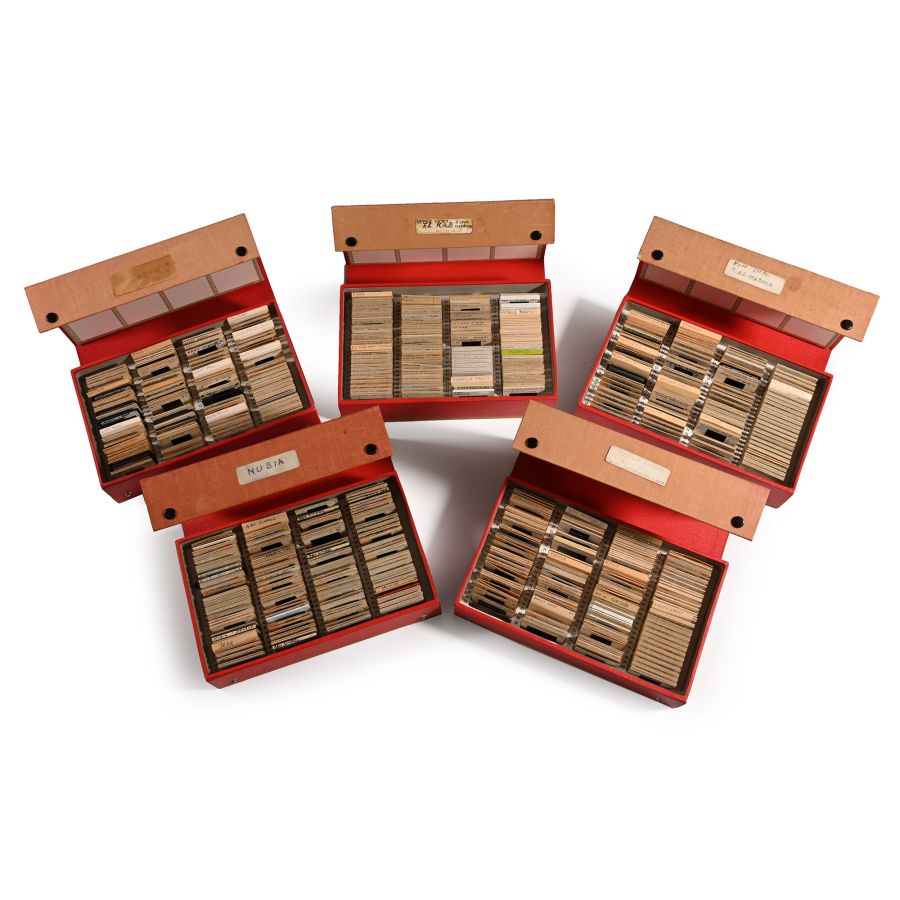
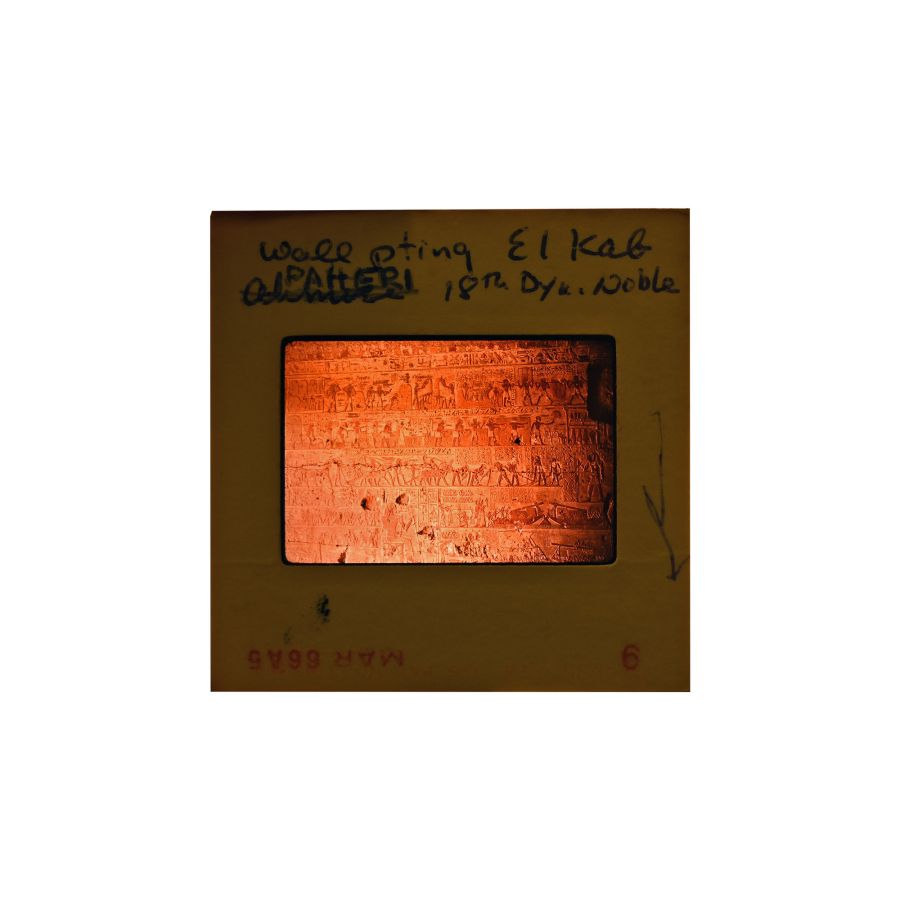
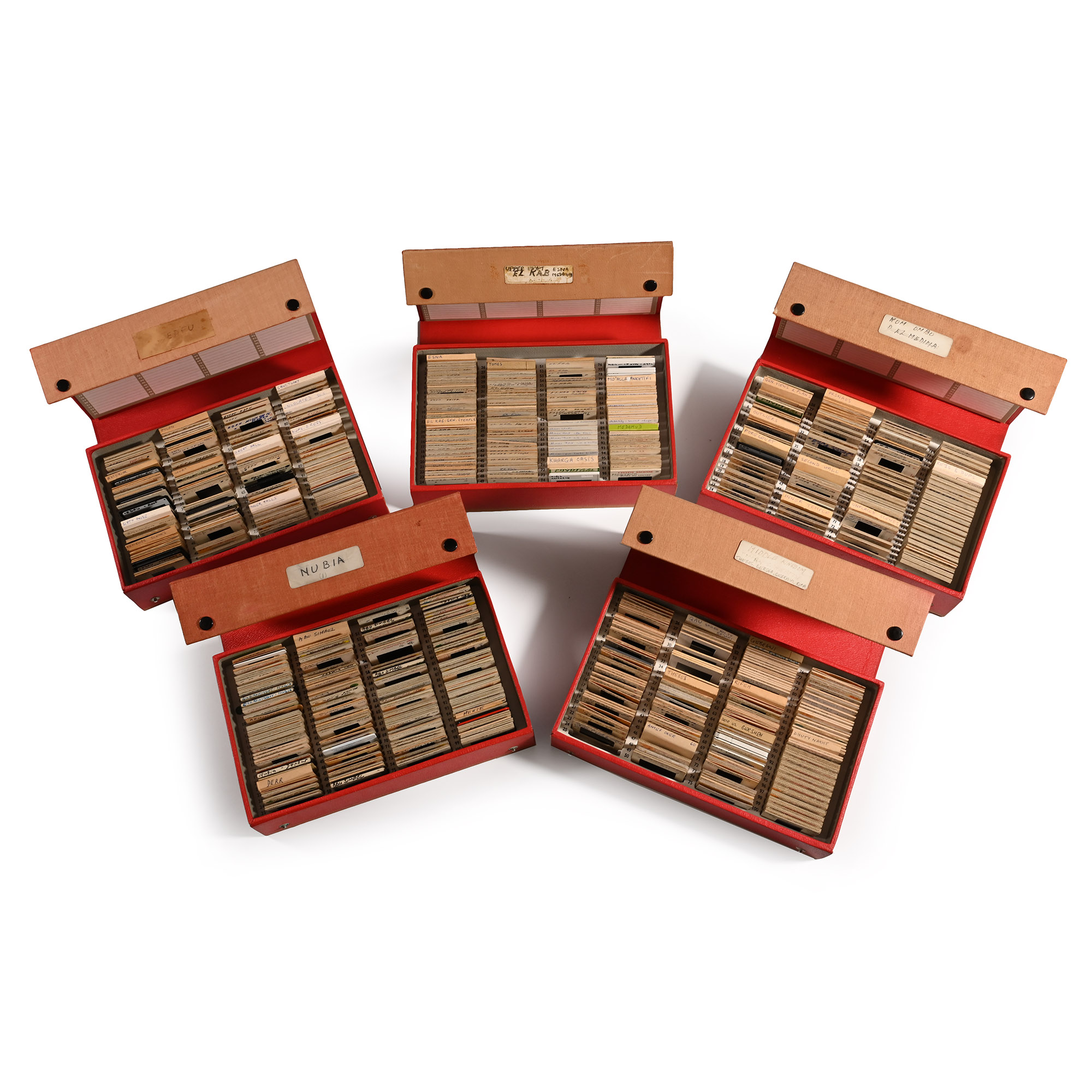
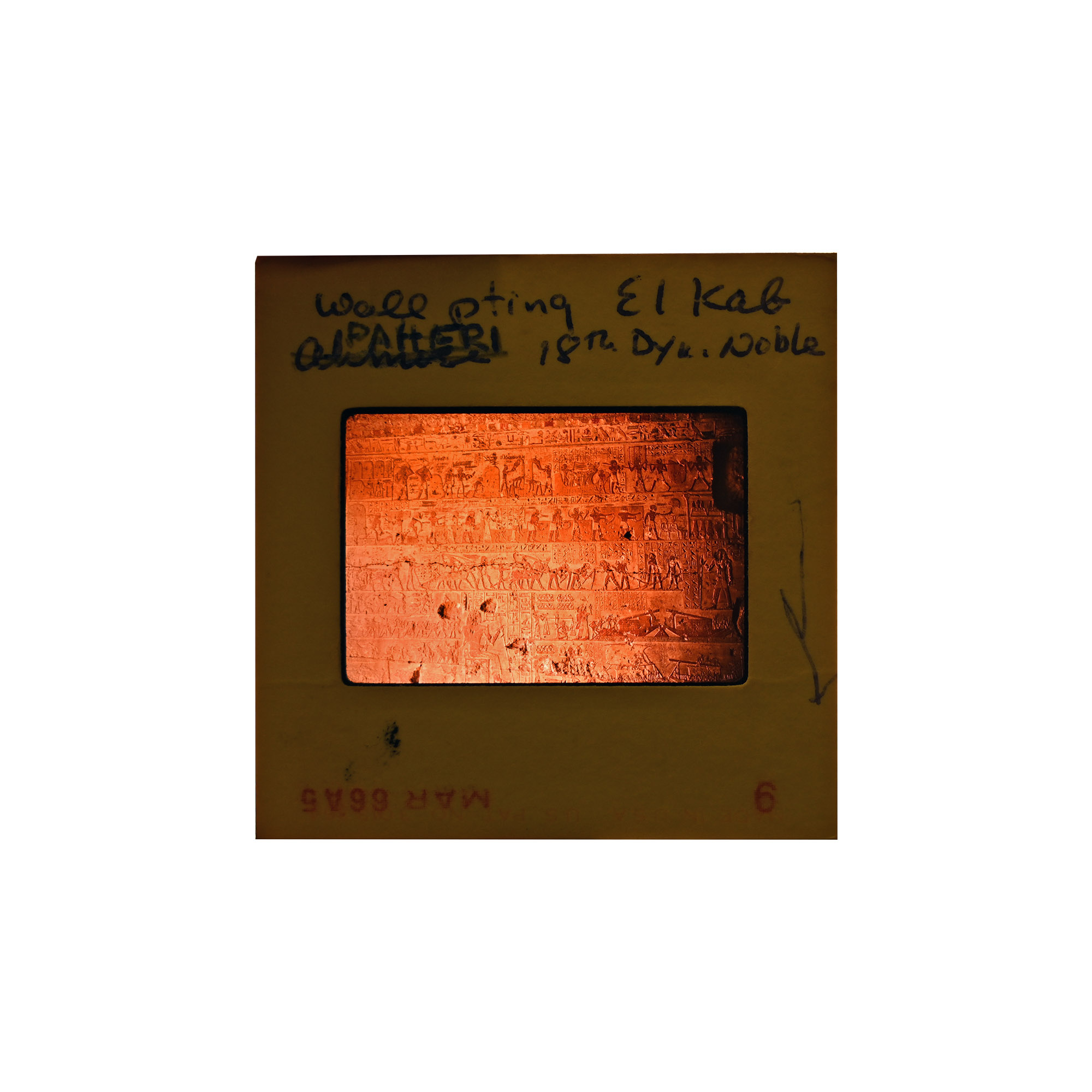
Historic Collection of 861 Slides of Archaeological Sites in Egypt
1960S-1980S A.D.
10 1/2 x 6 1/2 x 2 1/2 in. (4.21 kg total, 26.5 x 16.5 x 6.5 cm each box).
Housed in five linen-covered boxes, covering Edfu, Kom Ombo, Nubia, Middle Kingdom Tombs, Semmebtisi, Thebes, Abu Simbel, Bersha, Gebravi, Rifa, Upper Egypt, El Kab, Esna, Medamud etc. [5, No Reserve]
ProvenanceProperty of archaeologist Stephanie Gee, N.W. London, UK, 1960s-1980s.
FootnotesStephanie Gee was a prominent archaeologist who took part in several expeditions in Egypt. She was a trusted assistant to the British-Australian archaeologist Veronica Seton-Williams, who excavated in Egypt, Britain, and the Near East. Stephanie also took part in the Tell El-Farâ'în expeditions of 1965-1968, and assisted Seton-Williams with preparing the 1966 expedition report. Their collaboration continued and Stephanie helped with the manuscript of Seton-Williams’ book ‘The Road to El-Aguzein’, a narrative account of her life that was first published in 1988.
CONDITIONTimeLine Auctions follows a vetting process to ensure the authenticity and legality of all items, reinforcing our commitment to integrity and responsible trading. Each antiquity, antique, and coin lot undergoes thorough examination by a vetting committee of at least ten external specialists, professional trade association members, scientists, and archaeologists: Our Vetting Process
AUCTIONS:
TimeLine is a leading auction house specialising in antiquities, ancient art, collectables, natural history, coins, medals, and books. Our auctions offer museums, collectors, historians, and enthusiasts the opportunity to acquire unique and historically significant pieces.
LOT 0468
Historic Collection of 861 Slides of Archaeological Sites in Egypt
Sold for (Inc. bp): £910
-
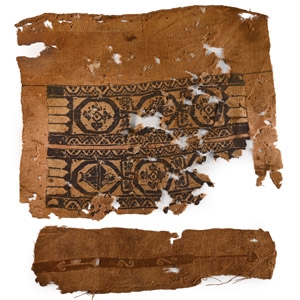
Egyptian Coptic Textile Fragment Group
Circa 7th century A.D.Sold for (Inc. bp): £286
Comprising: a large fragment of a tunic with double segmenta in dark purple wool over linen, S torsion, formed by two parallel stripes, embroidered with kantharos and floral patterns, inscribed in tondos within bands with crenellated borders; a thin clavus connected to an orbiculus ending in an arrow shape, red purple and brown wool over linen, S torsion, embroidered with S shaped and lanceolate patterns. 207 grams total including package, 31-33.5 cm
Acquired 1970s-1996. Property of a North American collector. London collection, 2016.
This type of embroideries were typical of tunics and garments characterised by full-length clavi, and segmenta, decorated with either intricate geometric patterns or floral and vegetal motifs. In Christian symbology, the kantharos was an ancient Greek wine cup that symbolised resurrection and eternal life through Christ. -
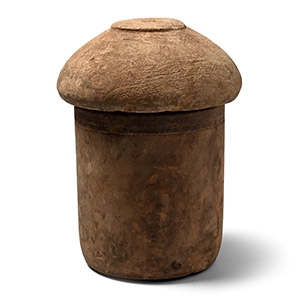
Coptic Wooden Jar with Lid
4th-6th century A.D.Sold for (Inc. bp): £98
Columnar in profile, turned wooden vessel with stepped rim and dark-red painted band below the lip; domed lid with inner locating ring to underside; flat panel to the apex. 147 grams total, 11.5 cm high
London, UK, art market, 1990s. From the collection of G.M.R.H., London, UK. -
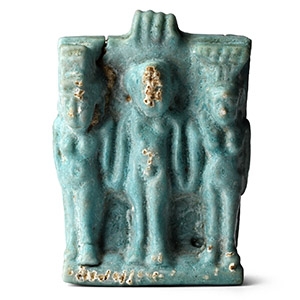
Egyptian Faience Triad Amulet
Late Period, 664-332 B.C.Estimate: £500 - 700 (+bp*)
Opening Bid: £250
Comprising in high relief the Osirian triad (Nephthys, Horus, Isis) standing side by side on an integral plinth against a dorsal pillar; Nephthys (right) and Isis (left) shown frontally wearing headdresses with their own attributes, each holding the hands of Horus in the centre, naked and wearing the side-lock of youth; ribbed loop at the top for suspension. 8.56 grams, 33 mm
From the collection of a Swedish noble family, 1920s.
