
Loading, please wait...
LOT 0540
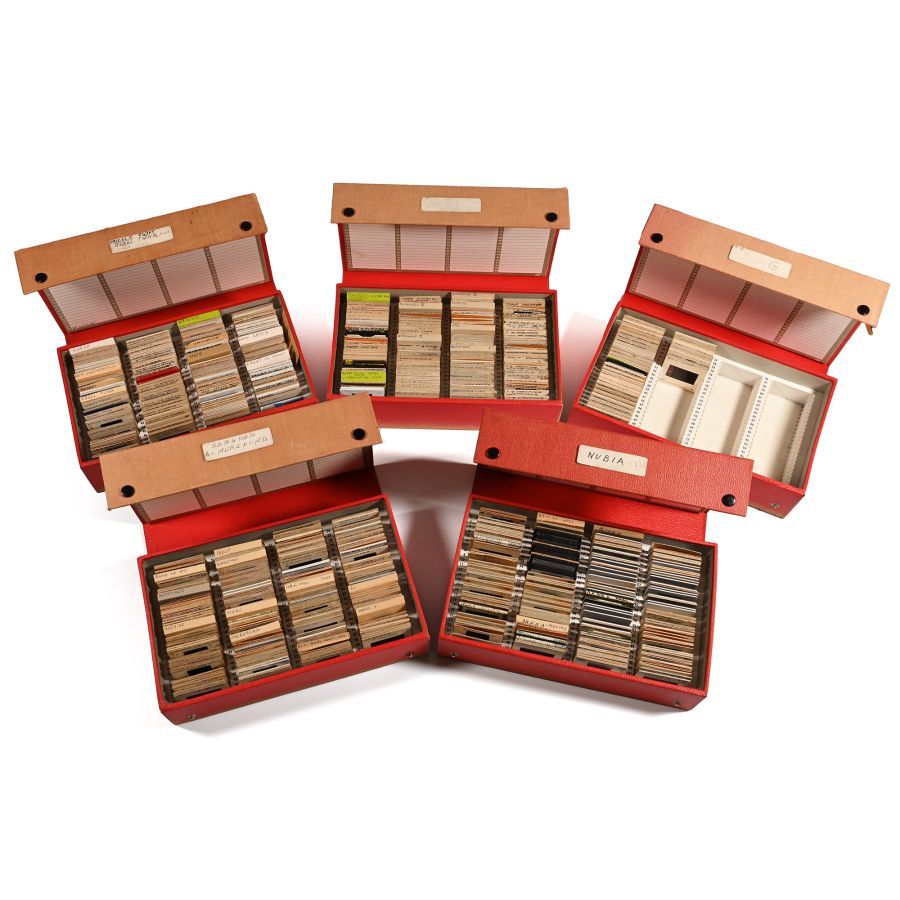
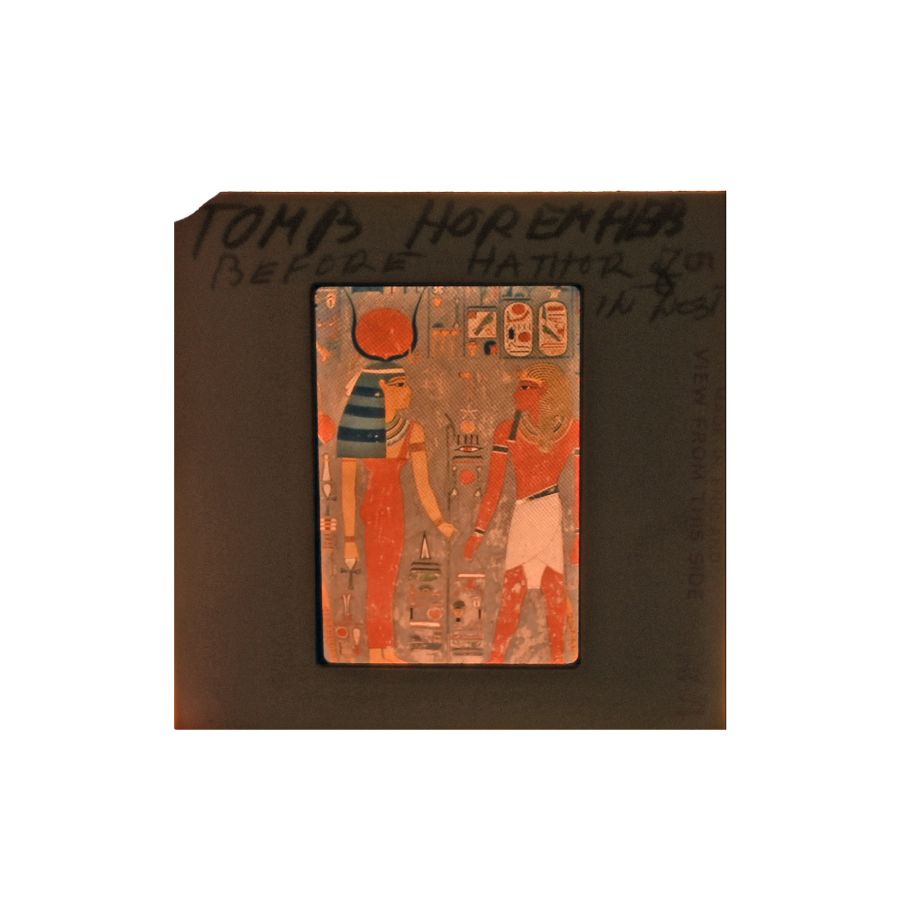
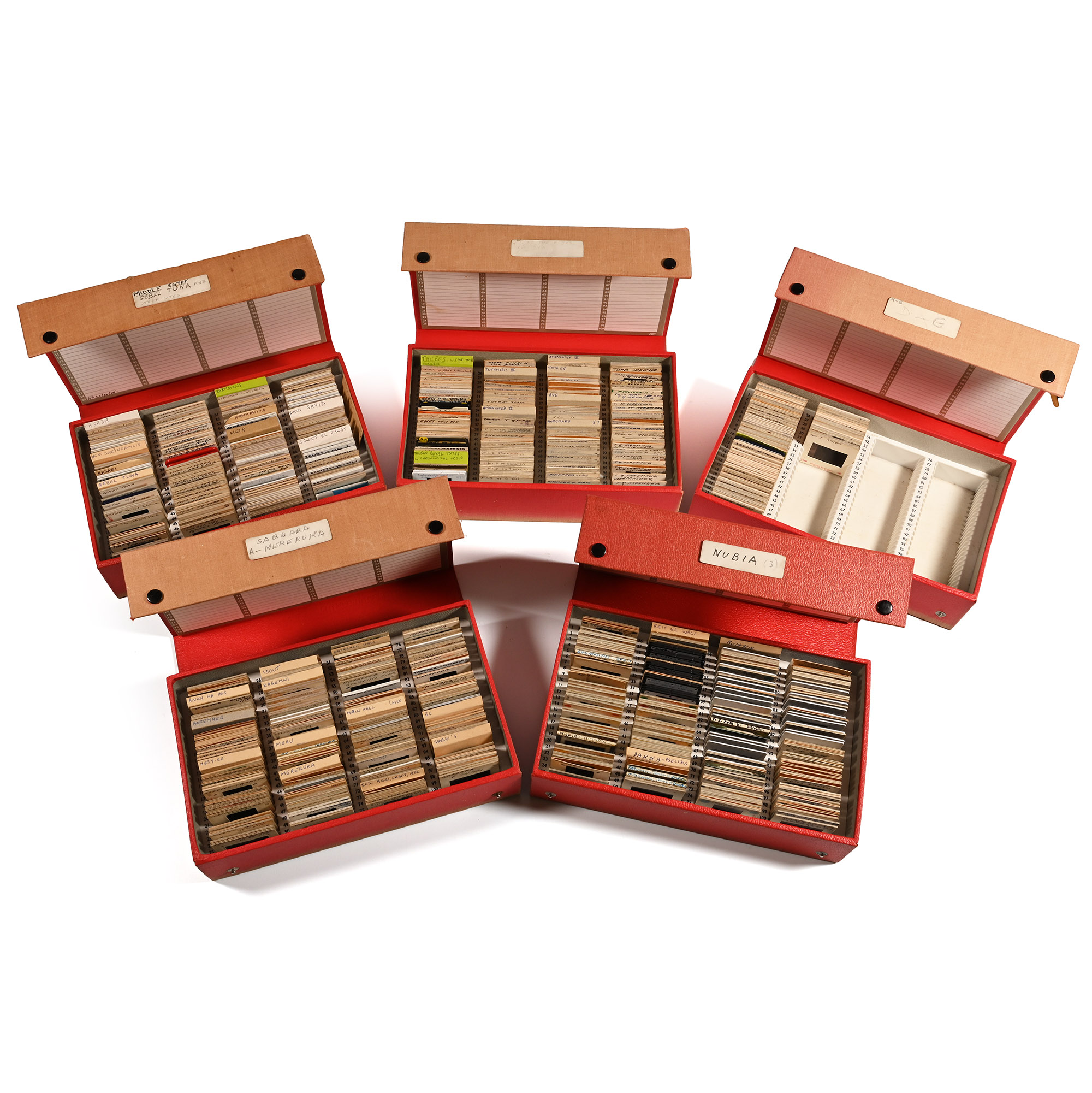
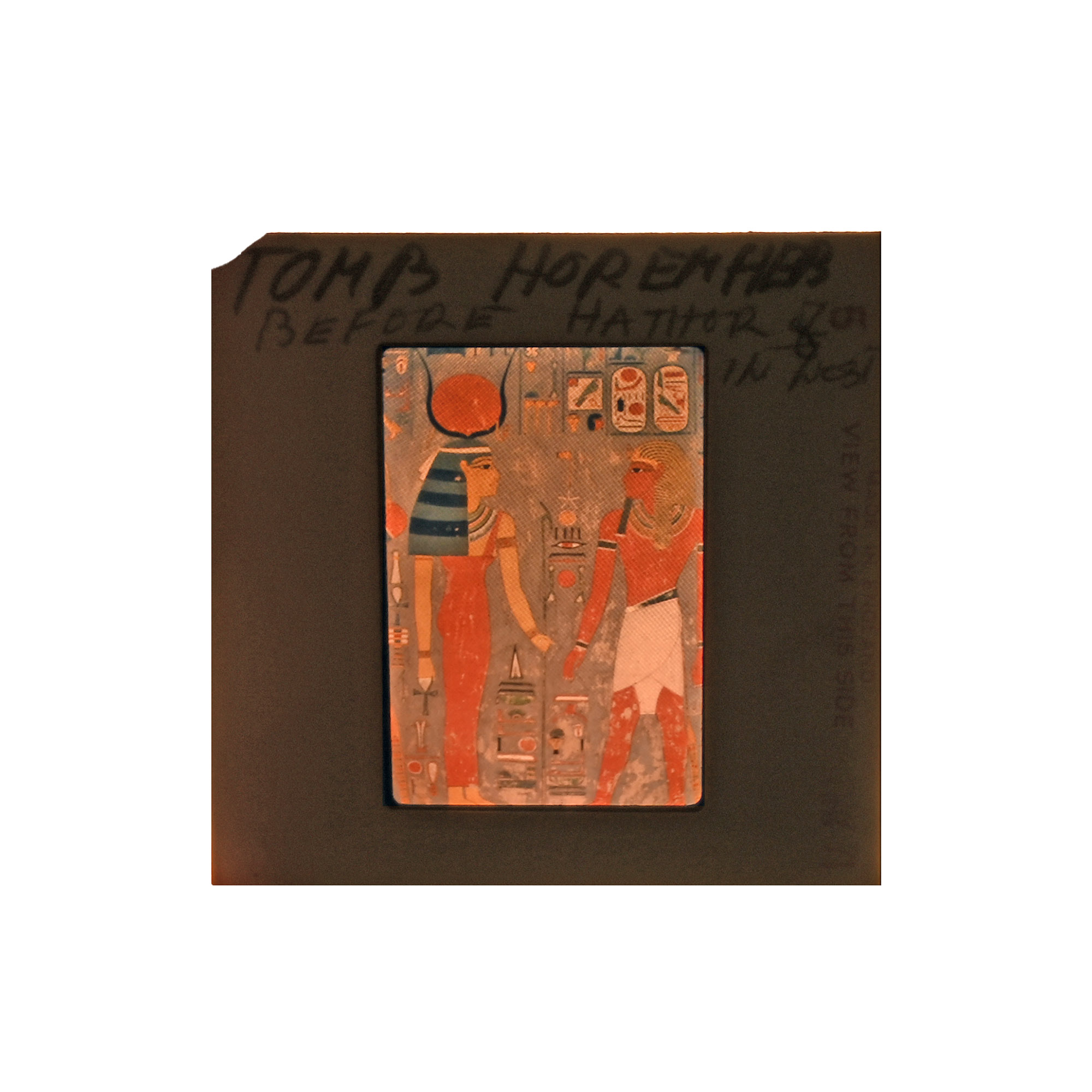
Historic Collection of 801 Slides of Archaeological Sites in Egypt
1960S-1980S A.D.
10 1/2 x 6 1/2 x 2 1/2 in. (4.31 kg total, 26.5 x 16.5 x 6.5 cm each box).
Housed in five linen-covered boxes, covering Saqqara, Mereruka, Nubia, Middle Egypt, Thebes, Gebel, Tuna, Tutankhamun of the Valley of the Kings, Eighteenth Dynasty, and Abydos etc. [5, No Reserve]
ProvenanceProperty of archaeologist Stephanie Gee, N.W. London, UK, 1960s-1980s.
FootnotesStephanie Gee was a prominent archaeologist who took part in several expeditions in Egypt. She was a trusted assistant to the British-Australian archaeologist Veronica Seton-Williams, who excavated in Egypt, Britain, and the Near East. Stephanie also took part in the Tell El-Farâ'în expeditions of 1965-1968, and assisted Seton-Williams with preparing the 1966 expedition report. Their collaboration continued and Stephanie helped with the manuscript of Seton-Williams’ book ‘The Road to El-Aguzein’, a narrative account of her life that was first published in 1988.
CONDITIONTimeLine Auctions follows a vetting process to ensure the authenticity and legality of all items, reinforcing our commitment to integrity and responsible trading. Each antiquity, antique, and coin lot undergoes thorough examination by a vetting committee of at least ten external specialists, professional trade association members, scientists, and archaeologists: Our Vetting Process
AUCTIONS:
TimeLine is a leading auction house specialising in antiquities, ancient art, collectables, natural history, coins, medals, and books. Our auctions offer museums, collectors, historians, and enthusiasts the opportunity to acquire unique and historically significant pieces.
LOT 0540
Historic Collection of 801 Slides of Archaeological Sites in Egypt
Sold for (Inc. bp): £910
-
Large Egyptian Coptic Textile Fragment
Circa 5th-9th century A.D.Sold for (Inc. bp): £494
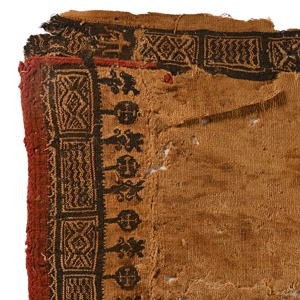
A very large tunic fragment from the upper part of the garment, in purple and red wool over linen, S torsion, a horizontal band with geometric patterns alternating with zig-zag lines, and descending on the breast with two clavi, patterned in similar way; red border with cords in the upper part, dentilled border with floral and vegetal ornaments (plants, flowers and buds with cross) in the lower part. 103 grams total including package, 36 cm
Acquired 1970s-1996. Property of a North American collector. London collection, 2016.
These decorative bands had a ground weave in purple wool, with natural linen and red forming the inlaid design of formal sprigs and zig-zag patterns. The double woven selvedge of the tunic’s neck has been preserved in the upper part. -
Egyptian Faience Amulet Group
Mainly Late Period, 664-332 B.C.Sold for (Inc. bp): £156
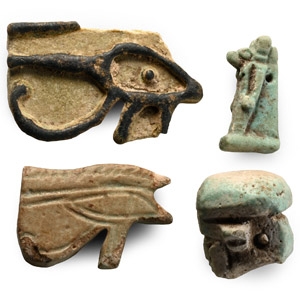
Comprising two wedjat amulets, one Pataikos head amulet, and a striding Anubis amulet. 7.69 grams total, 18-30 mm
From an important central London collection formed since the mid 1960s; thence by descent. -
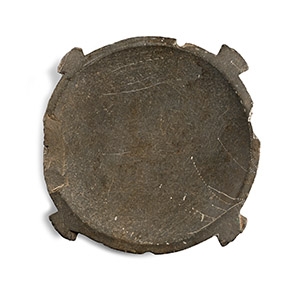
Egyptian Schist Plate
Middle Kingdom, 2040-1782 B.C.Estimate: £650 - 850 (‡+bp*)
Opening Bid: £325
Discoid palette with rounded underside and flat base, dished central field, flat rim with four radiating trapezoidal projections. 450 grams, 16.4 cm
Acquired in the mid 1980s-1990s. Private collection, Switzerland, thence by descent. Private collection, since the late 1990s. Accompanied by a copy of an Art Loss Register certificate no.S00038135.
