
Loading, please wait...
LOT 0482
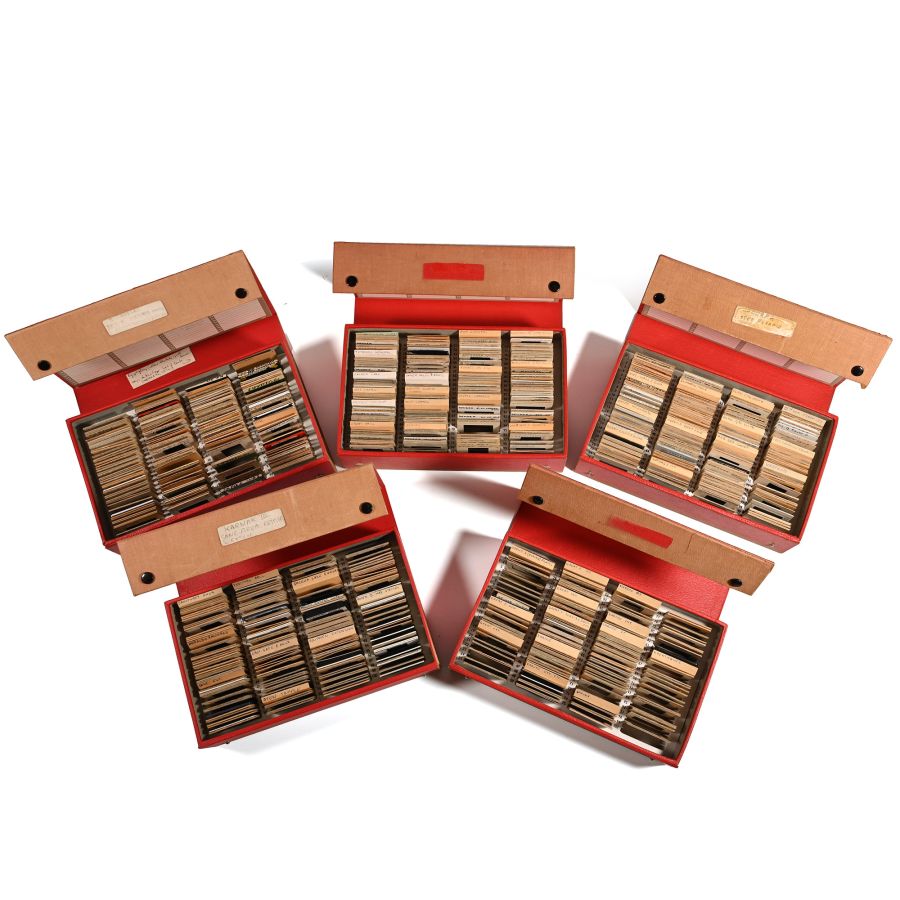
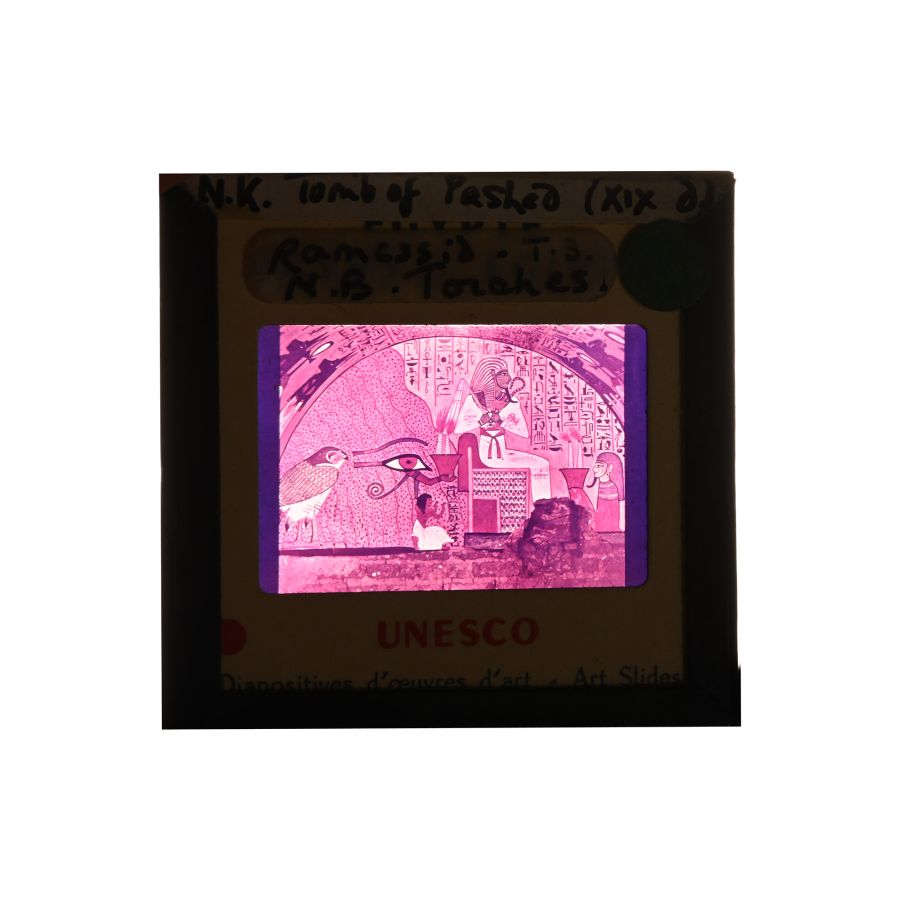
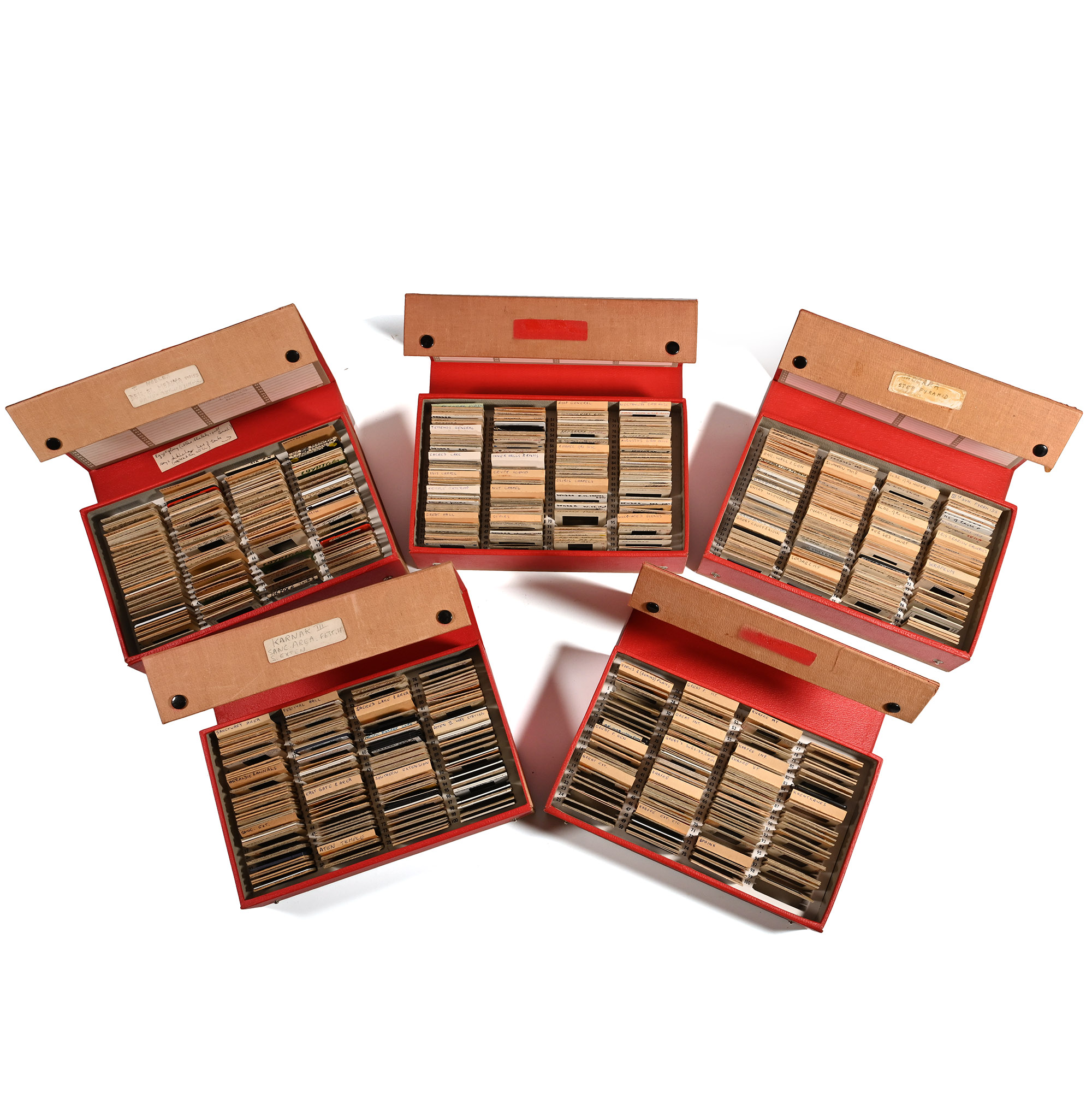
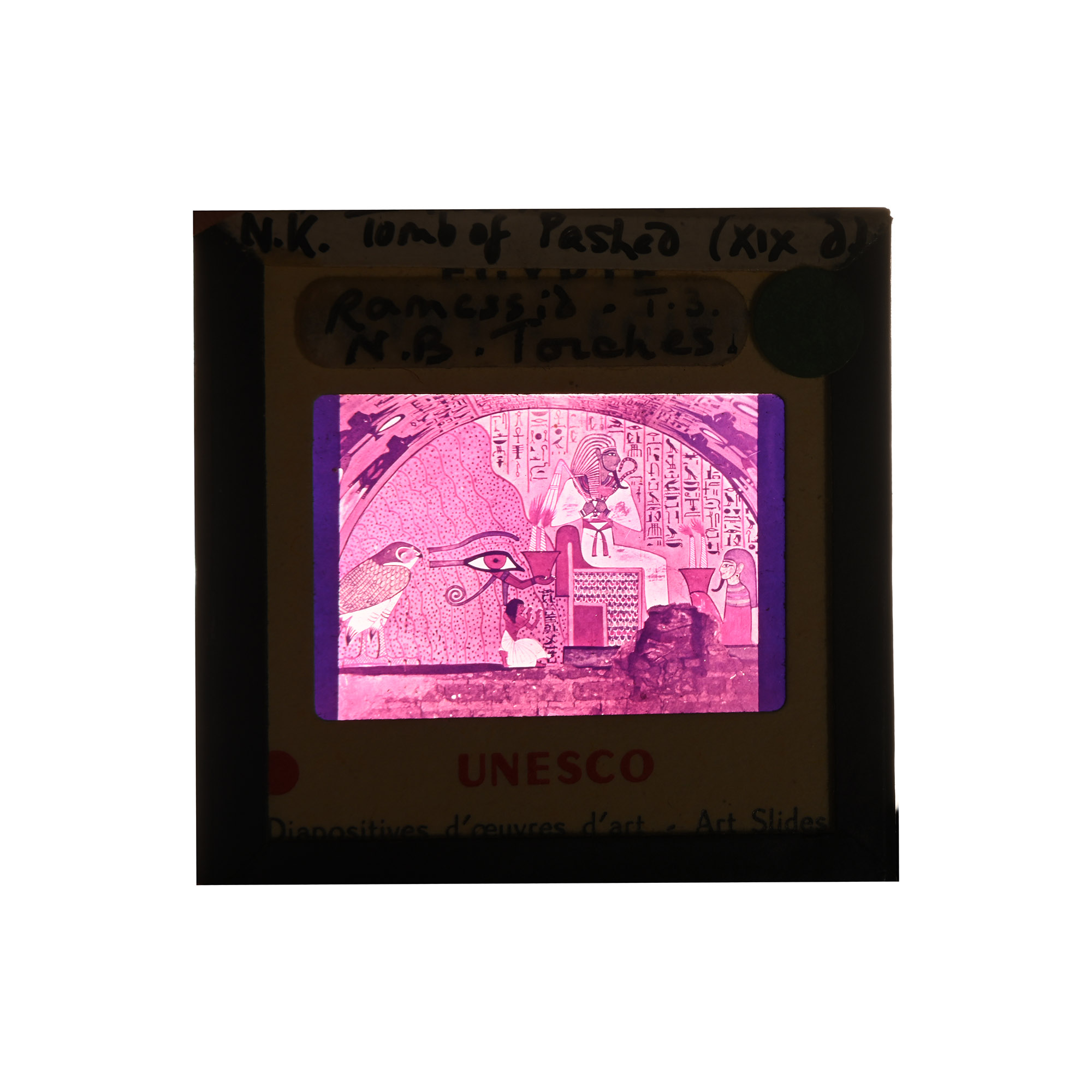
Historic Collection of 772 Slides of Archaeological Sites in Egypt
1960S-1980S A.D.
10 1/2 x 6 1/2 x 2 1/2 in. (4.17 kg total, 26.5 x 16.5 x 6.5 cm each box).
Housed in five linen-covered boxes, covering Saqqara, Step Pyramids, The Serapeum, Giza, Karnak, Tombs of the Nobles, Deir-el Medina Tombs, Ummuh Bured Tombs, Denderah and Edfu, etc. [5, No Reserve]
ProvenanceProperty of archaeologist Stephanie Gee, N.W. London, UK, 1960s-1980s.
This lot is accompanied by an illustrated lot declaration signed by the Head of the Antiquities Department, Dr Raffaele D'Amato.
Stephanie Gee was a prominent archaeologist who took part in several expeditions in Egypt. She was a trusted assistant to the British-Australian archaeologist Veronica Seton-Williams, who excavated in Egypt, Britain, and the Near East. Stephanie also took part in the Tell El-Farâ'în expeditions of 1965-1968, and assisted Seton-Williams with preparing the 1966 expedition report. Their collaboration continued and Stephanie helped with the manuscript of Seton-Williams’ book ‘The Road to El-Aguzein’, a narrative account of her life that was first published in 1988.
CONDITIONTimeLine Auctions follows a vetting process to ensure the authenticity and legality of all items, reinforcing our commitment to integrity and responsible trading. Each antiquity, antique, and coin lot undergoes thorough examination by a vetting committee of at least ten external specialists, professional trade association members, scientists, and archaeologists: Our Vetting Process
AUCTIONS:
TimeLine is a leading auction house specialising in antiquities, ancient art, collectables, natural history, coins, medals, and books. Our auctions offer museums, collectors, historians, and enthusiasts the opportunity to acquire unique and historically significant pieces.
LOT 0482
Historic Collection of 772 Slides of Archaeological Sites in Egypt
Sold for (Inc. bp): £1,300
-
Egyptian Stone and Faience Amulet Group
Late Period-Roman Period, circa 664 B.C.-100 A.D.Sold for (Inc. bp): £572
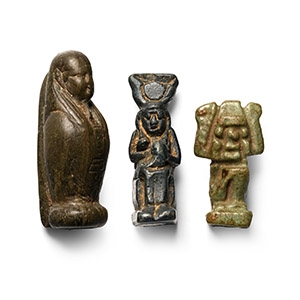
Comprising: a seated figure of Isis suckling infant Horus on her lap, the goddess crowned with large cow horns flanking a solar disc, pierced behind the head; a mummiform Osiris-Canopus amulet wearing a nemes headdress and plain dorsal pillar, a winged scarab with solar disc above at the base of the figure; a kneeling Shu amulet, his arms raised above his head holding a large solar disc, pierced through the dorsal pillar. 6.47 grams total, 18-25 mm
Ex Prof. Dr Emil Vogt (1906-1974), The Former Director of the Swiss National Museum, Zürich, in his collection before 1970. with Galerie Rhéa, Zurich, Switzerland. This lot is accompanied by an illustrated lot declaration signed by the Head of the Antiquities Department, Dr Raffaele D'Amato. -
Egyptian Plaque with Fertility Figure
Late-Ptolemaic Period, 664-31 B.C.Sold for (Inc. bp): £910
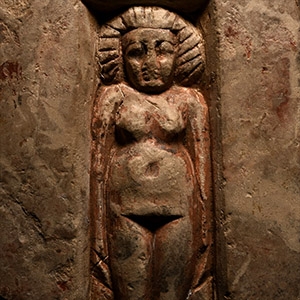
Carved rectangular plaque with central recess, carved image of a nude female modelled in the half-round with a deeply striated bag wig, arms by her side; traces of red and black pigment on the body; mounted on a custom-made stand. 502 grams total, 17.1 cm including stand
From a central London collection, formed 1980-2000. From the private collection of Mr David Barker, London, UK; thence by descent. This lot is accompanied by an illustrated lot declaration signed by the Head of the Antiquities Department, Dr Raffaele D'Amato.
The rectangular limestone plaque almost certainly represents a shrine. Such plaques first appeared in Lower Egypt and became widespread in the Late Period and Ptolemaic era. They may have developed from earlier female figurines depicted on beds and are usually associated with the female goddesses Isis and Hathor, both powerful protectors of women and childbirth and associated with fertility. -
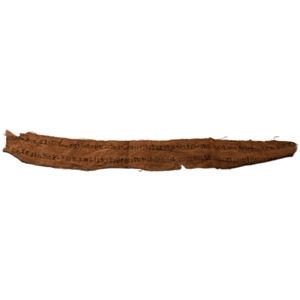
Egyptian Mummy Shroud Section with Hieratic Text
Late-Ptolemaic Period, circa 480-30 B.C.Sold for (Inc. bp): £715
A narrow strip of woven linen textile featuring two lines of neatly written hieratic text in black. 3.74 grams, 40 cm
From the collection of a gentleman, acquired on the London art market in the 1990s. This lot is accompanied by an illustrated lot declaration signed by the Head of the Antiquities Department, Dr Raffaele D'Amato.
From the fifth century B.C., mummy wrappings often feature hieratic script—a cursive form of Egyptian hieroglyphs used for daily and religious texts. These include excerpts from funerary works like the Book of the Dead, alongside prayers meant to protect the deceased in the afterlife. Often with vignettes, these texts were inscribed directly on linen strips during the mummification. Some bandages were notably long; one from Brussels, 6.2 cm wide, measures an incredible 26 metres.
