
Loading, please wait...
LOT 0465
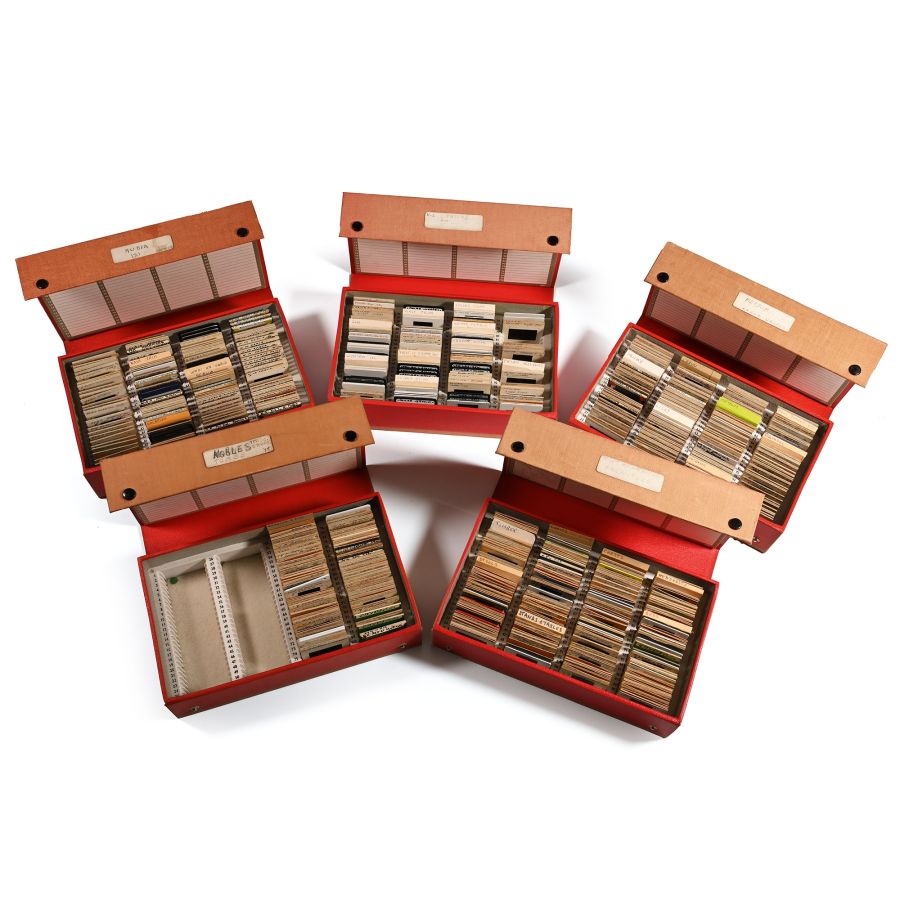
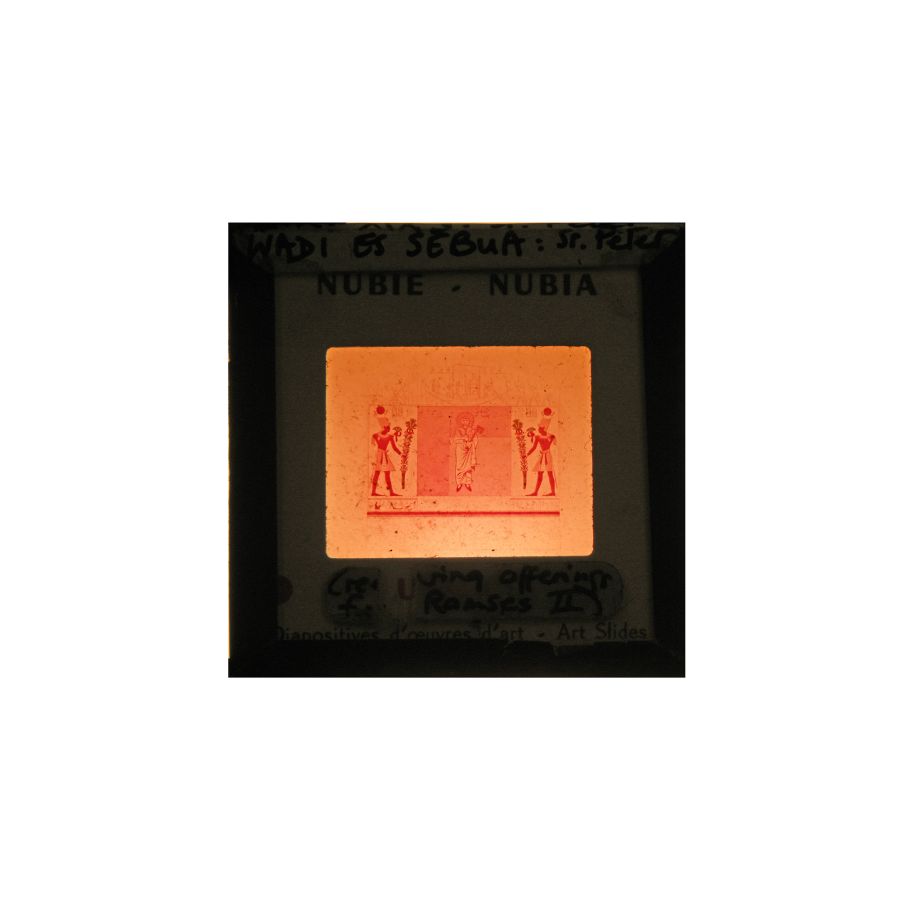
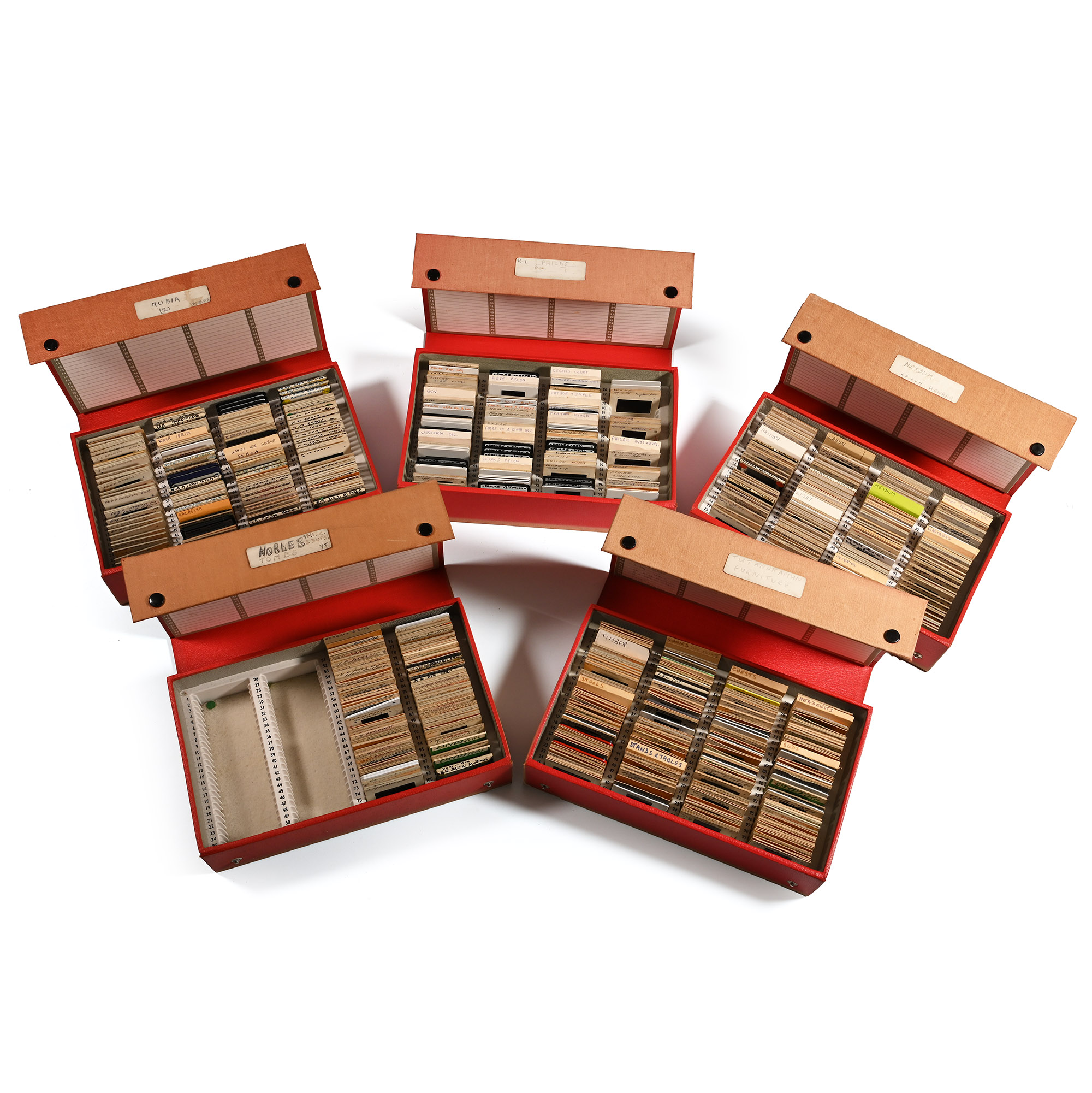
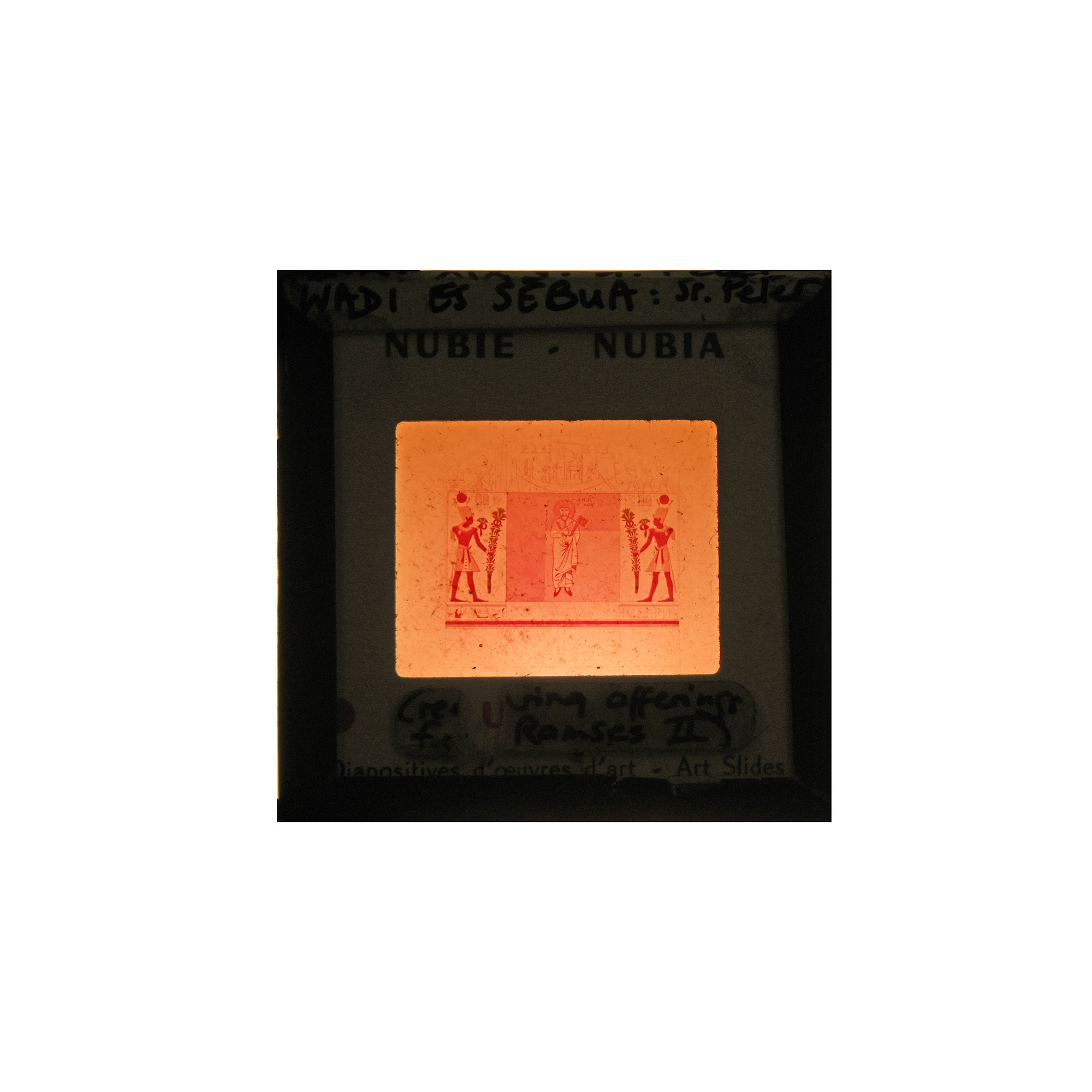
Historic Collection of 678 Slides of Archaeological Sites in Egypt
1960S-1980S A.D.
10 1/2 x 6 1/2 x 2 1/2 in. (4.1 kg total, 26.5 x 16.5 x 6.5 cm each box).
Housed in five linen-covered boxes, covering Tutankhamun furniture, Tombs of the Nobles, Lahun Hawara, Philae, and Nubia, etc. [5, No Reserve]
ProvenanceProperty of archaeologist Stephanie Gee, N.W. London, UK, 1960s-1980s.
This lot is accompanied by an illustrated lot declaration signed by the Head of the Antiquities Department, Dr Raffaele D'Amato.
Stephanie Gee was a prominent archaeologist who took part in several expeditions in Egypt. She was a trusted assistant to the British-Australian archaeologist Veronica Seton-Williams, who excavated in Egypt, Britain, and the Near East. Stephanie also took part in the Tell El-Farâ'în expeditions of 1965-1968, and assisted Seton-Williams with preparing the 1966 expedition report. Their collaboration continued and Stephanie helped with the manuscript of Seton-Williams’ book ‘The Road to El-Aguzein’, a narrative account of her life that was first published in 1988.
CONDITIONTimeLine Auctions follows a vetting process to ensure the authenticity and legality of all items, reinforcing our commitment to integrity and responsible trading. Each antiquity, antique, and coin lot undergoes thorough examination by a vetting committee of at least ten external specialists, professional trade association members, scientists, and archaeologists: Our Vetting Process
AUCTIONS:
TimeLine is a leading auction house specialising in antiquities, ancient art, collectables, natural history, coins, medals, and books. Our auctions offer museums, collectors, historians, and enthusiasts the opportunity to acquire unique and historically significant pieces.
LOT 0465
Historic Collection of 678 Slides of Archaeological Sites in Egypt
Sold for (Inc. bp): £286
-
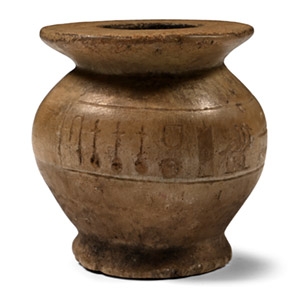
Egyptian Alabaster Kohl Pot with Later Hieroglyphs
Second Intermediate Period, 1650-1550 B.C.Sold for (Inc. bp): £195
Comprising a squat piriform body with a wide everted rim, a band of later hieroglyphs beneath the shoulder: ḳmꜢ.t n bꜢw ı͗wnw nfrw.s (You have gathered the souls (i.e. divine powers) of Heliopolis—her beauties). 208 grams, 55 mm high
Ex late London, UK, gentleman, 1970s. This lot is accompanied by an illustrated lot declaration signed by the Head of the Antiquities Department, Dr Raffaele D'Amato.
The inscription on what is a cosmetic vessel could be interpreted as “You acquire the powers of Heliopolis, source of her beauty”; “her beauties” likely references either the woman using the vessel or perhaps the divine beauty imparted by the contents. -
.jpg)
Egyptian Marble Head of a Queen
Ptolemaic Period, 323-30 B.C.Estimate: £1,800 - 2,400 (‡+bp*)
Opening Bid: £820
Modelled in the half-round in Hellenistic style with a stephane and centre-parted hair, serene facial features including hooded eyes and pert lips; mounted on a custom-made wooden display stand. 313 grams total, 10 cm high (14.3 cm high including stand)
Ex Hanna Saba collection, Ambassador to Egypt-USA-France (1909-1992). Private European collection. Accompanied by an academic report by Dr Raffaele D'Amato. This lot has been checked against the Interpol Database of stolen works of art and is accompanied by a search certificate number no.12083-218194. This lot has been cleared against the Art Loss Register database, and is accompanied by an illustrated lot declaration signed by the Head of the Antiquities Department, Dr Raffaele D'Amato.
The head is similar to various portraits of Ptolemaic queens, some of them identified as belonging to the famous Berenice II (246-222 B.C.), some others to Cleopatra VII Philopator (69-30 BC), the lover of Julius Caesar, the spouse of Mark Anthony and the last Queen of Egypt. The analogies with Berenike II’s portrait are noteworthy, especially with the portrait in the Cairo Museum (inv.JE 39517): the diadem and its position on the top of the head, similar physical features, and similar roundness of the cheeks. -
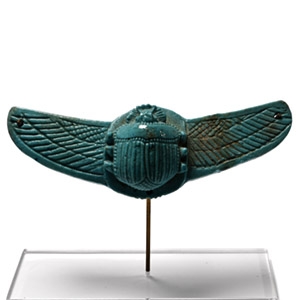
Egyptian Blue Faience Scarab
Late Period, 7th-6th century B.C.Sold for (Inc. bp): £4,550
Comprising a crescentic plaque with central scarab modelled in the half-round, and lateral wings with hatched texturing; scarab with ribbing and other detailing; pierced in four places for attachment; accompanied by a custom-made stand. 22.3 grams, 10 cm wide (44 grams total, 10 cm wide including stand)
Acquired in the 1950-1990s. Mr C., Geneva, Switzerland. Private collection, Europe. This lot has been checked against the Interpol Database of stolen works of art and is accompanied by a search certificate number no.12592-232170. This lot has been cleared against the Art Loss Register database, and is accompanied by an illustrated lot declaration signed by the Head of the Antiquities Department, Dr Raffaele D'Amato.
Winged scarabs were thought to ensure the rebirth and regeneration of the deceased, making them popular funerary amulets. This is a particularly fine example of a rarer one-piece amulet, as they are usually made from three separate elements.
