
Loading, please wait...
LOT 0500
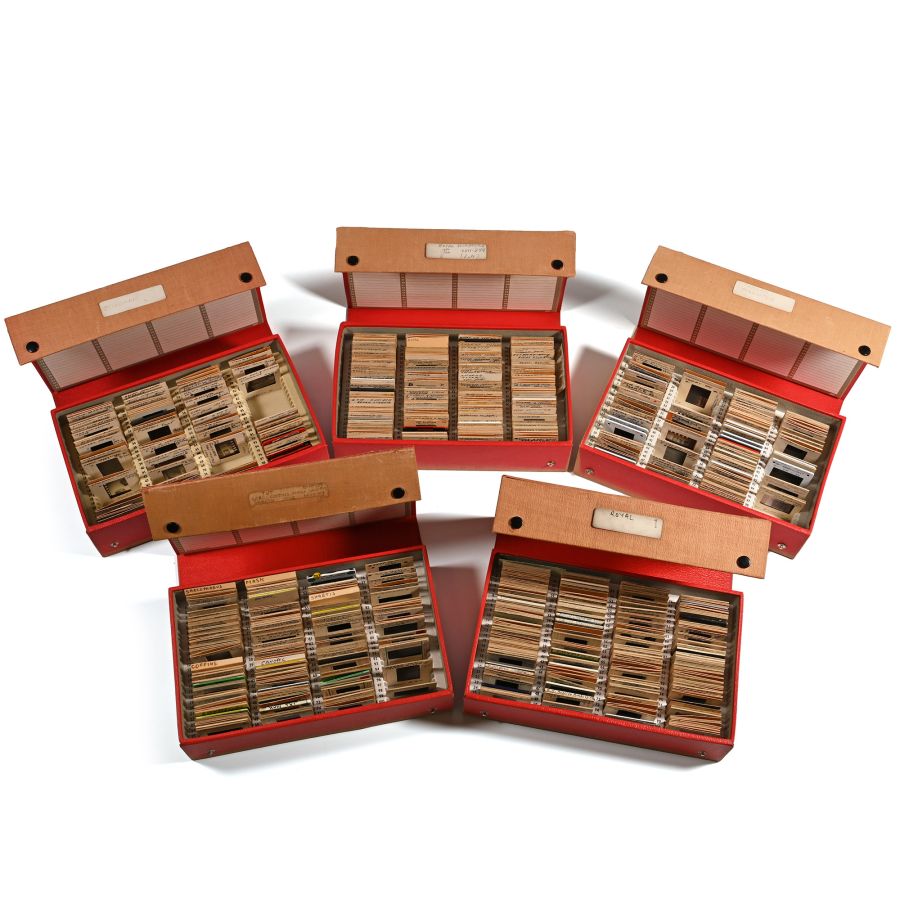
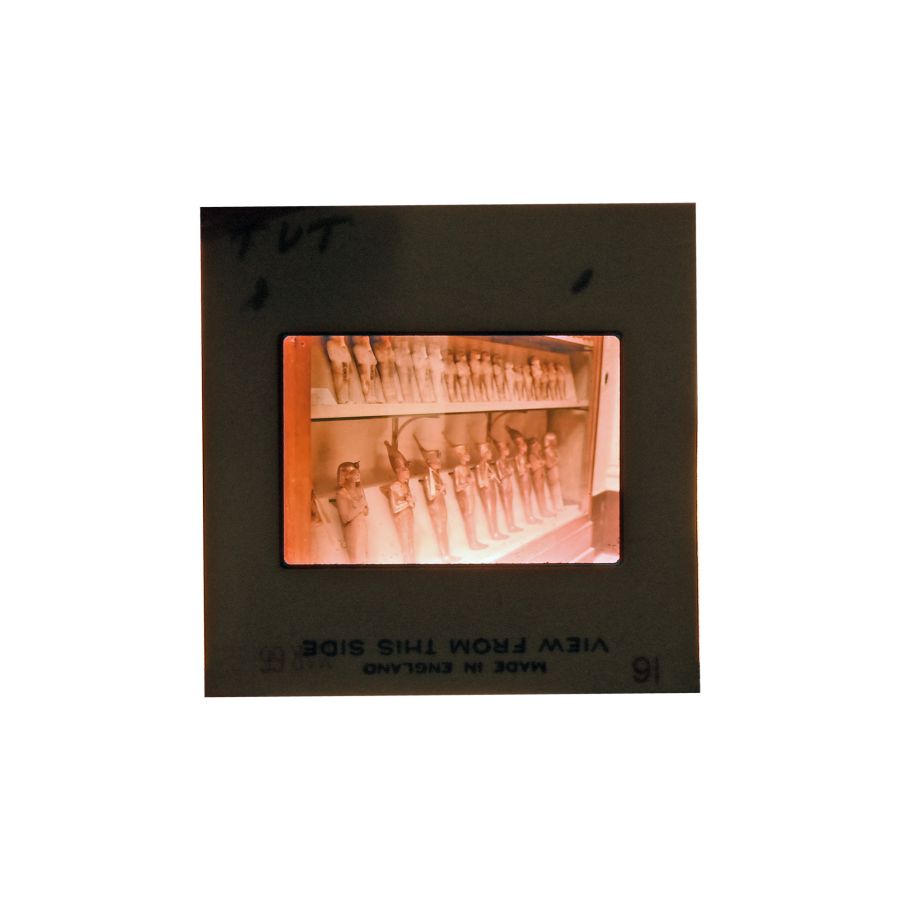
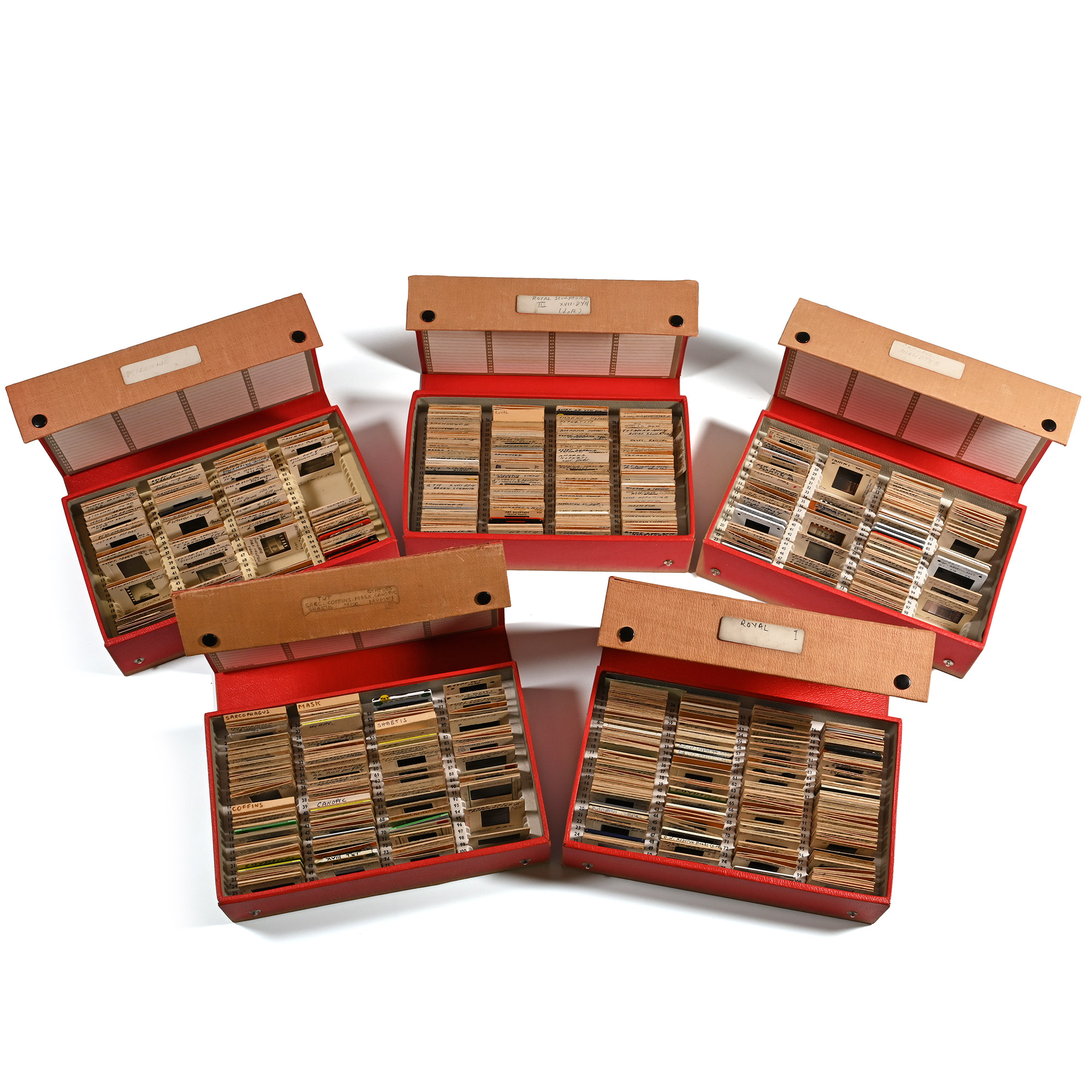
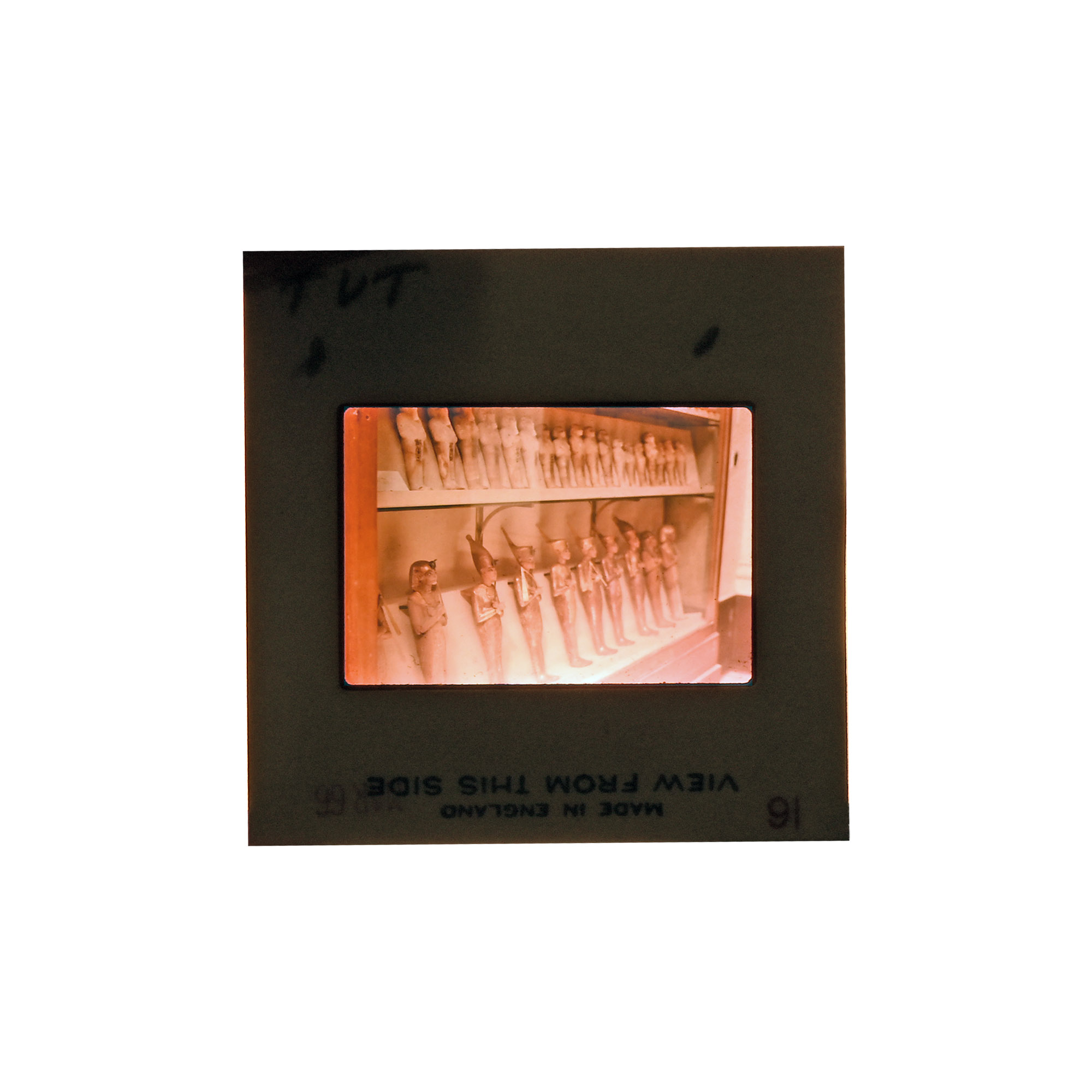
Historic Collection of 615 Slides of Archaeological Objects From Egypt
1960S-1980S A.D.
10 1/2 x 6 1/2 x 2 1/2 in. (3.87 kg total, 26.5 x 16.5 x 6.5 cm each box).
Housed in five linen-covered boxes, covering the Ptolemaic Period, royal sculpture of the Eighteenth Dynasty, sarcophagi, masks, canopics, shabtis, mummies, other royal objects etc. [5, No Reserve]
ProvenanceProperty of archaeologist Stephanie Gee, N.W. London, UK, 1960s-1980s.
FootnotesStephanie Gee was a prominent archaeologist who took part in several expeditions in Egypt. She was a trusted assistant to the British-Australian archaeologist Veronica Seton-Williams, who excavated in Egypt, Britain, and the Near East. Stephanie also took part in the Tell El-Farâ'în expeditions of 1965-1968, and assisted Seton-Williams with preparing the 1966 expedition report. Their collaboration continued and Stephanie helped with the manuscript of Seton-Williams’ book ‘The Road to El-Aguzein’, a narrative account of her life that was first published in 1988.
CONDITIONTimeLine Auctions follows a vetting process to ensure the authenticity and legality of all items, reinforcing our commitment to integrity and responsible trading. Each antiquity, antique, and coin lot undergoes thorough examination by a vetting committee of at least ten external specialists, professional trade association members, scientists, and archaeologists: Our Vetting Process
AUCTIONS:
TimeLine is a leading auction house specialising in antiquities, ancient art, collectables, natural history, coins, medals, and books. Our auctions offer museums, collectors, historians, and enthusiasts the opportunity to acquire unique and historically significant pieces.
LOT 0500
Historic Collection of 615 Slides of Archaeological Objects From Egypt
Sold for (Inc. bp): £624
-
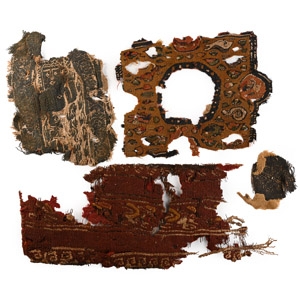
Egyptian Coptic Textile Fragment Group
Circa 6th-7th century A.D.Sold for (Inc. bp): £211
Comprising: a large fragment of a segmentum in white and red linen and wool, S torsion, borders embroidered with meanders, the central scene representing running hares; a purple on linen fragment of a clavus representing a dancer, borders with geometric decoration; and a large fragment of a tablion, ornamented with images of fishes, birds and vegetal patterns in red, green, yellow and dark blue wool, the central tondo missing. 66 grams total including package, 14.3-20.3 cm
Acquired 1970s-1996. Property of a North American collector. London collection, 2016.
Water plant elements are scattered across the bottom of the tablion, which is decorated with water birds; these decorations likely surrounded the image of a nereid. These abstract decorations show a strong stylisation often giving the marine animals a plant-like appearance. -
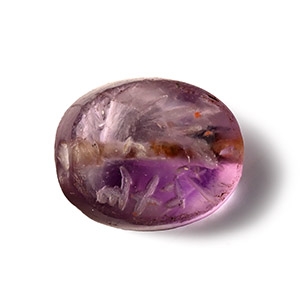
Phoenician Amethyst Scarab with Horse’s Head and Later Aramaic Inscription
Late 1st millennium B.C.Sold for (Inc. bp): £572
Scaraboid in form with transverse piercing, four later engraved Aramaic characters engraved to the flat face above a horse-head motif; supplied with a museum-quality impression. 1.59 grams, 13 mm
From the private collection of the late Mr S.M., London, UK, 1969-1999; thence by descent. Accompanied by a copy of a previous cataloguing slip. -
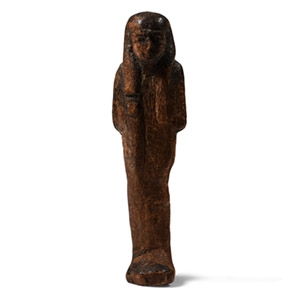
Egyptian Wooden Funerary Shabti Figurine
New Kingdom, circa 1570-1070 B.C.Estimate: £1,000 - 1,400 (‡+bp*)
Opening Bid: £540
Carved in the round as a mummiform figure, with a carefully modelled tripartite wig, a rounded face, large eyes, and a subtly simpering expression. 39 grams, 14.5 cm
Ex R. Liechti (1934-2010) Geneva, Switzerland, formed between 1950-1990s. with Liechti stock number 'E.825' to base. This lot has been checked against the Interpol Database of stolen works of art and is accompanied by a search certificate number no.12079-218221.
A shabti (also known as ushabti or shawabti) is a small funerary figurine found in ancient Egyptian tombs, from around 2000 BCE to 30 BCE. Its main purpose was to act as a servant for the deceased in the afterlife, carrying out manual tasks like farming or irrigation as directed by the gods. Shabtis were frequently inscribed with a magical formula from the Book of the Dead to ensure they would animate when summoned.
