
Loading, please wait...
LOT 0467
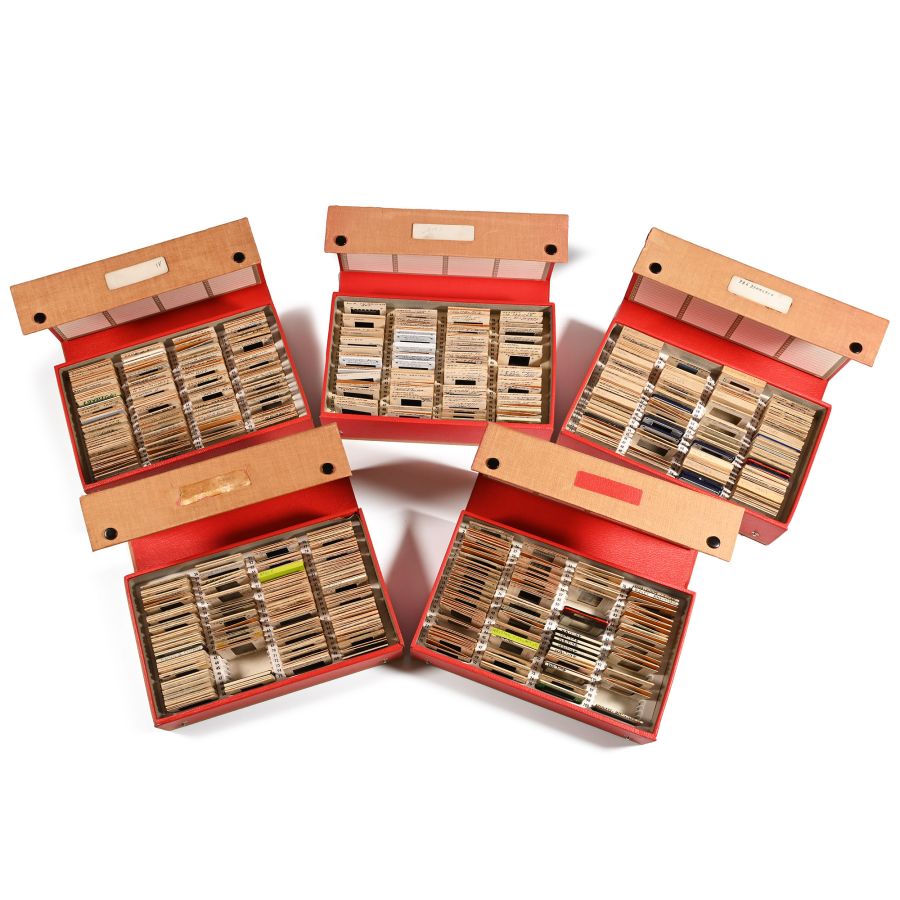
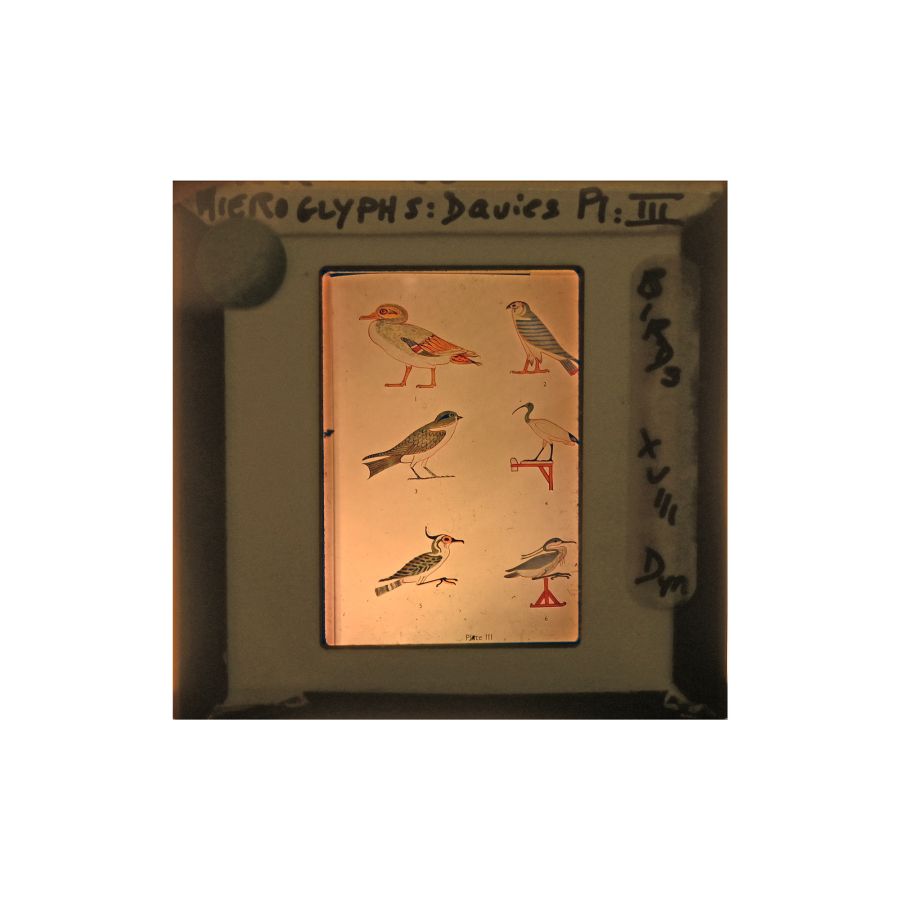
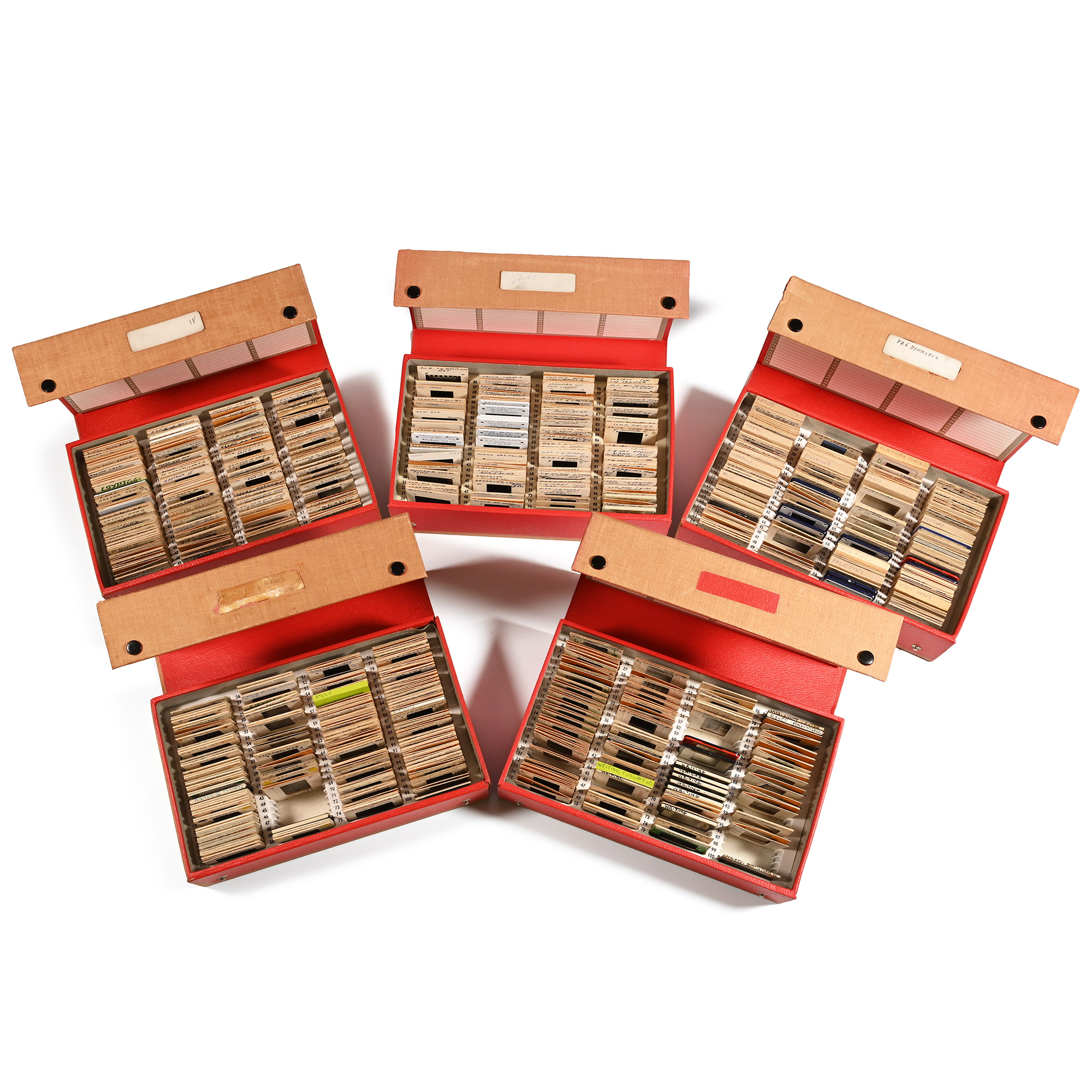
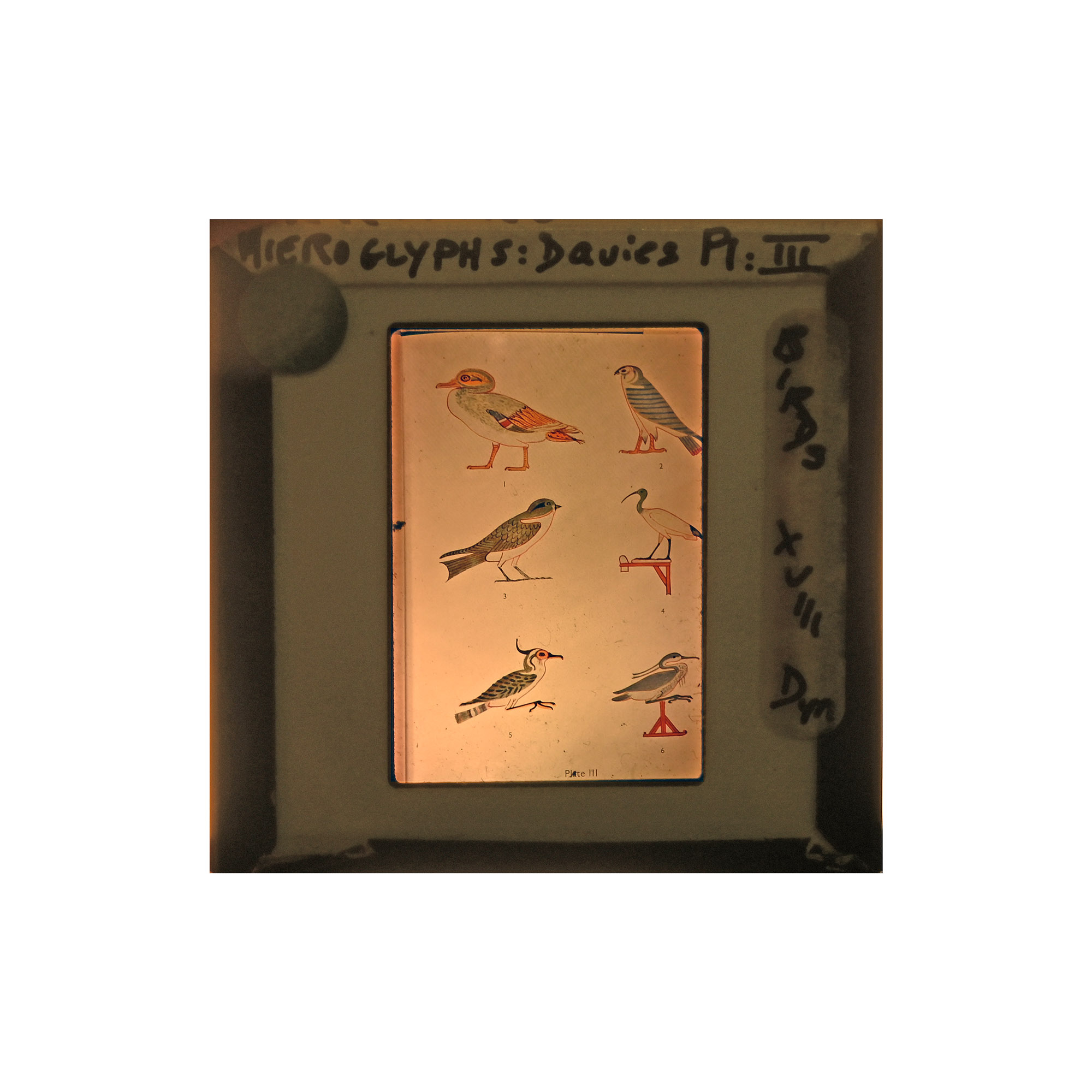
Historic Collection of 601 Slides of Archaeological Objects From Egypt
1960S-1980S A.D.
10 1/2 x 6 3/4 x 2 1/2 in. (3.9 kg total, 26.5 x 17 x 6.5 cm each box).
Housed in five linen-covered boxes, covering mummies, masks, scarabs, cylinders, shabtis, titulary, tablets, statuary, Saite artefacts, and Pre Dynastic pottery, stone vases etc. [5, No Reserve]
ProvenanceProperty of archaeologist Stephanie Gee, N.W. London, UK, 1960s-1980s.
FootnotesStephanie Gee was a prominent archaeologist who took part in several expeditions in Egypt. She was a trusted assistant to the British-Australian archaeologist Veronica Seton-Williams, who excavated in Egypt, Britain, and the Near East. Stephanie also took part in the Tell El-Farâ'în expeditions of 1965-1968, and assisted Seton-Williams with preparing the 1966 expedition report. Their collaboration continued and Stephanie helped with the manuscript of Seton-Williams’ book ‘The Road to El-Aguzein’, a narrative account of her life that was first published in 1988.
CONDITIONTimeLine Auctions follows a vetting process to ensure the authenticity and legality of all items, reinforcing our commitment to integrity and responsible trading. Each antiquity, antique, and coin lot undergoes thorough examination by a vetting committee of at least ten external specialists, professional trade association members, scientists, and archaeologists: Our Vetting Process
AUCTIONS:
TimeLine is a leading auction house specialising in antiquities, ancient art, collectables, natural history, coins, medals, and books. Our auctions offer museums, collectors, historians, and enthusiasts the opportunity to acquire unique and historically significant pieces.
LOT 0467
Historic Collection of 601 Slides of Archaeological Objects From Egypt
Sold for (Inc. bp): £546
-
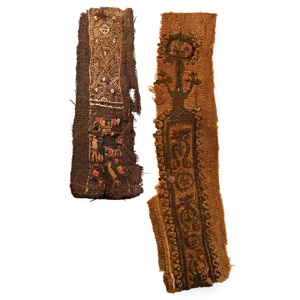
Egyptian Coptic Textile Fragment Group
Circa 5th-6th century A.D.Sold for (Inc. bp): £130
Comprising: a decorative tunic stripe (clavus) in purple wool over coarse linen, S-twist tapestry, embroidered with floral medallions and stylised plants, borders decorated with meanders; fragment of a segmentum, in yellow, red green and brown wool, S-twist tapestry, divided in two sections, embroidered with a stylised human figure and geometric interlacing. 41 grams total including package, 15.5-22 cm
Acquired 1970s-1996. Property of a North American collector. London collection, 2016. -
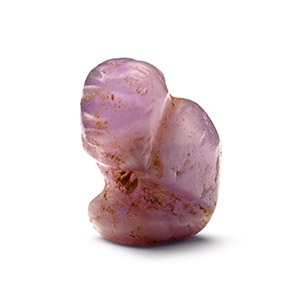
Egyptian Amethyst Ba-Bird Amulet
Late Period, 664-332 B.C.Sold for (Inc. bp): £124
Crouched figure of a human-headed Ba-bird on a rectangular base, carved in the round. 0.62 grams, 9.8 mm
with Archaeologia, Switzerland, before 1983. Ex private North American collection. London private collection, 2016. -
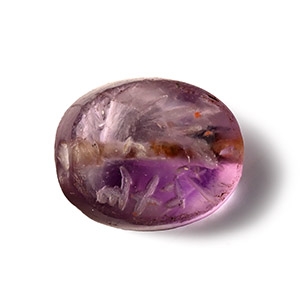
Phoenician Amethyst Scarab with Horse’s Head and Later Aramaic Inscription
Late 1st millennium B.C.Sold for (Inc. bp): £572
Scaraboid in form with transverse piercing, four later engraved Aramaic characters engraved to the flat face above a horse-head motif; supplied with a museum-quality impression. 1.59 grams, 13 mm
From the private collection of the late Mr S.M., London, UK, 1969-1999; thence by descent. Accompanied by a copy of a previous cataloguing slip.
