
Loading, please wait...
_900x900.jpg "Historic British Petrology Collection of Rock Specimens")
_200x200.jpg "Historic British Petrology Collection of Rock Specimens")
.jpg "Historic British Petrology Collection of Rock Specimens")
LOT 2469
Historic British Petrology Collection of Rock Specimens
4 - 4 1/2 in. (2 kg total, 10.3-11.4 cm).
Comprising: volcanic ash from Borrowdale, Cumberland; hornblende from Sutherland; granite-aplite from Devon; and luxullianite; three with old labels. [4, No Reserve]
ProvenanceFound at various sites in the UK.
Ex Gregory, Bottley & Lloyd (Gregory's), Harwich, UK.
TimeLine Auctions follows a vetting process to ensure the authenticity and legality of all items, reinforcing our commitment to integrity and responsible trading. Each antiquity, antique, and coin lot undergoes thorough examination by a vetting committee of at least ten external specialists, professional trade association members, scientists, and archaeologists: Our Vetting Process
AUCTIONS:
TimeLine is a leading auction house specialising in antiquities, ancient art, collectables, natural history, coins, medals, and books. Our auctions offer museums, collectors, historians, and enthusiasts the opportunity to acquire unique and historically significant pieces.
-
![Selenite Satin Spar Wand Group [50]](https://timelineauctions.com/upload/images/items/small/228184-s.jpg)
Selenite Satin Spar Wand Group [50]
Sold for (Inc. bp): £26
Comprising fifty cut sections showing satin-like lustre. 927 grams total, 50-71 mm
Ex Mineral Imports, London, UK. Gregory, Bottley & Lloyd (Gregory's), Harwich, UK. -
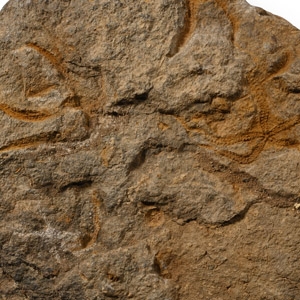
Fossil Brittle Star Plate
Ordovician Period, circa 485.4-443.8 million years B.P.Sold for (Inc. bp): £13
A rounded matrix containing a number of Ophiuroidea sp. specimens. 740 grams, 19 cm
From a Lincolnshire, UK, collection. -
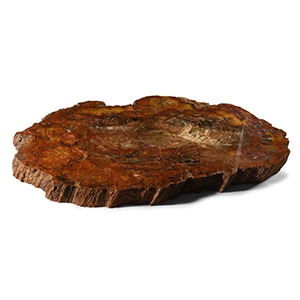
Huge Section of Fossilised 'Rainbow' Wood
235 million years B.P.Sold for (Inc. bp): £546
Petrified tree section of 40-46mm thickness with finely polished finish to upper and lower faces and set into resin; edges slightly chamfered. 26.2 kg, 68 cm
From the private collection of Mr J.G., UK, a company executive.
The petrified wood from Araucarioxylon arizonicum is often referred to as "rainbow wood" due to the variety of subtle, warm colours it exhibits, mainly in the red-orange range from hematite and limonite inclusions within the silica.
