
Loading, please wait...
LOT 0662
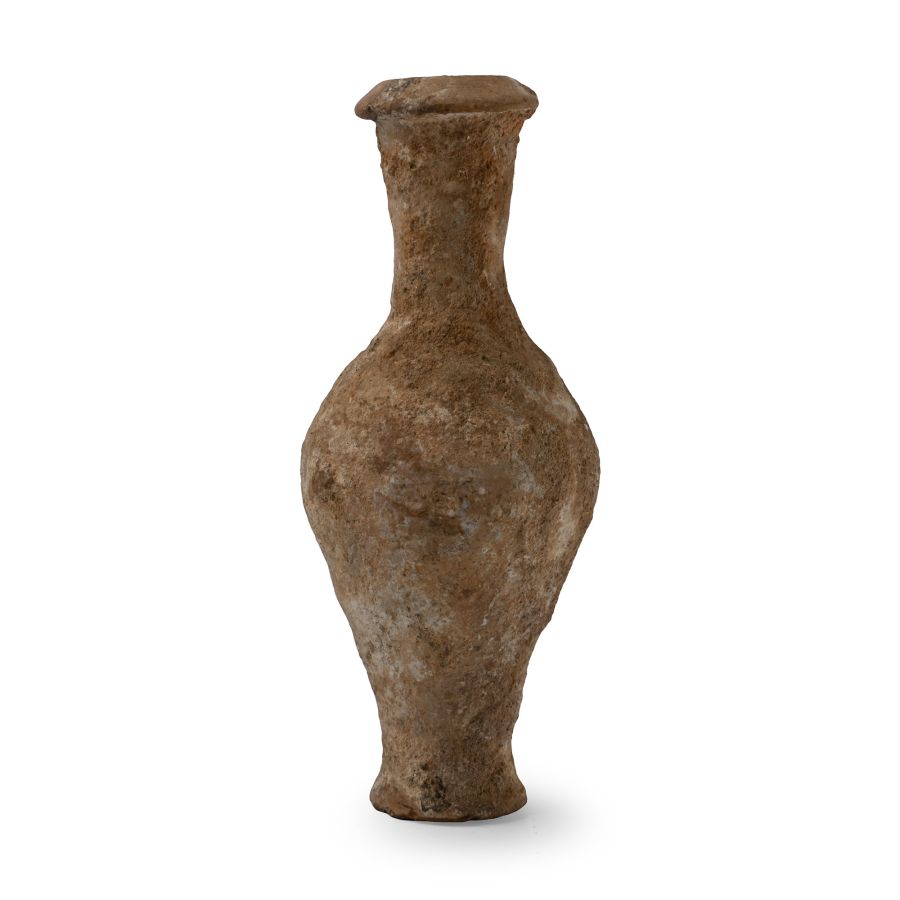
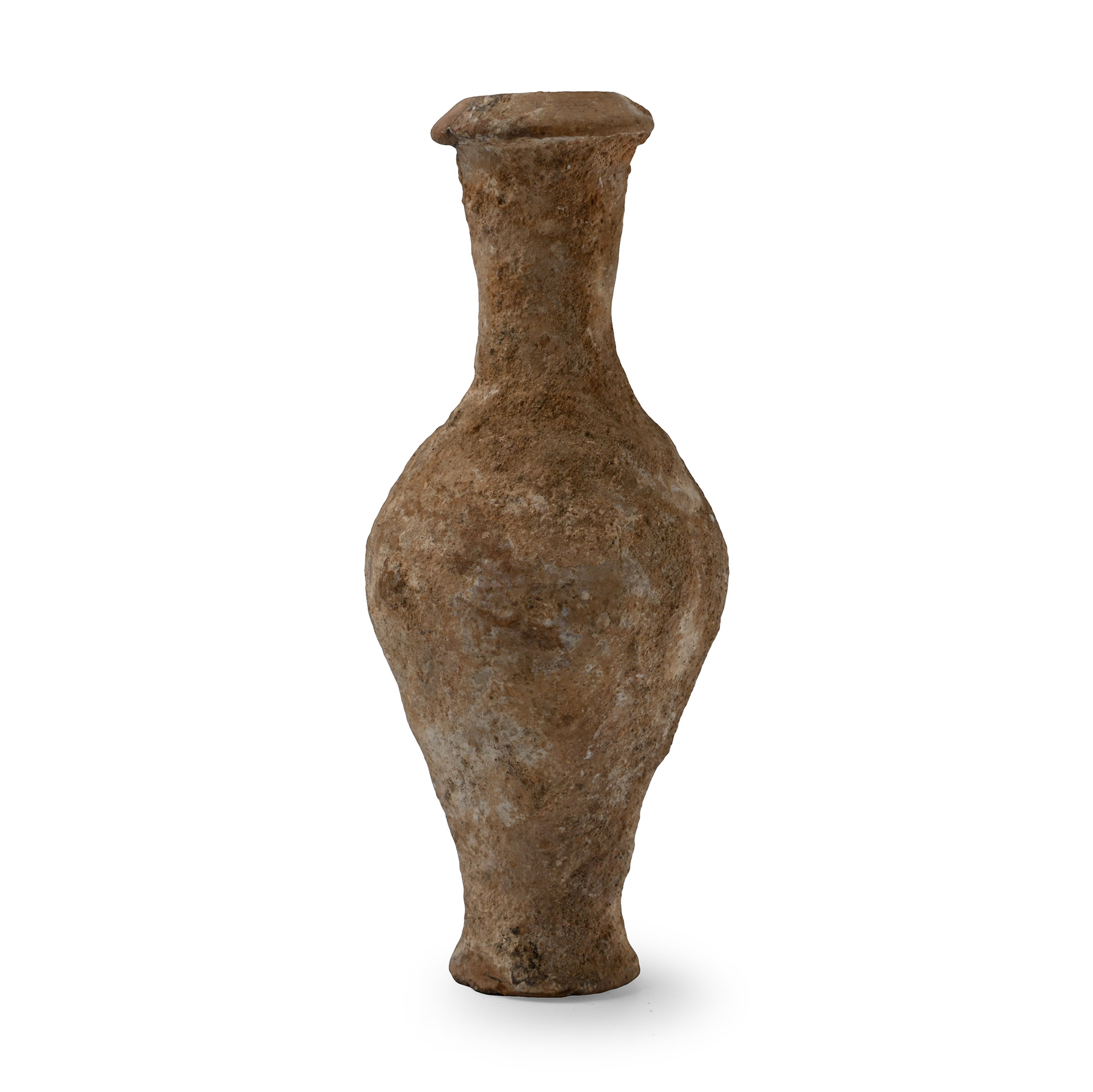
Hellenistic Terracotta Spindle Flask
4TH-3RD CENTURY B.C.
4 3/8 in. (86 grams, 11.1 cm).
With narrow neck and chamfered mouth, developing to a biconical body and flared foot; old label 'ΓΓΣΣ' to shoulder. [No Reserve]
ProvenancePrivate Derby, UK, antiquities collection.
From the property of a late Lincolnshire, UK, gentleman.
TimeLine Auctions follows a vetting process to ensure the authenticity and legality of all items, reinforcing our commitment to integrity and responsible trading. Each antiquity, antique, and coin lot undergoes thorough examination by a vetting committee of at least ten external specialists, professional trade association members, scientists, and archaeologists: Our Vetting Process
AUCTIONS:
TimeLine is a leading auction house specialising in antiquities, ancient art, collectables, natural history, coins, medals, and books. Our auctions offer museums, collectors, historians, and enthusiasts the opportunity to acquire unique and historically significant pieces.
-
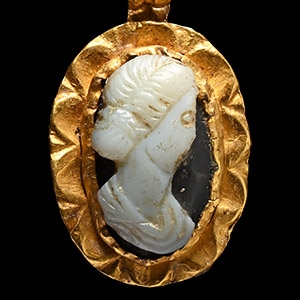
Roman Gold Pendant with Onyx Cameo
2nd century A.D.Estimate: £1,500 - 2,000 (+bp*)
Opening Bid: £750
Comprising a gold medallion and high-relief onyx cameo with female bust in profile facing right, the lower half of her face absent; the jawline and long neck finely carved, hair gathered in a low bun, drapery of the dress framing her face below; set within a gold sleeve and framed by a delicate border with a petal motif; gold loop for suspension. 4.03 grams, 26.90 mm
From the collection of a Cambridge lady, 1990s. -
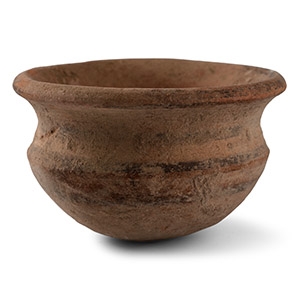
Greek Terracotta Cup
5th-3rd century B.C.Sold for (Inc. bp): £98
Squat in profile with carinated shoulder and everted rim, rounded underside. 128 grams, 87 mm
From an English collection formed in the 1990s. Ex property of an Essex gentleman. From the property of a late Lincolnshire, UK, gentleman. -
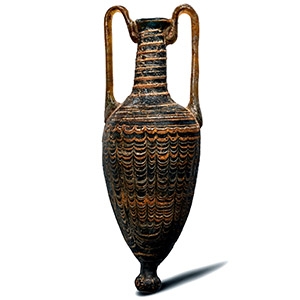
Greek Core-Formed Glass Amphoriskos
5th-3rd century B.C.Estimate: £2,500 - 3,500 (+bp*)
Opening Bid: £1,200
Elongated piriform amphora shape, tubular neck and everted rim, decorated with polychrome festooning and trails, applied amber-green handles and knop foot. 152 grams, 18 cm high
Acquired early 1990s. Ex private American collection; thence by descent. Private collection since 1998. This lot has been checked against the Interpol Database of stolen works of art and is accompanied by search certificate number no.12206-222129.
