
Loading, please wait...
LOT 0606
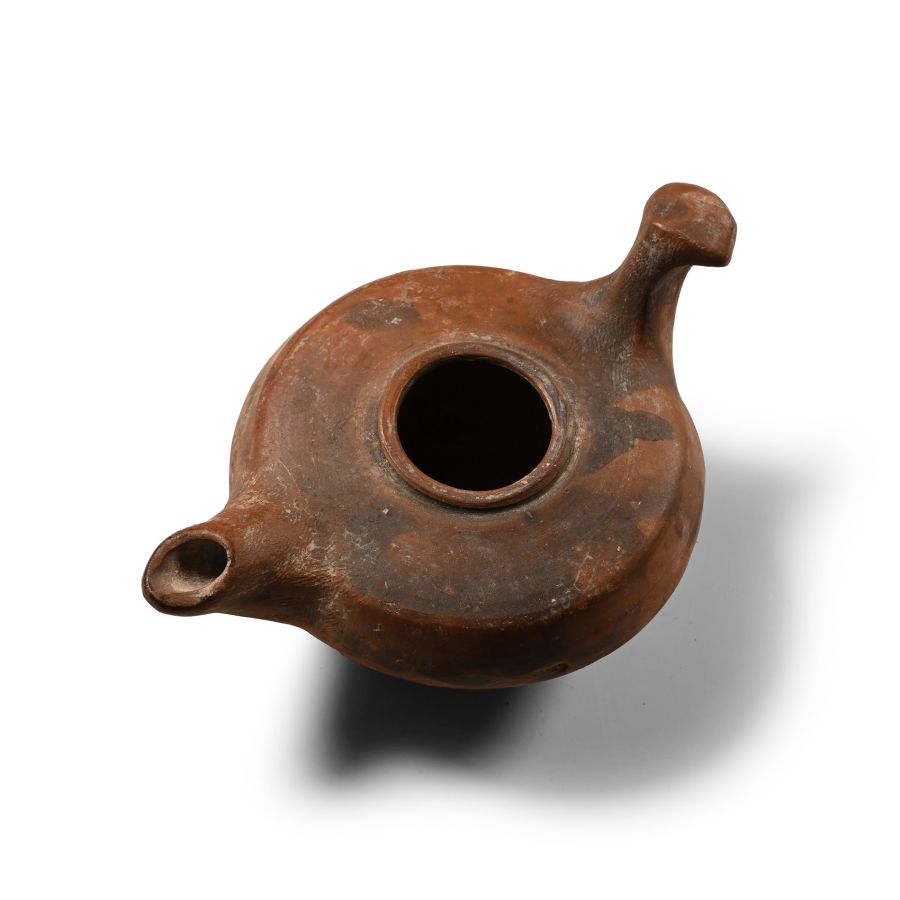
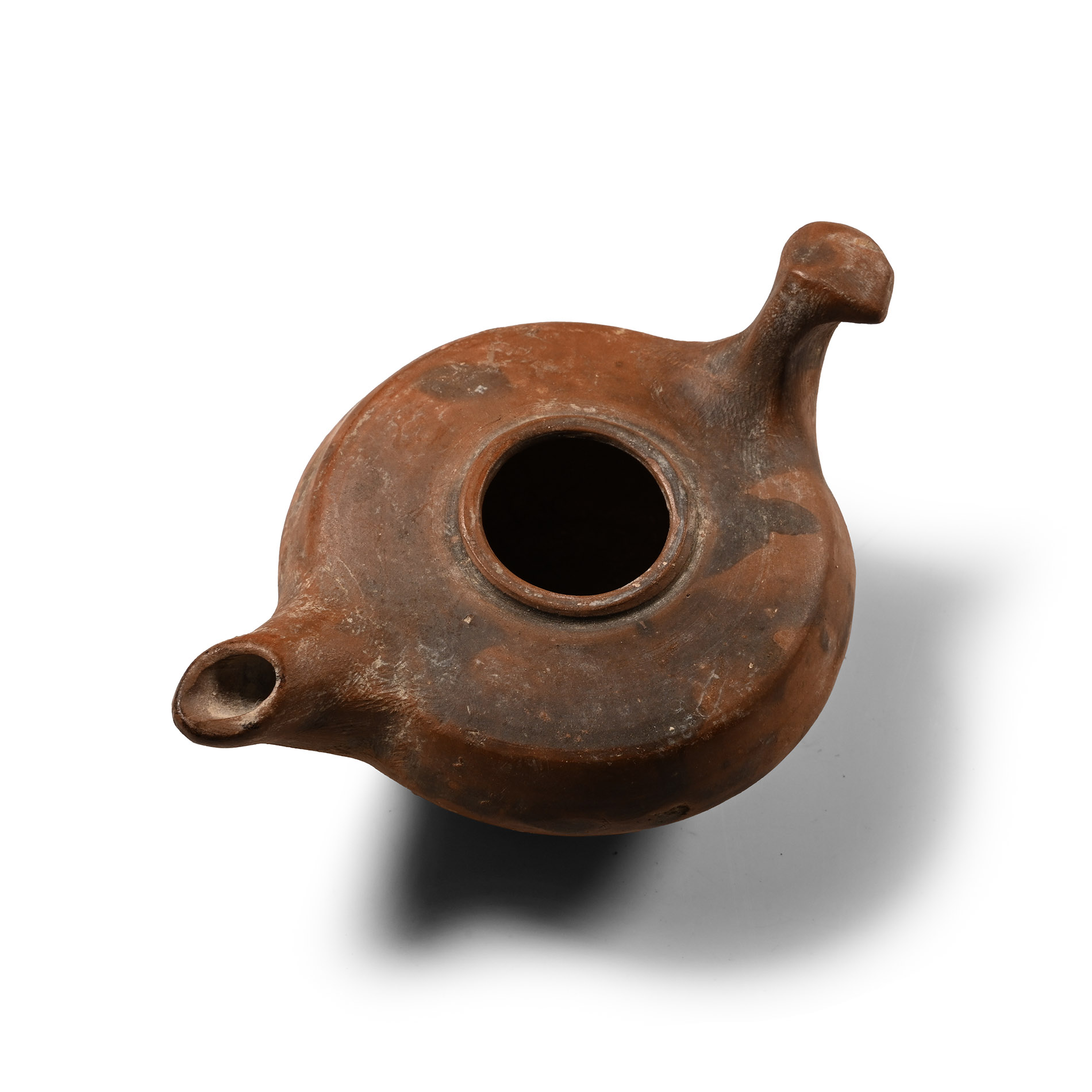
Hellenistic Terracotta Oil Lamp
CIRCA 300 B.C.
4 in. (57 grams, 10 cm).
Dark maroon in colour with black strokes; broad shoulder with raised rim to the central vent, squat nozzle, lobe handle to the rear; accompanied by a certificate of authenticity issued by Ancient Art at Fortnum & Mason stating 'Hellenistic Greek terracotta oil lamp with unusual knopped handle, dating to c. 300 Bc. Formerly in the collection of the German royal family.' [No Reserve]
ProvenanceEx Ancient Art at Fortnum & Mason, London, UK.
Acquired 2005.
From the private collection of Ms Tucker, London, UK.
Accompanied by the original Fortnum & Mason certificate of authenticity and Ancient Art invoice dated 6 December 2005.
TimeLine Auctions follows a vetting process to ensure the authenticity and legality of all items, reinforcing our commitment to integrity and responsible trading. Each antiquity, antique, and coin lot undergoes thorough examination by a vetting committee of at least ten external specialists, professional trade association members, scientists, and archaeologists: Our Vetting Process
AUCTIONS:
TimeLine is a leading auction house specialising in antiquities, ancient art, collectables, natural history, coins, medals, and books. Our auctions offer museums, collectors, historians, and enthusiasts the opportunity to acquire unique and historically significant pieces.
-
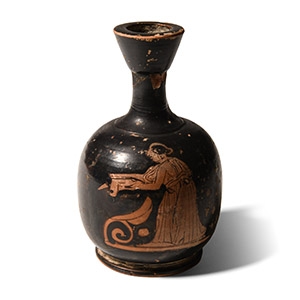
Greek Red-Figure Lekythos
5th century B.C.Estimate: £1,000 - 1,400 (‡+bp*)
Opening Bid: £540
Of ovoid form with trumpet-shaped spout and strap handle, reserved image of a lady wearing a large himation, on a baseline with scrolled foliage. 106 grams, 11 cm
Ex German collection, 1970. with Galerie Chenel, Paris, 22 July 2008.
The word lekythos had a wide meaning in ancient Greece, probably generally meaning all oil jugs, including the athletes' oil bottle (now called aryballos) as well as the types now given this name by archaeologists. Certain lekythoi resemble certain oenochoe superficially, at a first glance. Oenochoes, however, were wine-pitchers and in most cases were larger than the lekythoi, which were small jugs for oil, perfumes, etc. -
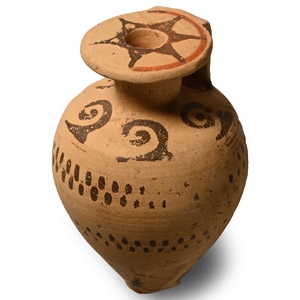
Greek Corinthian Terracotta Piriform Aryballos
Circa 600-550 B.C.Sold for (Inc. bp): £156
Bulbous vessel with narrow neck, broad rim to the mouth and short strap handle to the rear; circumferential rings of pellets and horizontal bands to the body, rosette to the rim, wave pattern to the shoulder; foot absent. 36 grams, 61 mm
Ex H. Norry collection, 1980s-1990s.
From the 8th century B.C. Corinthian pottery vessels were exported to Greek colonies in South Italy and the coast of Asia Minor. They were used to hold perfumed oil, an essential item for the wealthy middle classes of the time. In Italy, especially in Etruria, local workshops produced imitations of Corinthian vessel types for a clientele of Greek settlers and local populations with a taste for Greek fashions. -
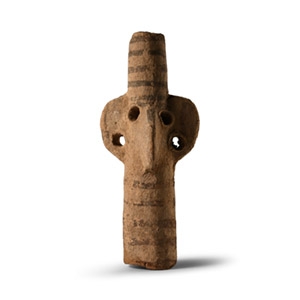
Cypriot Terracotta Tubular Idol Head
Middle Bronze Age, circa 2000-1650 B.C.Sold for (Inc. bp): £182
Columnar in form with lateral lugs pierced at the lower edge and impressed eyes; painted ings above and below; with old inked label to verso: '215'. 21.4 grams, 76 mm
From a collection acquired on the UK art market from various auction houses and collections mostly before 2000. From an important Cambridgeshire estate; thence by descent.
