
Loading, please wait...
LOT 0644
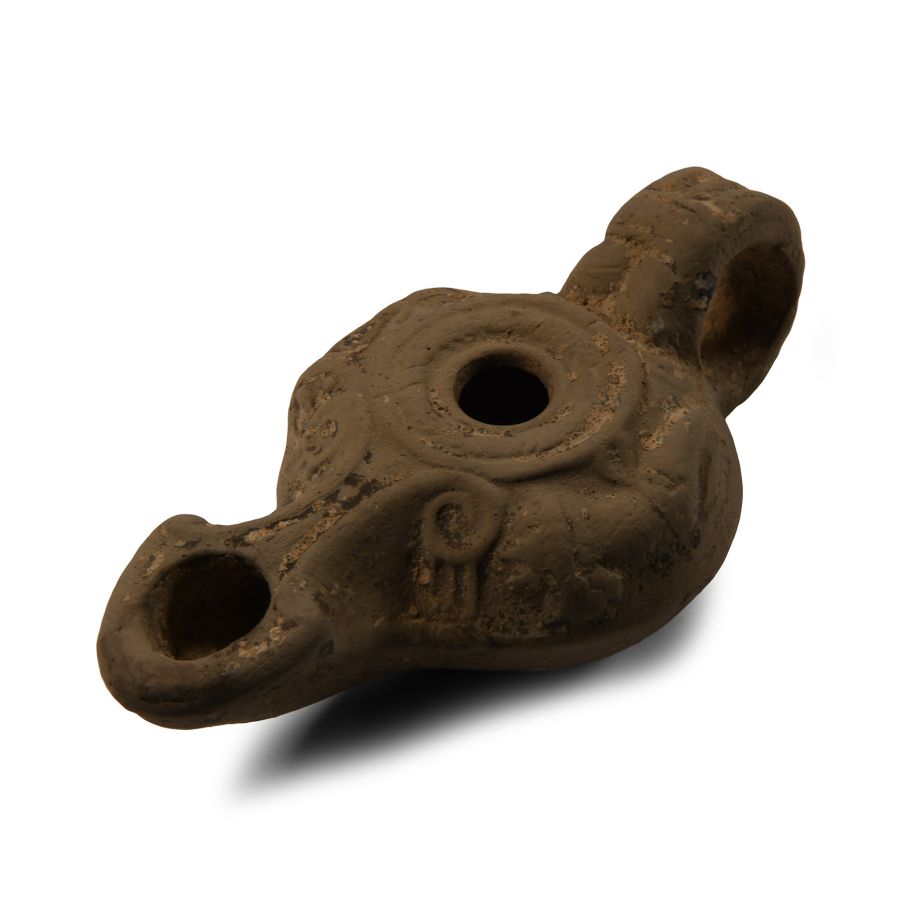
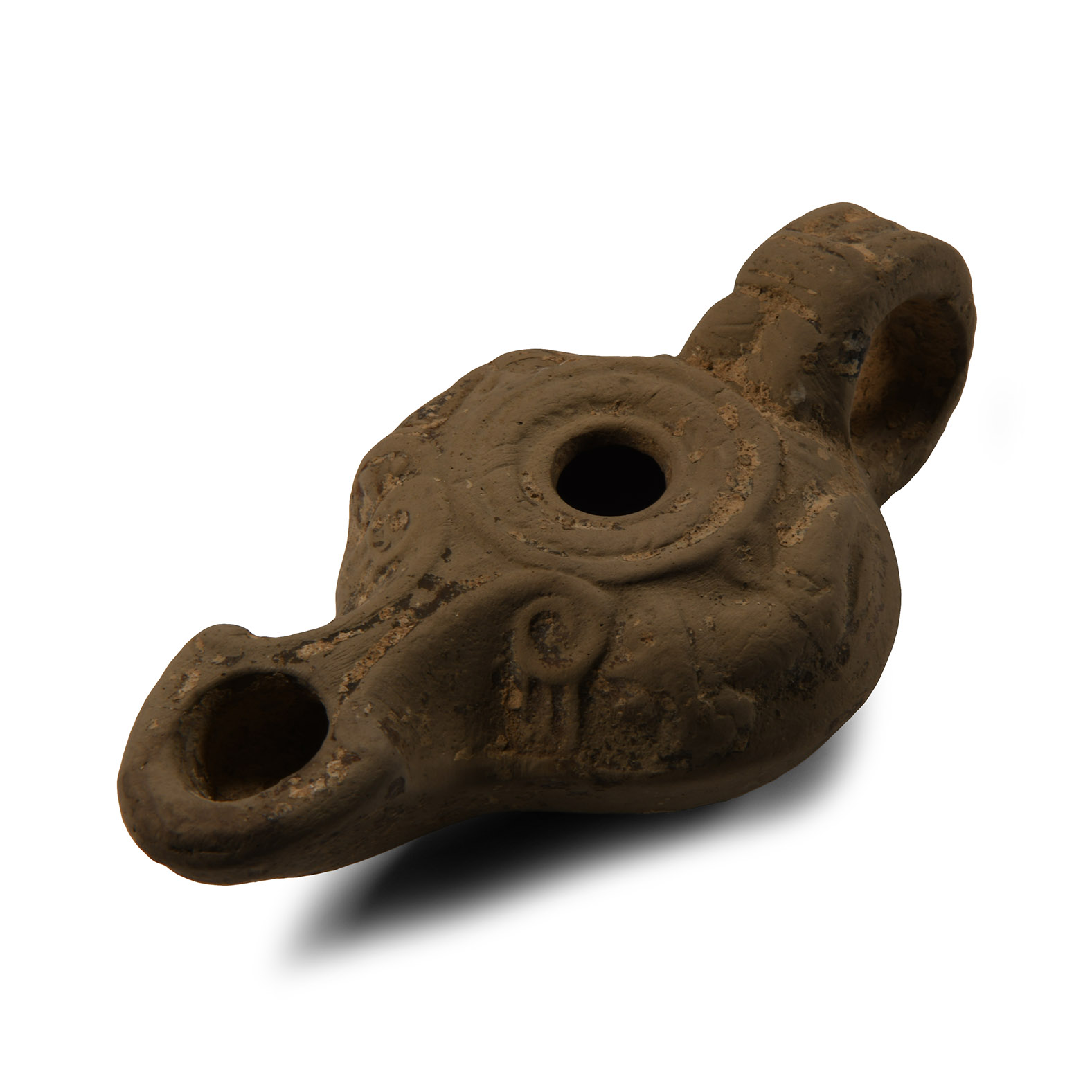
Hellenistic Terracotta Oil Lamp with Cornucopiae
2ND-1ST CENTURY B.C.
4 1/4 in. (62 grams, 10.5 cm).
With circular body and raised rim, round central filling-hole flanked by cornucopiae; long broad nozzle with rounded spout-like termination; handle with three ribs.
ProvenanceCollected from 1970-1999.
From the collection of the late Mr S.M., London, UK.
Cf. Walters, H.B., Catalogue of the Greek and Roman lamps in the British Museum, London, 1914, fig.333, for the type.
FootnotesThe principal parts of a Graeco-Roman lamp were: a) the body or reservoir which contained the oil (infundibulum); the flat circular top (discus) on which the design was placed, sometimes with an ornamental rim; the edge (margo); the nozzle (rostrum, nasus, myxus) with a hole for the insertion of the wick (ellychnium); and the handle (ansa, manubrium,).
CONDITIONTimeLine Auctions follows a vetting process to ensure the authenticity and legality of all items, reinforcing our commitment to integrity and responsible trading. Each antiquity, antique, and coin lot undergoes thorough examination by a vetting committee of at least ten external specialists, professional trade association members, scientists, and archaeologists: Our Vetting Process
AUCTIONS:
TimeLine is a leading auction house specialising in antiquities, ancient art, collectables, natural history, coins, medals, and books. Our auctions offer museums, collectors, historians, and enthusiasts the opportunity to acquire unique and historically significant pieces.
LOT 0644
Hellenistic Terracotta Oil Lamp with Cornucopiae
Estimate £180 - 240€210 - 280 (for guidance only)$240 - 320 (for guidance only)
-
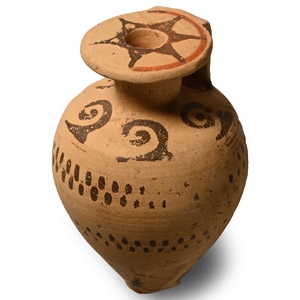
Greek Corinthian Terracotta Piriform Aryballos
Circa 600-550 B.C.Sold for (Inc. bp): £156
Bulbous vessel with narrow neck, broad rim to the mouth and short strap handle to the rear; circumferential rings of pellets and horizontal bands to the body, rosette to the rim, wave pattern to the shoulder; foot absent. 36 grams, 61 mm
Ex H. Norry collection, 1980s-1990s.
From the 8th century B.C. Corinthian pottery vessels were exported to Greek colonies in South Italy and the coast of Asia Minor. They were used to hold perfumed oil, an essential item for the wealthy middle classes of the time. In Italy, especially in Etruria, local workshops produced imitations of Corinthian vessel types for a clientele of Greek settlers and local populations with a taste for Greek fashions. -
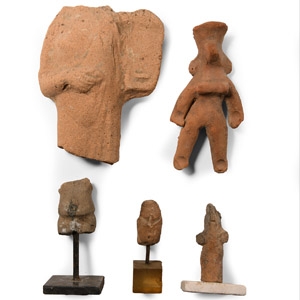
Cypriot Terracotta Idol Group
1st millennium B.C.Sold for (Inc. bp): £234
Including female bodies and body parts, some mounted. 581 grams total, 7.7-12.3 cm
From a collection acquired on the UK art market from various auction houses and collections mostly before 2000. From an important Cambridgeshire estate; thence by descent. -
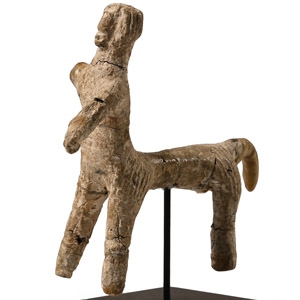
Greek Lead Centaur Statuette
Archaic, circa 6th century B.C.Sold for (Inc. bp): £715
Modelled in the round with fur texture detailing to the rump and forelegs; repaired; mounted on a custom-made stand. 314 grams, 11.2 cm high including stand
From a collection acquired on the UK art market from various auction houses and collections mostly before 2000. From an important Cambridgeshire estate; thence by descent.
