
Loading, please wait...
LOT 0070
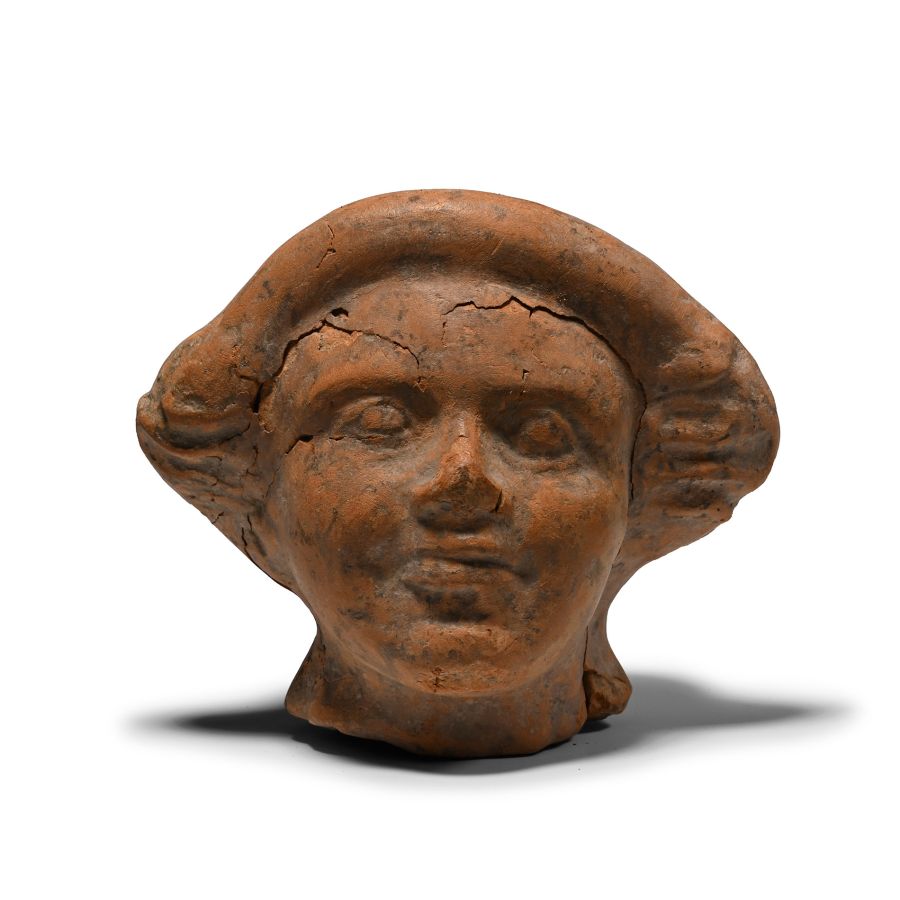
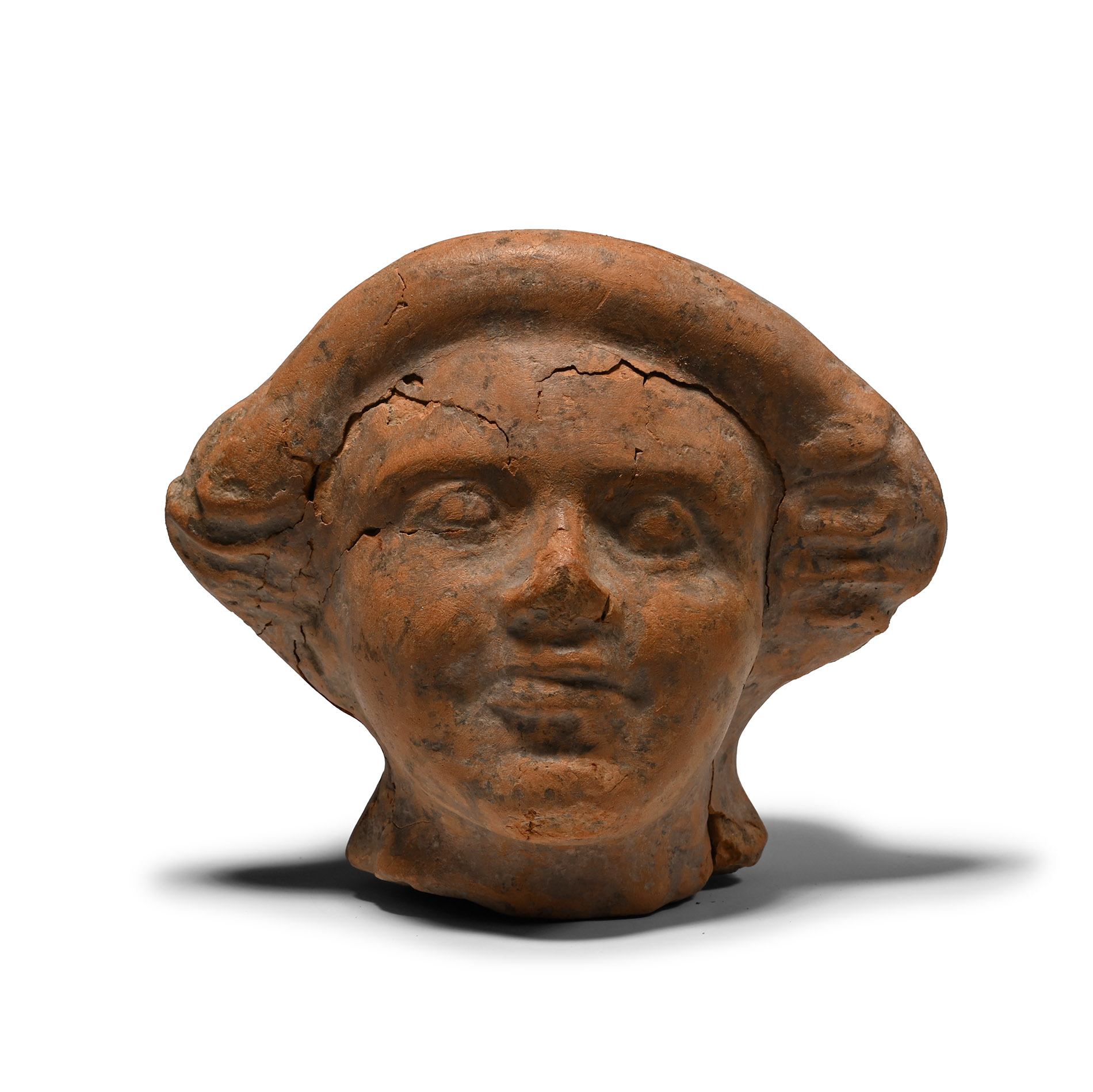
Hellenistic Terracotta Head of a Woman
3RD-1ST CENTURY B.C.
4 3/4 in. (499 grams, 12.3 cm wide).
Hollow-formed with flared neck, moulded face with shallow lentoid eyes, snub nose and wide mouth with enigmatic smile; band of hair framing the face.
ProvenanceAcquired in the mid 1980s-1990s.
Private collection, Switzerland, thence by descent.
Private collection, since the late 1990s.
Cf. similar in Metropolitan Museum of Art under accession no.23.160.95, for type.
CONDITIONTimeLine Auctions follows a vetting process to ensure the authenticity and legality of all items, reinforcing our commitment to integrity and responsible trading. Each antiquity, antique, and coin lot undergoes thorough examination by a vetting committee of at least ten external specialists, professional trade association members, scientists, and archaeologists: Our Vetting Process
AUCTIONS:
TimeLine is a leading auction house specialising in antiquities, ancient art, collectables, natural history, coins, medals, and books. Our auctions offer museums, collectors, historians, and enthusiasts the opportunity to acquire unique and historically significant pieces.
LOT 0070
Hellenistic Terracotta Head of a Woman
Estimate £800 - 1,000€930 - 1,160 (for guidance only)$1,080 - 1,350 (for guidance only)
-
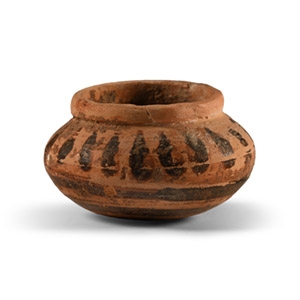
Mycenaean Miniature Painted Terracotta Bowl
Circa 13th-11th century B.C.Sold for (Inc. bp): £143
Squat jar or bowl with raised rim, painted radiating strokes to the shoulder and concentric rings to the underside. 12.8 grams, 42 mm
From a collection acquired on the UK art market from various auction houses and collections mostly before 2000. From an important Cambridgeshire estate; thence by descent. -
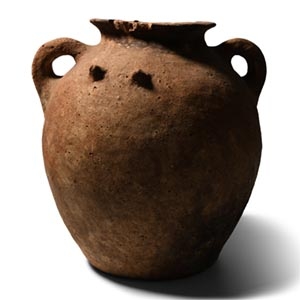
Cypriot Two-Handled Terracotta Jar
Middle Bronze Age, circa 2000-1800 B.C.Sold for (Inc. bp): £143
With barrel-shaped body, broad base, everted rim, two lateral loop handles to the shoulders and pairs of attached lugs between. 2.5 kg, 23 cm
From a collection acquired on the UK art market from various auction houses and collections mostly before 2000. From an important Cambridgeshire estate; thence by descent. -
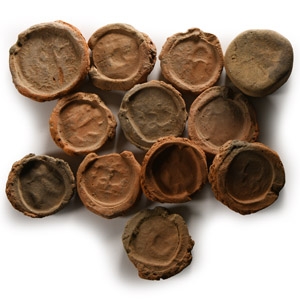
Indo-Greek Terracotta Forger's Mould Group
Circa 2nd-1st century B.C.Sold for (Inc. bp): £85
Group of discoid clay moulds for casting contemporary counterfeit coins. 57 grams total, 25-30 mm
Private collection formed in the 1990s. Acquired from a central London gallery. Property of an Essex, UK, gentleman.
