
Loading, please wait...
LOT 0533
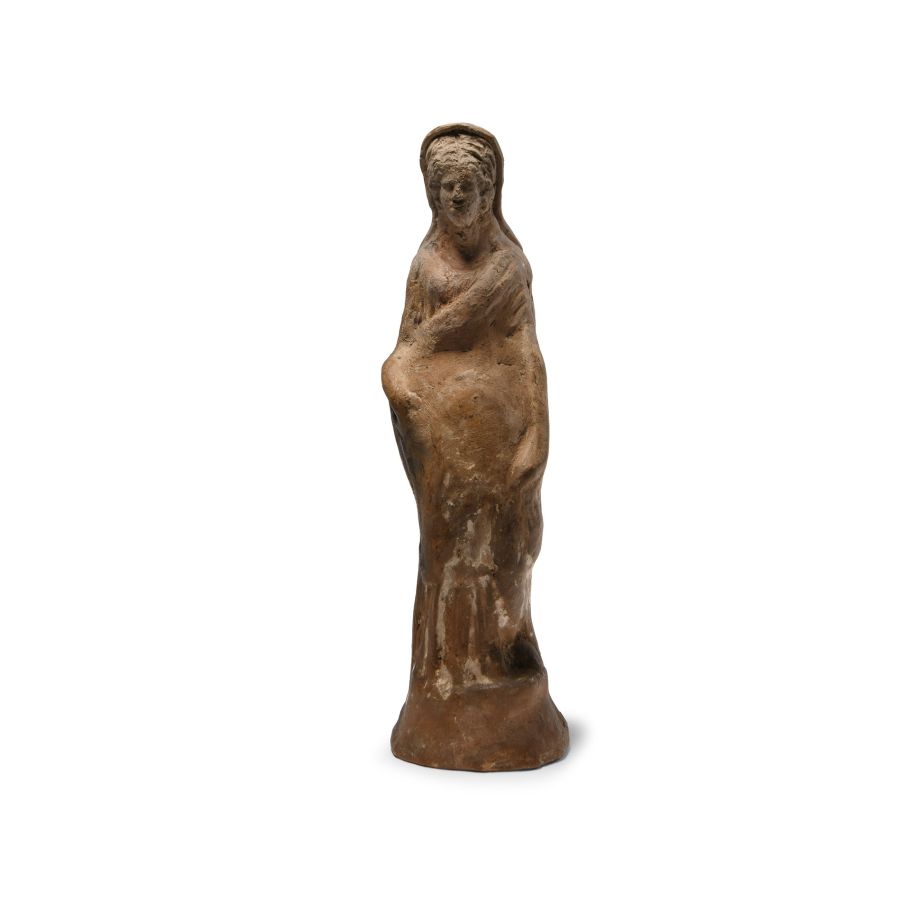
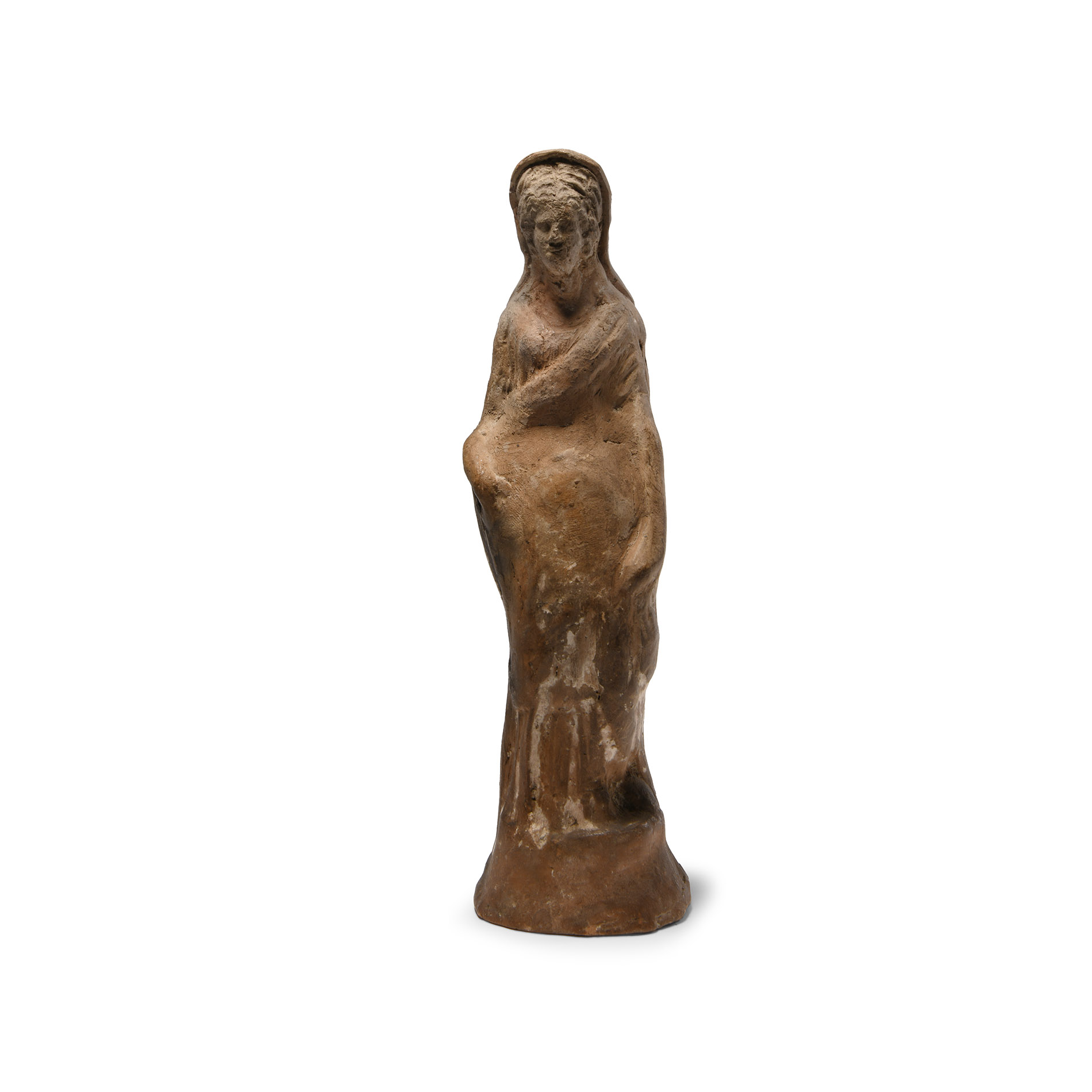
Hellenistic Terracotta Figure of a Goddess
2ND-1ST CENTURY B.C. OR LATER
7 7/8 in. (229 grams, 20 cm high).
Tanagra-type ceramic figure of a standing female wearing a himation, hands at her sides; hollow-formed with void to the reverse and to the underside; restored. [No Reserve]
ProvenanceEx North Yorkshire deceased estate, 1990s.
LiteratureSee Uhlenbrock, J.P., The Coroplast's Art: Greek Terracottas of the Hellenistic World, Exhibition catalogue, New Paltz, NY: College Art Gallery, State University of New York, 1990.
CONDITIONTimeLine Auctions follows a vetting process to ensure the authenticity and legality of all items, reinforcing our commitment to integrity and responsible trading. Each antiquity, antique, and coin lot undergoes thorough examination by a vetting committee of at least ten external specialists, professional trade association members, scientists, and archaeologists: Our Vetting Process
AUCTIONS:
TimeLine is a leading auction house specialising in antiquities, ancient art, collectables, natural history, coins, medals, and books. Our auctions offer museums, collectors, historians, and enthusiasts the opportunity to acquire unique and historically significant pieces.
-
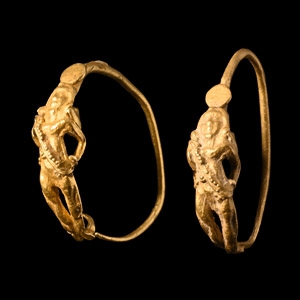
Greek Gold Eros Earrings
3rd-2nd century B.C.Sold for (Inc. bp): £546
Composed of tapering penannular hoops with figural plaque, discoid plaque above. 2.01 grams total, 18-20 mm
Acquired 1960s-1990s. Late Alison Barker collection, a retired London barrister. -
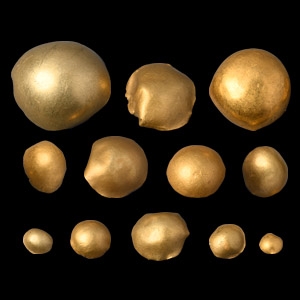
Greek Gold Domed Dress Decoration Set
Circa 3rd century B.C.Sold for (Inc. bp): £211
Comprising twelve garment fittings of various sizes, each discoid in form with one domed face and concave reverse; at least nine with loops for attachment; accompanied by a display frame. 3.01 grams total, 2-12 mm (207 grams total, 13 x 13.5 cm including case)
Fine condition.
Acquired 1970-2010. Collection of a late Japanese gentleman. -
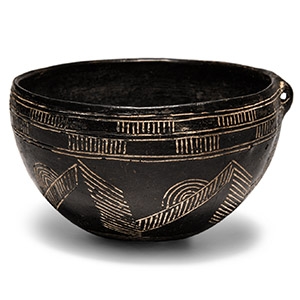
Early Cypriot Terracotta Bowl
Bronze Age, circa 2300-1650 B.C.Sold for (Inc. bp): £1,170
Hemispherical in form, black burnished finish with small loop below the rim, incised geometric bands with hatching. 163 grams, 11 cm wide
Ex private Bonn collection, acquired c.1960-1970.
