
Loading, please wait...
LOT 0525
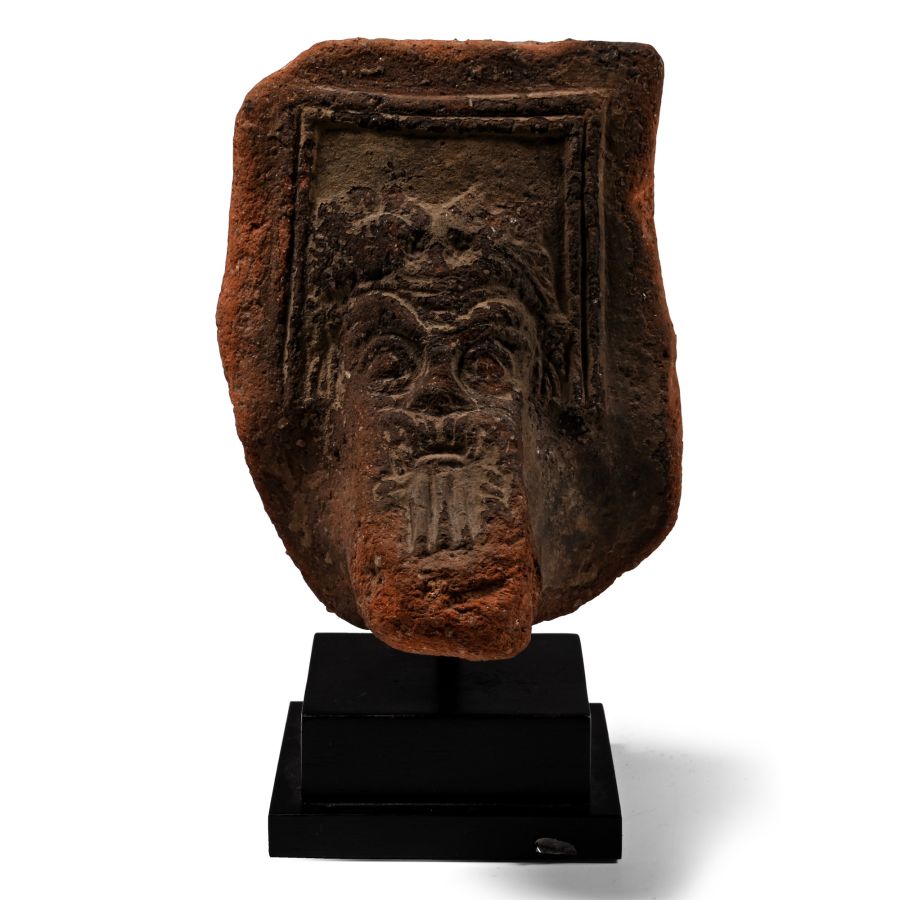
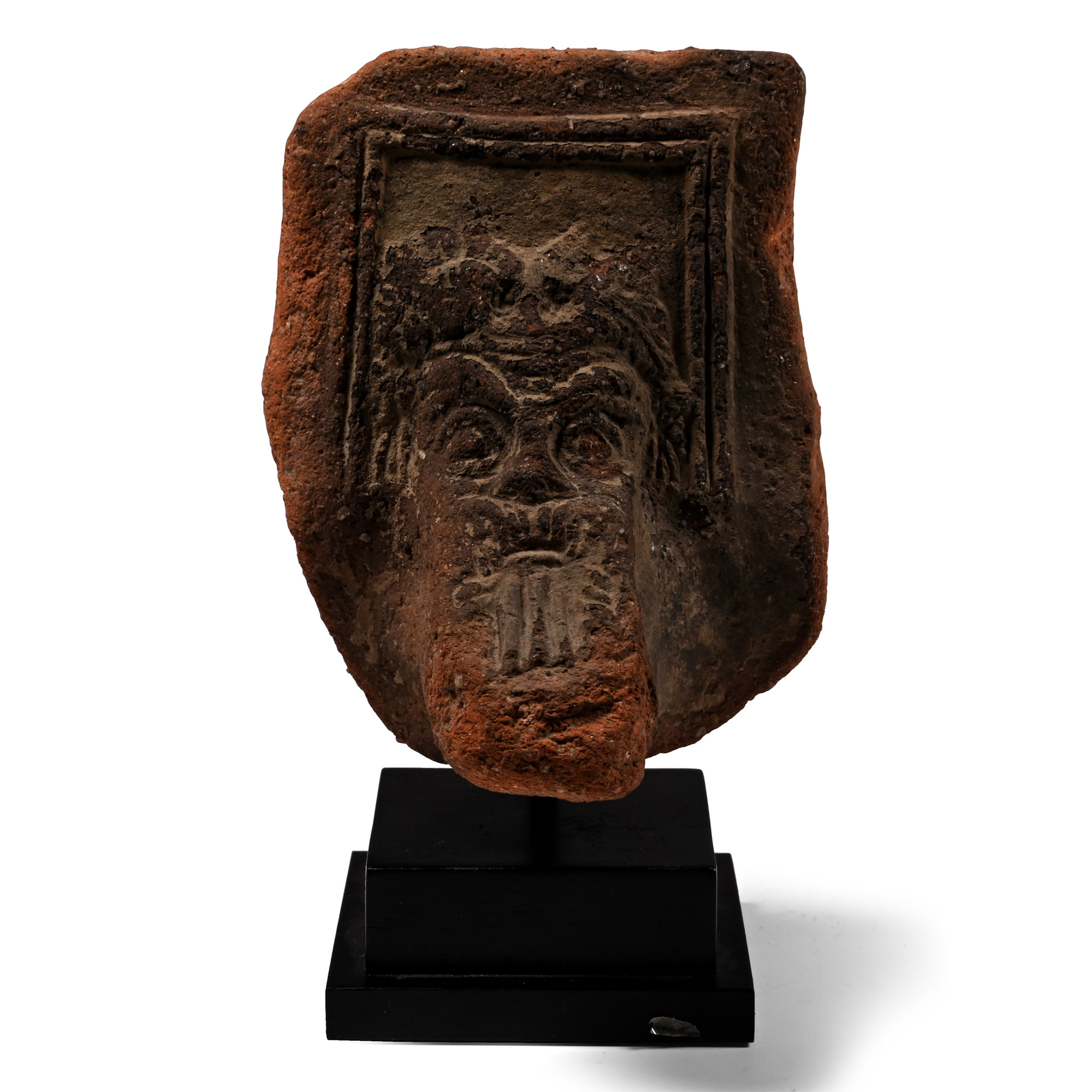
Hellenistic Terracotta Brazier Fragment with Face
3RD-1ST CENTURY B.C.
4 in. (5 3/8 in.) (319 grams, 10 cm (584 grams total, 13.8 cm including stand)).
A rectangular fragment with the head Silenus or satyr wearing an ivy crown, projecting beard, double border above the head; accompanied by a custom-made display stand.
ProvenanceFrom a private collection formed in the early 20th century.
with Gorny & Mosch, Munich, 17 December 2014, no.631.
with Galerie Rhéa, Zurich.
This lot is accompanied by an illustrated lot declaration signed by the Head of the Antiquities Department, Dr Raffaele D'Amato.
Cf. The British Museum, London, museum no.1856,0826.255, for similar.
CONDITIONTimeLine Auctions follows a vetting process to ensure the authenticity and legality of all items, reinforcing our commitment to integrity and responsible trading. Each antiquity, antique, and coin lot undergoes thorough examination by a vetting committee of at least ten external specialists, professional trade association members, scientists, and archaeologists: Our Vetting Process
AUCTIONS:
TimeLine is a leading auction house specialising in antiquities, ancient art, collectables, natural history, coins, medals, and books. Our auctions offer museums, collectors, historians, and enthusiasts the opportunity to acquire unique and historically significant pieces.
-
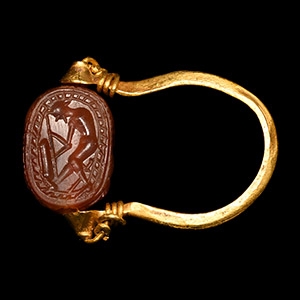
Etruscan Engraved Scarab in Gold Swivel Ring
Circa 3rd century B.C. and laterSold for (Inc. bp): £1,820
Carnelian scarab with flat underside, segmented border around a figure bent over his tools, set into a later swivel-mount with carinated hoop, wires wound round the shank at each shoulder. 10.23 grams, 35.18 mm overall, 17.75 x 23.05 mm internal diameter (approximate size British P 1/2, USA 7 3/4, Europe 16.86, Japan 16)
Acquired from a London dealer in the 1980s. From the collection of a London antiquarian, formed since the 1980s. This lot has been checked against the Interpol Database of stolen works of art and is accompanied by a search certificate number no.12745-234210. This lot has been cleared against the Art Loss Register database, and is accompanied by an illustrated lot declaration signed by the Head of the Antiquities Department, Dr Raffaele D'Amato. -
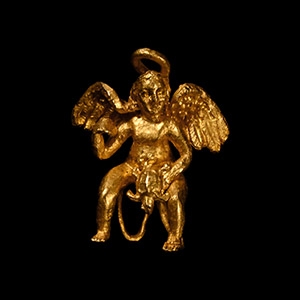
Greek Gold Eros Holding a Turtle Pendant
4th century B.C.Sold for (Inc. bp): £4,420
A delicately crafted pendant depicting a seated Eros with spread wings, holding a small turtle with his left hand and his right hand raised, feather detailing to wings and carefully modelled face with a smiling expression; a double suspension loop underneath and a single loop above; likely from an earring. 1.41 grams, 13 mm
Solothurn exhibition catalogue 1967, no.421. Notable Swiss private scholarly collection. with Galerie Rhéa, Zurich, Switzerland. This lot has been checked against the Interpol Database of stolen works of art and is accompanied by a search certificate number no.12671-236392. This lot has been cleared against the Art Loss Register database, and is accompanied by an illustrated lot declaration signed by the Head of the Antiquities Department, Dr Raffaele D'Amato. -
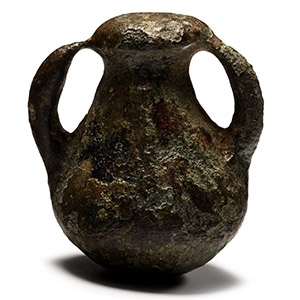
Graeco-Roman Bronze Weight
Circa 2nd century B.C-2nd century A.D.Sold for (Inc. bp): £33
Bulbous vessel with short neck and lateral handles; possibly used as a weight. 43.41 grams, 28 mm
Ex German art market, 2000s. Acquired from an EU collector living in London. From the collection of a Surrey, UK, gentleman. This lot is accompanied by an illustrated lot declaration signed by the Head of the Antiquities Department, Dr Raffaele D'Amato.
