
Loading, please wait...
LOT 0576
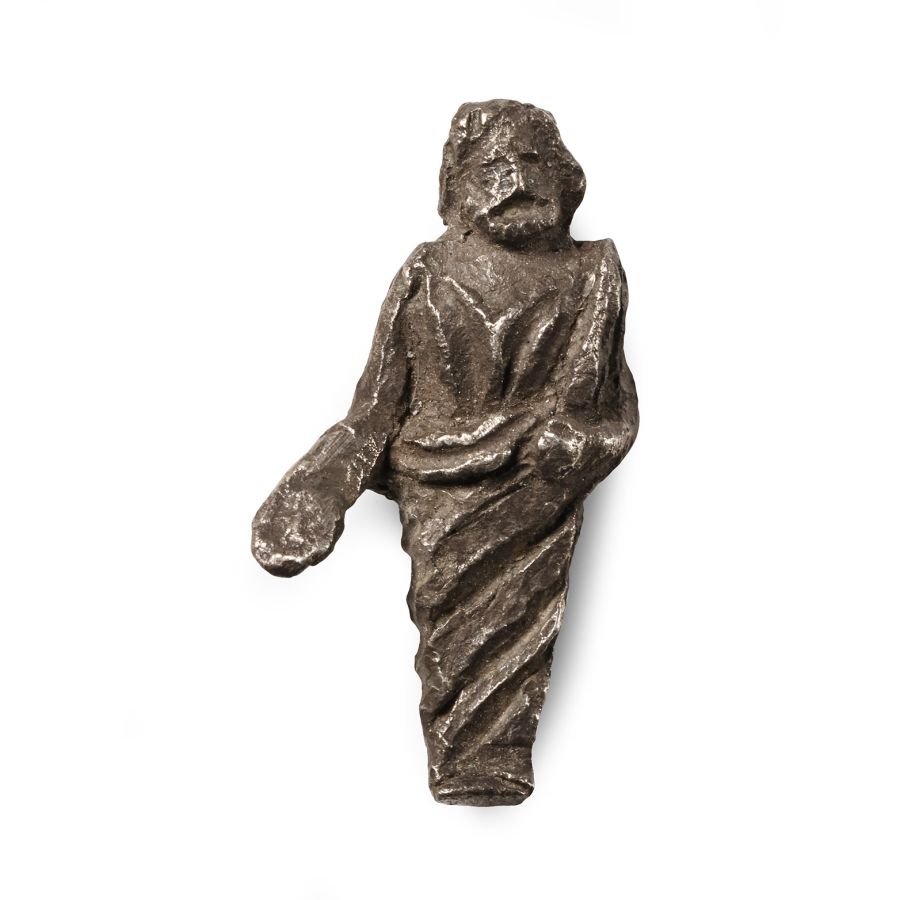
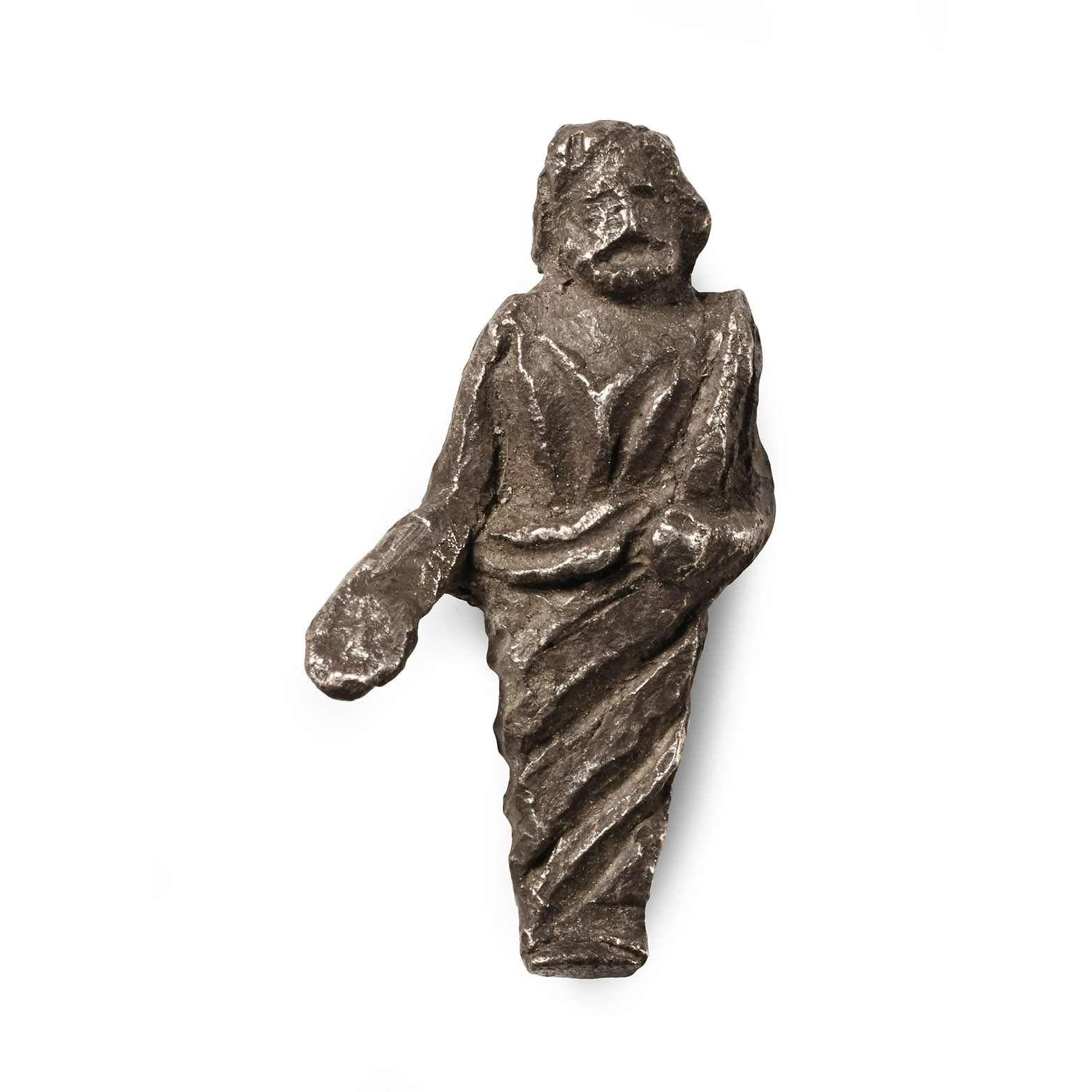
Hellenistic Silver Standing Figure
2ND-1ST CENTURY B.C.
1 in. (4.65 grams, 24 mm).
Bearded male wearing a himation held with his left hand, right hand open flat to support a patera (absent). [No Reserve]
ProvenanceAcquired 1960s-1990s.
From the late Alison Barker collection, a retired London barrister.
TimeLine Auctions follows a vetting process to ensure the authenticity and legality of all items, reinforcing our commitment to integrity and responsible trading. Each antiquity, antique, and coin lot undergoes thorough examination by a vetting committee of at least ten external specialists, professional trade association members, scientists, and archaeologists: Our Vetting Process
AUCTIONS:
TimeLine is a leading auction house specialising in antiquities, ancient art, collectables, natural history, coins, medals, and books. Our auctions offer museums, collectors, historians, and enthusiasts the opportunity to acquire unique and historically significant pieces.
-
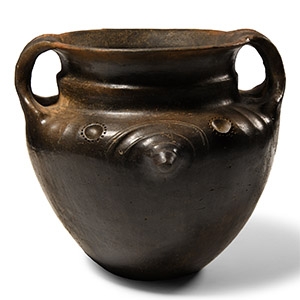
Villanovan Impasto Amphora with Anthropomorphic Decoration
Early 7th century B.C.Sold for (Inc. bp): £780
Burnished impasto amphora with lateral strap handles, everted rim, impressed dimples and other decoration to the broad shoulder; with some repairs. 948 grams, 17 cm high
Ex Galerie am Museum Jürgen Haering, Freiburg, Germany. From the collection of Dr Werner Cordes, Hagen, Germany, 1988. with Hammer Auktionen, Basel, Switzerland, sale 54, lot 121. Property of a South Australian private collector, with collection reference 21.25. Accompanied by detailed collector's catalogue pages including description and photograph. -
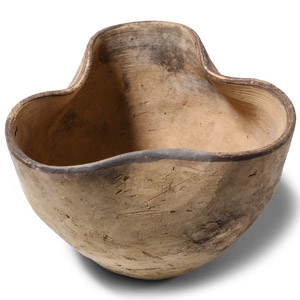
Greek Painted Terracotta Trefoil Cup
1st millennium B.C.Sold for (Inc. bp): £91
Hemispherical in profile with pinched trefoil format, applied pigment to the rounded rim. 421 grams, 14 cm wide
From a collection acquired on the UK art market from various auction houses and collections mostly before 2000. From an important Cambridgeshire estate; thence by descent.
In many ancient houses a special domestic sacrifice was offered: the remains of burned offering of a chicken or small bird were deposited on the floor of the courtyard, along with certain characteristic small vessels: shallow saucers and plates, covered dishes, wine cups and lamps. -
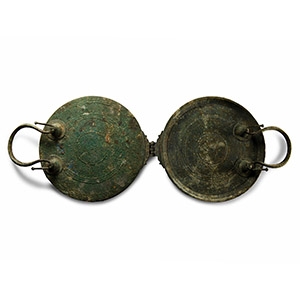
Greek Bronze Folding Travelling Mirror
Hellenistic, 2nd century B.C.Sold for (Inc. bp): £2,080
Discoid mirror with recess to obverse and reverse, each with a looped handle attached to two domed lugs, concentric rings and stepped rim; hinge to lower edge, recessed inner face to one disc and raised equivalent to the other with silvered finish. 305 grams, 12.8 cm
Acquired on the German art market, 1989-1995. with The Museum Gallery, 19 Bury Place, London, WC1A 2JB, 1998-2003. Property of a London based academic, 2003-present. This lot has been checked against the Interpol Database of stolen works of art and is accompanied by a search certificate no.12061-217502.
These kind of mirrors consisted of heavy circular discs with low cylindrical rims. They were made in pairs, and polished (and sometimes silvered) respectively on the recessed and flat sides, the latter being provided with a bevelled edge, into which the other fitted like a cover. Both polished surfaces were thus protected. The unpolished sides were ornamented with concentric-circle ornaments and concentric mouldings.
