
Loading, please wait...
_900x900.jpg "Hellenistic Silver-Gilt Bowl")
_200x200.jpg "Hellenistic Silver-Gilt Bowl")
.jpg "Hellenistic Silver-Gilt Bowl")
LOT 0097
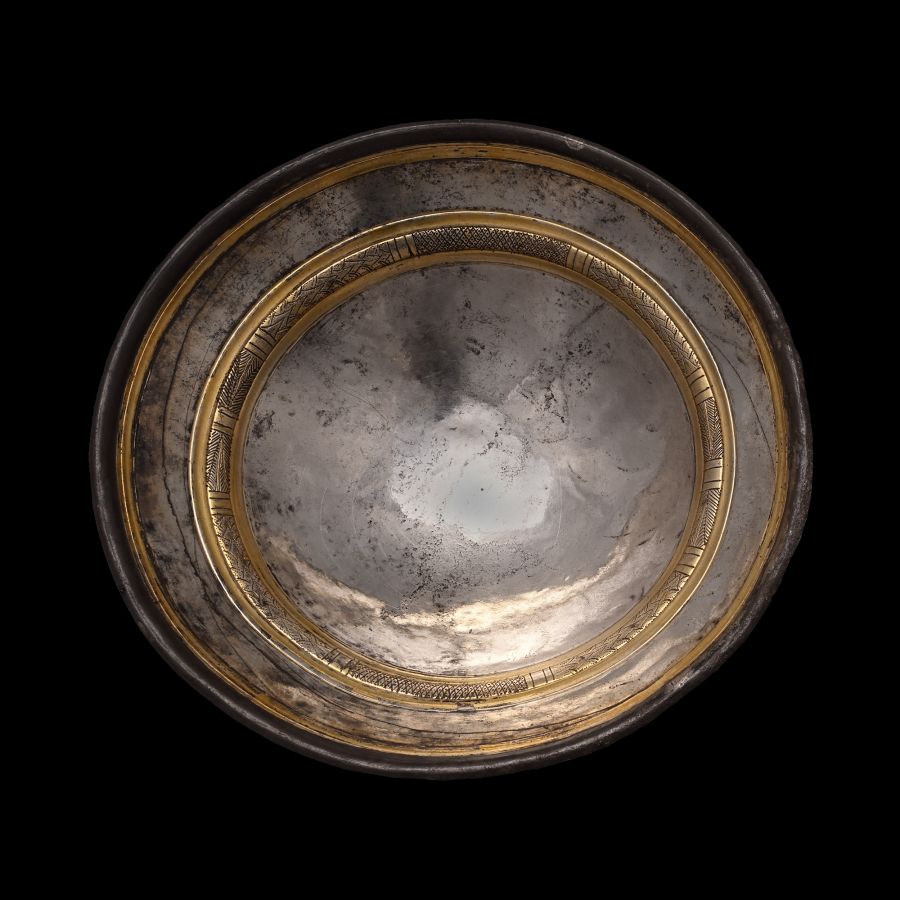
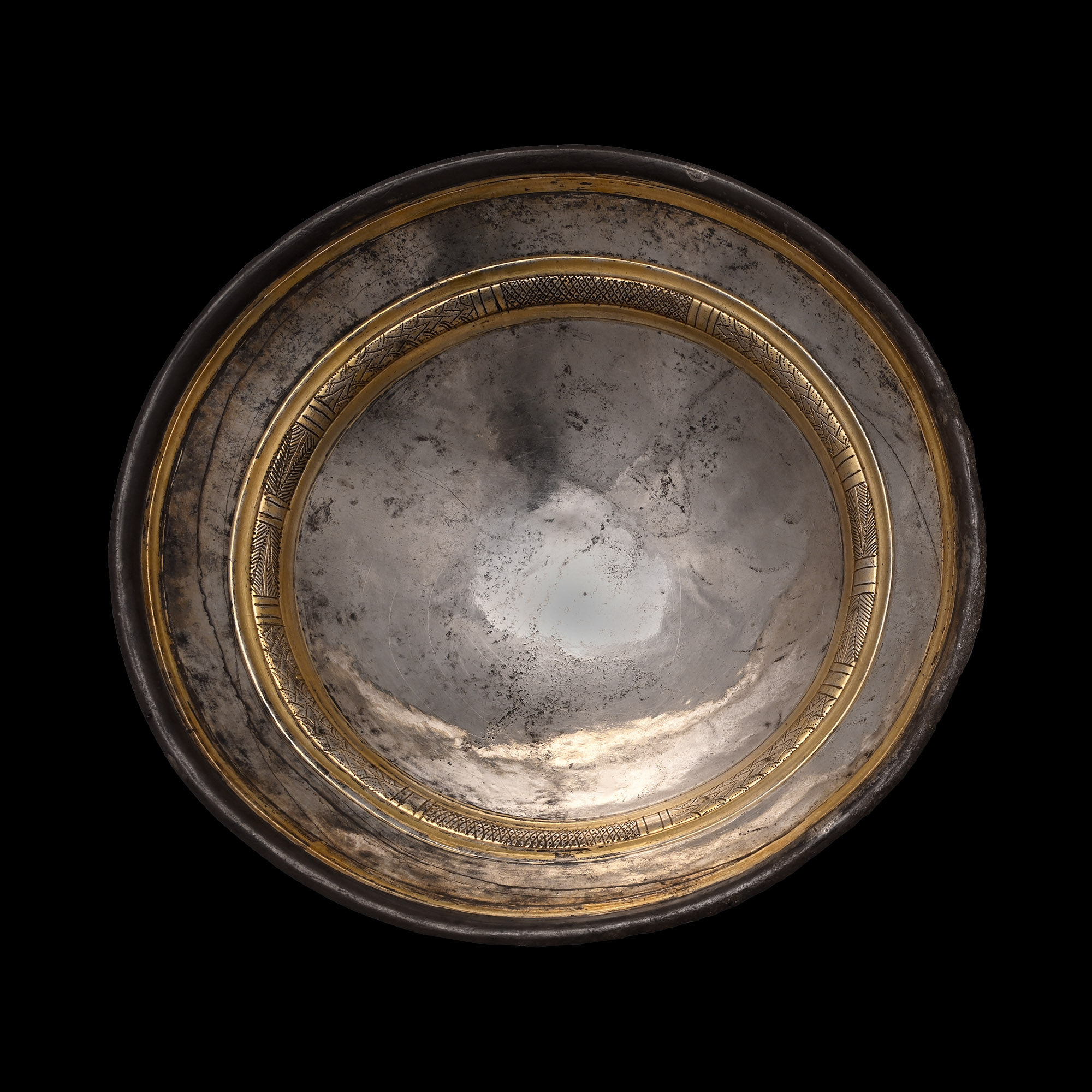
Hellenistic Silver-Gilt Bowl
2ND CENTURY B.C.
7 1/4 in. (354 grams, 18.6 cm wide).
With carinated profile, rolled rim, circumferential bands to the inner face, gilt concentric bands and hatched wreath; in a velvet-lined presentation case.
ProvenanceUK private collection before 2000.
Acquired on the UK art market.
Private collection, London.
Accompanied by an academic report by Dr Raffaele D'Amato.
This lot has been checked against the Interpol Database of stolen works of art and is accompanied by a search certificate number no.12662-236222.
This lot has been cleared against the Art Loss Register database, and is accompanied by an illustrated lot declaration signed by the Head of the Antiquities Department, Dr Raffaele D'Amato.
Cf. Strong, D.E., Greek and Roman Gold and Silver Plate, Glasgow, 1966; Hiebert, F., Cambon, P., Afghanistan, crossroads of the Ancient World, London, 2011, p.278; Ebbinghaus, S., Feasting with gods, heroes, and kings, Cambridge, 2019; Pfrommer, M., Metalwork from the Hellenized East: Catalogue of the Collections of the J. Paul Getty Museum, Malibu, 1993, pp.36ff and 140ff, for general discussion and parallels (especially fig.34, BM, inventory no.134304, and no.24, p.151).
CONDITIONTimeLine Auctions follows a vetting process to ensure the authenticity and legality of all items, reinforcing our commitment to integrity and responsible trading. Each antiquity, antique, and coin lot undergoes thorough examination by a vetting committee of at least ten external specialists, professional trade association members, scientists, and archaeologists: Our Vetting Process
AUCTIONS:
TimeLine is a leading auction house specialising in antiquities, ancient art, collectables, natural history, coins, medals, and books. Our auctions offer museums, collectors, historians, and enthusiasts the opportunity to acquire unique and historically significant pieces.
-
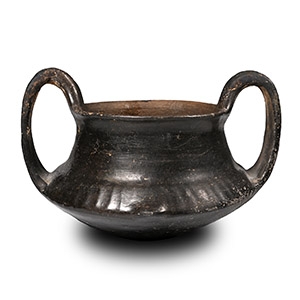
Villanovan Terracotta Two-Handled Bowl
9th-8th century B.C.Sold for (Inc. bp): £390
A squat vessel with a small base, raised neck and slightly projecting rim, carinated shoulder with two projecting bosses and a pair of high strap handles. 221 grams, 13.4 cm wide
Old Basel private collection. Elsa Bloch-Diener, Antike Kunst, Bern, 27 July 1990. Private collection, Bern, Switzerland. This lot is accompanied by an illustrated lot declaration signed by the Head of the Antiquities Department, Dr Raffaele D'Amato. -
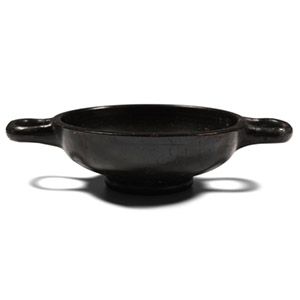
Greek Black Glazed Skyphos
South Italic, 5th-4th century B.C.Sold for (Inc. bp): £169
Comprising a broad bowl and two loop handles set below the rim, waisted foot with carinated rim. 100 grams, 15.3 cm
From a private, UK, collection in the 1980s. Property of a London, UK, antiquarian. This lot is accompanied by an illustrated lot declaration signed by the Head of the Antiquities Department, Dr Raffaele D'Amato. -
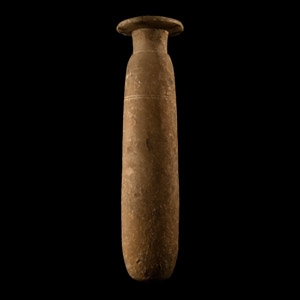
Greek Alabaster Alabastron
Circa 600 B.C.Sold for (Inc. bp): £650
With fusiform body, slender neck and broad flange rim, circumferential incised rings. 540 grams, 21 cm
Acquired in Germany, 1993. Private collection, Europe. This lot is accompanied by an illustrated lot declaration signed by the Head of the Antiquities Department, Dr Raffaele D'Amato.
