
Loading, please wait...
LOT 1377
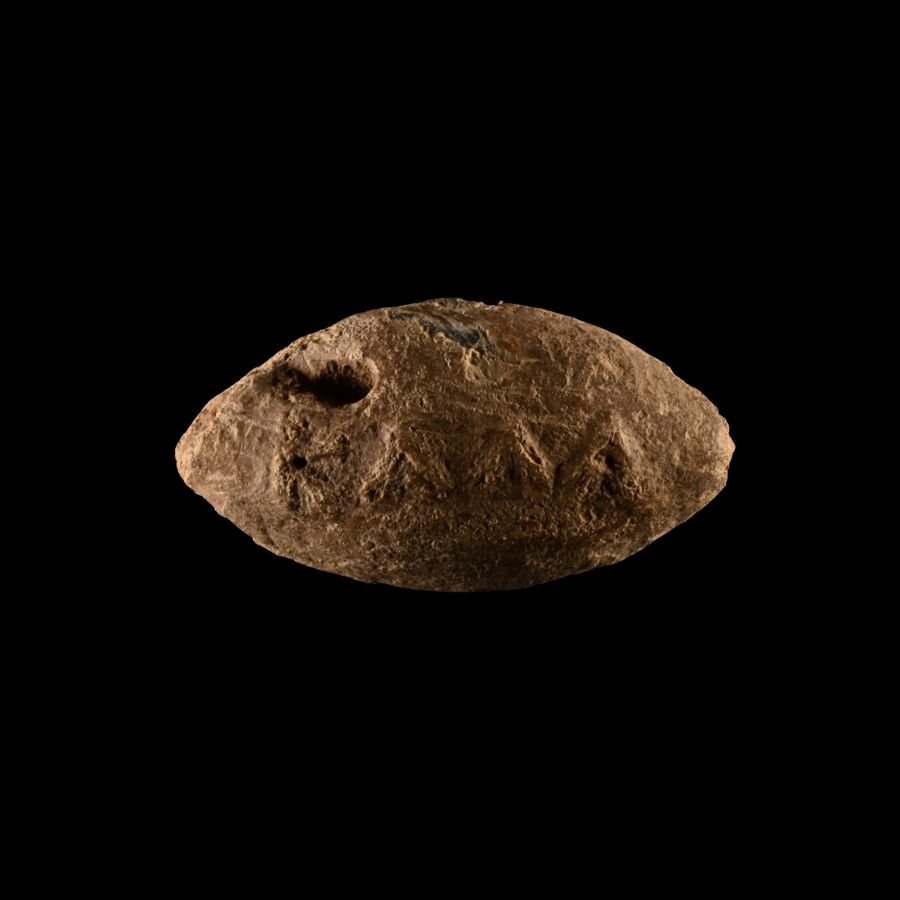
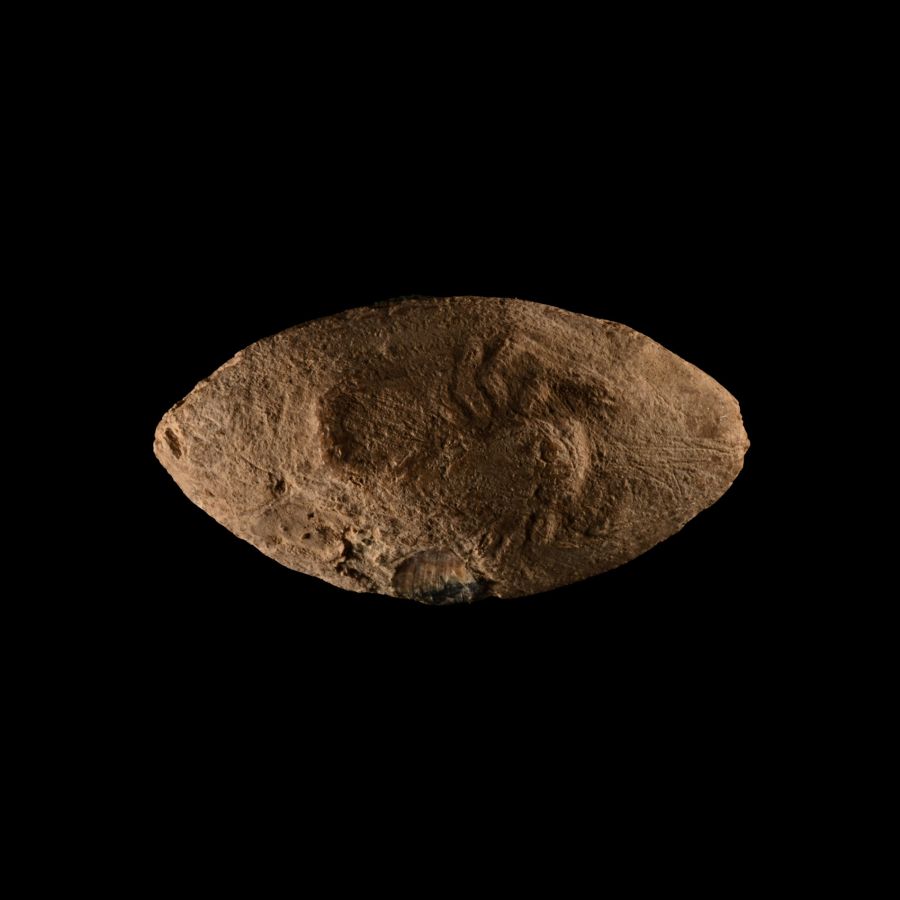
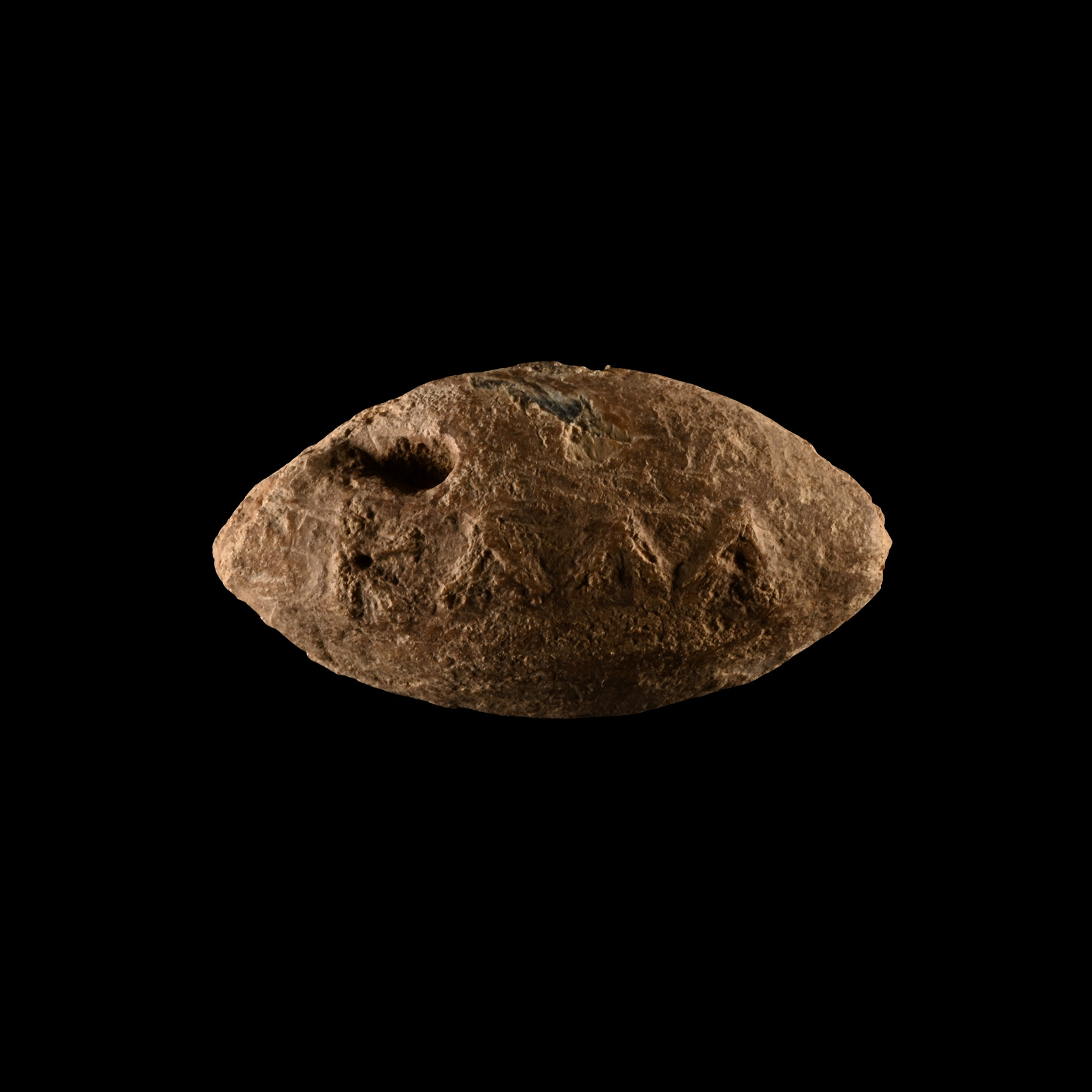
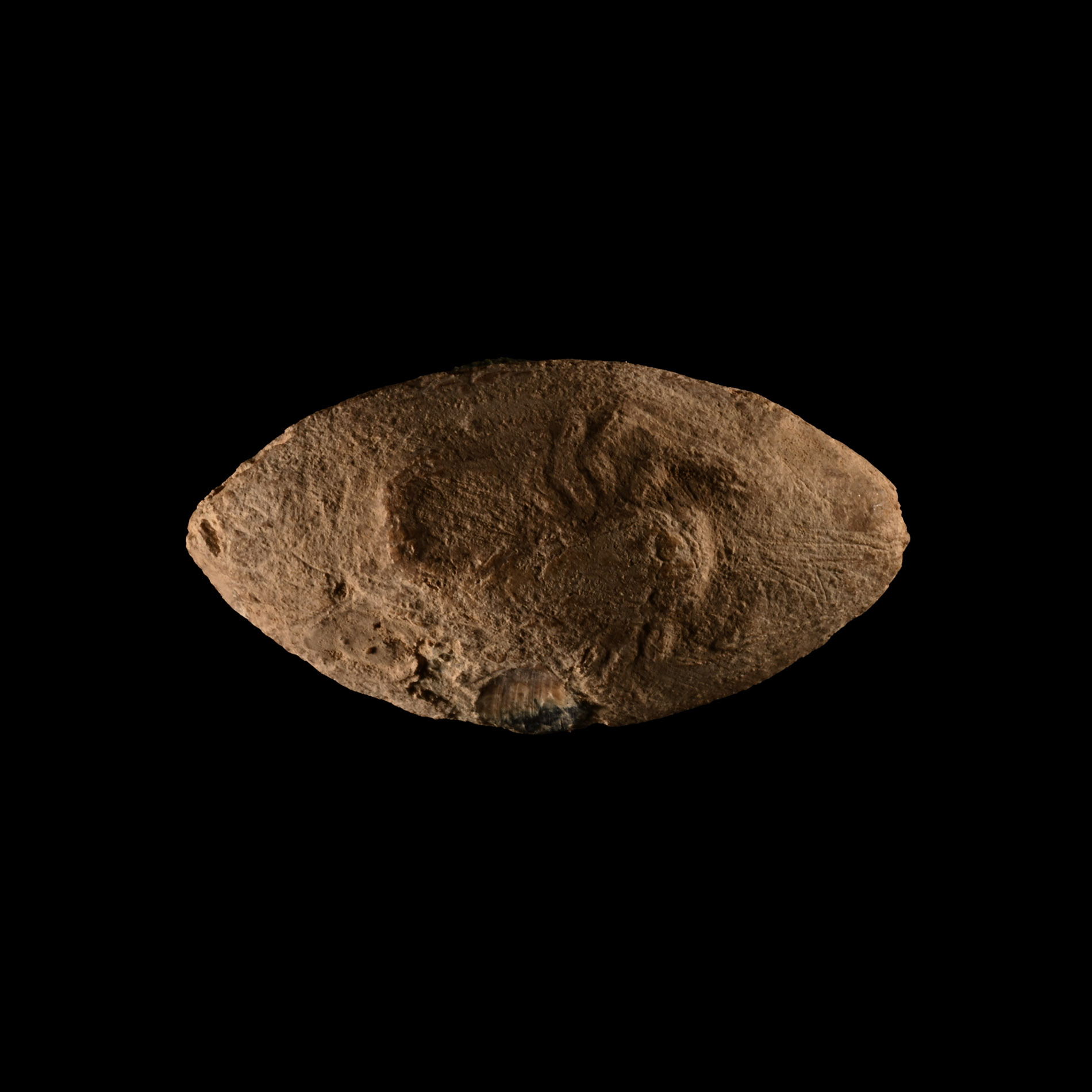
Hellenistic Rhodian Lead Slingshot with Scorpion
3RD CENTURY B.C.
1 1/4 in. (26 grams, 31 mm).
Lentoid-section and depicting a stylised scorpion to one side and inscription 'ΚΑΛΑ' on the other. [No Reserve]
ProvenanceEx Cummings collection, UK, 1990s.
LiteratureCf. Manov, M., Torbov.N., 'Inscribed Lead Sling Bullets with the name of Alexander the Great and with other names and symbols found in Thrace' in Archaeologia Bulgarica, XX, 2, pp.29-43, fig.23, for identical; Schinco, G., Small, A.M., 'A previously unknown siege of Botromagno/Silvium: the evidence of slingshots from Gravina in Puglia (Provincia di Bari, Puglia)' in Papers of the British School at Rome, 2019, pp.1-52, fig.38.
FootnotesTogether with the Balearic slingers, Rhodian slingers were considered to be the best of the Hellenistic world, and they were also used in the Roman army. The slingshots with an image of a scorpion on one side and with an inscription ΚΑΛΑ on the other are believed to originate from the Island of Rhodes. On these sling bullets ΚΑΛΑ should be translated as “nice things.” Of course, ironically, these “nice things” were designed to kill enemies and to sting like a scorpion, and the message of those with the image of a scorpion could be understood, as proposed ny M. Manov and N. Torbov, as: “nice things sting like a scorpion.”
CONDITIONTimeLine Auctions follows a vetting process to ensure the authenticity and legality of all items, reinforcing our commitment to integrity and responsible trading. Each antiquity, antique, and coin lot undergoes thorough examination by a vetting committee of at least ten external specialists, professional trade association members, scientists, and archaeologists: Our Vetting Process
AUCTIONS:
TimeLine is a leading auction house specialising in antiquities, ancient art, collectables, natural history, coins, medals, and books. Our auctions offer museums, collectors, historians, and enthusiasts the opportunity to acquire unique and historically significant pieces.
-
.jpg)
Viking Age Iron Sword with Seven-Lobed Pommel
Circa 11th century A.D.Sold for (Inc. bp): £4,160
Couronian sword of Petersen Type K with double-edged tapering blade and tapering fullers; bronze cross-guard extending at each end to serpent- or horse-heads, wheeled ornament to both faces; the lower guard with similar motifs; seven-lobed pommel with annulets and pellets. 1.02 kg, 86.5 cm
From the private collection of a London gentleman, from his grandfather's collection formed before the early 1970s. Accompanied by an academic report by Dr Raffaele D’Amato. This lot has been checked against the Interpol Database of stolen works of art and is accompanied by search certificate no.11925-209658.
Couronian swords of this type, with animal-head decoration on the lower guard, were widespread and used in the Eastern Baltic lands from the 10th to 13th century. Such zoomorphic detailing was a clear influence from Germanic art. Regular geometric ornamentation, derived from Romanesque art, was also widespread, with one of the most common ornaments being a cross-in-circle. -
North-Western Persian Type Bronze Blade
Early 1st millennium B.C.Sold for (Inc. bp): £117
With tapering triangular blade, having straight shoulders, flat midrib and tapering square-sectioned tang ending with a rounded pommel. 99 grams, 33 cm
Acquired 1980-2015. Ex Abelita family collection.
Moorey, Gordon and Khorasani created a classification of bladed weapons, according to which daggers are edged weapons not greater than 36cm in length, dirks (short swords) are between 36cm and 50cm in length, and swords are edged weapons greater than 50cm in length. -
'The Farnham Castle' English Medieval Socketted Macehead
13th-14th century A.D.Sold for (Inc. bp): £2,600
With a long tubular socket and raised circumferential ribs, three tiers of radiating spikes; found with remains of wooden haft in situ. 312 grams, 80 mm
Found near Farnham Castle, Farnham, Surrey, UK. From the private collection of a Surrey, UK, gentleman.
Maces were in use since the Bronze Age. In the Medieval Western Europe, maces are attested in England as throwing weapons at the Battle of Hastings in 1066. At the end of 12th century A.D., the mace head was made of metal and was, under the influence of Byzantium, one of the weapons of the armoured knight. Originally of round section and armed with strong pyramidal spikes, the mace head evolved into a cylindrical shape, sometimes reinforced with spikes, most often with flanges.
