
Loading, please wait...
LOT 1409
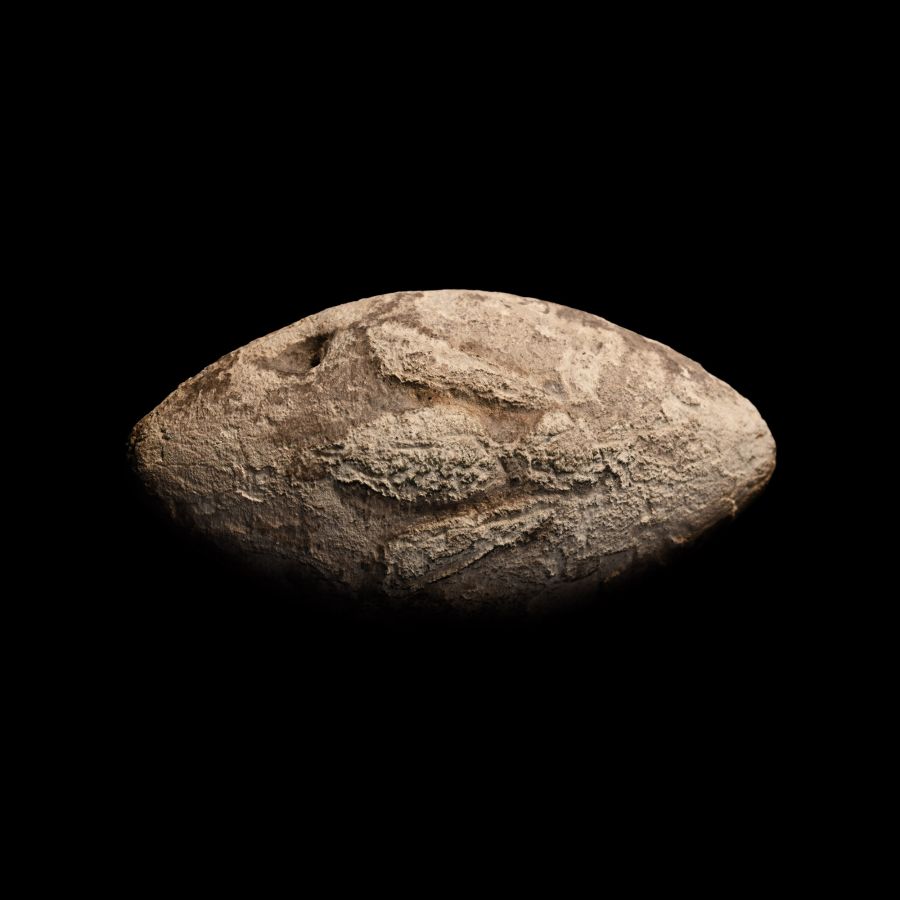
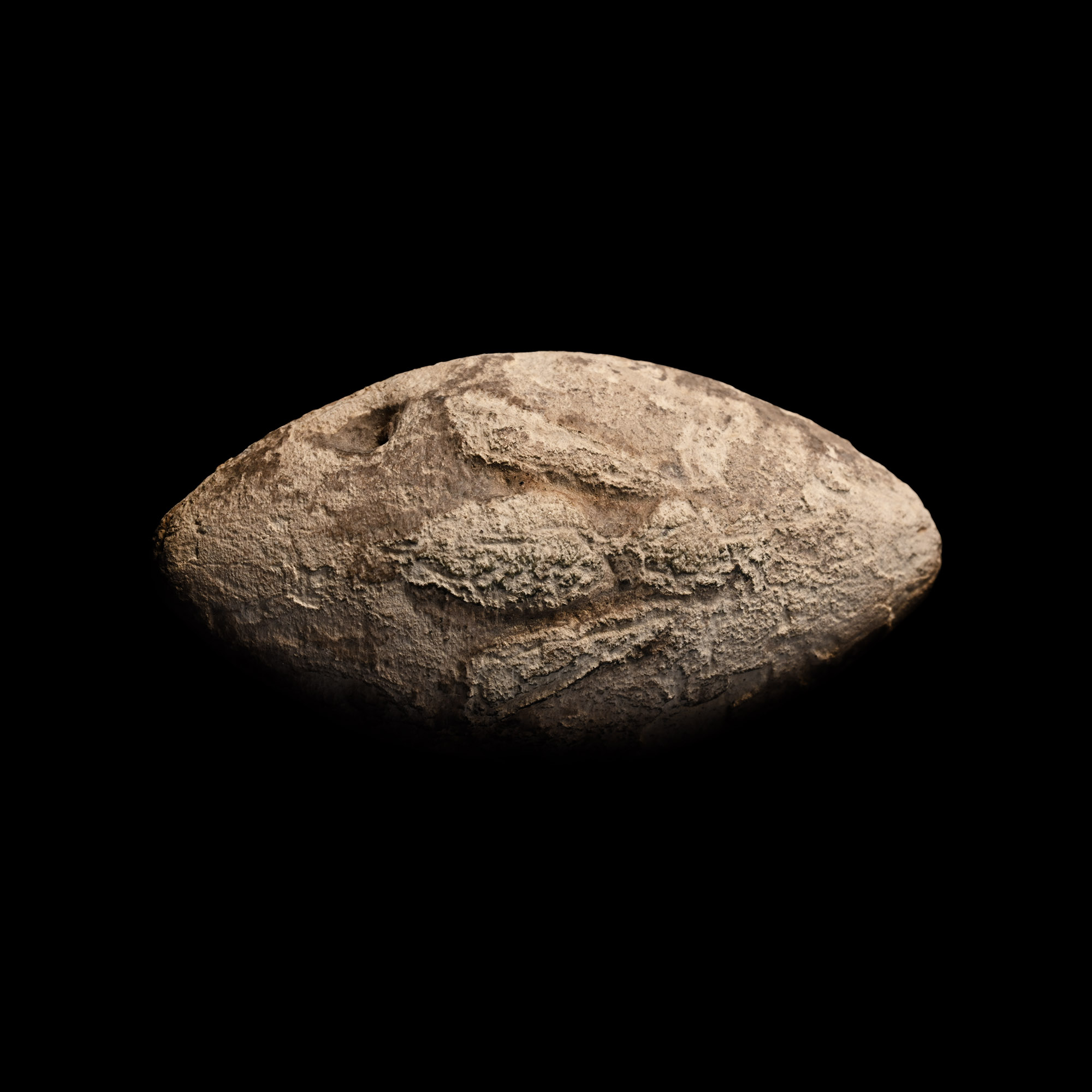
Hellenistic Rhodian Lead Slingshot with Bee
3RD CENTURY B.C.
1 1/4 in. (27.2 grams, 31 mm).
Lentoid-section and depicting a bee to one side and inscription 'ΚΑΛΑ' on the other. [No Reserve]
ProvenanceEx Norri collection, Milton Keynes, UK, 1980s-1990s.
LiteratureCf. Manov, M., Torbov.N., 'Inscribed Lead Sling Bullets with the name of Alexander the Great and with other names and symbols found in Thrace' in Archaeologia Bulgarica, XX, 2, pp.29-43, fig.23, for identical; Schinco, G., Small, A.M., 'A previously unknown siege of Botromagno/Silvium: the evidence of slingshots from Gravina in Puglia (Provincia di Bari, Puglia)' in Papers of the British School at Rome, 2019, pp.1-52, fig.38.
FootnotesThe slingshots with an inscription ΚΑΛΑ are believed to originate from the island of Rhodes. On these sling bullets ΚΑΛΑ should be translated as “nice things.” Together with the Balearic slingers, Rhodian slingers were considered to be the best of the Hellenistic world, and they were also used in the Roman army.
CONDITIONTimeLine Auctions follows a vetting process to ensure the authenticity and legality of all items, reinforcing our commitment to integrity and responsible trading. Each antiquity, antique, and coin lot undergoes thorough examination by a vetting committee of at least ten external specialists, professional trade association members, scientists, and archaeologists: Our Vetting Process
AUCTIONS:
TimeLine is a leading auction house specialising in antiquities, ancient art, collectables, natural history, coins, medals, and books. Our auctions offer museums, collectors, historians, and enthusiasts the opportunity to acquire unique and historically significant pieces.
-
Western Asiatic Sword Blade with Blood Channels
2nd-1st millennium B.C.Estimate: £300 - 400 (+bp*)
Opening Bid: £150
With corrugated raised midrib extending to a short tang, fullers with curved ends extending to the shoulders. 345 grams, 47.5 cm
Ex Abelita family collection, 1990s. -
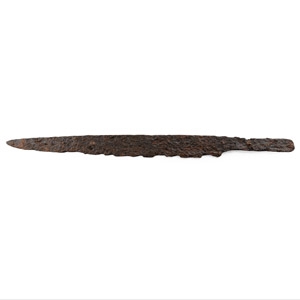
Medieval Iron Single-Edged Dagger
12th-14th century A.D.Sold for (Inc. bp): £33
With thick straight back and gently tapering cutting edge, flat tang pierced to accept rivets to attach scales. 264 grams, 42.3 cm
Acquired 1990s-early 2000s. From an East Anglian, UK, private collection. From the property of a late Lincolnshire, UK, gentleman. -
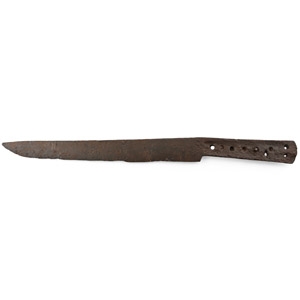
Medieval Iron Single-Edged Dagger
12th-14th century A.D.Sold for (Inc. bp): £33
With thick straight back and tapering cutting edge with swept tip, flat tang pierced for attachment of organic scales, one rivet in situ. 320 grams, 38.6 cm
Acquired 1990s-early 2000s. From an East Anglian, UK, private collection. From the property of a late Lincolnshire, UK, gentleman.
