
Loading, please wait...

LOT 0091
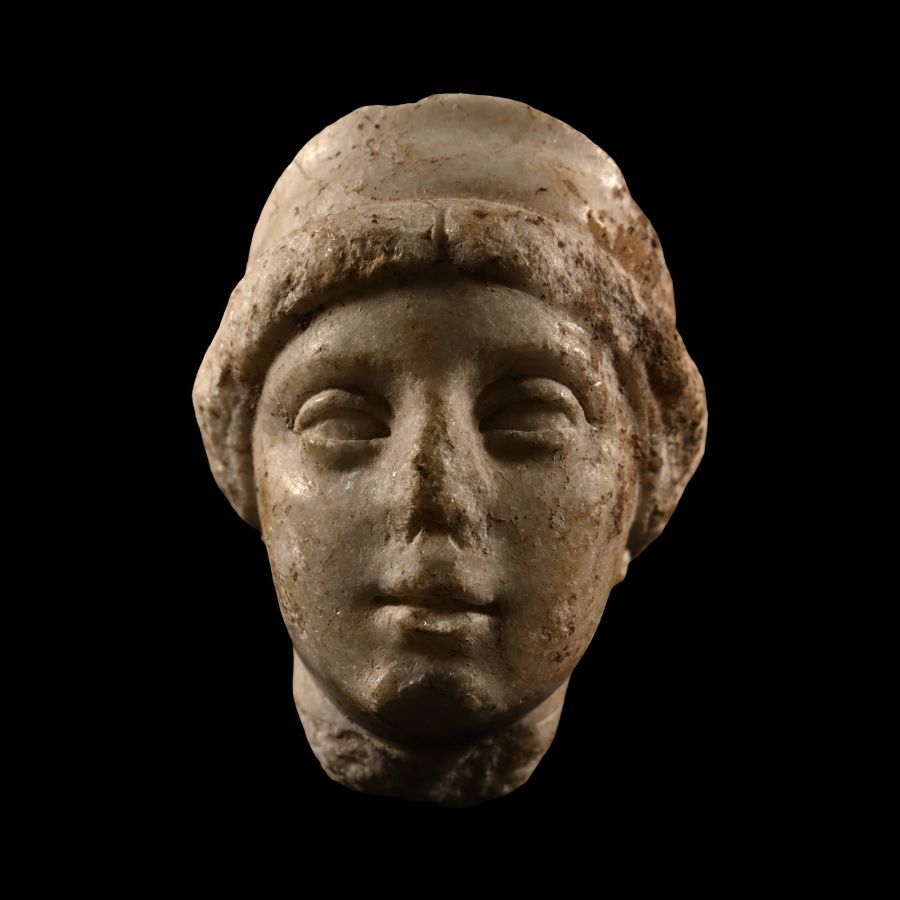
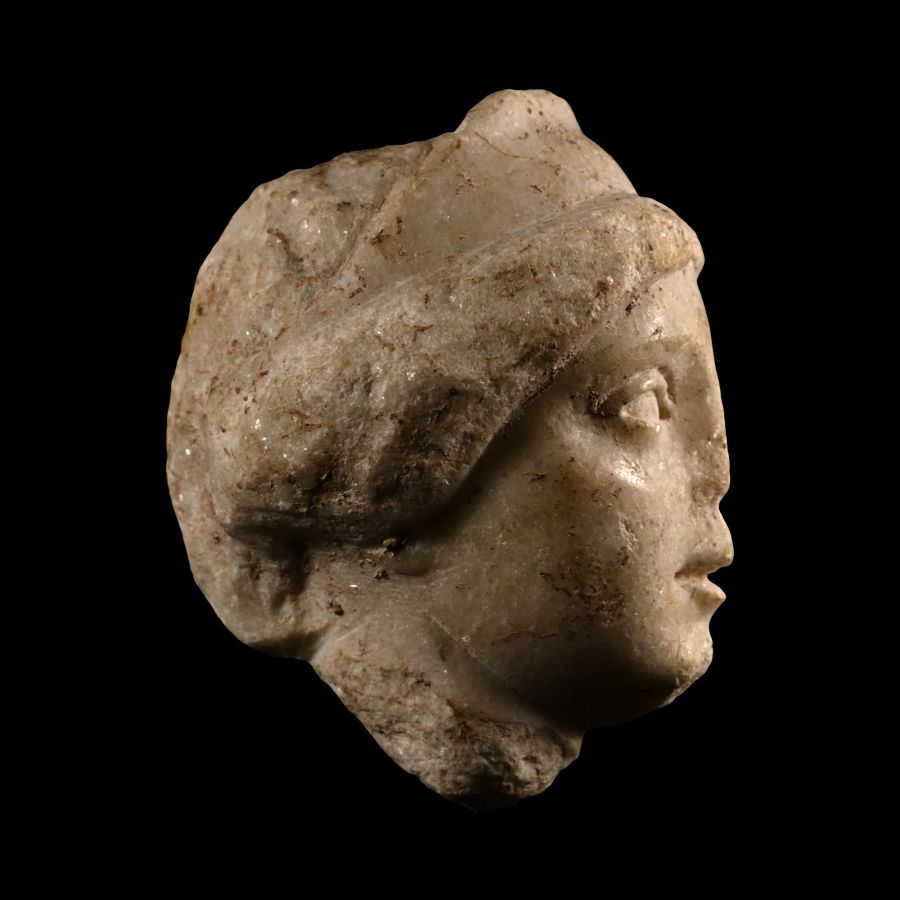
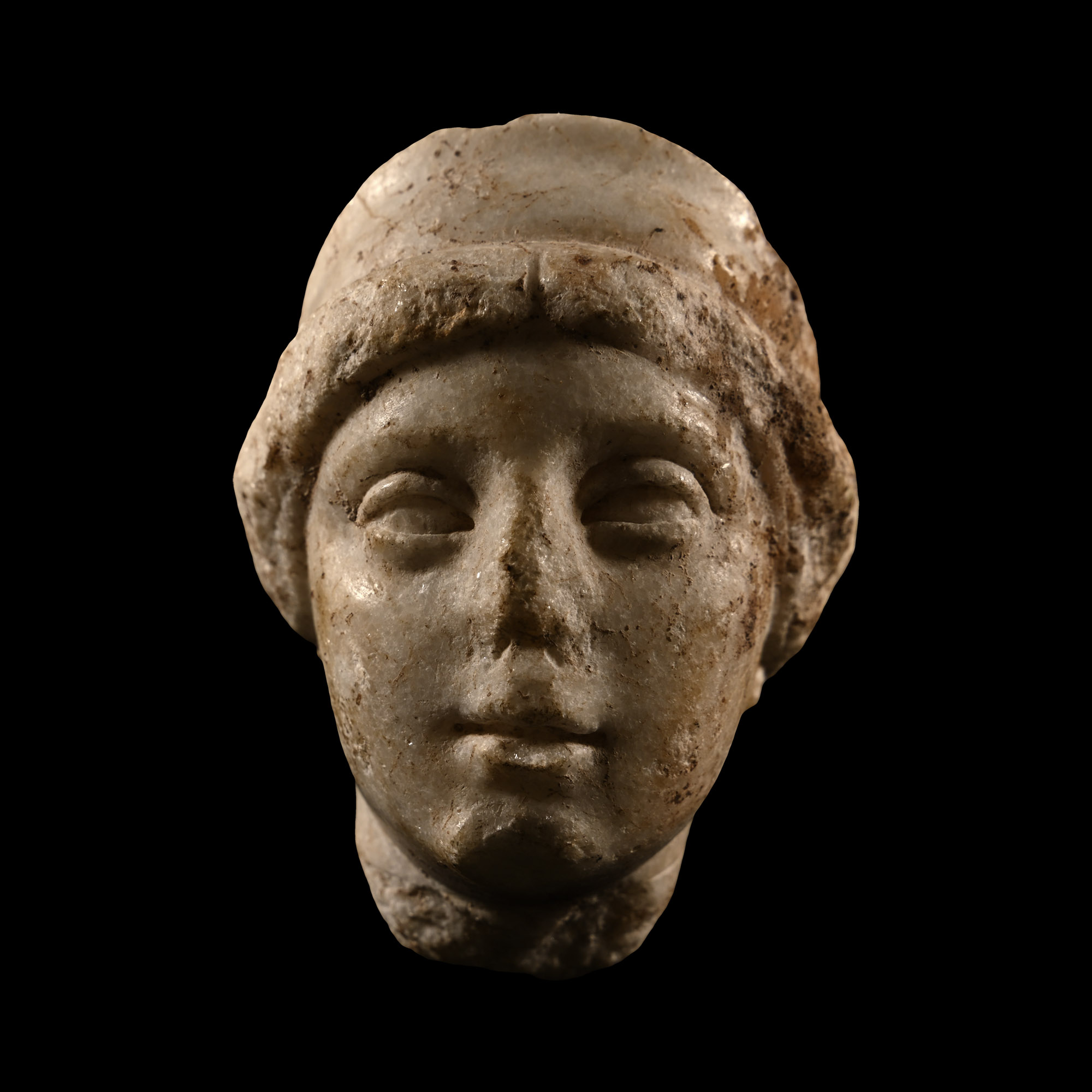
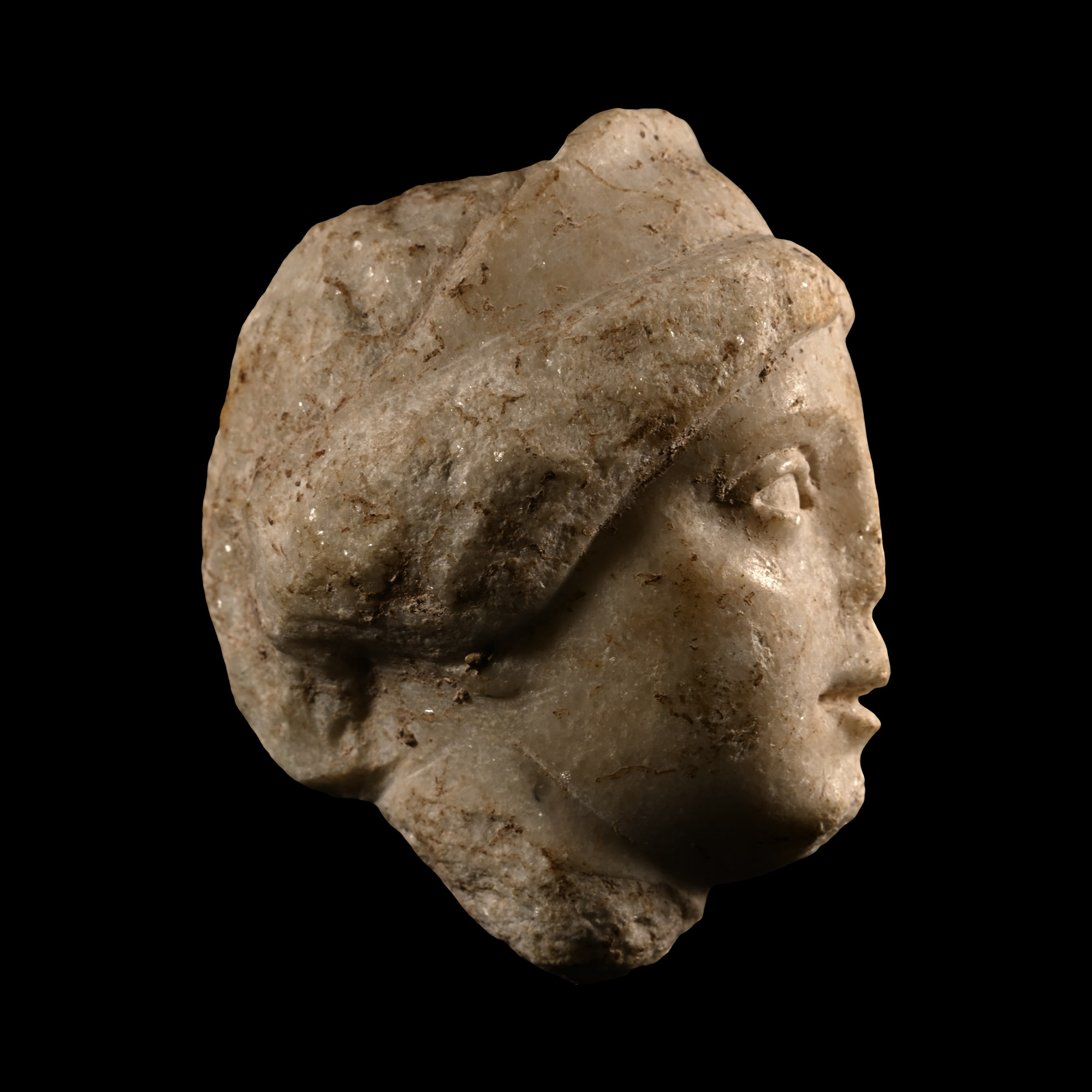
Hellenistic Marble Head of a Woman
3RD-2ND CENTURY B.C.
3 3/4 in. (620 grams, 95 mm).
Carved in the round with carinated diadem in the hair, heavily lidded eyes, small mouth with pursed lips.
ProvenanceAcquired in the mid 1980s-1990s.
From the family collection of Mr S.A., Switzerland, thence by descent.
Private collection since the late 1990s.
This lot has been checked against the Interpol Database of stolen works of art and is accompanied by a search certificate number no.12102-218191.
This lot is accompanied by an illustrated lot declaration signed by the Head of the Antiquities Department, Dr Raffaele D'Amato.
Cf. Beutler, F. et al., Der Adler Roms. Carnuntum und der Armee der Cäsaren, Bad-Deutsch Altenberg, 2017, item 69, for type.
CONDITIONTimeLine Auctions follows a vetting process to ensure the authenticity and legality of all items, reinforcing our commitment to integrity and responsible trading. Each antiquity, antique, and coin lot undergoes thorough examination by a vetting committee of at least ten external specialists, professional trade association members, scientists, and archaeologists: Our Vetting Process
AUCTIONS:
TimeLine is a leading auction house specialising in antiquities, ancient art, collectables, natural history, coins, medals, and books. Our auctions offer museums, collectors, historians, and enthusiasts the opportunity to acquire unique and historically significant pieces.
-
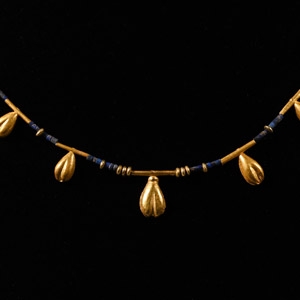
Hellenistic Gold and Lapis Lazuli Bead Necklace
1st century B.C. and laterSold for (Inc. bp): £1,105
Composed of lapis lazuli seed beads interspersed with small gold discs, nine tubular pendants with a flower bud suspended from the centre; restrung with a modern S-hook clasp. 8.03 grams, 44 cm
Private collection of a London gentleman, acquired between 1965-2020. This lot is accompanied by an illustrated lot declaration signed by the Head of the Antiquities Department, Dr Raffaele D'Amato. -
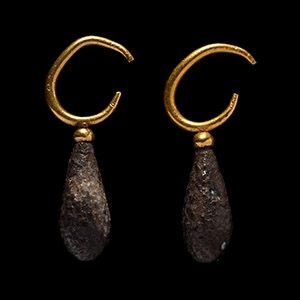
Late Eastern Greek Gold and Silver Earring Pair
1st century B.C.-1st century A.D.Estimate: £500 - 700 (‡+bp*)
Opening Bid: £225
Matched pair, each a gold open loop with bulb below supporting a silver imitation fig. 12.3 grams total, 41-42 mm
Acquired in the 1980s. Private collection, Switzerland, thence by descent. Private collection, since the late 1990s. This lot is accompanied by an illustrated lot declaration signed by the Head of the Antiquities Department, Dr Raffaele D'Amato. -
.jpg)
Monumental Villanovan Impasto Kyathos
7th century B.C.Estimate: £4,000 - 6,000 (‡+bp*)
Opening Bid: £2,000
Fluted body tapering to a narrow foot, the shoulders decorated with tiered bosses, short neck with flared mouth; wide handle perforated with a triangle. 1.18 kg, 25 cm wide
Estate of Mr Bruno Fellinger (1926-2016), Küsnacht, Switzerland. with Galerie Rhéa, Zurich, Switzerland. This lot has been checked against the Interpol Database of stolen works of art and is accompanied by a search certificate number no.12648-236390. This lot has been cleared against the Art Loss Register database, and is accompanied by an illustrated lot declaration signed by the Head of the Antiquities Department, Dr Raffaele D'Amato.
