
Loading, please wait...
LOT 0543
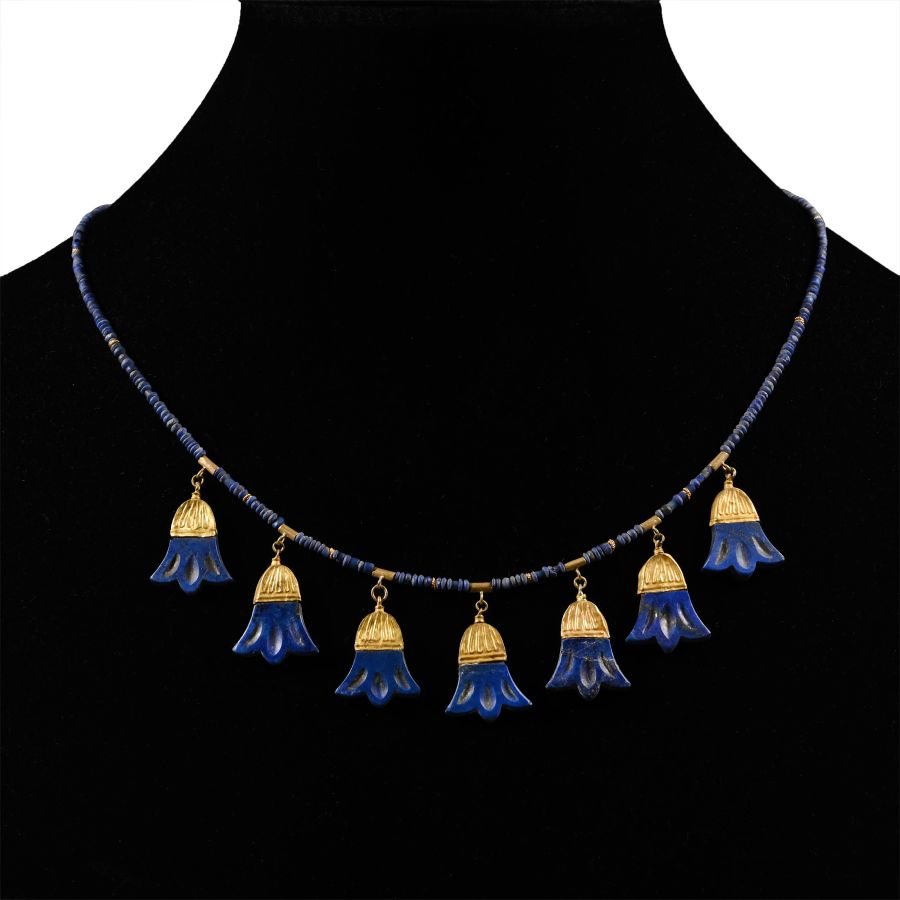
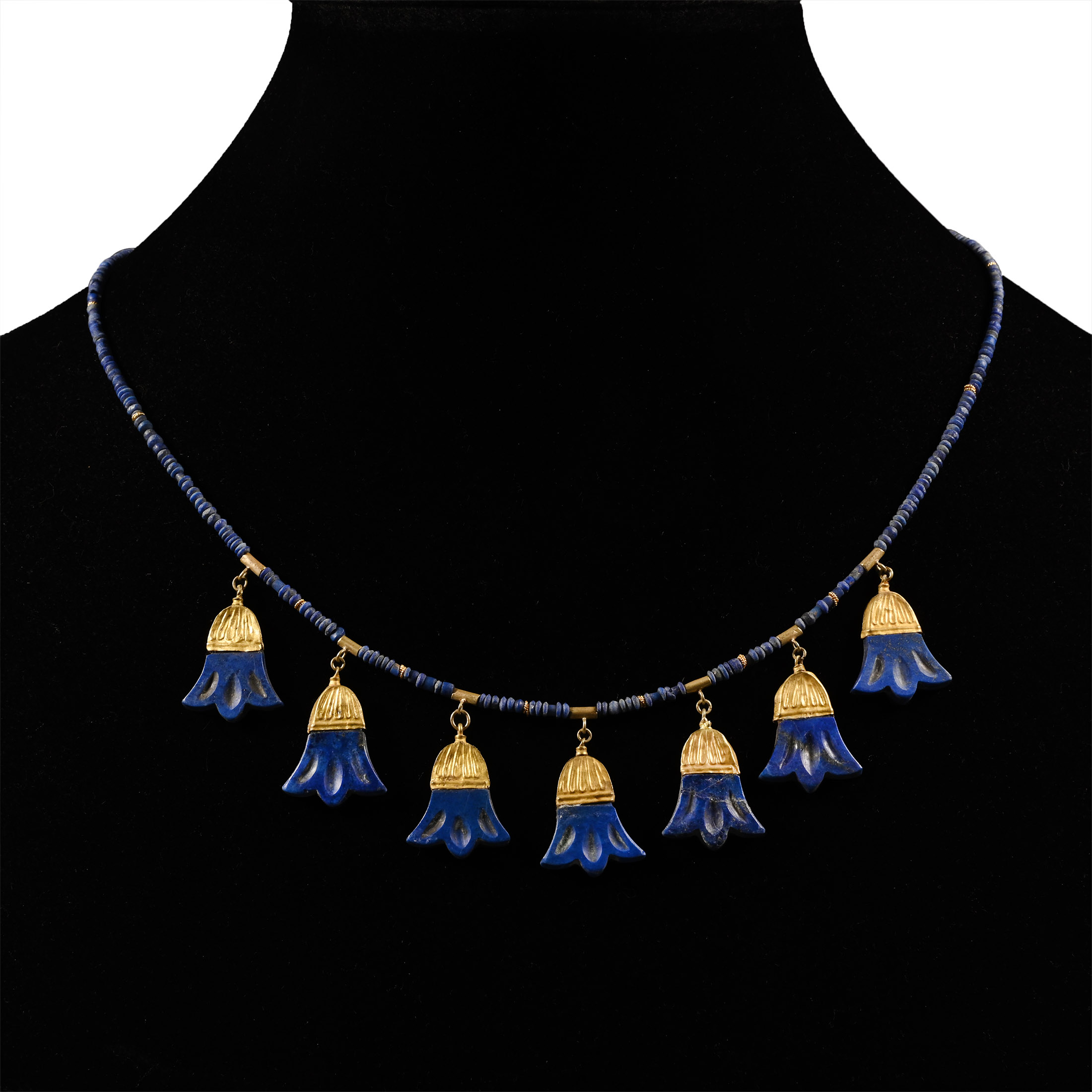
Hellenistic Lapis Lazuli Lotus Bead Necklace
1ST CENTURY B.C. AND LATER
16 7/8 in. (18.42 grams, 43 cm).
Restrung group of lapis lazuli seed beads with seven dangles, each a gold cell with three-petalled flower.
ProvenancePrivate collection of a London, UK, gentleman, acquired between 1965-2020.
This lot is accompanied by an illustrated lot declaration signed by the Head of the Antiquities Department, Dr Raffaele D'Amato.
TimeLine Auctions follows a vetting process to ensure the authenticity and legality of all items, reinforcing our commitment to integrity and responsible trading. Each antiquity, antique, and coin lot undergoes thorough examination by a vetting committee of at least ten external specialists, professional trade association members, scientists, and archaeologists: Our Vetting Process
AUCTIONS:
TimeLine is a leading auction house specialising in antiquities, ancient art, collectables, natural history, coins, medals, and books. Our auctions offer museums, collectors, historians, and enthusiasts the opportunity to acquire unique and historically significant pieces.
-
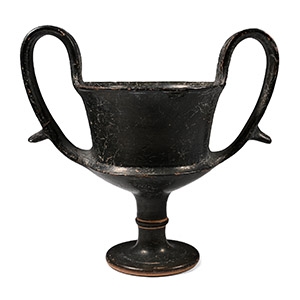
Boeotian Black-Glazed Terracotta Kantharos
Circa 5th century B.C.Estimate: £1,000 - 1,400 (‡+bp*)
Opening Bid: £500
The high-handled drinking cup with carinated lower body and a tall offset foot with a collar. 310 grams, 19 cm wide
Ex Galleria Serodine, Arte Antichità, Fritz Huchelmann-Tieche, Ascona 13 November 1987. Private collection, Bern, Switzerland. This lot is accompanied by an illustrated lot declaration signed by the Head of the Antiquities Department, Dr Raffaele D'Amato. -
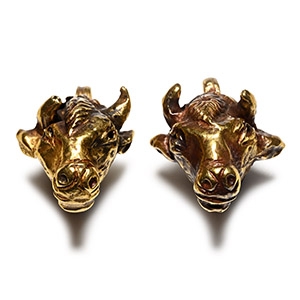
Cypriot Gold Bull-Headed Pendant Pair
7th century B.C.Sold for (Inc. bp): £6,500
Matched pair of hollow-formed pendants, each a bull's head modelled in the round with a rosette to the rear beneath the loop. 5.39 grams total, 23-24 mm
Acquired in 1986. with Taisei Gallery, Gold & Silver Auction, Part II, Ancient to Renaissance, 5 November 1992, The Conrad Salon, The Waldorf-Astoria, New York, no.165. This lot has been checked against the Interpol Database of stolen works of art and is accompanied by search certificate no.11969-210472. This lot has been cleared against the Art Loss Register database, and is accompanied by an illustrated lot declaration signed by the Head of the Antiquities Department, Dr Raffaele D'Amato.
In Cyprus, the cult of the bull developed from the 3rd millennium B.C. until the 6th century B.C. The bull was a 'frequently invoked manifestation of divinity', and its cult was widespread since the Minoan Age. The appearance of gold bull-head pendants in tombs had an aesthetic and social value, but at the same time it also had a deeper symbolic and religious meaning. -
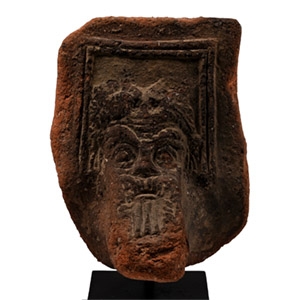
Hellenistic Terracotta Brazier Fragment with Face
3rd-1st century B.C.Sold for (Inc. bp): £156
A rectangular fragment with the head Silenus or satyr wearing an ivy crown, projecting beard, double border above the head; accompanied by a custom-made display stand. 319 grams, 10 cm (584 grams total, 13.8 cm including stand)
From a private collection formed in the early 20th century. with Gorny & Mosch, Munich, 17 December 2014, no.631. with Galerie Rhéa, Zurich. This lot is accompanied by an illustrated lot declaration signed by the Head of the Antiquities Department, Dr Raffaele D'Amato.
