
Loading, please wait...
LOT 0562
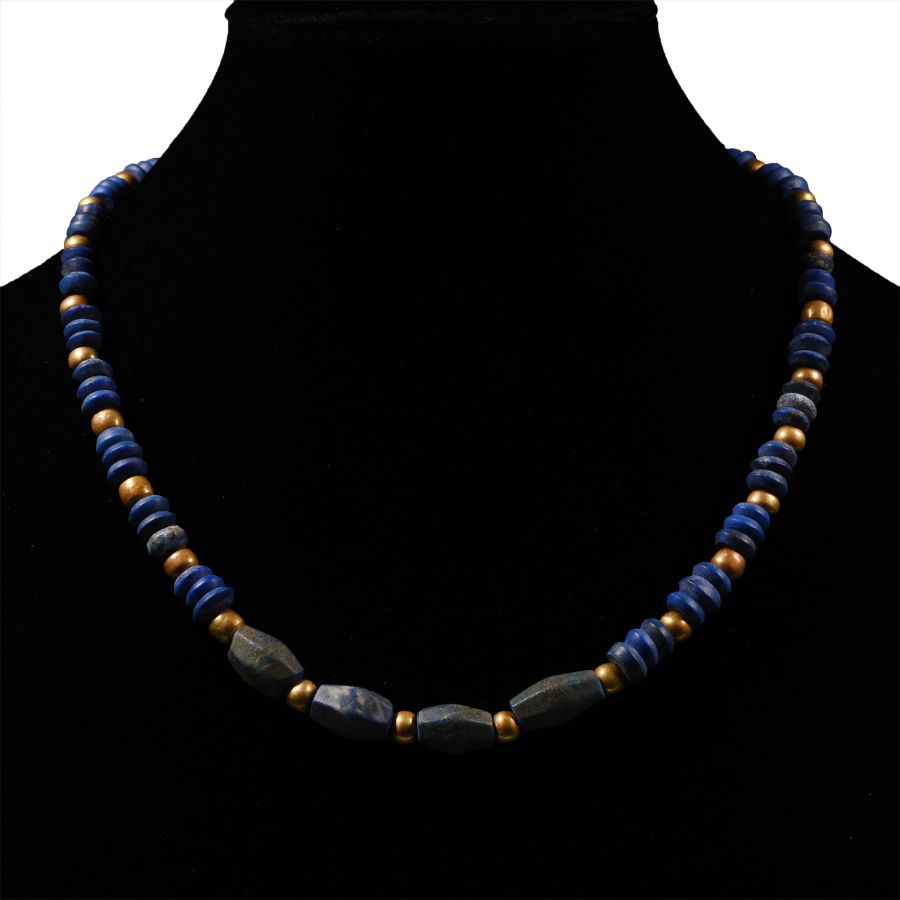
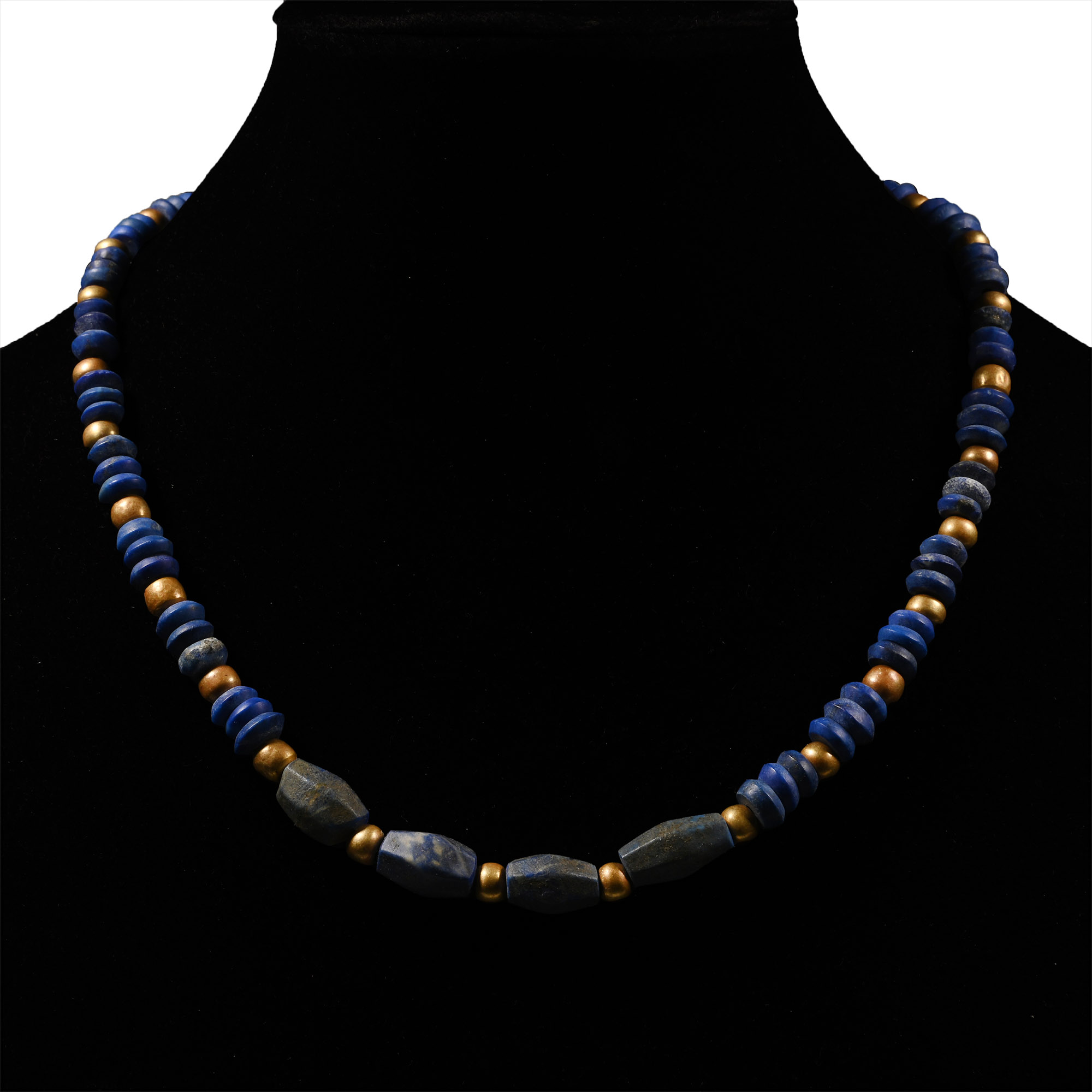
Hellenistic Lapis Lazuli and Gold Bead Necklace
1ST CENTURY B.C. AND LATER
17 3/4 in. (48.83 grams, 45 cm).
Restrung necklace of biconvex lapis lazuli beads with annular gold spacers, four large hexagonal-section fusiform beads as the centrepiece.
ProvenancePrivate collection of a London gentleman, acquired between 1965-2020.
This lot is accompanied by an illustrated lot declaration signed by the Head of the Antiquities Department, Dr Raffaele D'Amato.
TimeLine Auctions follows a vetting process to ensure the authenticity and legality of all items, reinforcing our commitment to integrity and responsible trading. Each antiquity, antique, and coin lot undergoes thorough examination by a vetting committee of at least ten external specialists, professional trade association members, scientists, and archaeologists: Our Vetting Process
AUCTIONS:
TimeLine is a leading auction house specialising in antiquities, ancient art, collectables, natural history, coins, medals, and books. Our auctions offer museums, collectors, historians, and enthusiasts the opportunity to acquire unique and historically significant pieces.
-
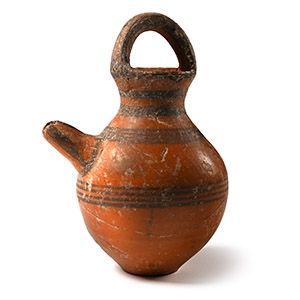
Cypriot Terracotta Vessel
Cypro-Archaic, 750-600 B.C.Sold for (Inc. bp): £286
Miniature ewer with tapering spout to the shoulder, flared neck and rounded rim with applied loop handle; painted decorative bands. 51 grams, 88 mm
Acquired in the mid 1980s-1990s. Private collection, Switzerland, thence by descent. Private collection, since the late 1990s. This lot is accompanied by an illustrated lot declaration signed by the Head of the Antiquities Department, Dr Raffaele D'Amato. -
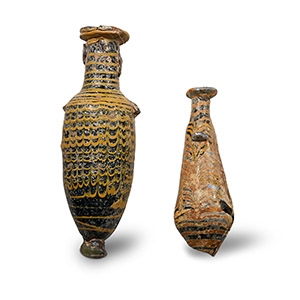
Greek Core-Formed Glass Vessel Group
2nd-1st century B.C.Sold for (Inc. bp): £312
With polychrome decoration and iridescent surfaces, comprising: an alabastron with fusiform body, conical foot and ledge handles, decorated with yellow feathering and trails; a blue amphoriskos with yellow festooning and trails, knop foot and everted rim; fragmentary. 197 grams total, 11.3-15 cm high
Acquired early 1990s. Ex private American collection; thence by descent. Private collection since 1998. This lot is accompanied by an illustrated lot declaration signed by the Head of the Antiquities Department, Dr Raffaele D'Amato. -
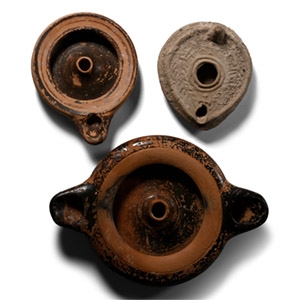
Greek and Byzantine Ceramic Oil Lamp Collection
5th century B.C.-6th century A.D.Estimate: £300 - 400 (‡+bp*)
Opening Bid: £150
Comprising: a squat oil lamp with wreath surrounding the large filler hole, radiating sun motif on the base; the two larger terracotta lamps with open reservoirs with a central cone open beneath, short nozzle. 473 grams total, 9.2-17.8 cm
Ex R.C. collection. Acquired by Galerie Rhéa, Zurich, from the above in 2010. This lot is accompanied by an illustrated lot declaration signed by the Head of the Antiquities Department, Dr Raffaele D'Amato.
