
Loading, please wait...
LOT 0545
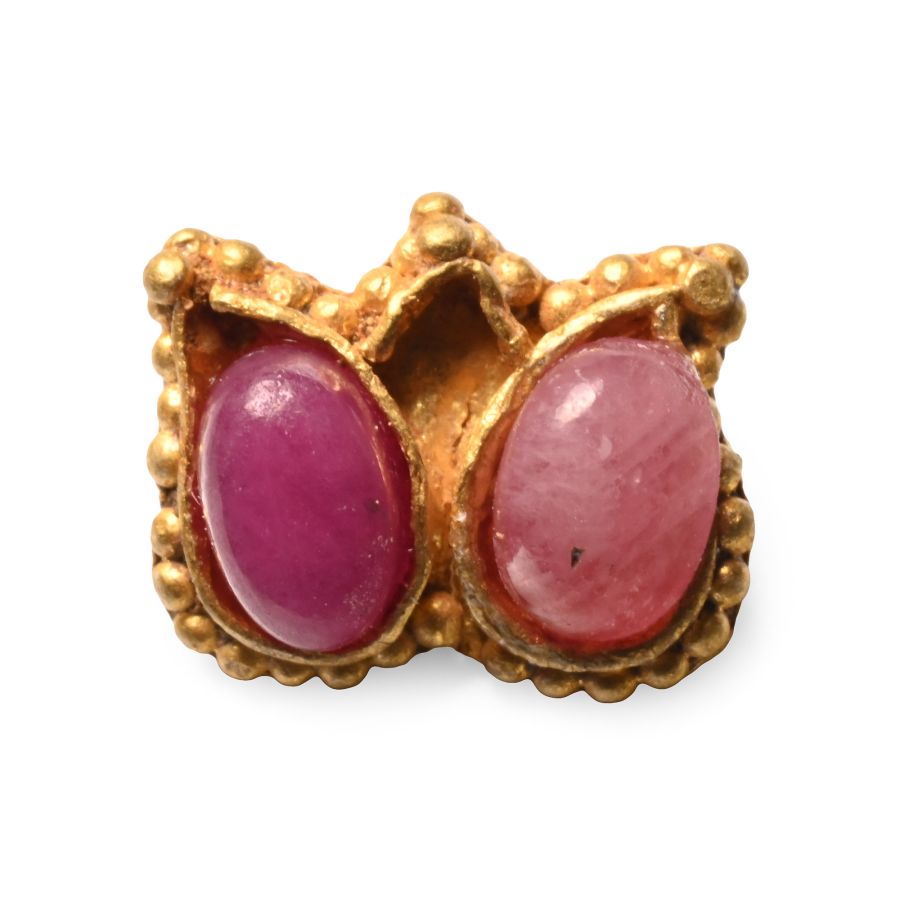
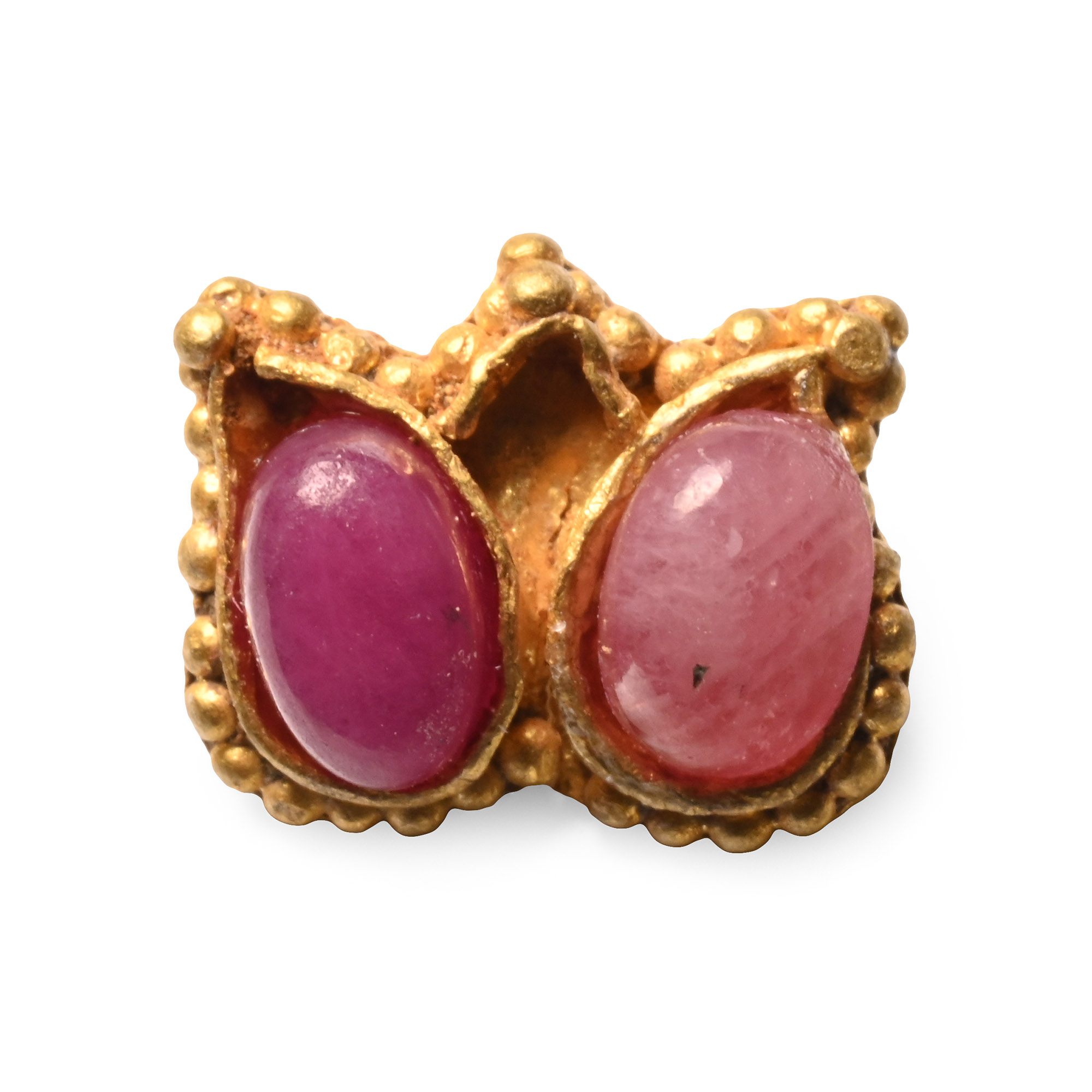
Hellenistic Gold Pendant with Cabochons
CIRCA 2ND-1ST CENTURY B.C.
1/2 in. (1.48 grams, 12 mm).
Plaque with granulated border, two carnelian cabochons and loop to reverse.
ProvenanceEx property of a late Japanese collector, 1970-2000s.
This lot is accompanied by an illustrated lot declaration signed by the Head of the Antiquities Department, Dr Raffaele D'Amato.
TimeLine Auctions follows a vetting process to ensure the authenticity and legality of all items, reinforcing our commitment to integrity and responsible trading. Each antiquity, antique, and coin lot undergoes thorough examination by a vetting committee of at least ten external specialists, professional trade association members, scientists, and archaeologists: Our Vetting Process
AUCTIONS:
TimeLine is a leading auction house specialising in antiquities, ancient art, collectables, natural history, coins, medals, and books. Our auctions offer museums, collectors, historians, and enthusiasts the opportunity to acquire unique and historically significant pieces.
LOT 0545
Hellenistic Gold Pendant with Cabochons
Estimate £180 - 240€210 - 280 (for guidance only)$240 - 320 (for guidance only)
-
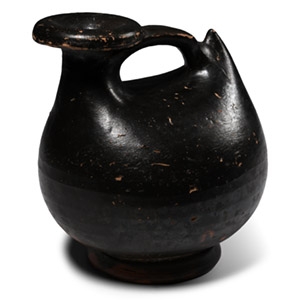
Greek Black Glazed Terracotta Askos
4th century B.C.Estimate: £400 - 600 (‡+bp*)
Opening Bid: £200
A pouring vessel with bulbous body and funicular spout, central strap handle. 160 grams, 97 mm high
Ex C.R., Ticino, before 1970. with Galerie Rhéa, Zurich, Switzerland. This lot is accompanied by an illustrated lot declaration signed by the Head of the Antiquities Department, Dr Raffaele D'Amato. -
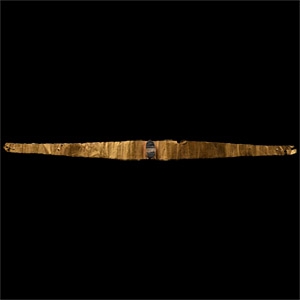
Greek Gold Diadem with Glass Gem
1st millennium B.C.Sold for (Inc. bp): £936
Sheet-gold with tapering finials, central raised cell set with a two-tone glass insert imitating banded agate; mounted on perspex backing. 76.87 grams total, 30 cm (36 cm including stand)
with Galerie Rhéa, Zurich, Switzerland. This lot is accompanied by an illustrated lot declaration signed by the Head of the Antiquities Department, Dr Raffaele D'Amato. -
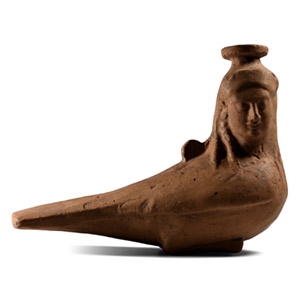
Greek Terracotta Siren Vessel
Rhodian, circa 550–500 B.C.Sold for (Inc. bp): £2,340
A mould-made vessel with the body of a bird and the head of youthful female with her head turned right, hair arranged in long plaits falling on her shoulders, small lug on the back, the body resting on stylised legs tucked beneath the body. 341 grams, 18 cm
Ex Dr U.W., Biel, Switzerland. with Rhea Galerie, Zurich, Switzerland. This lot has been checked against the Interpol Database of stolen works of art and is accompanied by a search certificate number no.12647-236463. This lot has been cleared against the Art Loss Register database, and is accompanied by an illustrated lot declaration signed by the Head of the Antiquities Department, Dr Raffaele D'Amato.
