
Loading, please wait...
LOT 0579
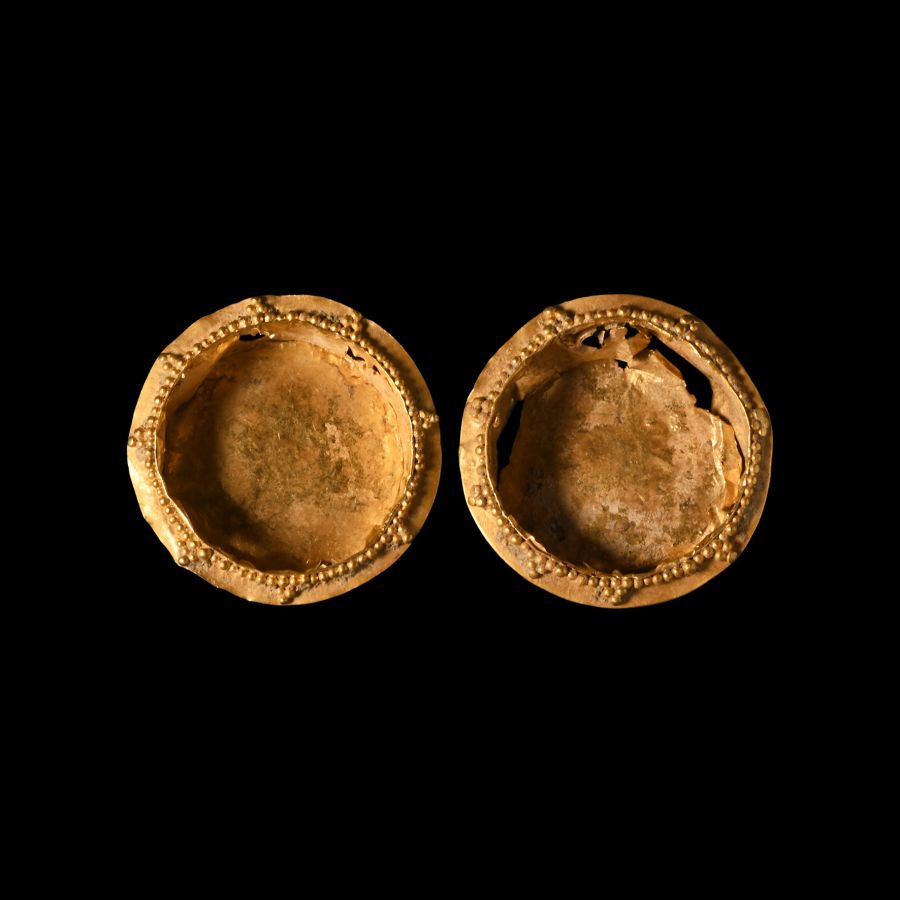
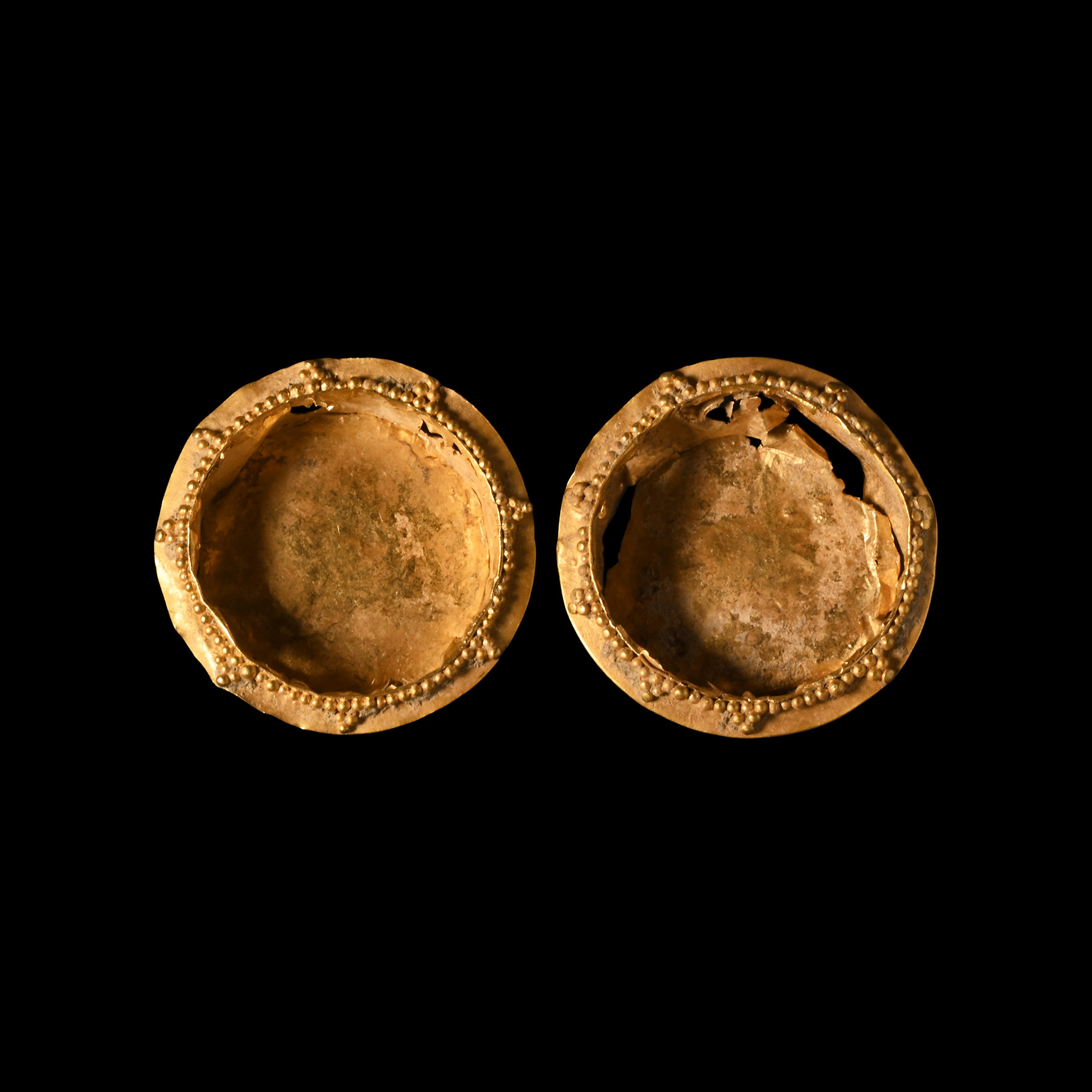
Hellenistic Gold Mount Pair
2ND-1ST CENTURY B.C.
3/4 in. (1.62 grams total, 19 mm each).
Comprising discoid cells each with shallow sidewall and flange rim, granule collar with radiating clusters. [2]
ProvenanceFrom a late Japanese specialist collector, 1970-2000s.
CONDITIONTimeLine Auctions follows a vetting process to ensure the authenticity and legality of all items, reinforcing our commitment to integrity and responsible trading. Each antiquity, antique, and coin lot undergoes thorough examination by a vetting committee of at least ten external specialists, professional trade association members, scientists, and archaeologists: Our Vetting Process
AUCTIONS:
TimeLine is a leading auction house specialising in antiquities, ancient art, collectables, natural history, coins, medals, and books. Our auctions offer museums, collectors, historians, and enthusiasts the opportunity to acquire unique and historically significant pieces.
LOT 0579
Hellenistic Gold Mount Pair
Estimate £180 - 240€210 - 280 (for guidance only)$240 - 320 (for guidance only)
-
Cypriot Bichrome Ware Pottery Feeder Flask
Iron Age, circa 950-850 B.C.Sold for (Inc. bp): £325
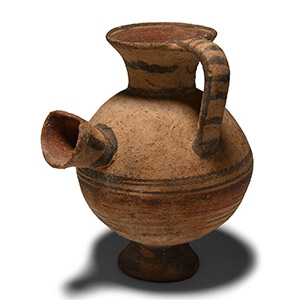
Spherical body with flared foot, trumpet-shaped mouth with strap handle, flared spout to the shoulder with strainer; painted circles to the mouth, rim and body, transverse stripes to the handle. 148 grams, 11.2 cm high
Acquired from Bonhams, London, 20 October 2005, no.406 (part). From an important Cambridgeshire estate; thence by descent. Accompanied by copies of the relevant Bonhams catalogue pages and the original Bonhams lot tag. -
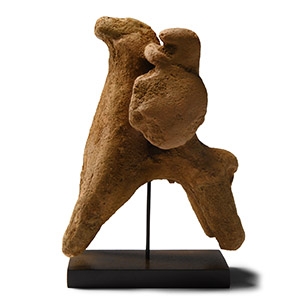
Archaic Greek Terracotta Figure of Mounted Warrior with Shield
7th-5th century B.C.Sold for (Inc. bp): £338
The figure comprising a stylised horse with elongated neck, mounted by a bearded rider figure holding a shield, restored; mounted on a custom-made display stand. 323 grams total, 13 cm including stand
Acquired before 1990. From an old German collection. -
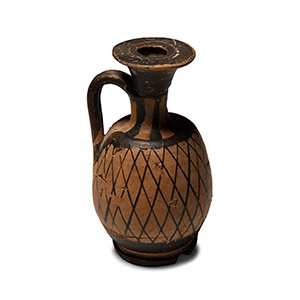
Greek Net-Painted Black-Figure Lekythos
Apulian, 4th century B.C.Estimate: £400 - 600 (‡+bp*)
Opening Bid: £200
The ovoid body decorated with cross-hatching, solid band to the shoulder and vertical bands to the slender neck, trumpet-shaped mouth, strap handle and discoid foot; repaired. 72 grams, 91 mm
Ex Mister X. (1931-2017) private collection. Sold in the benefit of the 'Croix-Rouge of Monaco'.
