
Loading, please wait...
LOT 0656
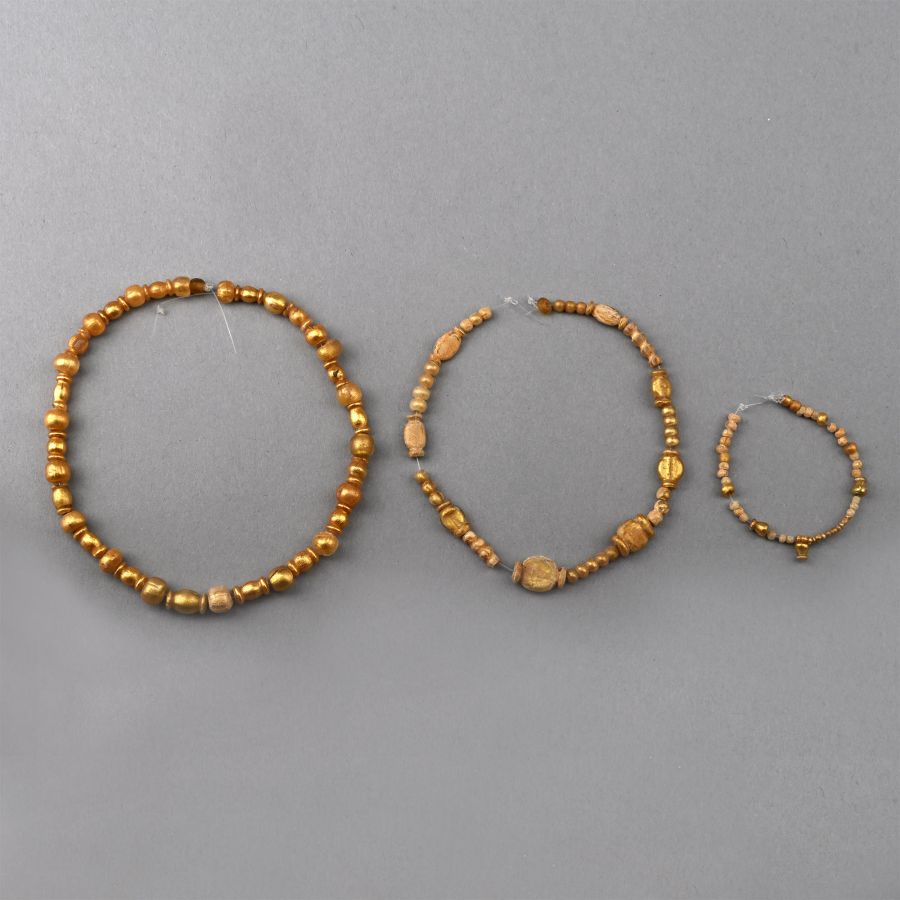
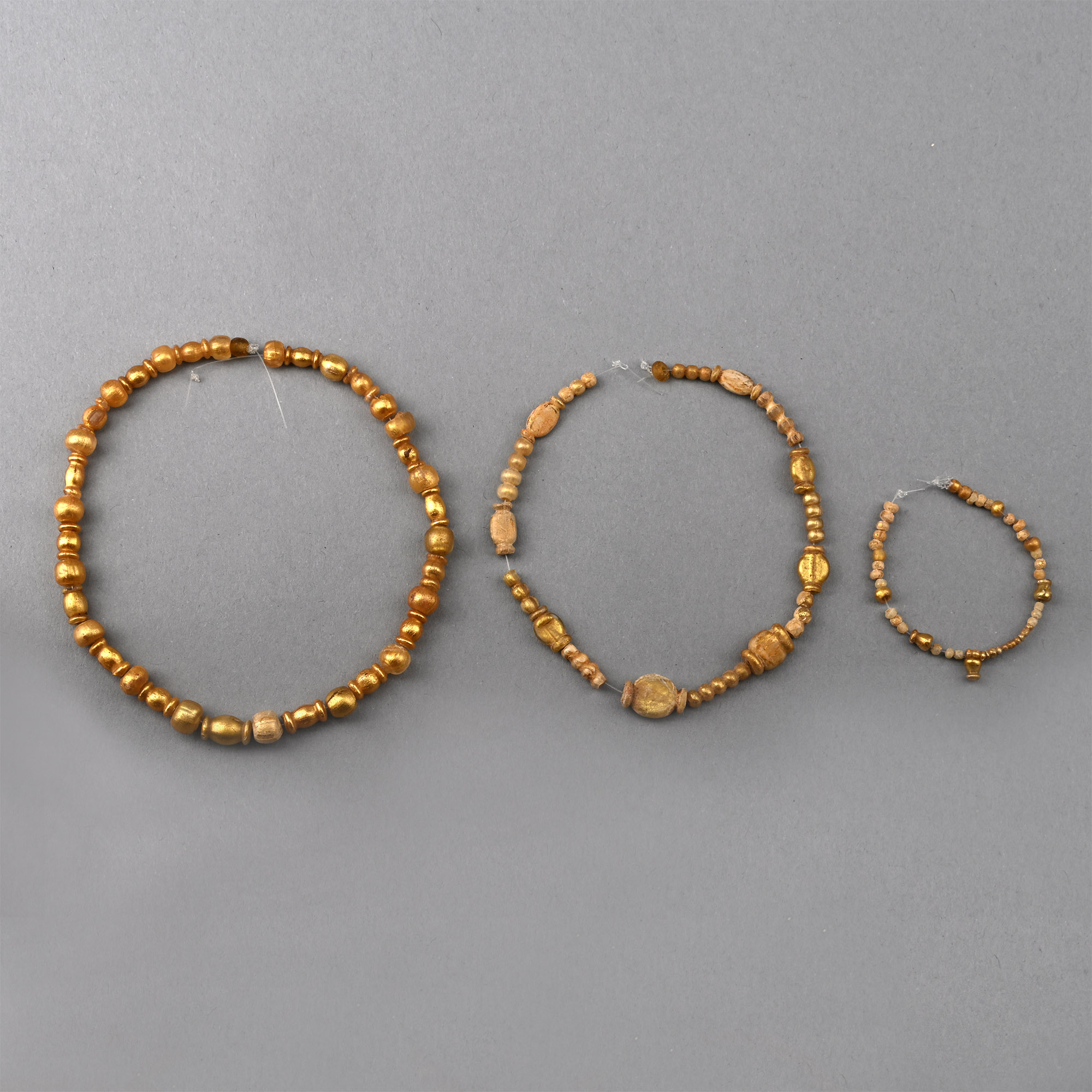
Hellenistic Gold in Glass Bead Group
CIRCA 100 B.C.-200 A.D. AND LATER
4 - 10 3/8 in. (19.74 grams total, 10-26.5 cm).
Comprising beads encasing gold foil beneath a transparent glass layer, strung in three separate strands of various lengths. [3, No Reserve]
ProvenancePrince collection, 1990s-2014.
Ex private collection 1970s-1990s.
See The Metropolitan Museum of Art, object nos. 10.130.3225a, 10.130.3225b.
CONDITIONTimeLine Auctions follows a vetting process to ensure the authenticity and legality of all items, reinforcing our commitment to integrity and responsible trading. Each antiquity, antique, and coin lot undergoes thorough examination by a vetting committee of at least ten external specialists, professional trade association members, scientists, and archaeologists: Our Vetting Process
AUCTIONS:
TimeLine is a leading auction house specialising in antiquities, ancient art, collectables, natural history, coins, medals, and books. Our auctions offer museums, collectors, historians, and enthusiasts the opportunity to acquire unique and historically significant pieces.
-
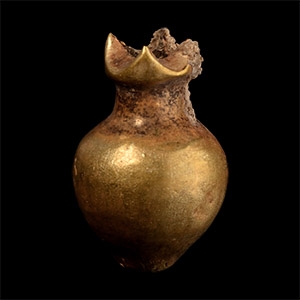
Large Greek Gold Pomegranate Amulet
Circa 5th-3rd century B.C.Estimate: £300 - 400 (+bp*)
Opening Bid: £150
Pendant or bead of pomegranate form, crowned by four pointed petals over a broad shoulder and a rounded, tapering body. 1.77 grams, 17 mm
From the collection of a late Japanese gentleman, 1970s onwards. -
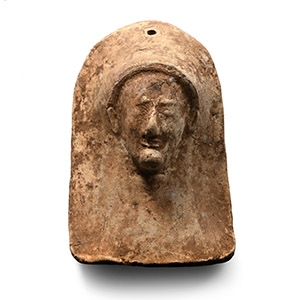
Greek Terracotta Protome Mask
Magna Graecia, early 5th century B.C.Sold for (Inc. bp): £156
Tongue-shaped in plan and hollow to the reverse; obverse with female bust in high-relief with palla head-covering. 75 grams, 10.3 cm
From an old Bath antiquities collection. From the property of a late Lincolnshire, UK, gentleman. -
.jpg)
Greek Terracotta Seated Shepherd
Circa 400 B.C.Estimate: £800 - 1,000 (‡+bp*)
Opening Bid: £444
Hollow-formed statue showing a young shepherd wearing a short tunic and hooded cloak, holding an object in his right hand; rectangular slot on the reverse. 205 grams, 15.8 cm
Private collection Mr T.B., Zürich, Switzerland, before 1970. with Galerie Rhéa, Zurich, Switzerland.
