
Loading, please wait...
LOT 0077
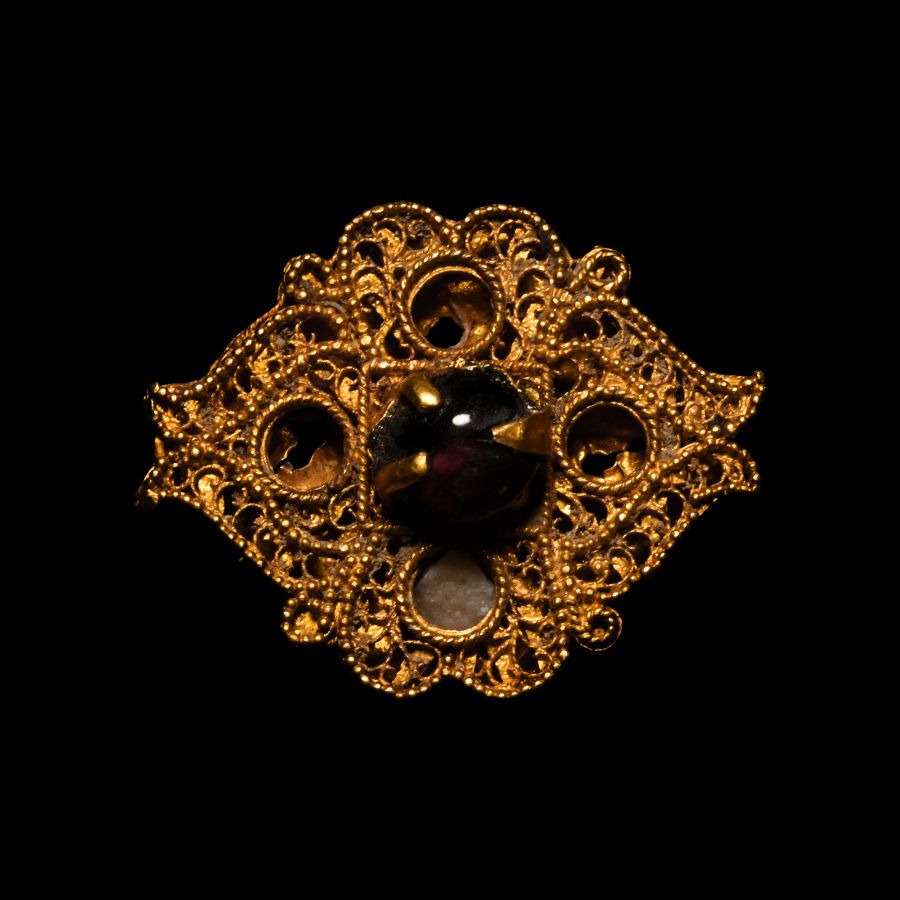
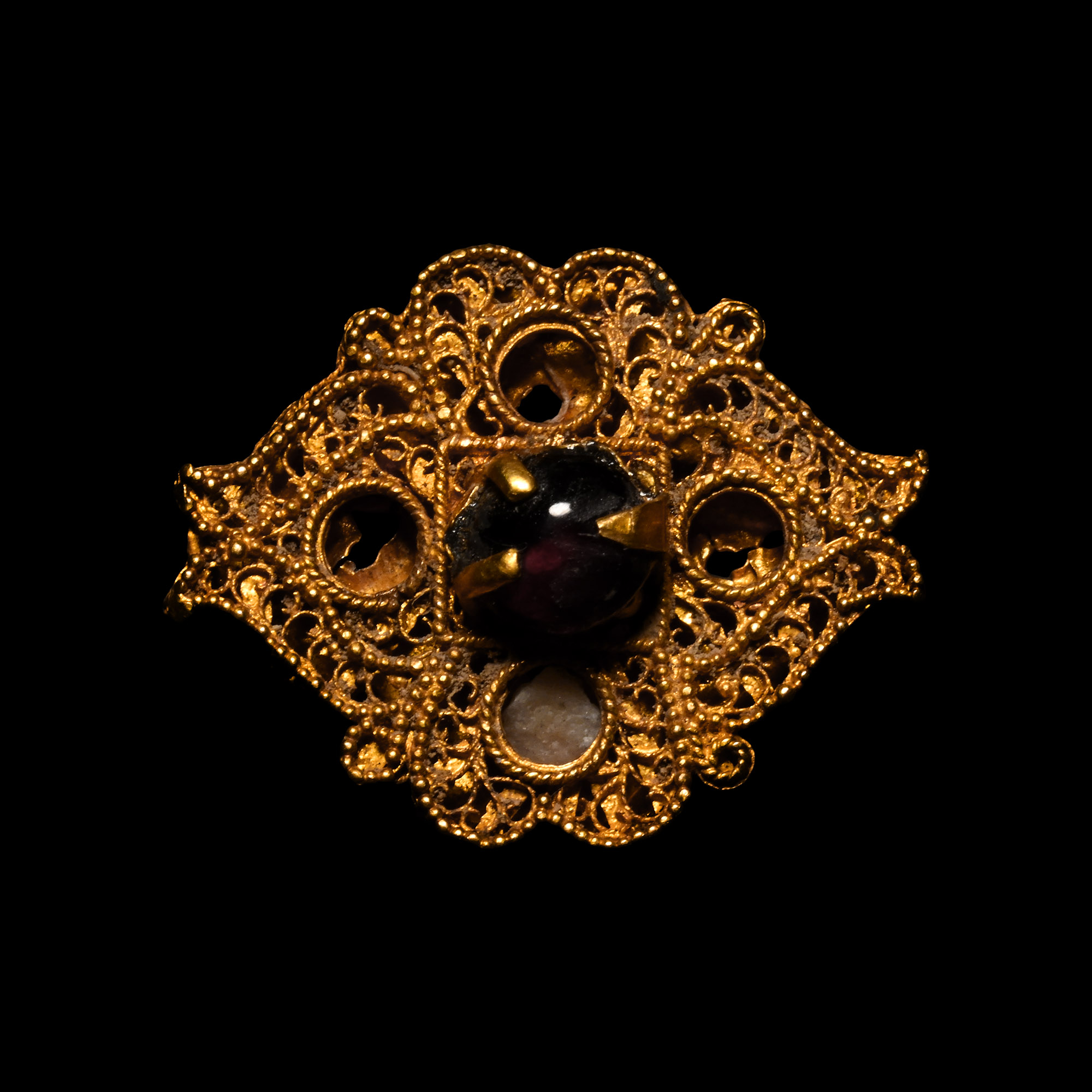
Hellenistic Gold Filigree Element with Garnet
2ND-1ST CENTURY B.C.
1 in. (3.32 grams, 24 mm).
Rosette panel with central claw setting and four voided cells, scrolled filigree and beaded wire; garnet cabochon to centre.
ProvenanceAcquired before 1983.
Ex London gallery, 1990s.
This lot is accompanied by an illustrated lot declaration signed by the Head of the Antiquities Department, Dr Raffaele D'Amato.
TimeLine Auctions follows a vetting process to ensure the authenticity and legality of all items, reinforcing our commitment to integrity and responsible trading. Each antiquity, antique, and coin lot undergoes thorough examination by a vetting committee of at least ten external specialists, professional trade association members, scientists, and archaeologists: Our Vetting Process
AUCTIONS:
TimeLine is a leading auction house specialising in antiquities, ancient art, collectables, natural history, coins, medals, and books. Our auctions offer museums, collectors, historians, and enthusiasts the opportunity to acquire unique and historically significant pieces.
-
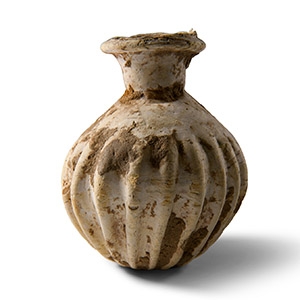
Greek Cream Frit Ribbed Bottle
4th-2nd century B.C.Sold for (Inc. bp): £104
Opaque with vertical ribbing around the globular body, trumpet-style neck and mouth with rolled rim. 76 grams, 73 mm high
Acquired early 1990s. Ex private American collection; thence by descent. Private collection since 1998. This lot is accompanied by an illustrated lot declaration signed by the Head of the Antiquities Department, Dr Raffaele D'Amato. -
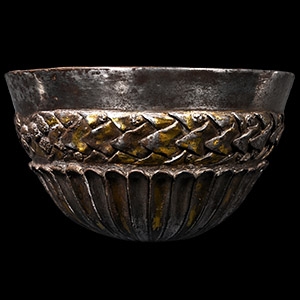
Hellenistic Silver-Gilt Drinking Cup
2nd-1st century B.C.Sold for (Inc. bp): £13,000
A heavy hemispherical vessel with simulated braid beneath the rim and Hercules' knot; the body with lotus-flower ornament. 508 grams, 10.9 cm
Acquired before 1983. Ex London gallery, 1990s. This lot has been checked against the Interpol Database of stolen works of art and is accompanied by a search certificate number no.12661-236259. This lot has been cleared against the Art Loss Register database, and is accompanied by an illustrated lot declaration signed by the Head of the Antiquities Department, Dr Raffaele D'Amato. -
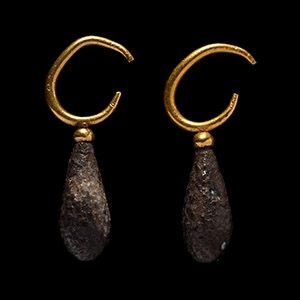
Late Eastern Greek Gold and Silver Earring Pair
1st century B.C.-1st century A.D.Estimate: £500 - 700 (‡+bp*)
Opening Bid: £225
Matched pair, each a gold open loop with bulb below supporting a silver imitation fig. 12.3 grams total, 41-42 mm
Acquired in the 1980s. Private collection, Switzerland, thence by descent. Private collection, since the late 1990s. This lot is accompanied by an illustrated lot declaration signed by the Head of the Antiquities Department, Dr Raffaele D'Amato.
