
Loading, please wait...
_900x900.jpg "Hellenistic Gold Earring Pair")
_200x200.jpg "Hellenistic Gold Earring Pair")
.jpg "Hellenistic Gold Earring Pair")
LOT 0097
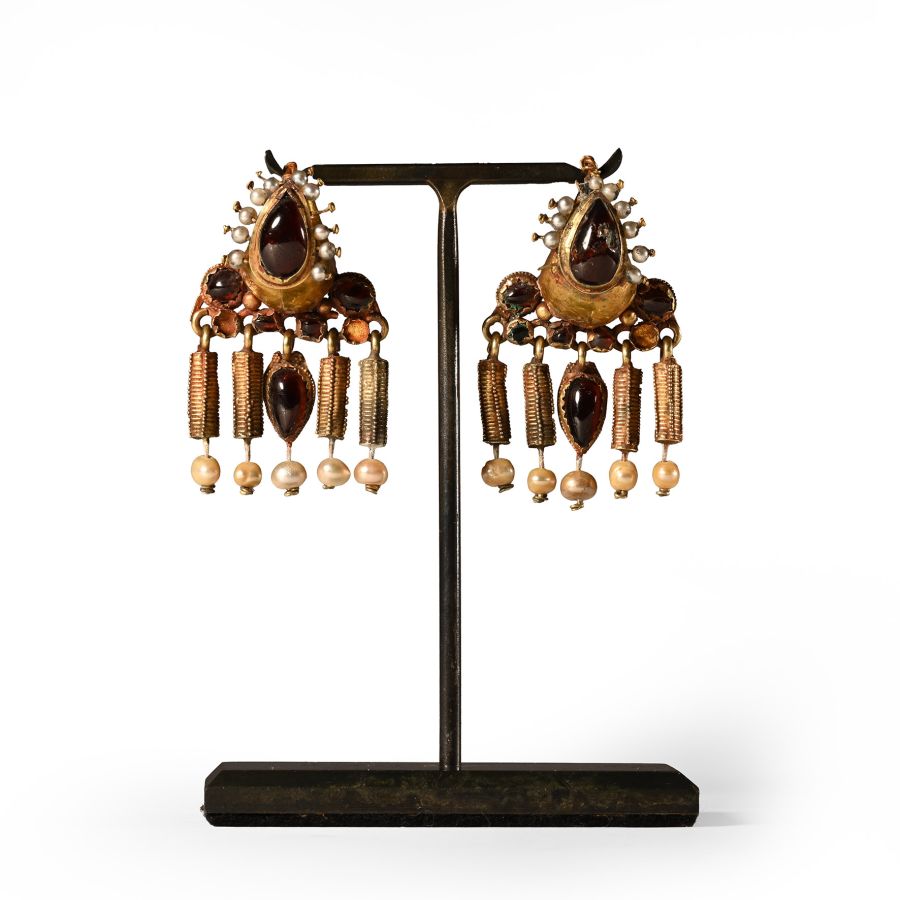
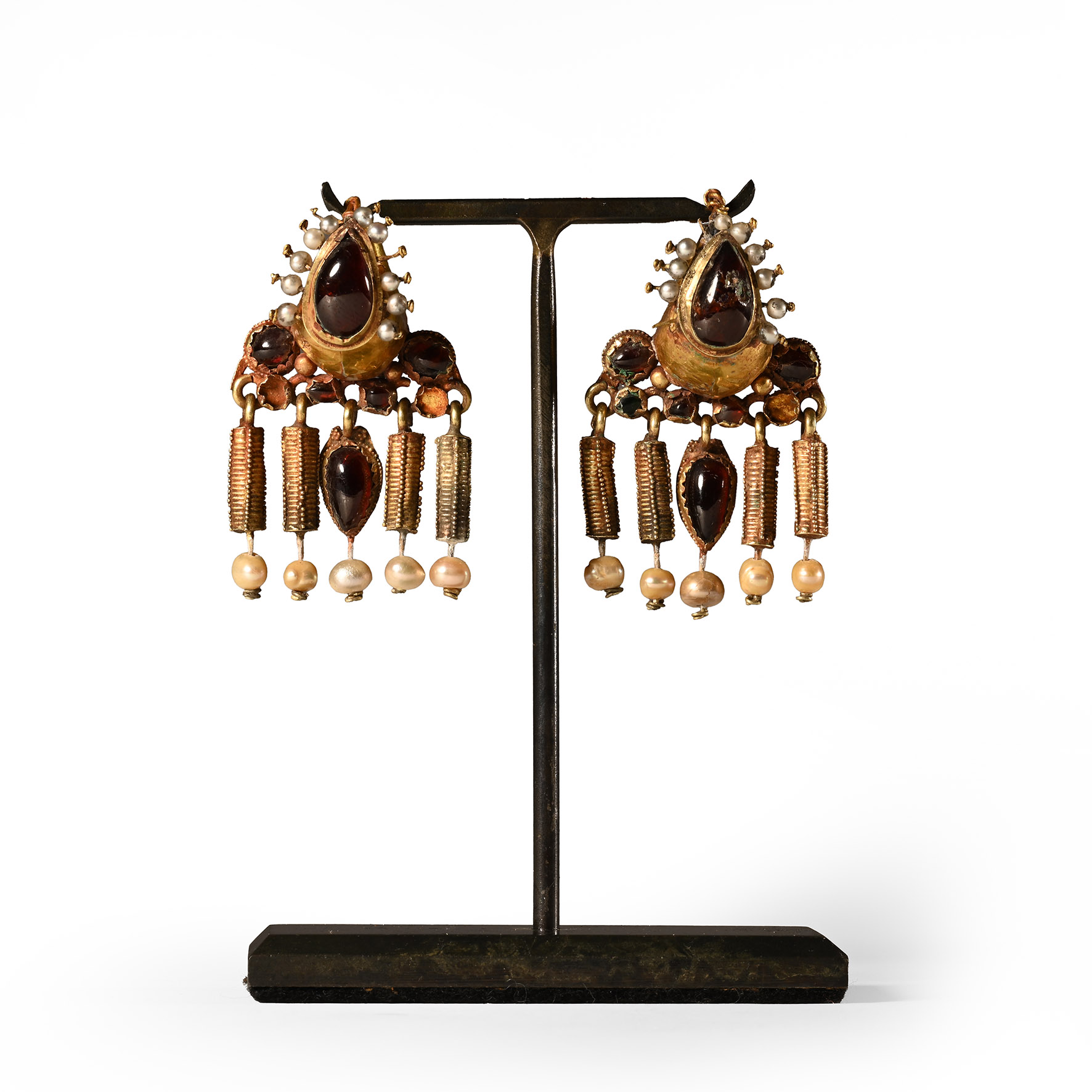
Hellenistic Gold Earring Pair
1ST CENTURY B.C.-1ST CENTURY A.D.
1 7/8 in. (3 5/8 in.) (22.40 grams total, 47-49 mm (107 grams total, 92 mm high including stand)).
Each with a hollow-form crescentic body with a large teardrop-shaped garnet set within a cell with radiating pearl studs; a pendant panel below with garnet cabochons, five pendant drops with pearl finials and a central teardrop-shaped garnet; accompanied by a custom-made display stand. [2]
ProvenanceFrom a private collection.
Acquired from Mr D.S., 7 February 2008.
Private UK collection.
This lot has been checked against the Interpol Database of stolen works of art and is accompanied by search certificate no.12119-214174.
Cf. earring with an identical hollow crescentic body from Roman Egypt in Vernier, É.S., Catalogue général des Antiquités Égyptiennes du Musée du Caire, Catalogue Bijoux et orfèvreries. Fascicule 2, Paris, 1907-1927, no.52495; see also a pair of brooches in similar style in Yavtushenko, I. (eds.), Masterpieces of Platar, 2004, no.143.
FootnotesThe material culture of the Hellenistic east followed the eastern Mediterranean polychromy. Many beautiful jewels were produced in Alexandria or in the Syrian cities and the majority of their precious decorations was imitated by jewellers of more remote provinces, like those of the Greek Pontic cities.
CONDITIONTimeLine Auctions follows a vetting process to ensure the authenticity and legality of all items, reinforcing our commitment to integrity and responsible trading. Each antiquity, antique, and coin lot undergoes thorough examination by a vetting committee of at least ten external specialists, professional trade association members, scientists, and archaeologists: Our Vetting Process
AUCTIONS:
TimeLine is a leading auction house specialising in antiquities, ancient art, collectables, natural history, coins, medals, and books. Our auctions offer museums, collectors, historians, and enthusiasts the opportunity to acquire unique and historically significant pieces.
-
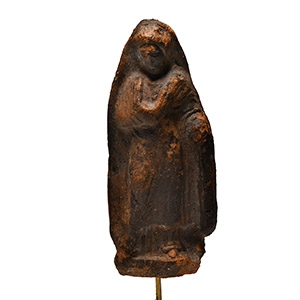
Hellenistic Terracotta Goddess Figure
Circa 2nd century B.C.-1st century A.D.Sold for (Inc. bp): £85
Modelled in the half-round on a tongue-shaped plaque, with right hand in the folds of the robe and left hand holding the hem; mounted on a custom-made stand. 155 grams total, 13.7 cm including stand
From a collection acquired on the UK art market from various auction houses and collections mostly before 2000. From an important Cambridgeshire estate; thence by descent. -
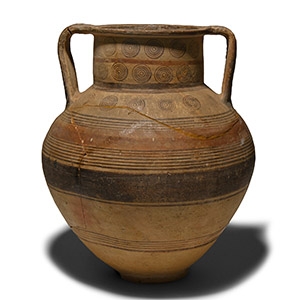
Large Cypriot Bichrome Ware Pottery Amphora
Iron Age, Cypro-Archaic I, 750-600 B.C.Sold for (Inc. bp): £1,430
The body with encircling red and black bands, the shoulder and neck with concentric circles, two strap handles; repaired. 4.05 kg, 37.5 cm high
From a collection acquired on the French art market from various auction houses and collections mostly before 2000. From an important Cambridgeshire estate; thence by descent. Accompanied by an original French cultural export licence no.129945. -
.jpg)
Greek Archaic Laconian Black-Figure Kylix Fragment Group Attributed to the Rider Painter
550-540 B.C.Sold for (Inc. bp): £1,820
Comprising six fragments from a bowl once decorated with concentric circles around a central disc with expanding black rays, remains of palmette to the sides of the handle; the internal base with two facing warriors holding spears and a wreath, the older one depicted with a beard. 67 grams total, 34-89 mm
Acquired in Europe before 1990. Private collection, Europe. Accompanied by an academic report by Dr Raffaele D’Amato. This lot has been checked against the Interpol Database of stolen works of art and is accompanied by search certificate number no.11820-206481.
The Rider Painter was a Laconian vase painter active between 560 and 530 B.C. and is considered to be one of the five great vase painters of Sparta. He painted various forms predominantly kylikes but also lebetes, a form rare in this area. He mainly painted scenes from mythology, such as figures like Cadmos or Heracles, and tales such as the blinding of Polyphemus. In addition, he realised pictures from everyday life. The attribution of these fragments to his workmanship can be supported by the motifs painted on the exterior decoration of the vessel, and by the shape of the birds and figures. The illustrated scene fits within the warrior society of Spartan Laconia.
