
Loading, please wait...
LOT 0618
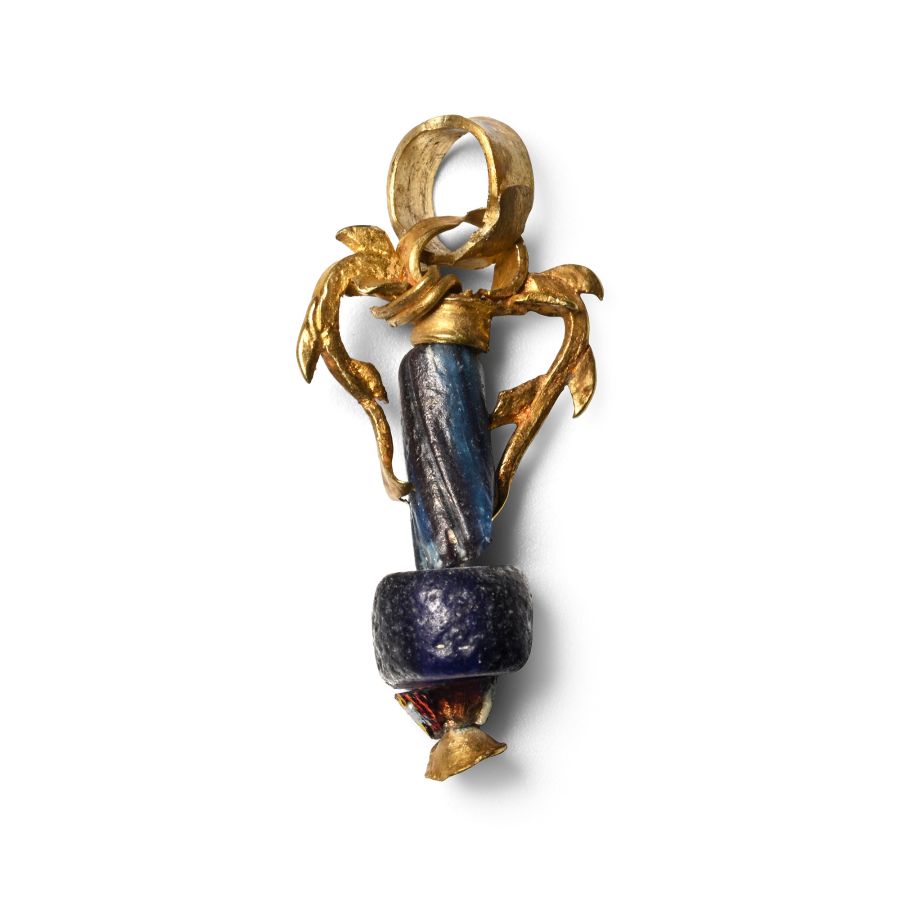
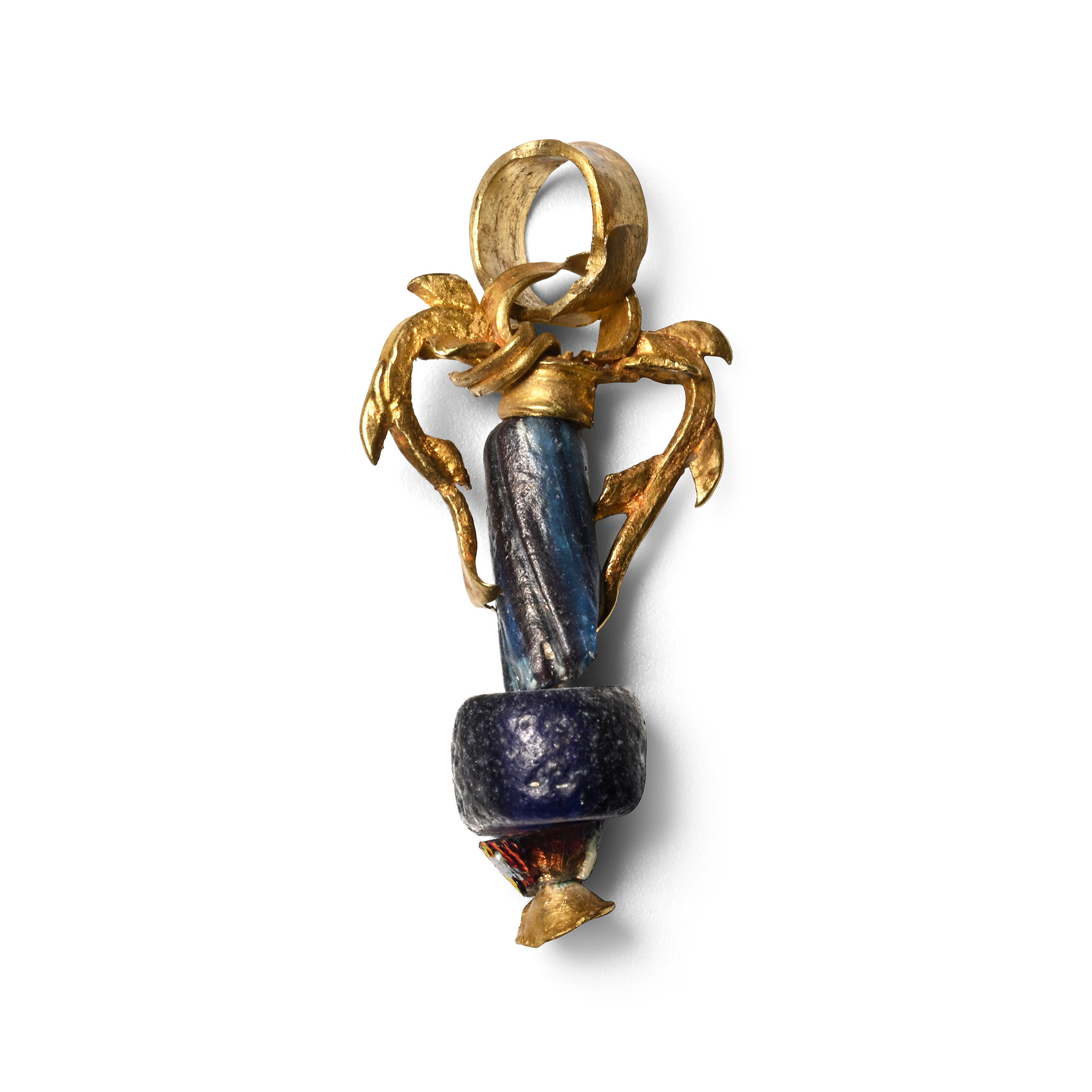
Hellenistic Gold Dolphin and Jasper Amphora Pendant
CIRCA 2ND-1ST CENTURY B.C.
1 in. (1.17 grams, 25 mm).
Formed as an amphora with cylindrical neck, biconical jasper body and small gold granulated bead; to the shoulders, two dolphins flanking the suspension loop, forming the handles of the amphora; each eye represented by a small circular cell to accept a gemstone; row of granulation down to the rear and around the perimeter of the eyes; loop added in antiquity for suspension.
ProvenanceFrom a late Japanese specialist collector, 1970-2000s.
LiteratureCf. The British Museum, museum number 1904,0706.1, for similar.
CONDITIONTimeLine Auctions follows a vetting process to ensure the authenticity and legality of all items, reinforcing our commitment to integrity and responsible trading. Each antiquity, antique, and coin lot undergoes thorough examination by a vetting committee of at least ten external specialists, professional trade association members, scientists, and archaeologists: Our Vetting Process
AUCTIONS:
TimeLine is a leading auction house specialising in antiquities, ancient art, collectables, natural history, coins, medals, and books. Our auctions offer museums, collectors, historians, and enthusiasts the opportunity to acquire unique and historically significant pieces.
-
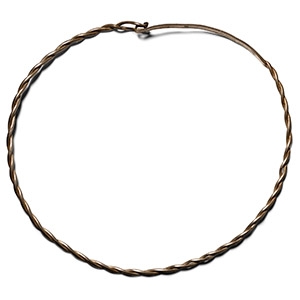
Thracian Decorated Silver Neck Torc
4th-3rd century B.C.Sold for (Inc. bp): £351
Formed from a round-section twisted rod forming a loop at one end, the other end hammered to a flat-section bar with a hooked end and punched pointillé decoration. 43 grams, 18 cm wide
Ex German art market, 2000s. Acquired from an EU collector living in London. From the collection of a Surrey, UK, gentleman. -
.jpg)
Greek Terracotta Fragment Group
4th century B.C. and laterSold for (Inc. bp): £52
Including a trumpet-shaped pot lid, D-section model animal and other items. 120 grams total, 39-73 mm
Acquired 1979-1999. London collection of the late Mr S.M., thence by descent. -
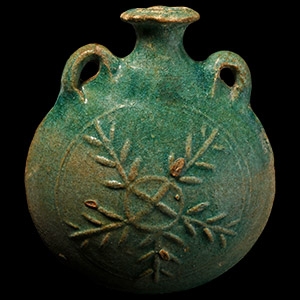
Parthian Blue-Glazed Water Vessel
2nd century B.C.Sold for (Inc. bp): £650
Discoid in plan and biconvex in section with trumpet-shaped spout and loop to each shoulder; radiating fronds to tondo on each face. 278 grams, 14.1 cm
Ex London, UK gallery, 1971-early 2000s. Private collection, London, UK.
