
Loading, please wait...
LOT 0541
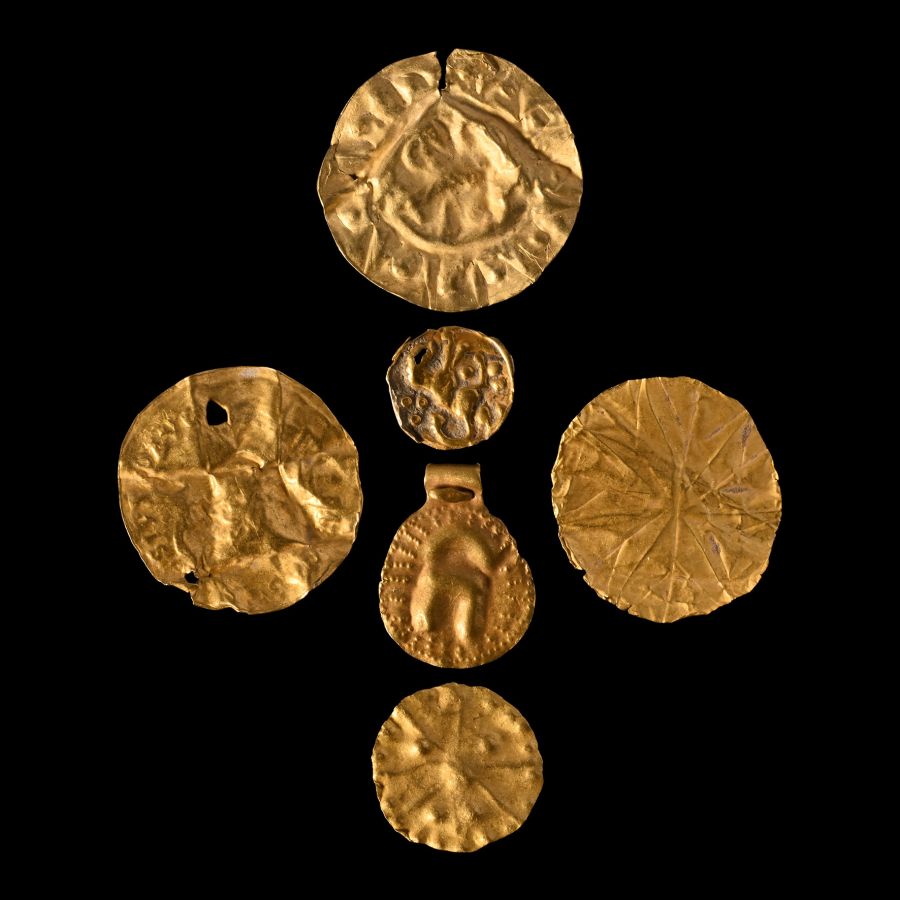
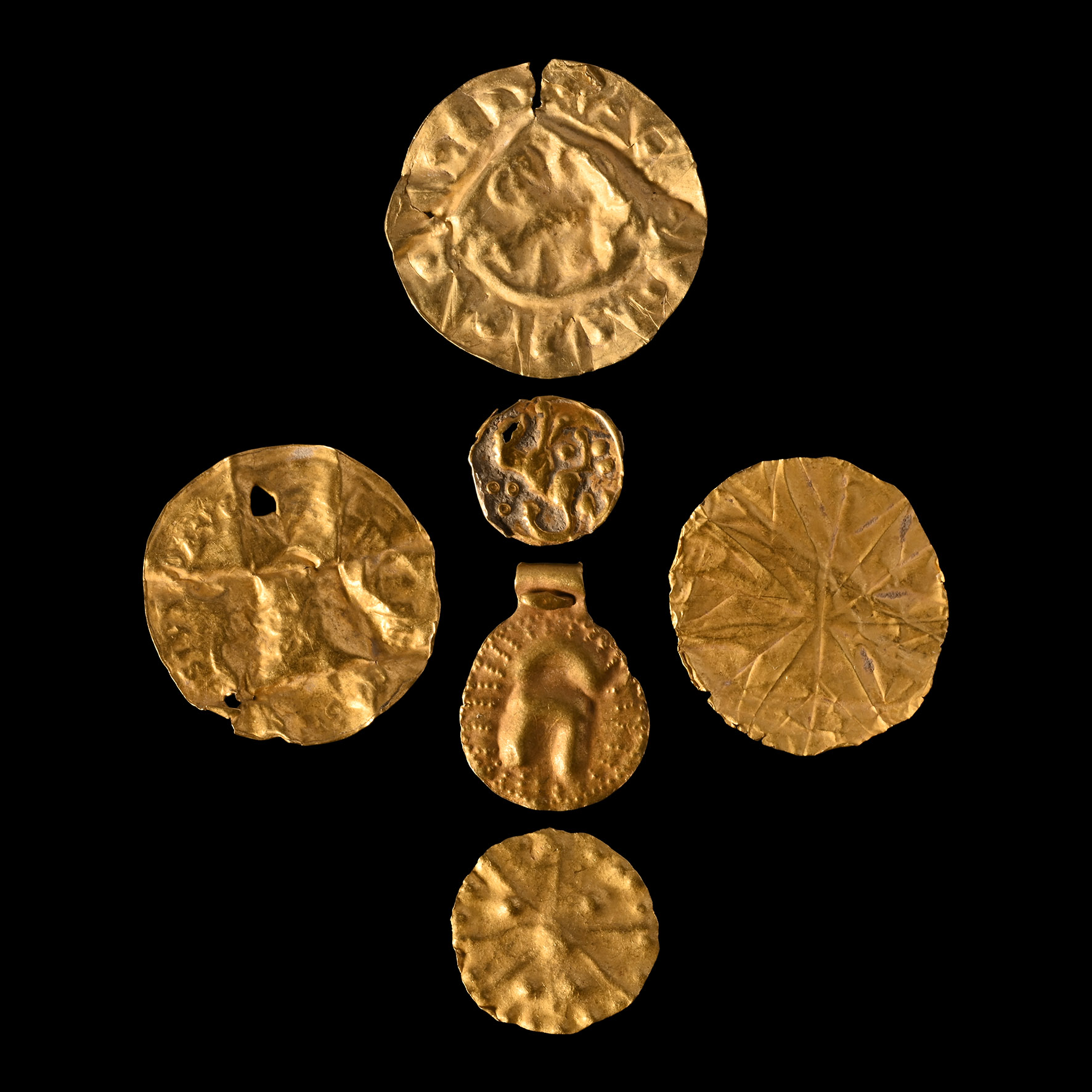
Hellenistic Gold Bracteate Group
2ND-1ST CENTURY B.C.
1/4 - 3/4 in. (1.71 grams total, 8-18 mm).
Comprising discoid bracteates of varying sizes with repoussé motifs including: geometric motifs; animal; possible temple; possible human head; together with other motifs, including examples which are pierced or have a suspension loop. [6]
ProvenanceFrom the private collection of the late Mr S.M., London, UK, thence by descent.
CONDITIONTimeLine Auctions follows a vetting process to ensure the authenticity and legality of all items, reinforcing our commitment to integrity and responsible trading. Each antiquity, antique, and coin lot undergoes thorough examination by a vetting committee of at least ten external specialists, professional trade association members, scientists, and archaeologists: Our Vetting Process
AUCTIONS:
TimeLine is a leading auction house specialising in antiquities, ancient art, collectables, natural history, coins, medals, and books. Our auctions offer museums, collectors, historians, and enthusiasts the opportunity to acquire unique and historically significant pieces.
-
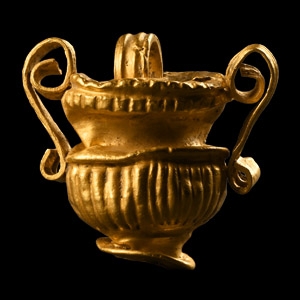
Hellenistic Gold Amphora-Shaped Pendant
2nd-1st century B.C.Sold for (Inc. bp): £390
Displaying decorative fluting; gusseted suspension loop and handles. 4.49 grams, 23 mm
From the collection of a North American gentleman, formed in the 1990s. -
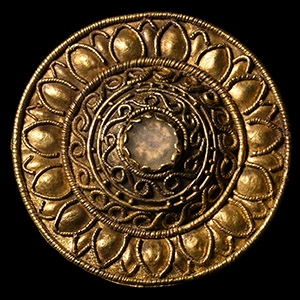
Eastern Greek Gold Turretted Brooch
5th-3rd century B.C.Sold for (Inc. bp): £845
Adorned with repoussé detailing and filigree borders and petals, domed centre with granules and applied scrolls, central corrugated claw set with glass(?); pin lug and catchplate to reverse. 8.74 grams, 40 mm
From the collection of a North American gentleman, formed in the 1990s. -
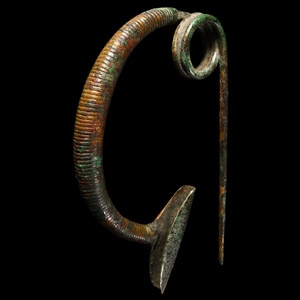
Massive Greek Bow Brooch
8th-6th century B.C.Sold for (Inc. bp): £182
Composed of a faux-twisted round-section body, tapering towards a catchplate and repaired integral coiled pin. 206 grams, 15 cm
Ex Garcia collection, France, 1990s-2000s.
