
Loading, please wait...
LOT 0531
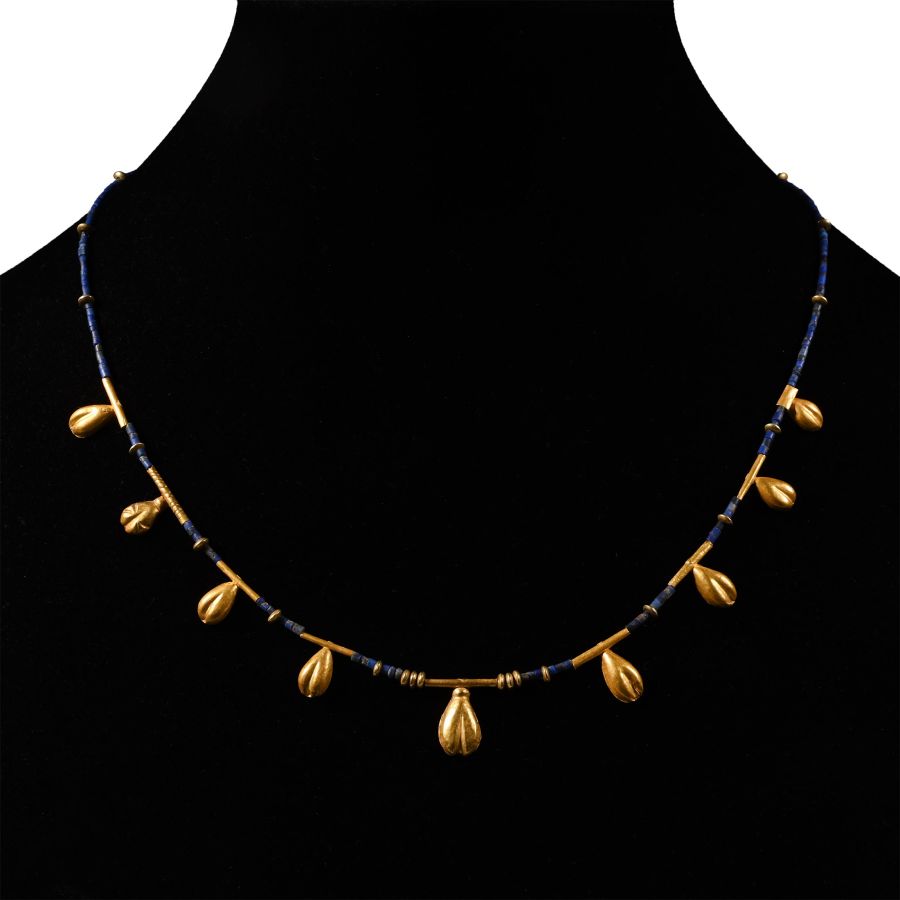
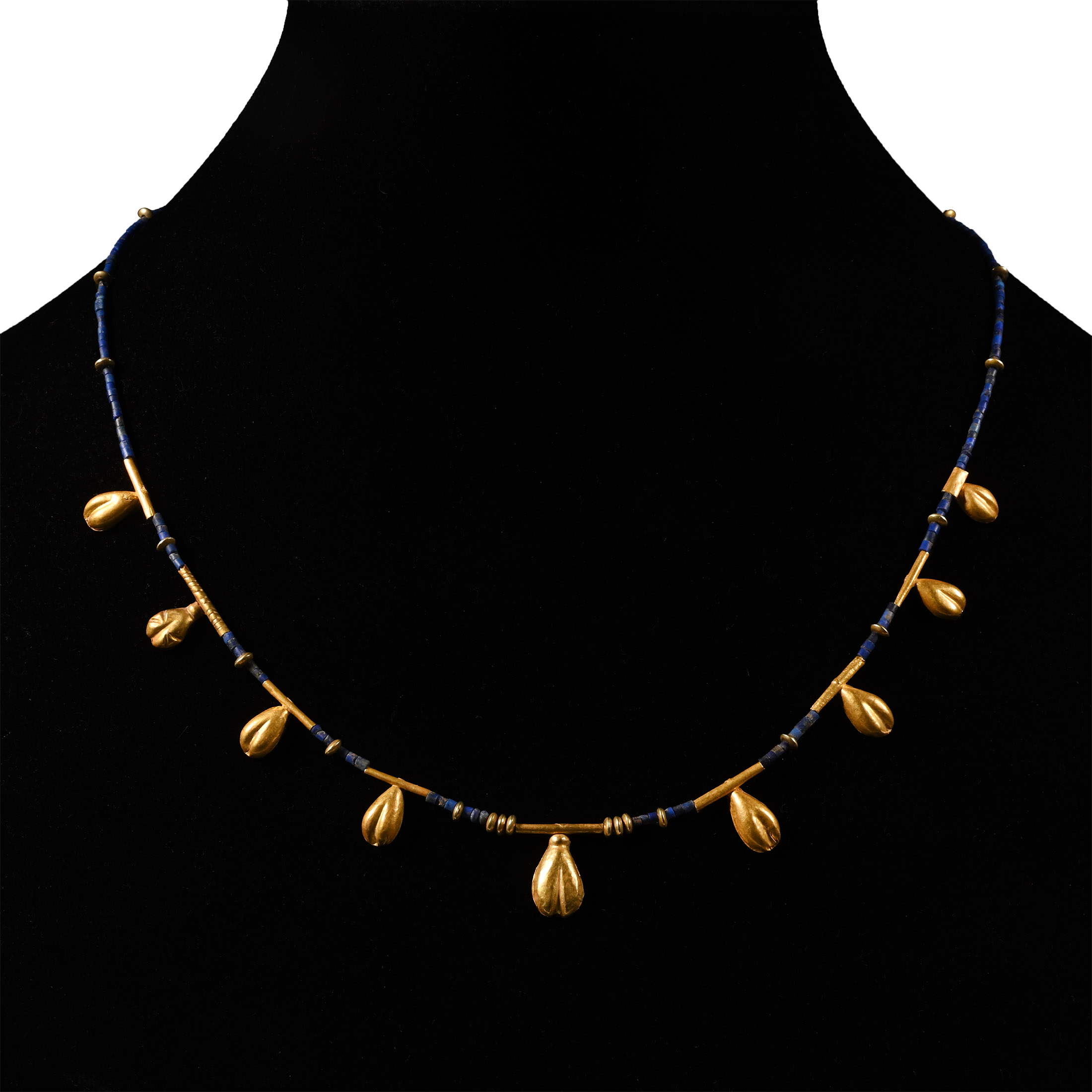
Hellenistic Gold and Lapis Lazuli Bead Necklace
1ST CENTURY B.C. AND LATER
17 3/8 in. (8.03 grams, 44 cm).
Composed of lapis lazuli seed beads interspersed with small gold discs, nine tubular pendants with a flower bud suspended from the centre; restrung with a modern S-hook clasp.
ProvenancePrivate collection of a London gentleman, acquired between 1965-2020.
This lot is accompanied by an illustrated lot declaration signed by the Head of the Antiquities Department, Dr Raffaele D'Amato.
TimeLine Auctions follows a vetting process to ensure the authenticity and legality of all items, reinforcing our commitment to integrity and responsible trading. Each antiquity, antique, and coin lot undergoes thorough examination by a vetting committee of at least ten external specialists, professional trade association members, scientists, and archaeologists: Our Vetting Process
AUCTIONS:
TimeLine is a leading auction house specialising in antiquities, ancient art, collectables, natural history, coins, medals, and books. Our auctions offer museums, collectors, historians, and enthusiasts the opportunity to acquire unique and historically significant pieces.
-
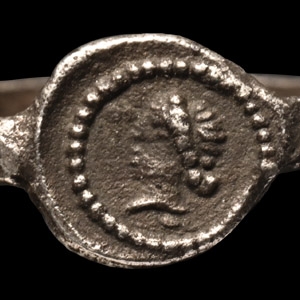
Greek Silver Ring with Portrait of Apollo
5th-3rd century B.C.Sold for (Inc. bp): £143
Comprising a slender square-section hoop and discoid bezel with low-relief image of diademed bust within pelletted border. 0.96 grams, 17.84 mm overall, 14.34 mm internal diameter (approximate size British G, USA 3 1/4, Europe 4.92, Japan 4)
Ex German art market, 2000s. Acquired from an EU collector living in London. From the collection of a Surrey, UK, gentleman. This lot is accompanied by an illustrated lot declaration signed by the Head of the Antiquities Department, Dr Raffaele D'Amato. -
.jpg)
Greek Attic Black-Figure Lekythos with Fighting Warriors
6th century B.C.Sold for (Inc. bp): £4,160
With flared foot, broad shoulder and trumpet-shaped mouth, strap handle to the rear; painted frieze with scene of two warriors fighting on foot with spears, watched by two silhouetted companions; ivy leaves to shoulder. 154 grams, 13.9 cm
Ex Gübelin, Switzerland, before 1970. with Fischer Luzern, 2006. Acquired by the previous owner from the above, 9 June 2006. Private collection, Europe. Accompanied by a copy of an Art Loss register certificate, no.S00066703. This lot has been checked against the Interpol Database of stolen works of art and is accompanied by a search certificate number no.12638-264603. This lot has been cleared against the Art Loss Register database, and is accompanied by an illustrated lot declaration signed by the Head of the Antiquities Department, Dr Raffaele D'Amato. -
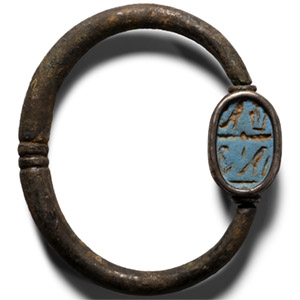
Etruscan Silver Bracelet with Mounted Scarab
6th century B.C.Sold for (Inc. bp): £1,820
Hollow-formed tapering shank with rotating cell containing a scarab with hieroglyphs to the underside. 24.8 grams, 57.6 mm
Acquired in the mid 1980s-1990s. Private collection, Switzerland, thence by descent. Private collection, since the late 1990s. This lot has been checked against the Interpol Database of stolen works of art and is accompanied by a search certificate number no.12660-234644. This lot has been cleared against the Art Loss Register database, and is accompanied by an illustrated lot declaration signed by the Head of the Antiquities Department, Dr Raffaele D'Amato.
