
Loading, please wait...
LOT 0620
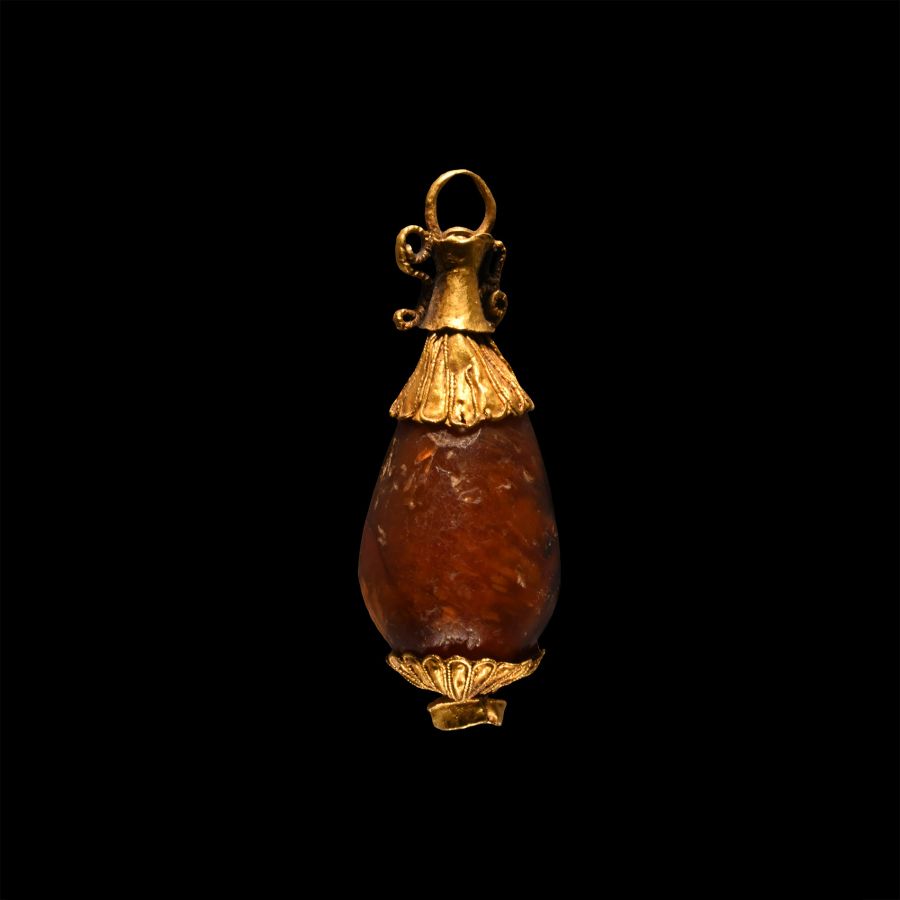
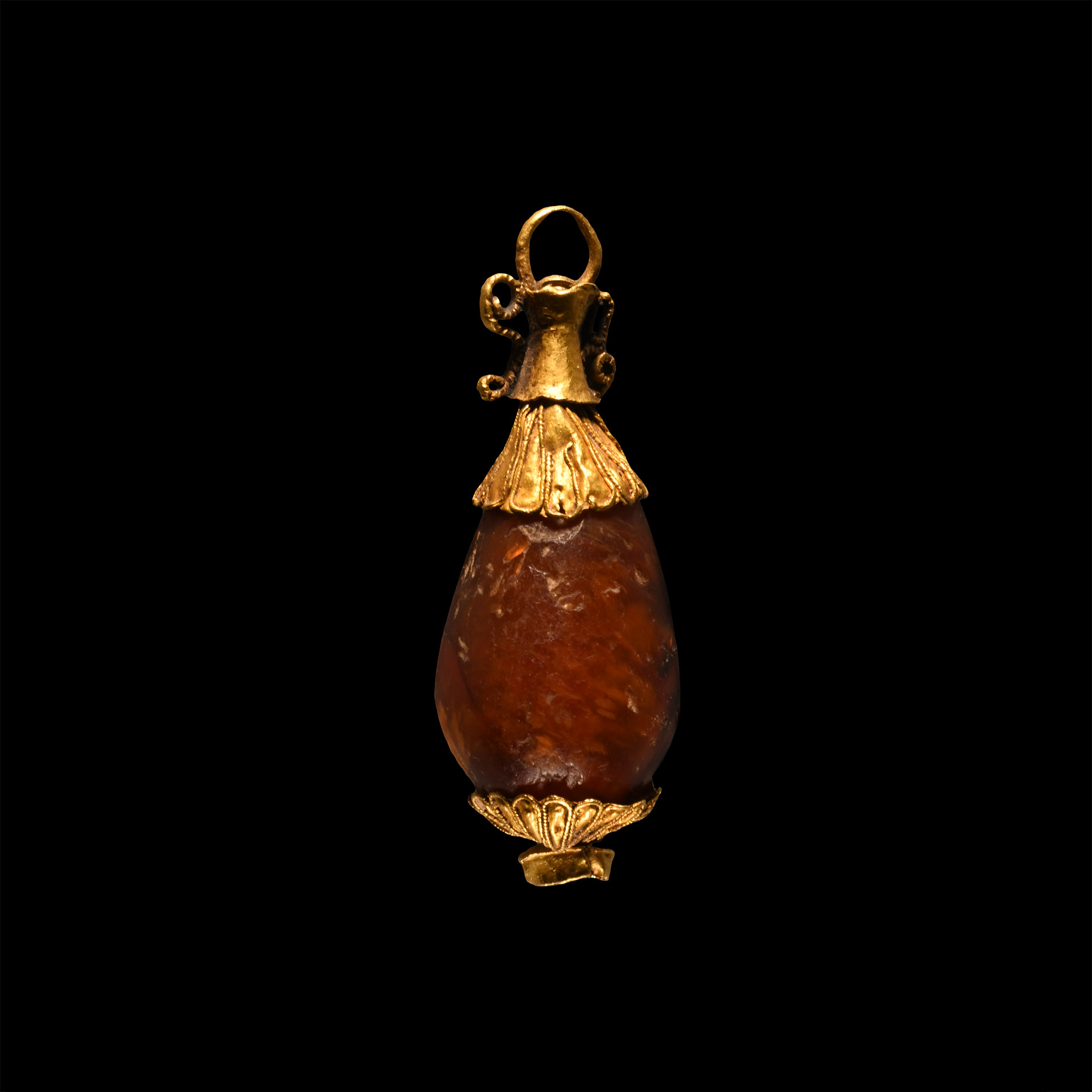
Hellenistic Gold Amphora-Shaped Pendant
3RD-1ST CENTURY B.C.
1 1/4 in. (3.64 grams, 30 mm).
Piriform carnelian centre with gold fittings, filigree loop handles.
ProvenanceAcquired from the collection of Mrs L.G., an Italian noble woman.
European private collection.
Cf. Marshall, F.H., Catalogue of the Jewellery, Greek, Etruscan and Roman, in the Department of Antiquities, British Museum, London, 1911, pl.XXXVI, for type.
CONDITIONTimeLine Auctions follows a vetting process to ensure the authenticity and legality of all items, reinforcing our commitment to integrity and responsible trading. Each antiquity, antique, and coin lot undergoes thorough examination by a vetting committee of at least ten external specialists, professional trade association members, scientists, and archaeologists: Our Vetting Process
AUCTIONS:
TimeLine is a leading auction house specialising in antiquities, ancient art, collectables, natural history, coins, medals, and books. Our auctions offer museums, collectors, historians, and enthusiasts the opportunity to acquire unique and historically significant pieces.
LOT 0620
Hellenistic Gold Amphora-Shaped Pendant
Estimate £600 - 800€700 - 930 (for guidance only)$810 - 1,080 (for guidance only)
-
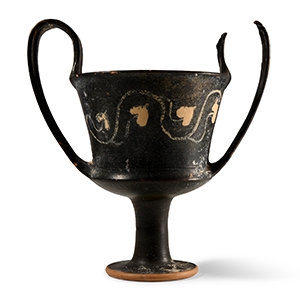
South Italian Blackware Kantharos with Ivy Branch
5th-4th century B.C.Estimate: £1,500 - 2,000 (‡+bp*)
Opening Bid: £750
The high-handled drinking cup with carinated lower body, discoid feet and vines painted to the equator. 525 grams, 22.2 cm
Acquired in the late-1980. Ex S.A. collection. -
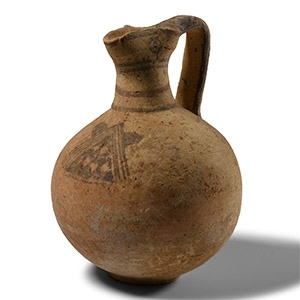
Cypriot 'Eyed' Trefoil-Mouthed Pottery Jug with Geometric Motif
Iron Age, circa 1200-600 B.C.Sold for (Inc. bp): £520
White ware globular jug with pinched trefoil mouth and strap handle to the rear; painted 'eye' detailing to mouth, serpent pattern to handle, hatched triangle motif to the body. 300 grams, 16 cm high
Ex Peter Cran collection, Scotland, who worked as an engineer for the Cypriot public works department 1931-1946; thence by descent. Acquired from Bonhams, London, 23 May 2012, no.6 (part). From an important Cambridgeshire estate; thence by descent. Accompanied by copies of the relevant Bonhams catalogue pages and original lot tag. -
.jpg)
Graeco-Parthian Bronze Mirror with Animals
2nd-1st century B.C.Sold for (Inc. bp): £585
Discoid flat mirror with piriform attachment bracket developing to an addorsed pair of animal heads, equine but with a single curved plume or horn between the ears; mounted on a custom-made stand. 516 grams total, 16.6 cm
UK private collection before 2000. UK art market. Property of a London gentleman.
