
Loading, please wait...
LOT 0626
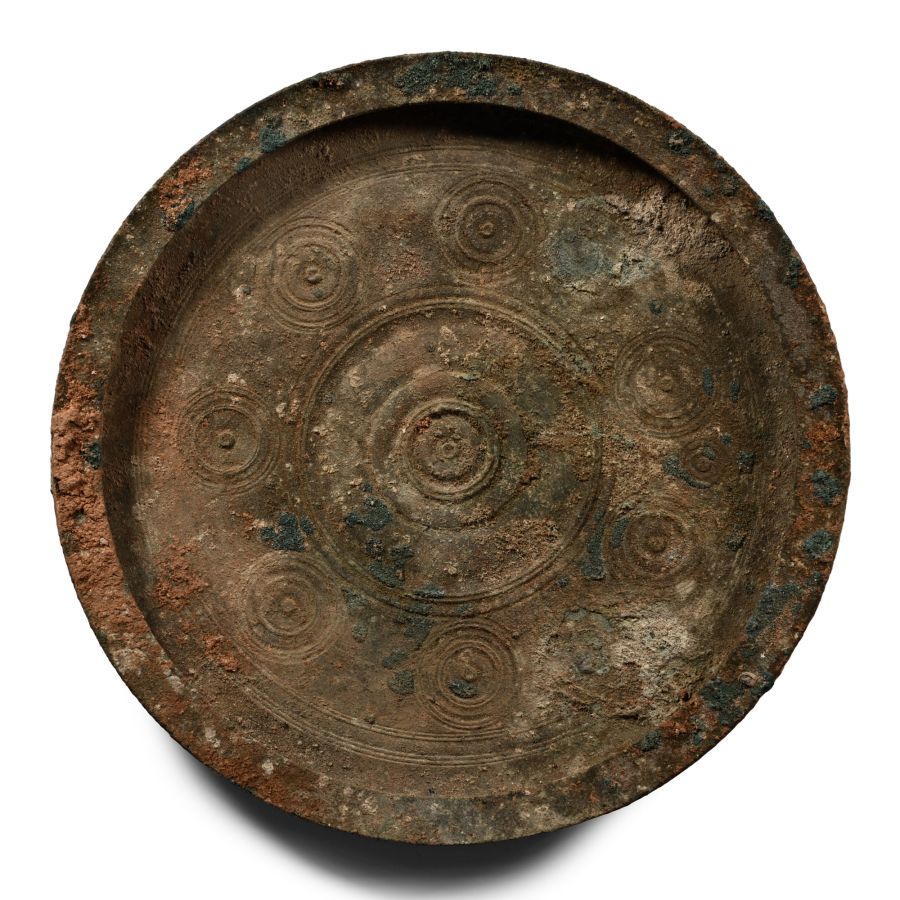
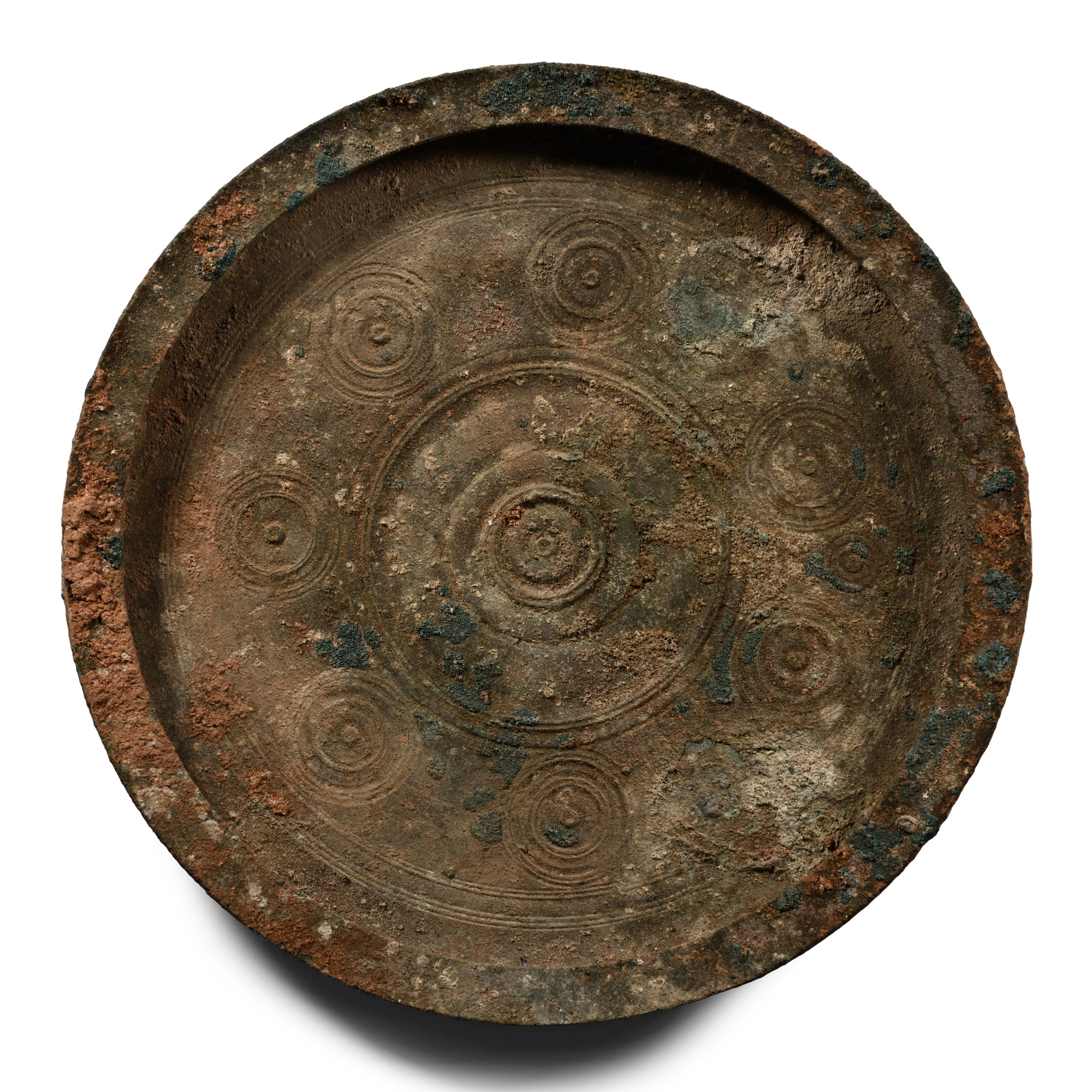
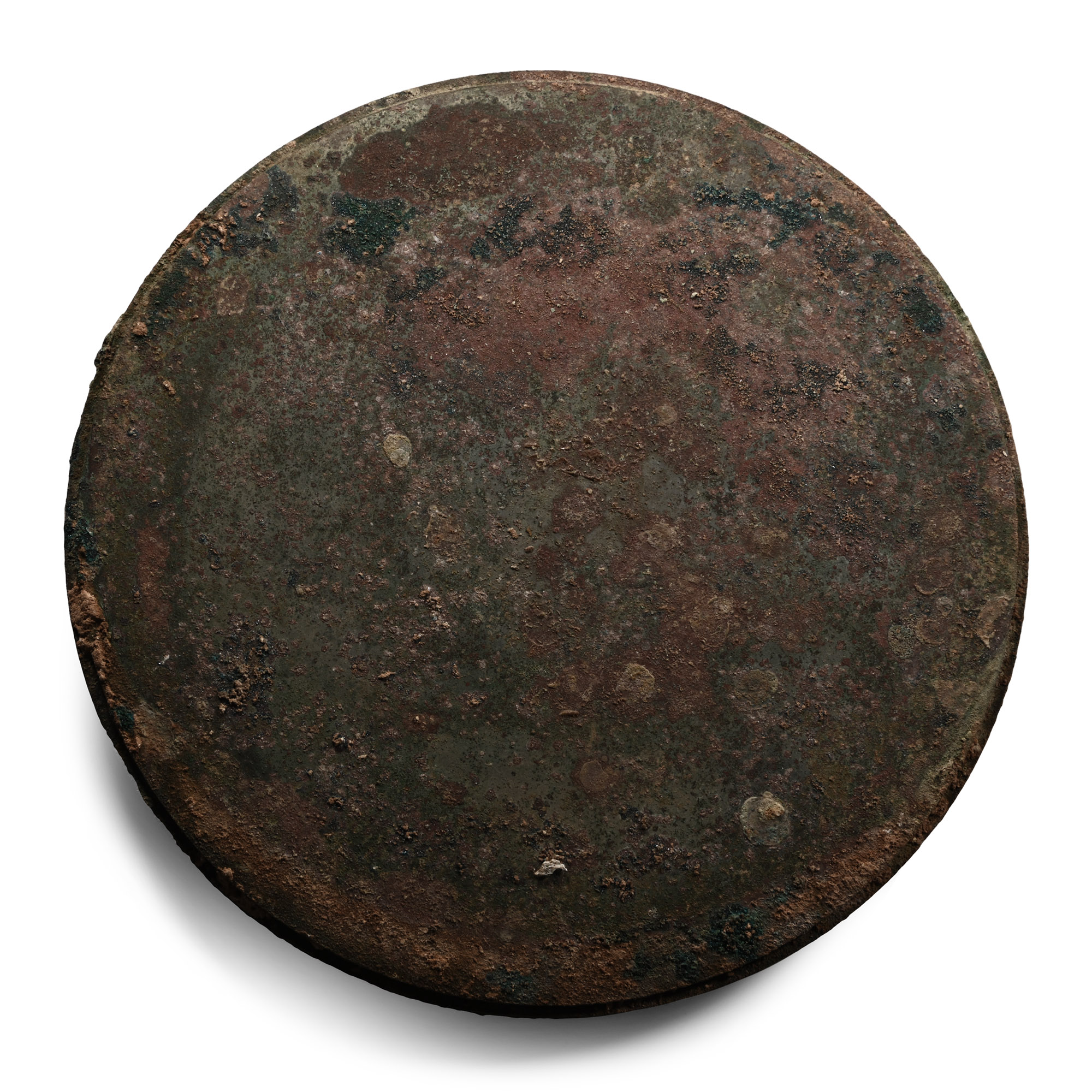
Hellenistic Decorated Bronze Mirror
2ND CENTURY B.C.
5 7/8 in. (440 grams, 15.1 cm).
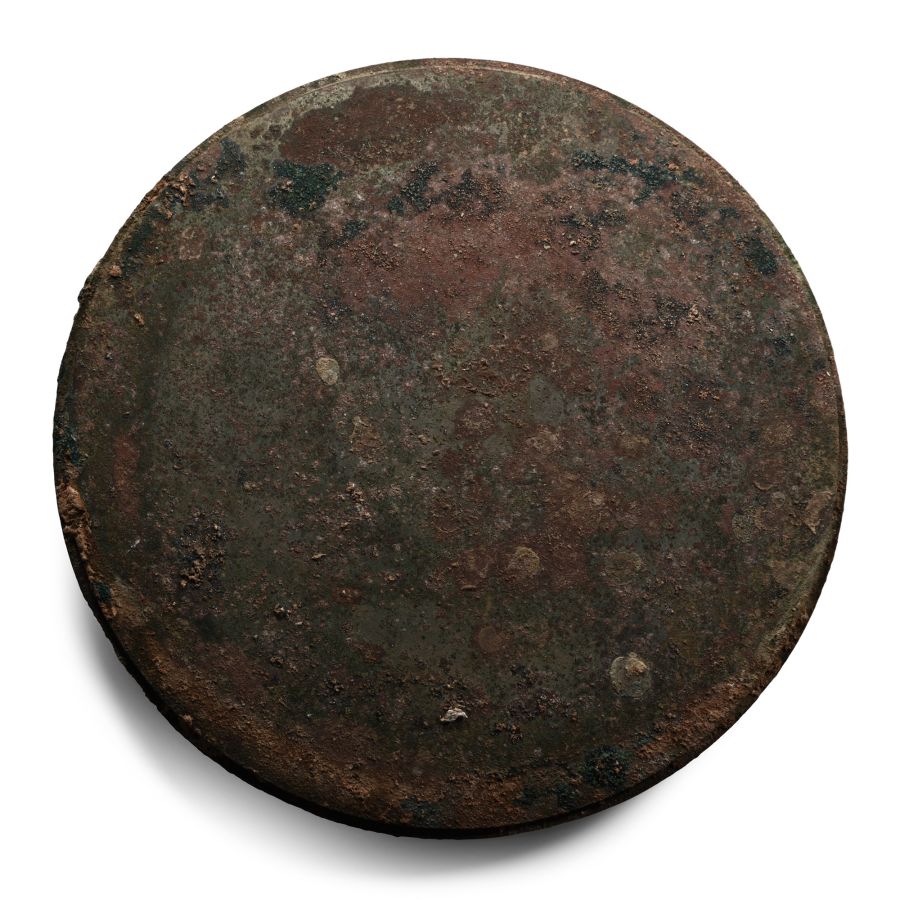
Discoid with slightly raised rim, low-relief concentric ring detailing to the reverse.
ProvenanceAcquired in the mid 1995.
Private collection, Switzerland, thence by descent.
Private collection, since the late 1990s.
Cf. for a specific parallel Richter, M.A., The Metropolitan Museum of Art, Greek, Etruscan and Roman bronzes, New York, 1915, no.784, p.269.
FootnotesThe category of this mirror is similar to those of the Cesnola collection, from Cyprus at the Metropolitan Museum. They consist of heavy circular disks, provided with low cylindrical rims. They were made in pairs, and polished respectively on the recessed and flat sides. The unpolished sides were ornamented with concentric-circle ornaments and concentric mouldings.
CONDITIONTimeLine Auctions follows a vetting process to ensure the authenticity and legality of all items, reinforcing our commitment to integrity and responsible trading. Each antiquity, antique, and coin lot undergoes thorough examination by a vetting committee of at least ten external specialists, professional trade association members, scientists, and archaeologists: Our Vetting Process
AUCTIONS:
TimeLine is a leading auction house specialising in antiquities, ancient art, collectables, natural history, coins, medals, and books. Our auctions offer museums, collectors, historians, and enthusiasts the opportunity to acquire unique and historically significant pieces.
-
Greek and Roman Bronze Statue Collection
4th century B.C.-4th century A.D.Estimate: £3,500 - 4,500 (‡+bp*)
Opening Bid: £1,750
Comprising: an Etruscan figure of Turms (Greek Hermes), standing and holding a patera in his right hand, original lead mounting beneath; a standing figure of nude Aphrodite, possibly later; figure of a Baubo with her legs bent and right hand touching her genitals; two standing bronze figures holding offerings. 352 grams total, 63-96 mm
Hermes from the estate of a Swiss gentleman, Ticino, before 1970. Sardinian figure ex private collection of Prof. Dr Hans (1918-1984) and Dr Ines (1922-2013) Jucker, classical archaeologists, Bern, Switzerland. with Galerie Rhéa, Zurich, Switzerland. This lot has been checked against the Interpol Database of stolen works of art and is accompanied by a search certificate number no.12669-236450. -
Greek Bronze Bow Brooch
4th-2nd century B.C.Sold for (Inc. bp): £65
Comprising a tapering bow with median cluster of two bulbs, one arm extending to a single-loop spring and pin, the other widening to a coil and flat catch with curved edge and lateral spur above. 12.9 grams, 42 mm
From the estate of a West Sussex, UK, archaeology collector. From the property of a late Lincolnshire, UK, gentleman. -
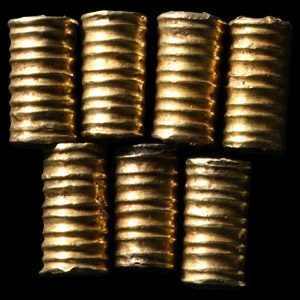
Late Eastern Mediterranean Gold and Silver Fluted Beads
Bronze Age, 1550-1050 B.C.Sold for (Inc. bp): £351
Comprising seven fluted beads, each formed from sheet-gold over a silver core. 19.61 grams total, 15 mm each
Private English collection, formed between the late 1970s and early 1990s. Private collection, UK.
