
Loading, please wait...
LOT 0538
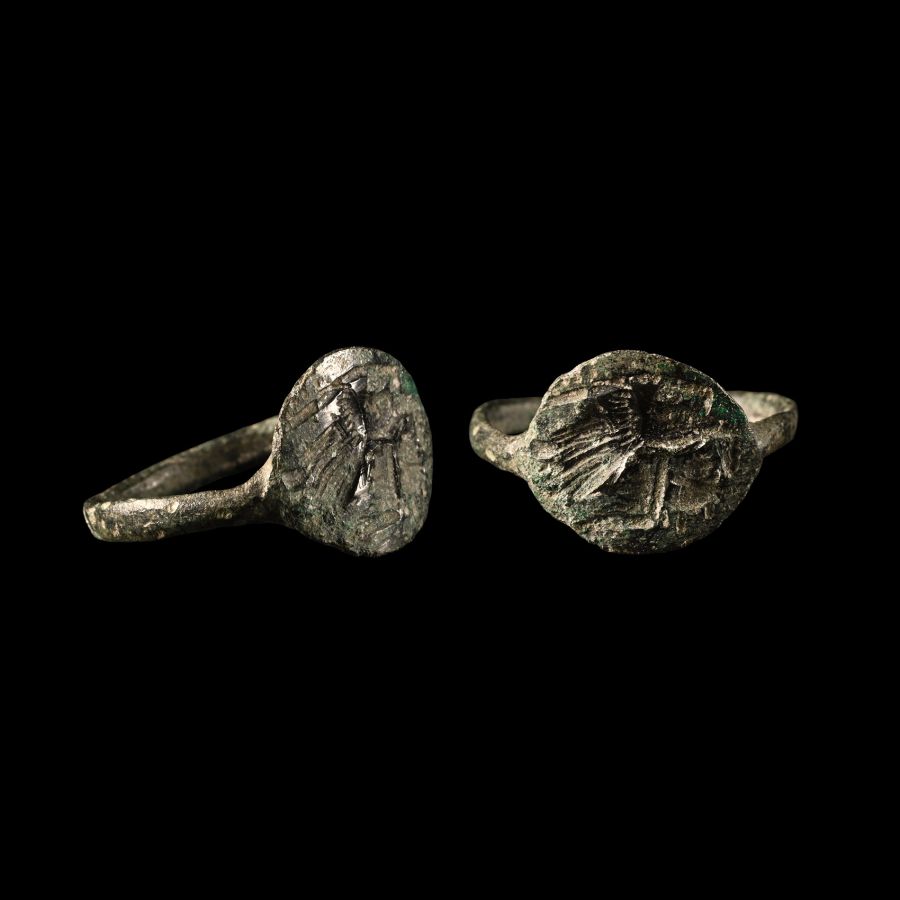
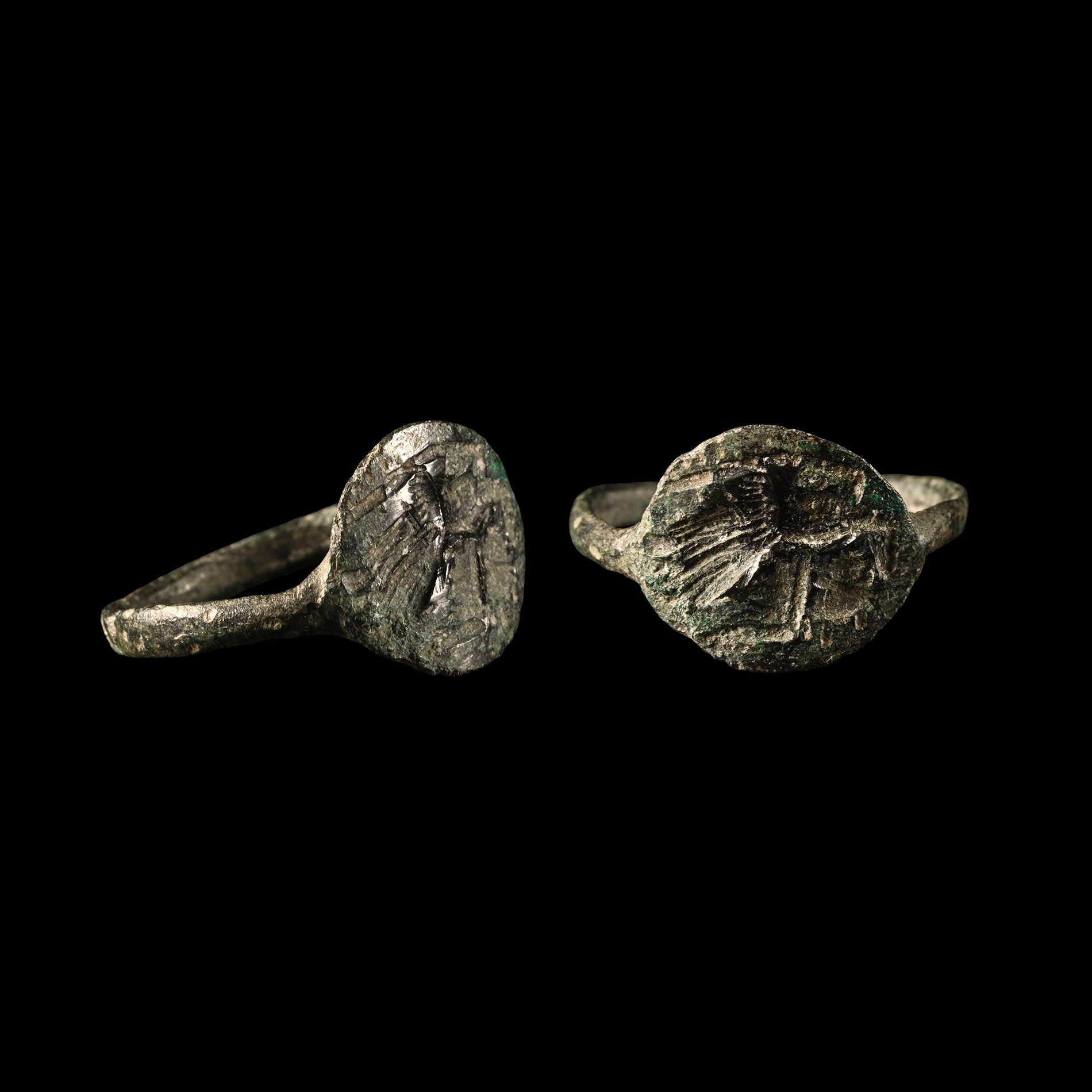
Hellenistic Bronze Ring with Horse Motif
CIRCA 2ND-1ST CENTURY B.C.
3/4 in. (2.16 grams, 20.95 mm overall, 18.48 mm internal diameter (approximate size British Q, USA 8, Europe 17.49, Japan 16)).
Displayed in relief on a broad elliptical bezel. [No Reserve]
ProvenanceAcquired 1990s-early 2000s.
East Anglian private collection.
TimeLine Auctions follows a vetting process to ensure the authenticity and legality of all items, reinforcing our commitment to integrity and responsible trading. Each antiquity, antique, and coin lot undergoes thorough examination by a vetting committee of at least ten external specialists, professional trade association members, scientists, and archaeologists: Our Vetting Process
AUCTIONS:
TimeLine is a leading auction house specialising in antiquities, ancient art, collectables, natural history, coins, medals, and books. Our auctions offer museums, collectors, historians, and enthusiasts the opportunity to acquire unique and historically significant pieces.
-
.jpg)
Eastern Greek Carnelian Scarab Seal
6th-5th century B.C.Sold for (Inc. bp): £5,200
Modelled with semi-naturalistic anatomical detailing, the base displaying a battle showing a mature and muscular naked man grappling with a winged gryphon; drilled for suspension. 2.29 grams, 16 mm
Ex F.A., Brussels, 1980. Private collection of a London antiquarian.
Combat between a man and gryphon is a well-attested subject matter on Greek scarabs. A faience factory was found in Naukratis by Flinders-Petrie, with innumerable faience and discarded moulds. The motifs on the bottom surface are repetitive and hurriedly worked. They depict lucky symbols or representative subjects (lions with sun disc, ibex, Horus falcons, lotus flowers); such motifs had already been adopted into Greek art but are generally considered typically Egyptian. Here the subject of a fight against a gryphon is Greek, although the style of the fighting character seems Phoenician, which points to Eastern Mediterranean workmanship, possibly on the Island of Rhodes. -
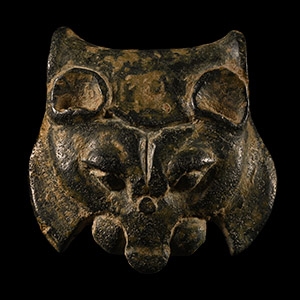
Greek Zoomorphic Bronze Hydria Handle Attachment
Circa 5th-4th century B.C.Estimate: £500 - 700 (+bp*)
Opening Bid: £200
Modelled as a skinned lion's head with fierce facial detailing; made for soldering to an articulated round handle. 98 grams, 51 mm high
Private collection, Germany, 1980s. Acquired on the UK art market 2010.
The handles were usually shaped as divinities or animals linked with gods (ie. lions for Herakles). A similar specimen can be seen in the Berlin Museum (inv.7491), from Athens. -
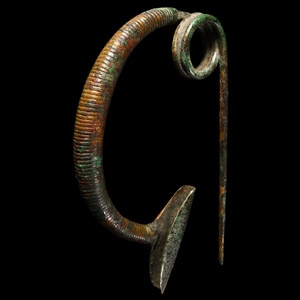
Massive Greek Bow Brooch
8th-6th century B.C.Sold for (Inc. bp): £182
Composed of a faux-twisted round-section body, tapering towards a catchplate and repaired integral coiled pin. 206 grams, 15 cm
Ex Garcia collection, France, 1990s-2000s.
