
Loading, please wait...


LOT 0071
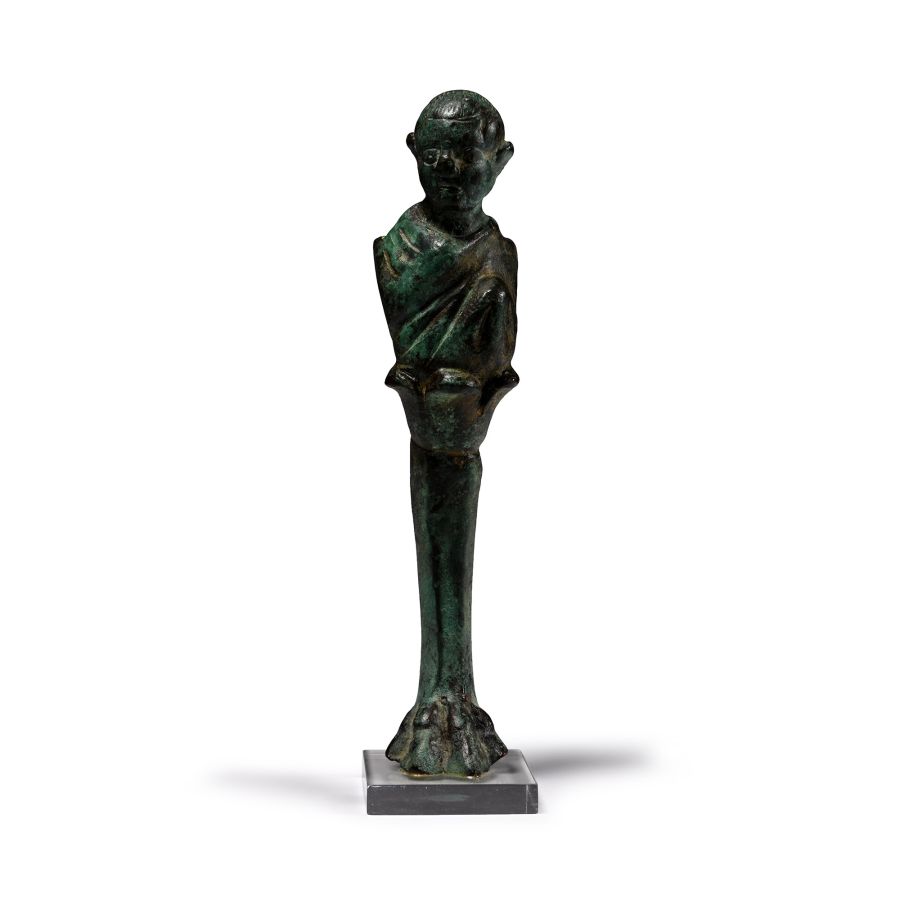
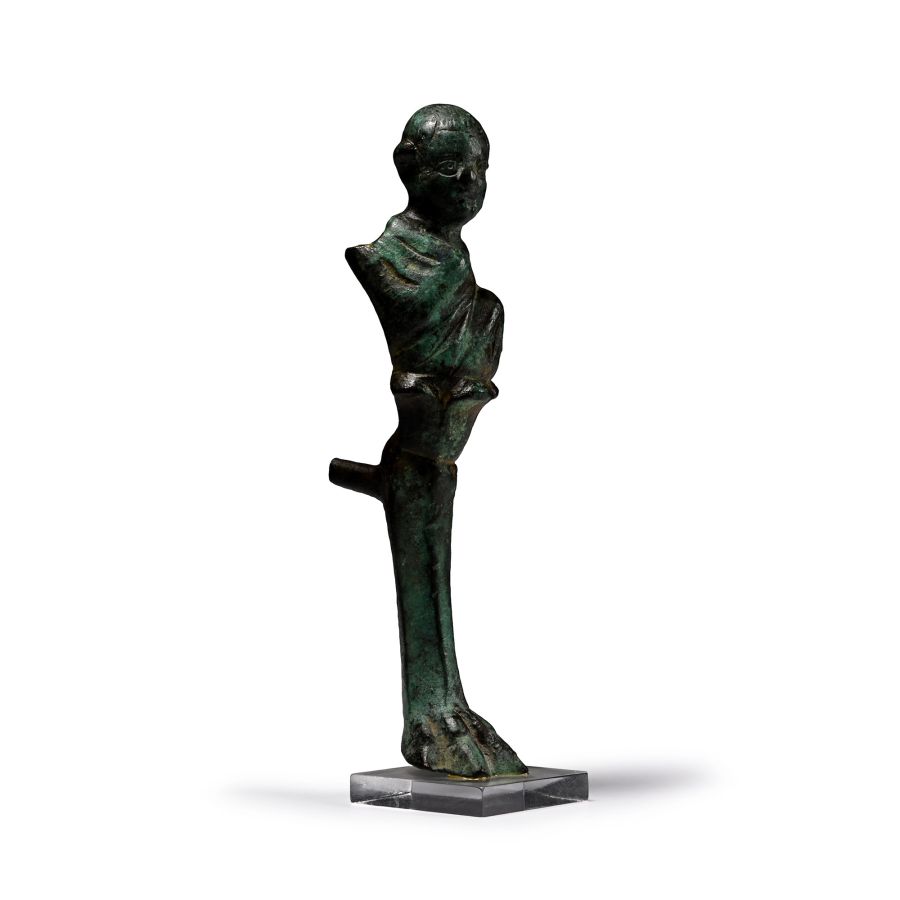
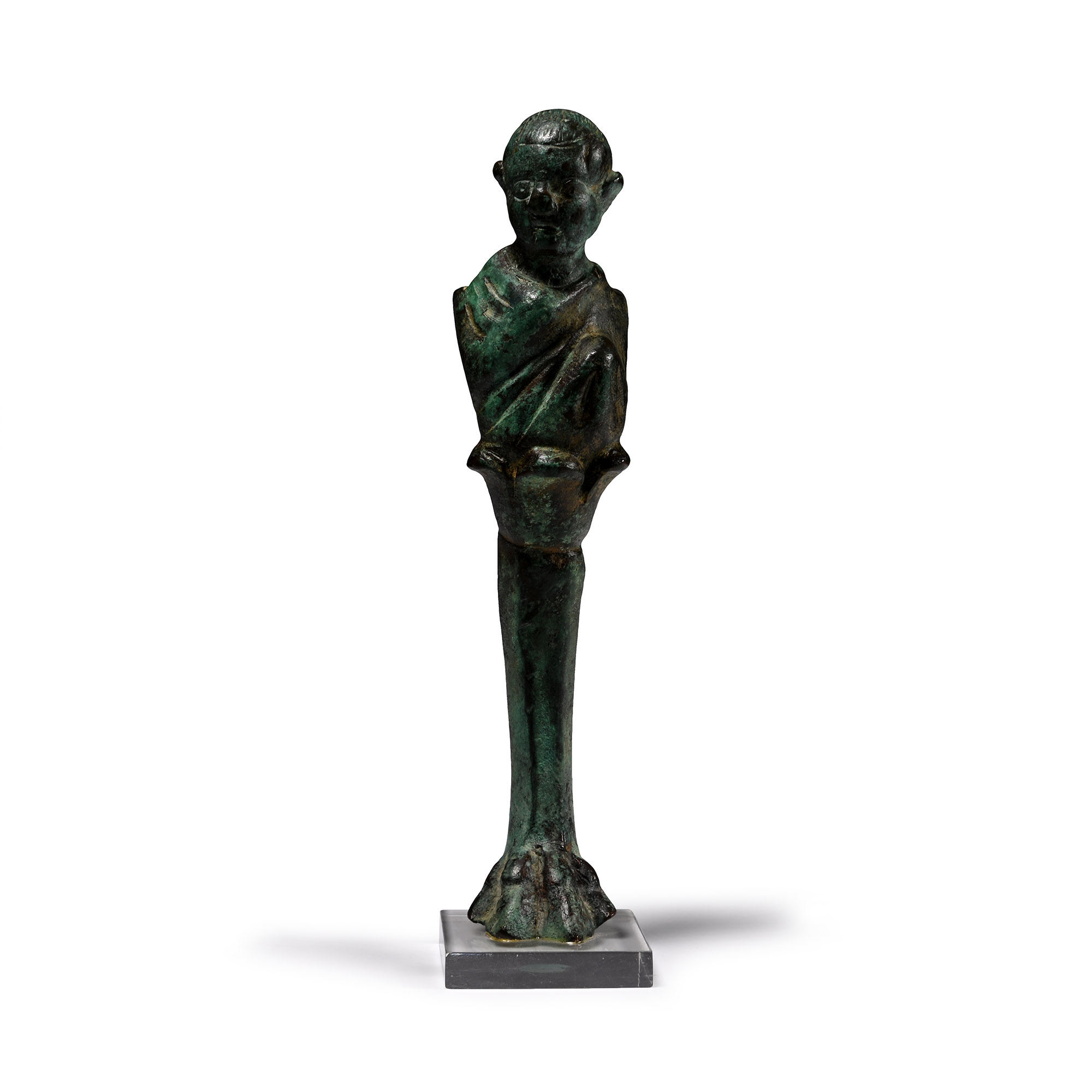
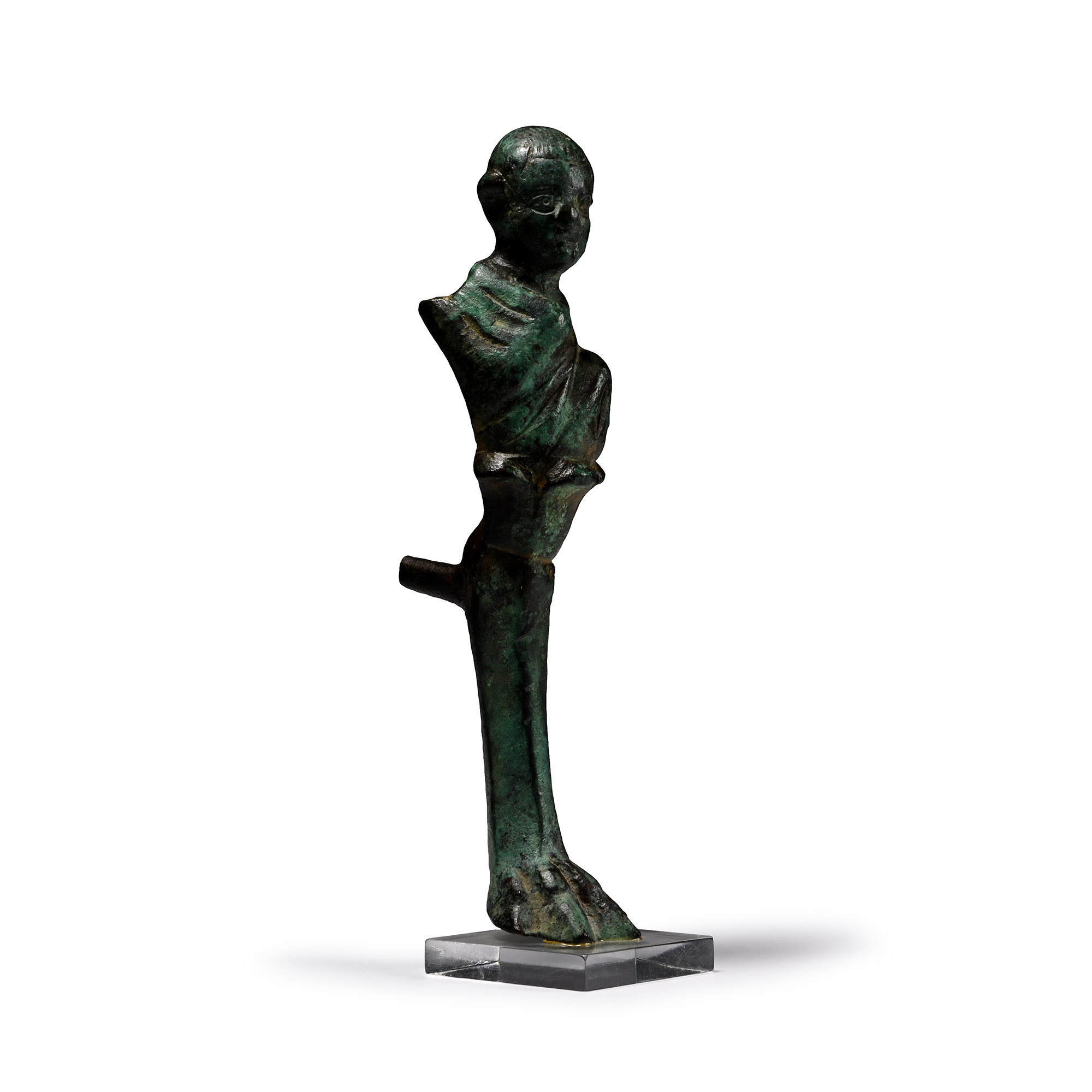
Hellenistic Bronze Furniture Mount with Mime
ALEXANDRIA, 1ST CENTURY B.C.
4 3/4 in. (130 grams total, 11.9 cm including stand).
Modelled with large prominent ears and neatly cut short hair, rounded facial detailing with large eyes and flattened nose, the upper body and hands wrapped inside a pleated cloak, hollow to the reverse; the bust emerging from a lotus flower resting atop a lion's claw foot with a mounting spike on the reverse; mounted on a display stand.
ProvenanceCollection of Ambassador G.P., nr.126, before 1965.
with Galerie Rhéa, Zurich, Switzerland.
This lot is accompanied by an illustrated lot declaration signed by the Head of the Antiquities Department, Dr Raffaele D'Amato.
TimeLine Auctions follows a vetting process to ensure the authenticity and legality of all items, reinforcing our commitment to integrity and responsible trading. Each antiquity, antique, and coin lot undergoes thorough examination by a vetting committee of at least ten external specialists, professional trade association members, scientists, and archaeologists: Our Vetting Process
AUCTIONS:
TimeLine is a leading auction house specialising in antiquities, ancient art, collectables, natural history, coins, medals, and books. Our auctions offer museums, collectors, historians, and enthusiasts the opportunity to acquire unique and historically significant pieces.
LOT 0071
Hellenistic Bronze Furniture Mount with Mime
Estimate £800 - 1,000€930 - 1,160 (for guidance only)$1,080 - 1,350 (for guidance only)
-
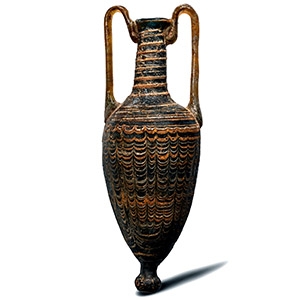
Greek Core-Formed Glass Amphoriskos
5th-3rd century B.C.Estimate: £3,000 - 4,000 (+bp*)
Opening Bid: £1,350
Elongated piriform amphora shape, tubular neck and everted rim, decorated with polychrome festooning and trails, applied amber-green handles and knop foot. 152 grams, 18 cm high
Acquired early 1990s. Ex private American collection; thence by descent. Private collection since 1998. This lot has been checked against the Interpol Database of stolen works of art and is accompanied by search certificate number no.12206-222129. This lot has been cleared against the Art Loss Register database, and is accompanied by an illustrated lot declaration signed by the Head of the Antiquities Department, Dr Raffaele D'Amato. -

Hellenistic Floral Gold Pendant with Garnet
2nd-1st century B.C.Estimate: £400 - 600 (+bp*)
Opening Bid: £200
Sheet-gold disc with integral loop, repoussé design of twelve radiating petals, pellets to the rim and loop, central cell with inset garnet bead. 0.92 grams, 25 mm
Formerly with Lyon & Turnbull, UK. Ex Surrey, UK, collection, 2000s. This lot is accompanied by an illustrated lot declaration signed by the Head of the Antiquities Department, Dr Raffaele D'Amato. -
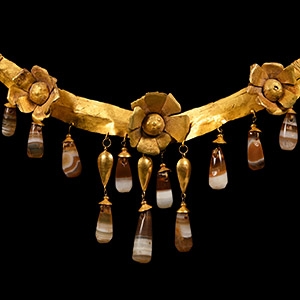
Eastern Greek Gold Necklace Element with Agate Drops
Circa 3rd century B.C.Sold for (Inc. bp): £4,940
Crescentic frontal panel from a necklace or collar; sheet gold band with slight carination, lightly incised leaf and berry detailing; applied filigree band to each end with double-loop attachment points; three applied foil rosettes; eleven banded agate dangles to the lower edge with sheet gold suspension; a marriage of ancient parts. 33.84 grams, 15.2 cm
Acquired in the mid 1980s-1990s. Private collection, Switzerland, thence by descent. Private collection, since the late 1990s. Accompanied by an academic report by Dr Raffaele D’Amato. This lot has been checked against the Interpol Database of stolen works of art and is accompanied by a search certificate number no.12591-232174. This lot has been cleared against the Art Loss Register database, and is accompanied by an illustrated lot declaration signed by the Head of the Antiquities Department, Dr Raffaele D'Amato.
Rosettes were one of the most desired decorations on jewellery. Diadems with rosettes are attested from the archaic period onwards. One of the rosette types was the so-called flower-head from Madytos, which most closely resembled the common wild or dog rose. The rose was, of course, much prized in ancient times for its wonderful scent and as the favoured flower of Aphrodite, the goddess of love: the lyric poet Anakreon called it ‘the perfume of gods, the joy of men’.
