
Loading, please wait...

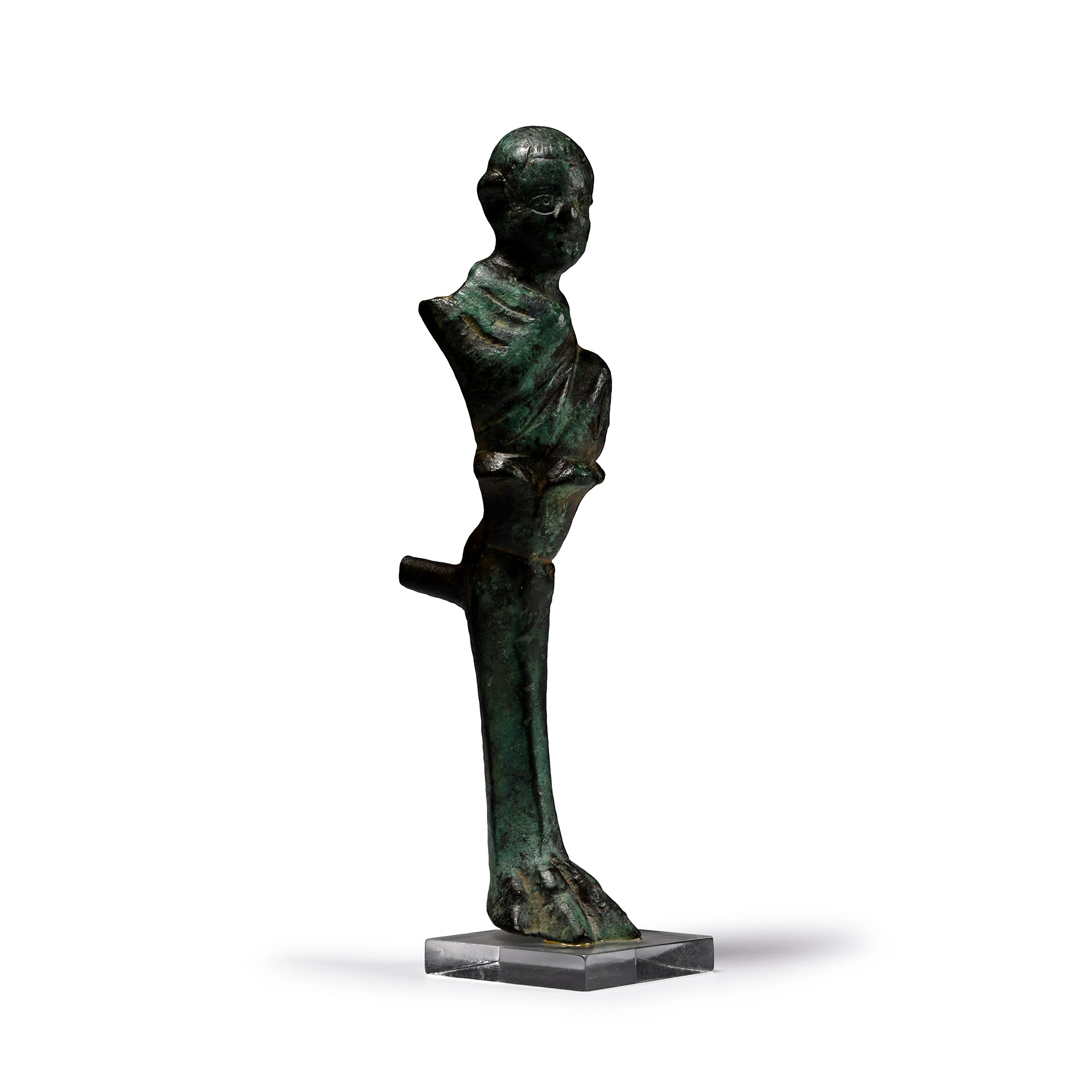
LOT 0068
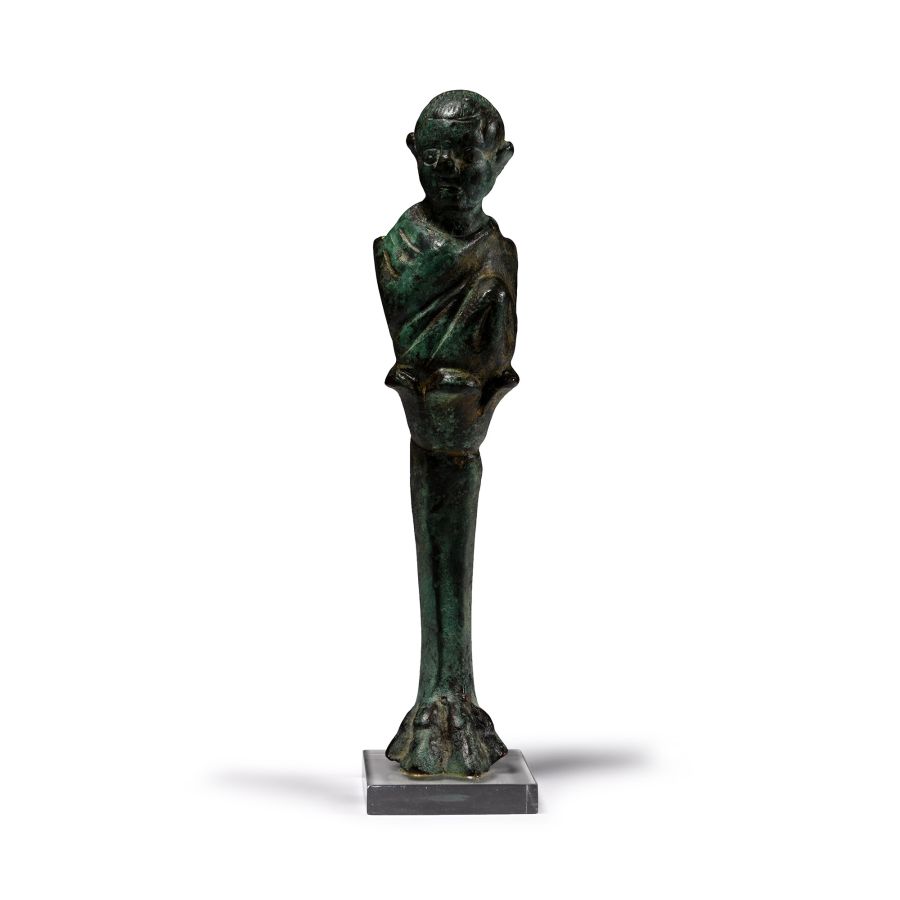
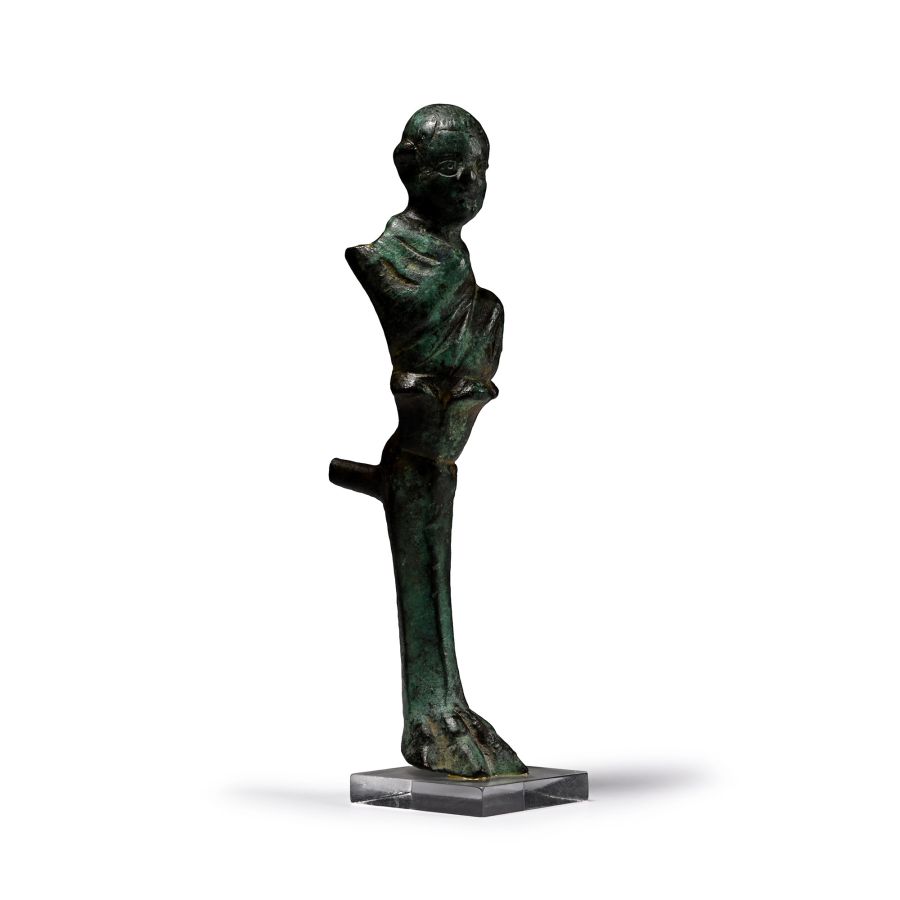
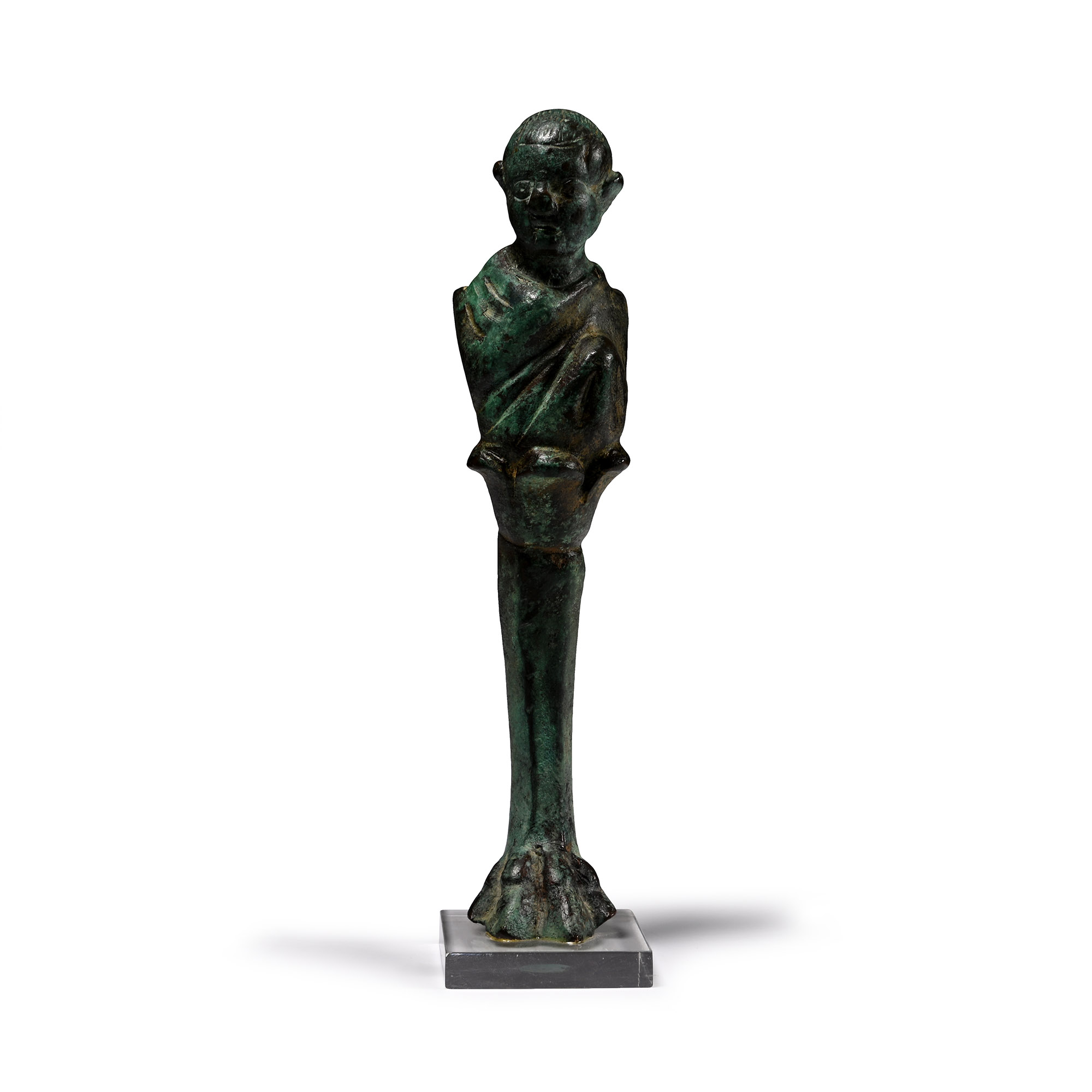
Hellenistic Bronze Furniture Mount with Mime Actor
ALEXANDRIA, 1ST CENTURY B.C.
4 3/4 in. (130 grams total, 11.9 cm including stand).
Modelled with large prominent ears and neatly cut short hair, rounded facial detailing with large eyes and flattened nose, the upper body and hands wrapped inside a pleated cloak, hollow to the reverse; the bust emerging from a lotus flower resting atop a lion's claw foot with a mounting spike on the reverse; mounted on a display stand.
ProvenanceCollection of Ambassador G.P., nr.126, before 1965.
with Galerie Rhéa, Zurich, Switzerland.
TimeLine Auctions follows a vetting process to ensure the authenticity and legality of all items, reinforcing our commitment to integrity and responsible trading. Each antiquity, antique, and coin lot undergoes thorough examination by a vetting committee of at least ten external specialists, professional trade association members, scientists, and archaeologists: Our Vetting Process
AUCTIONS:
TimeLine is a leading auction house specialising in antiquities, ancient art, collectables, natural history, coins, medals, and books. Our auctions offer museums, collectors, historians, and enthusiasts the opportunity to acquire unique and historically significant pieces.
LOT 0068
Hellenistic Bronze Furniture Mount with Mime Actor
Estimate £700 - 900€810 - 1,040 (for guidance only)$950 - 1,220 (for guidance only)
-
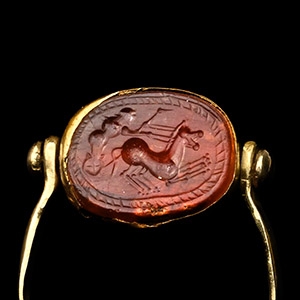
Etruscan Carnelian Scarab of a Charioteer in a Later Gold Ring
3rd century B.C.Estimate: £4,000 - 6,000 (+bp*)
Opening Bid: £2,000
Opaque scaraboid engraved with a dynamic scene of a charioteer driving a biga with his whip raised; set in a sheet-gold mount and a later swivel ring. 4.26 grams, 25.07 mm overall, 17.77 x 16.22 mm internal diameter (approximate size British O, USA 7, Europe 14.98, Japan 14)
Private English collection, formed between the late 1970s and early 1990s. Private collection, UK. This lot has been checked against the Interpol Database of stolen works of art and is accompanied by search certificate number no.12948-245985. -
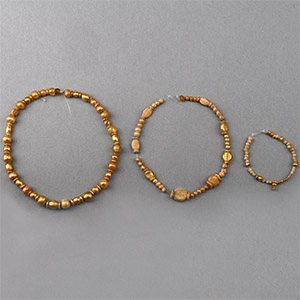
Hellenistic Gold in Glass Bead Group
Circa 100 B.C.-200 A.D. and laterSold for (Inc. bp): £715
Comprising beads encasing gold foil beneath a transparent glass layer, strung in three separate strands of various lengths. 19.74 grams total, 10-26.5 cm
Prince collection, 1990s-2014. Ex private collection 1970s-1990s. -
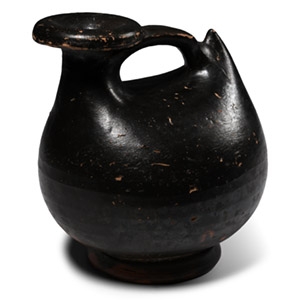
Greek Black-Glazed Terracotta Askos
4th century B.C.Sold for (Inc. bp): £416
A pouring vessel with bulbous body and funicular spout, central strap handle. 160 grams, 97 mm high
Ex C.R., Ticino, before 1970. with Galerie Rhéa, Zurich, Switzerland.
