
Loading, please wait...
LOT 1458
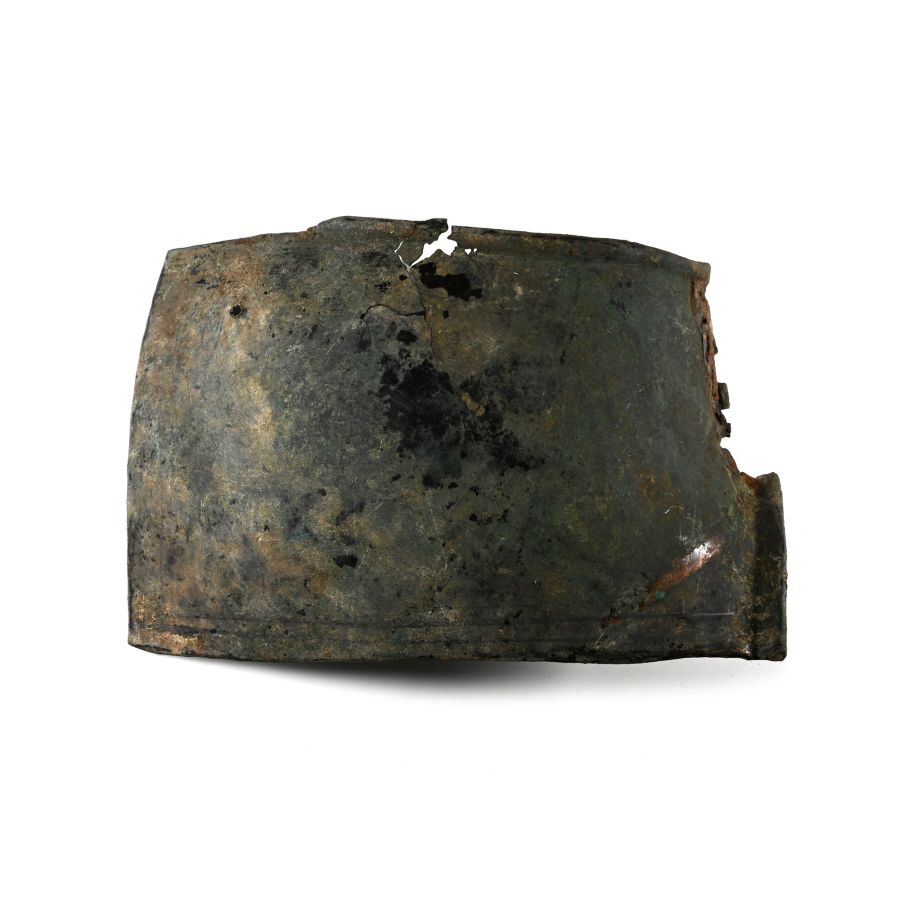
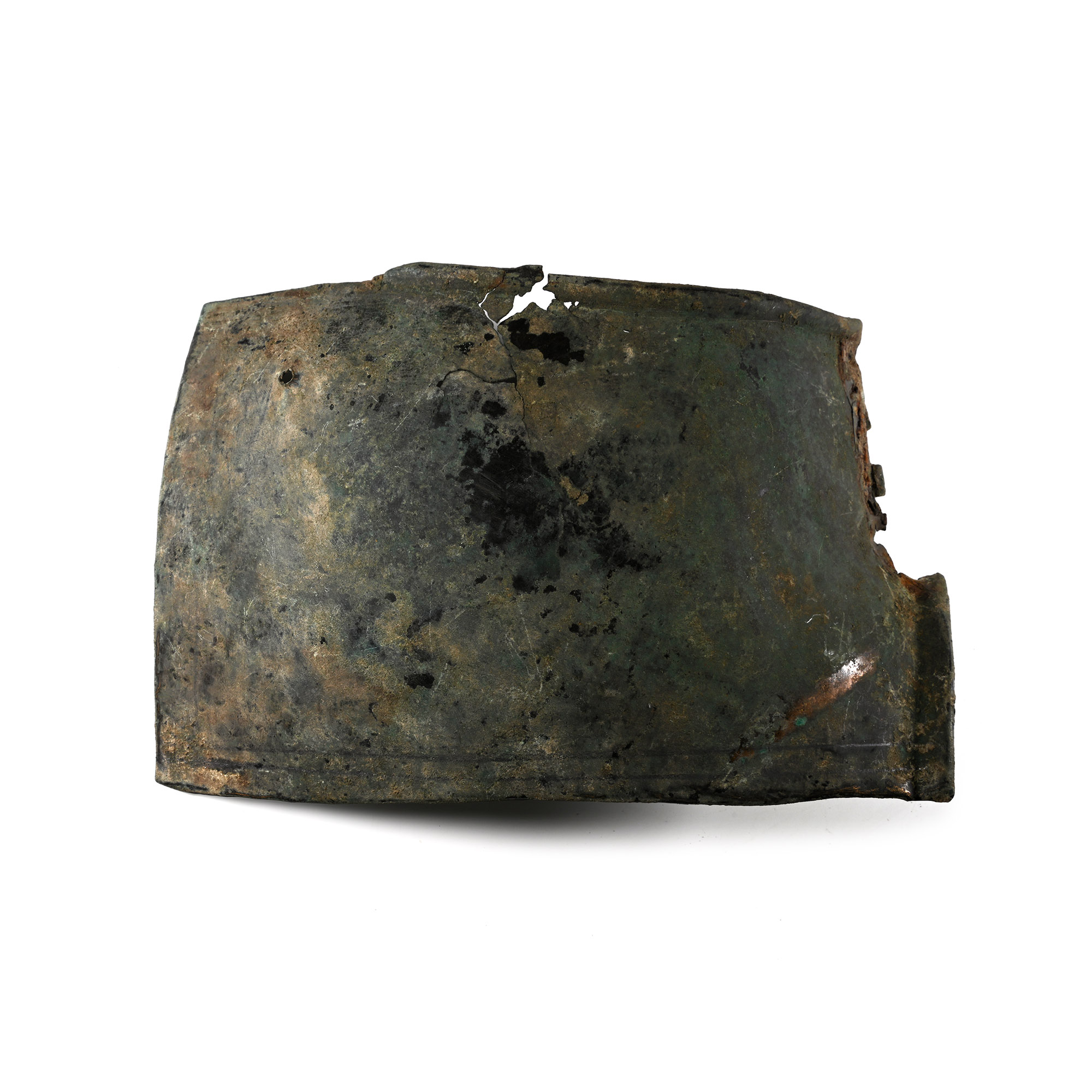
Hellenistic Bronze Cuirass Section
3RD-1ST CENTURY B.C.
9 in. (261 grams, 23 cm).
Possibly the upper right front element of a composite cuirass for a cataphract (armoured horseman), part of the edge around the neck and shoulders preserved, rivets and clasp for attachment of the back section present. [No Reserve]
ProvenanceUK private collection, acquired in 1996.
This lot is accompanied by an illustrated lot declaration signed by the Head of the Antiquities Department, Dr Raffaele D'Amato.
Cf. Connolly, P., Greece and Rome at War, London, 2006, figs.p.55-56, for the typology of armour and similar fragments.
FootnotesA near complete armour for cataphract was found in the French excavations in Al-Khanoum, a Hellenistic city in Afghanistan. The cavalry of Seleucid, Ptolemaic and other Hellenistic Kingdoms formed regiments of heavy armoured horsemen, who in the west, employed a combination of lamellar and segmented armour together with muscled armour of Greek type. Cataphract armour in the West had more Greek element, for example more plate armour and less scale and lamellar.
CONDITIONTimeLine Auctions follows a vetting process to ensure the authenticity and legality of all items, reinforcing our commitment to integrity and responsible trading. Each antiquity, antique, and coin lot undergoes thorough examination by a vetting committee of at least ten external specialists, professional trade association members, scientists, and archaeologists: Our Vetting Process
AUCTIONS:
TimeLine is a leading auction house specialising in antiquities, ancient art, collectables, natural history, coins, medals, and books. Our auctions offer museums, collectors, historians, and enthusiasts the opportunity to acquire unique and historically significant pieces.
-
.jpg)
Achaemenid Akinakes with Horse-Head Hilt and Gold Chain
6th-4th century B.C.Sold for (Inc. bp): £9,100
The upper part of the hilt shaped as a horse-head with an applied sheet-gold mane, wearing a gold bridle of Greek typology adorned with rosettes, mouthpiece formed of wire with garnet beads, and a large garnet cabochon set at the front of the bridle; the upper hilt connected to the straight blade with a restored grip; accompanied by a perspex scabbard with original gold sheet attached; possibly a marriage; mounted on a custom-made display stand. 392 grams, 36.5 cm (473 grams total, 37.6 cm high including stand)
Private collection of a London gentleman, acquired between 1965–2020. This lot has been checked against the Interpol Database of stolen works of art and is accompanied by search certificate number no.12619-235454. This lot has been cleared against the Art Loss Register database, and is accompanied by an illustrated lot declaration signed by the Head of the Antiquities Department, Dr Raffaele D'Amato.
The akinakes was the short dagger of the Scythians and the Achaemenid Persians. Many examples of this characteristic weapon have been found in every corner of the Persian Empire. The hilt was often made of bronze, gold or gilded. It is visible in the hands of the Medes and Persians in the reliefs of Persepolis. These weapons, straight and double-edged, were about 35 cm long. The scabbards could be covered with gold, hung from the belt at the waist and, according to Herodotus, attached to the right thigh with a thong. -
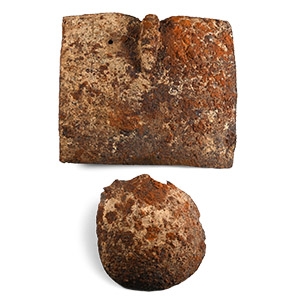
Oriental European Iron Armour Sections
10th-14th century A.D.Sold for (Inc. bp): £33
Consisting of a square dorsal plate and a spherical shoulder protection, the dorsal plate with one of the fixing holes present. 790 grams total, 12.7-20 cm
UK private collection, acquired in 1996. This lot is accompanied by an illustrated lot declaration signed by the Head of the Antiquities Department, Dr Raffaele D'Amato.
Although this is a type of armour that currently has no parallels for its dorsal plate, the spherical shoulder protection finds some comparable items with fragments of armour from the Balkans and could correspond to the melon of Eastern Roman sources of the period. -
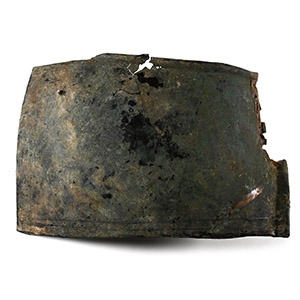
Hellenistic Bronze Cuirass Section
3rd-1st century B.C.Sold for (Inc. bp): £286
Possibly the upper right front element of a composite cuirass for a cataphract (armoured horseman), part of the edge around the neck and shoulders preserved, rivets and clasp for attachment of the back section present. 261 grams, 23 cm
UK private collection, acquired in 1996. This lot is accompanied by an illustrated lot declaration signed by the Head of the Antiquities Department, Dr Raffaele D'Amato.
A near complete armour for cataphract was found in the French excavations in Al-Khanoum, a Hellenistic city in Afghanistan. The cavalry of Seleucid, Ptolemaic and other Hellenistic Kingdoms formed regiments of heavy armoured horsemen, who in the west, employed a combination of lamellar and segmented armour together with muscled armour of Greek type. Cataphract armour in the West had more Greek element, for example more plate armour and less scale and lamellar.
