
LOT 3201
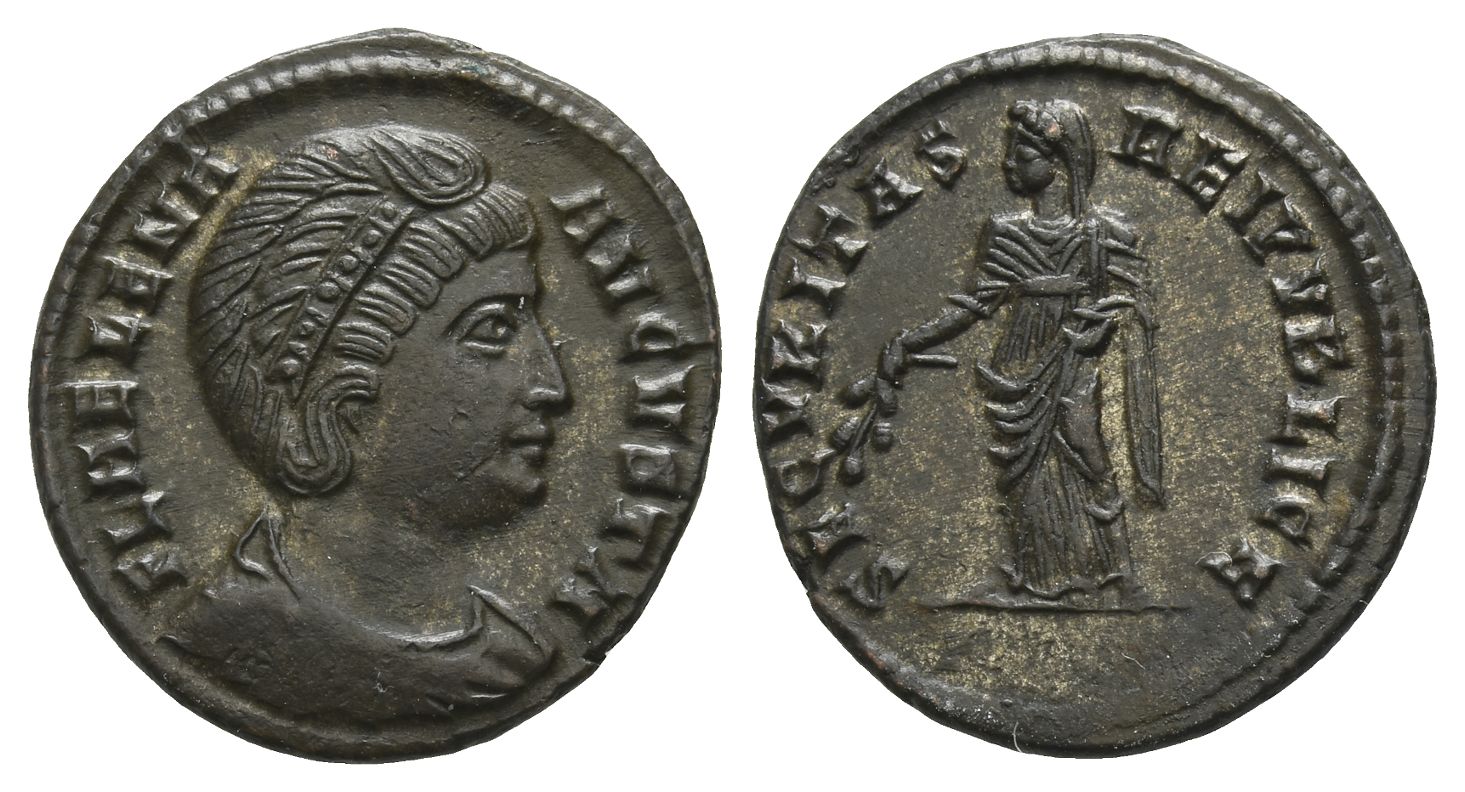
Helena, Augusta BI Nummus. AD 324-328/30.
Rome mint. FL AELENA (sic) AVGVSTA, diademed and draped bust to right, wearing pearl necklace / SECVRITAS REI PVBLICE, Securitas, veiled, standing facing, head to left, holding branch in her right hand; uncertain mintmark below. Cf. RIC 291. Extremely Fine. Sharp details.(2.88gr, 19mm, 12h.).
ProvenanceFrom a private, UK, collection in the 1980s.
Property of a London, UK, antiquarian.
TimeLine Auctions follows a vetting process to ensure the authenticity and legality of all items, reinforcing our commitment to integrity and responsible trading. Each antiquity, antique, and coin lot undergoes thorough examination by a vetting committee of at least ten external specialists, professional trade association members, scientists, and archaeologists: Our Vetting Process
AUCTIONS:
TimeLine is a leading auction house specialising in antiquities, ancient art, collectables, natural history, coins, medals, and books. Our auctions offer museums, collectors, historians, and enthusiasts the opportunity to acquire unique and historically significant pieces.
-
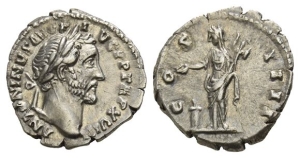
Antoninus Pius AR Denarius. AD 138-161.
Estimate: £80 - 100 (+bp*)
Opening Bid: £45
Rome mint; struck AD 154-155. ANTONINVS AVG PIVS P P TR P XVIII, laureate head to right / COS IIII, Vesta standing facing, head to left, sacrificing over altar with patera and holding palladium. RIC III 238; BMCRE 829-831; RSC 201. 3.30gr, 17mm, 12h.
Near Extremely Fine.
Ex Michael Trenerry, Truro, UK, 1980s. Private North Country, UK, collection. -
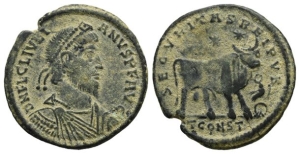
Julian II BI Double Maiorina. AD 360-363.
Sold for (Inc. bp): £78
Arelate mint. 3rd officina. D N FL CL IVLI-ANVS P F AVG, pearl-diademed, draped and cuirassed bust to right / SECVRITAS REI PVB, bull standing to right, two stars above; before, eagle standing to right on wreath holding wreath in beak; TCONST in exergue. RIC VIII 318; LRBC 468. 8.91gr, 29mm, 6h.
Good Very Fine.
From the collection of a gentleman, acquired on the London art market in the 1990s. -
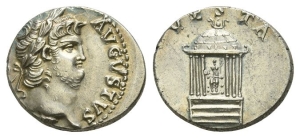
Nero AR Denarius. AD 54-68.
Sold for (Inc. bp): £2,340
Rome mint; struck AD 65-66. [NERO CAESAR] AVGVSTVS, laureate head to right / VESTA, hexastyle temple of Vesta with domed roof, set on podium of four steps; within, statue of Vesta seated, holding patera in right hand and long sceptre in left. RIC I 62; RSC 335. 3.46gr, 17mm, 6h.
Extremely Fine. A little off-centre.
Ex Roma Numismatics Ltd, E-Sale 21, 31 October 2015, lot 749.
