
Loading, please wait...
LOT 1406
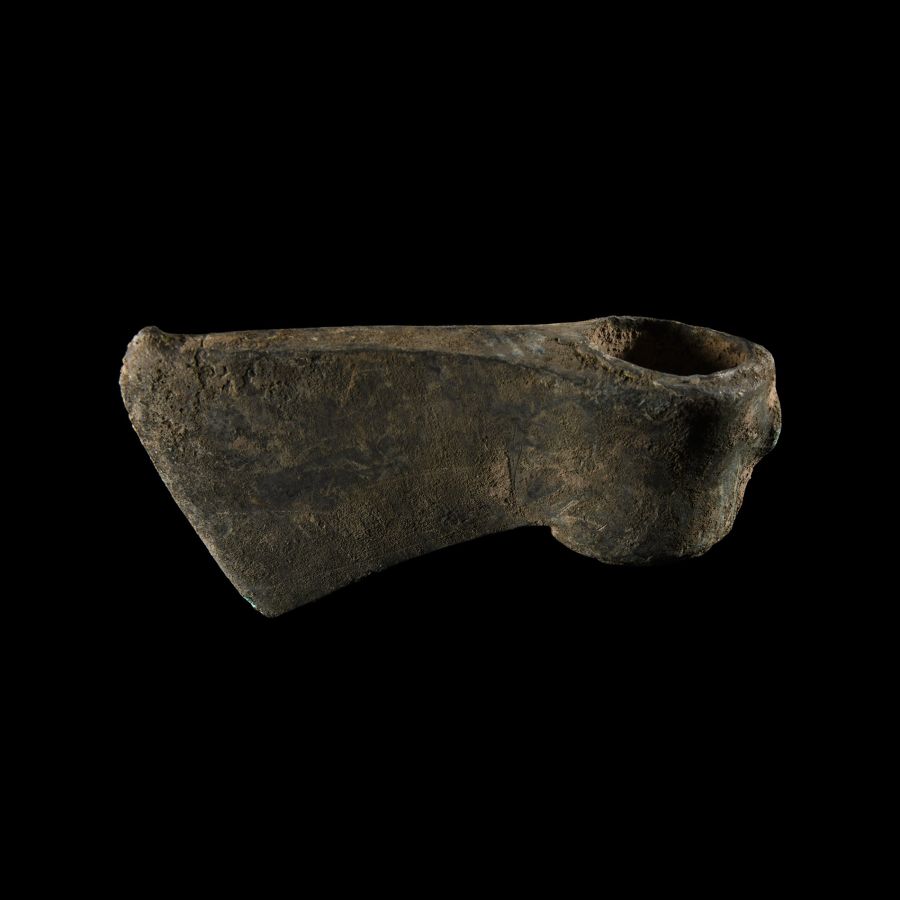
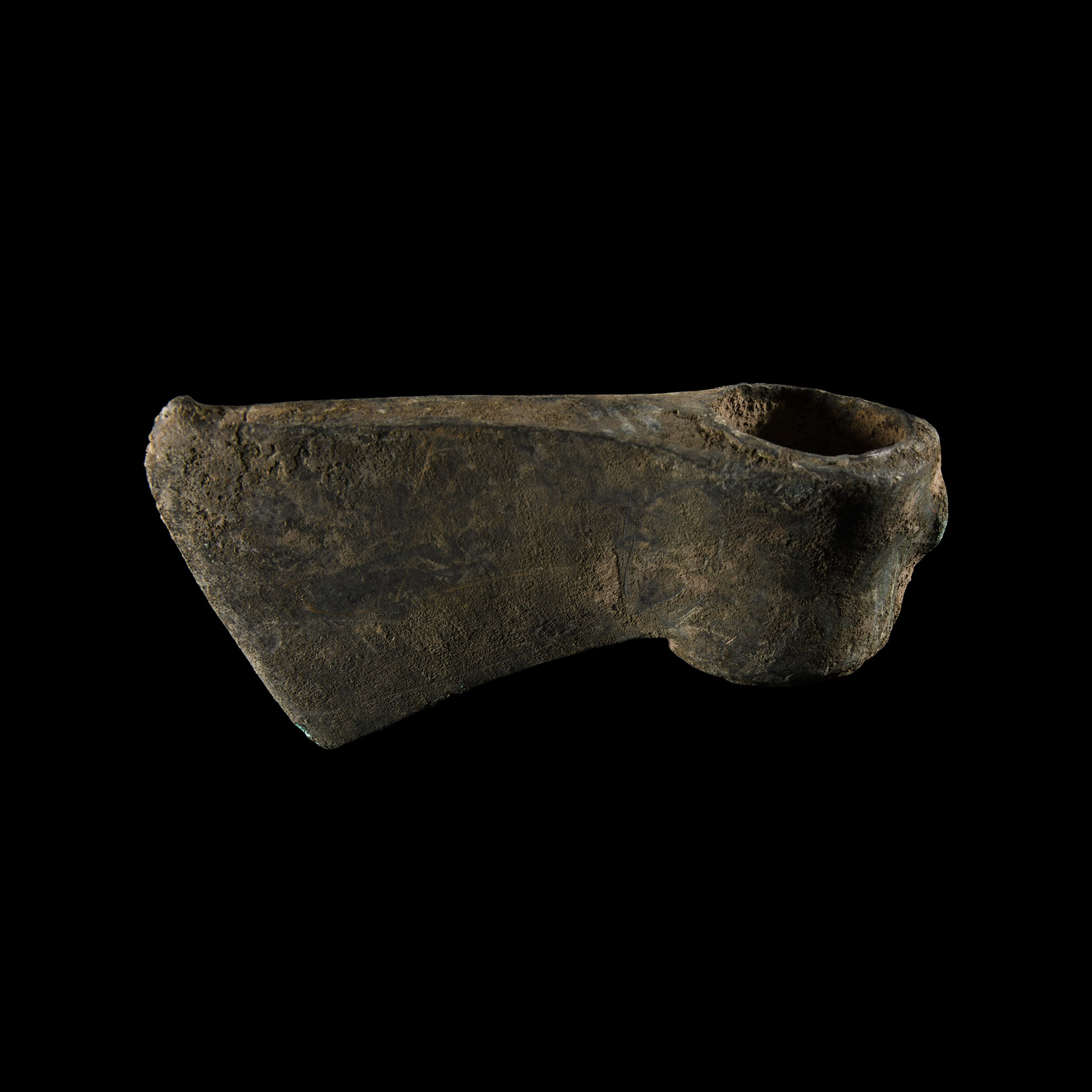
Heavy Western Asiatic Bronze Axehead
LATE 3RD MILLENNIUM B.C.
5 3/4 in. (741 grams, 14.5 cm).
With swept blade, large socket with shallow raised circumferential rib and a vertical rib to the rear.
ProvenanceAcquired 1980-2015.
Ex Abelita family collection.
For similar examples of axes see Gorelik, M., Weapons of Ancient East, IV millennium BC-IV century BC, Saint Petersburg (2003), pl.XX, no.44 (Mundigak, layer III, third quarter of the 3rd millennium B.C.).
FootnotesIn the middle of the 3rd millennium B.C., the most widespread types of axes were those made for splitting and those for cutting. In the last third of this millennium there emerged a sharp differentiation between such axes. Such a sharp division by function should be associated with the influence of the Syro-Palestinian tradition. Such differentiation, in the absence of some multifunctional forms, can be observed from the end of the 4th millennium B.C. and during the 3rd millennium B.C.
CONDITIONTimeLine Auctions follows a vetting process to ensure the authenticity and legality of all items, reinforcing our commitment to integrity and responsible trading. Each antiquity, antique, and coin lot undergoes thorough examination by a vetting committee of at least ten external specialists, professional trade association members, scientists, and archaeologists: Our Vetting Process
AUCTIONS:
TimeLine is a leading auction house specialising in antiquities, ancient art, collectables, natural history, coins, medals, and books. Our auctions offer museums, collectors, historians, and enthusiasts the opportunity to acquire unique and historically significant pieces.
LOT 1406
Heavy Western Asiatic Bronze Axehead
Estimate £100 - 140€120 - 160 (for guidance only)$140 - 190 (for guidance only)
-
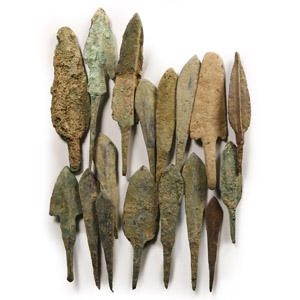
Luristan Bronze Arrowhead
Circa 13th-7th century B.C.Estimate: £100 - 140 (+bp*)
Opening Bid: £50
Including teardrop, barbed, leaf-shaped and other types, all tanged. 148 grams total, 52-91 mm
Acquired 1980-2015. Ex Abelita family collection. -
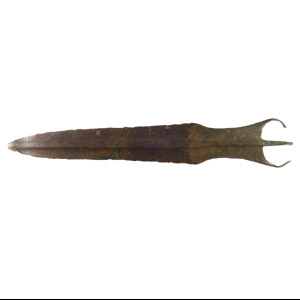
North-West Persian Bronze Short Sword with Integral Grip and Horns
Circa 1st millennium B.C.Sold for (Inc. bp): £338
With curved 'horns' projecting on either side at the top of waisted grip, blade with flat mid-rib. 242 grams, 41.5 cm
Acquired 1980-2015. Ex Abelita family collection.
The Luristani people produced a quantity of fine metalwork, which according to Dr Khorasani, could be due to a settled period which arose as a result of the defeat of the Elamites by the Babylonians, leaving the Luristani people in relative peace for a period of time after 1200 B.C. According to Khorasani, 'A culture of innovation and experimentation flourished, and the repertoire of the Luristan smiths expanded in the period between 1150-1050 BC.' -
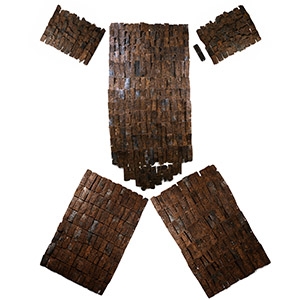
Jin Jurchen Warrior Signed Suit of Iron Plate Armor
Jin Dynasty, early 13th century A.D.Estimate: £8,000 - 10,000 (+bp*)
Opening Bid: £3,200
A complete suite of rectangular iron plates to form a protective coat; the plates provided with a series of holes close to the long edges by which they were laced together into articulating panels; one plate with inscription in Chinese script recording: 'first month of the Datong era / control of the propagation of Armour. Yanhui'. 8.5 kg total, 3-11.1 cm
From the private collection of a London gentleman, from his grandfather's collection formed before the early 1970s. Accompanied by an academic report by Dr Raffaele D’Amato. This lot has been checked against the Interpol Database of stolen works of art and is accompanied by a search certificate number no.12051-216403.
The Datong Era (大同, 1224–1233) is a name used for the reign of Puxian Wannu, a Jurchen warlord who established the Eastern Xia Dynasty in 13th century China. However, the war with the Jurchen states took more than 30 years: having first invaded the Jurchen borders in 1211, the Mongols finally defeated the Jin Empire only in 1234, while the Eastern Xia fell in 1246.
