
Loading, please wait...
LOT 0277
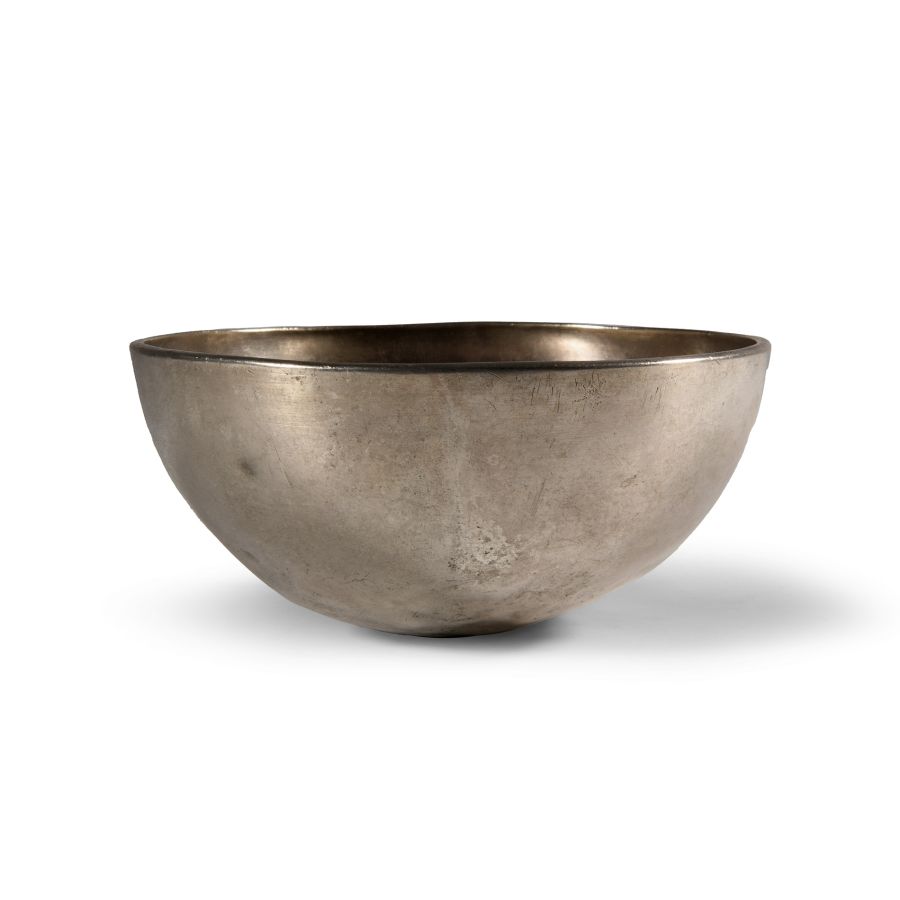
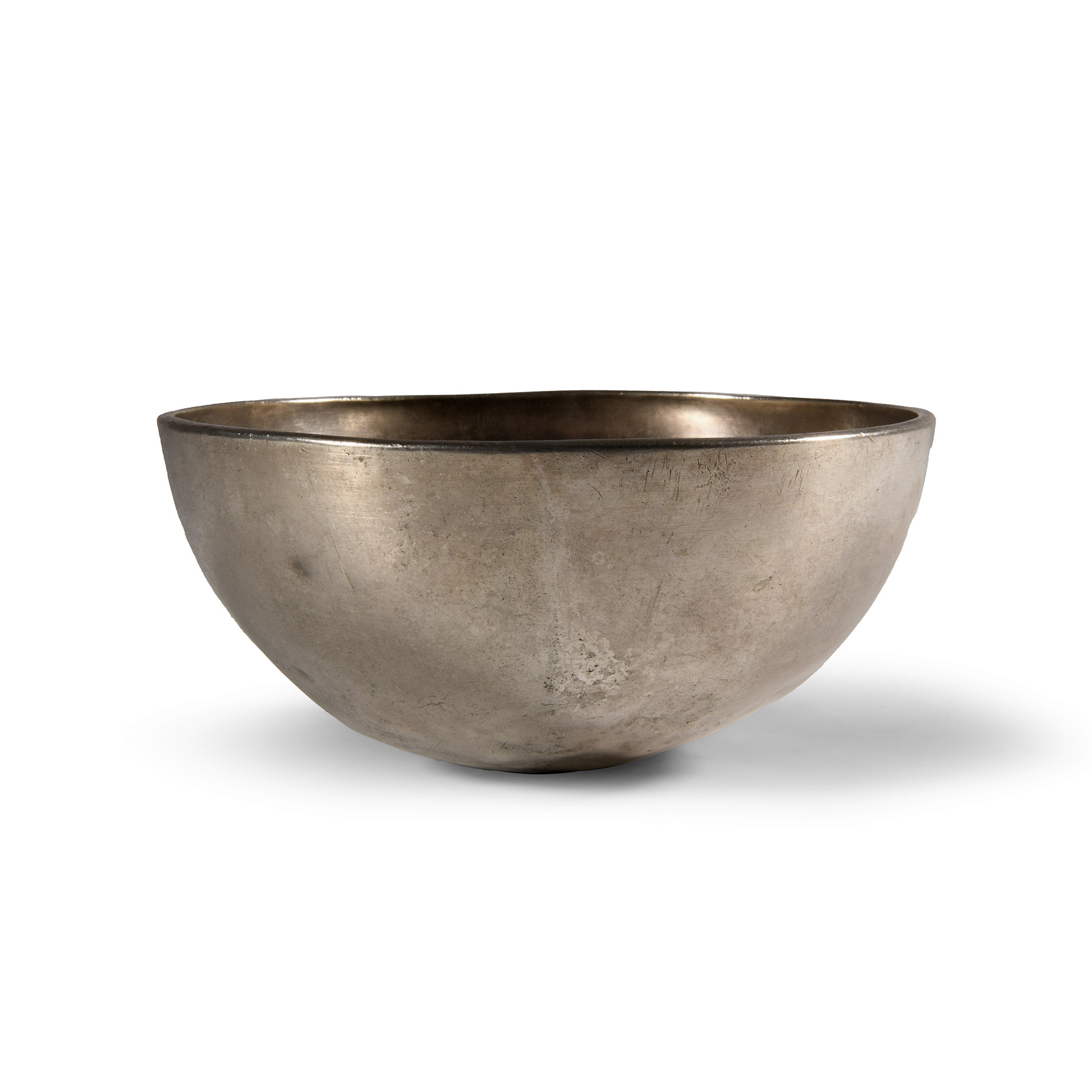
Heavy Sassanian Silver Bowl
5TH-7TH CENTURY A.D.
6 1/8 in. (370 grams, 15.5 cm).
A high quality bowl raised from a single sheet with round base and an inverted rim.
ProvenanceEx London, UK, gallery, 1971-early 2000s.
This lot has been checked against the Interpol Database of stolen works of art and is accompanied by search certificate no.12066-214195.
TimeLine Auctions follows a vetting process to ensure the authenticity and legality of all items, reinforcing our commitment to integrity and responsible trading. Each antiquity, antique, and coin lot undergoes thorough examination by a vetting committee of at least ten external specialists, professional trade association members, scientists, and archaeologists: Our Vetting Process
AUCTIONS:
TimeLine is a leading auction house specialising in antiquities, ancient art, collectables, natural history, coins, medals, and books. Our auctions offer museums, collectors, historians, and enthusiasts the opportunity to acquire unique and historically significant pieces.
-
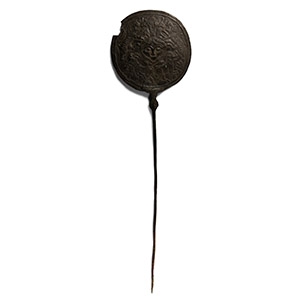
Large Neo-Elamite Decorated Bronze Pin
Circa 1200-800 B.C.Estimate: £800 - 1,000 (+bp*)
Opening Bid: £400
Comprising a large circular finial with symmetrical repoussé design and a long tapering shank; the finial with a large central head with hatched hair and beard, possibly representing a mask of a deity; two addorsed ibexes below, each with a rosette above and foliage in front; at the top, two rampant lions flanking the 'Master of Animals' motif; the motif with pricked ears and wearing a two-tiered headpiece, a pair of zoomorphic figure emerging from his cheeks and grasp onto the flanking lions; mounted on a custom-made fabric-covered backing. 228 grams total, 43 cm long
Ex Rabi Gallery 1980-1990. From an important London, UK, collection. -
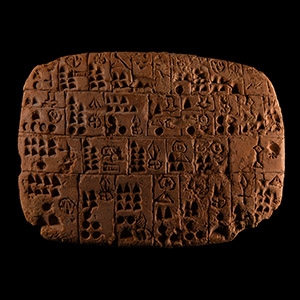
Proto-Sumerian Terracotta Tablet with Archaic Text
3300-3000 B.C.Sold for (Inc. bp): £11,050
Lentoid-section slab with incised grid to each face: one with three columns, impressed roundels and crescents, grid and other symbols; the other face with four columns, each cell filled with marks and symbols. 230 grams, 11.4 cm
Ex Oriental Dar Antiques, Jerusalem, 1967. European private collection. This lot has been checked against the Interpol Database of stolen works of art and is accompanied by search certificate no.12095-211940. -
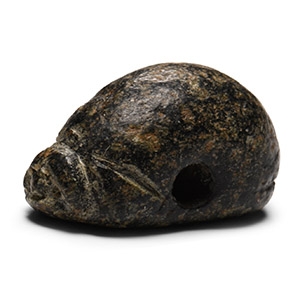
Western Asiatic Zoomorphic Stone Stamp Seal
3rd-2nd millennium B.C.Sold for (Inc. bp): £39
Plano-convex in profile, oval in plan with facial detailing to the knop finial, underside with incuse tree motifs. 3.81 grams, 21 mm
From a London, UK, collection formed in the late 1980s-early 1990s; collection number 2921. Academically researched and catalogued by the late Professor Lambert in the early 1990s (collection number on the packet in Professor Lambert's hand.
