
Loading, please wait...

LOT 1248
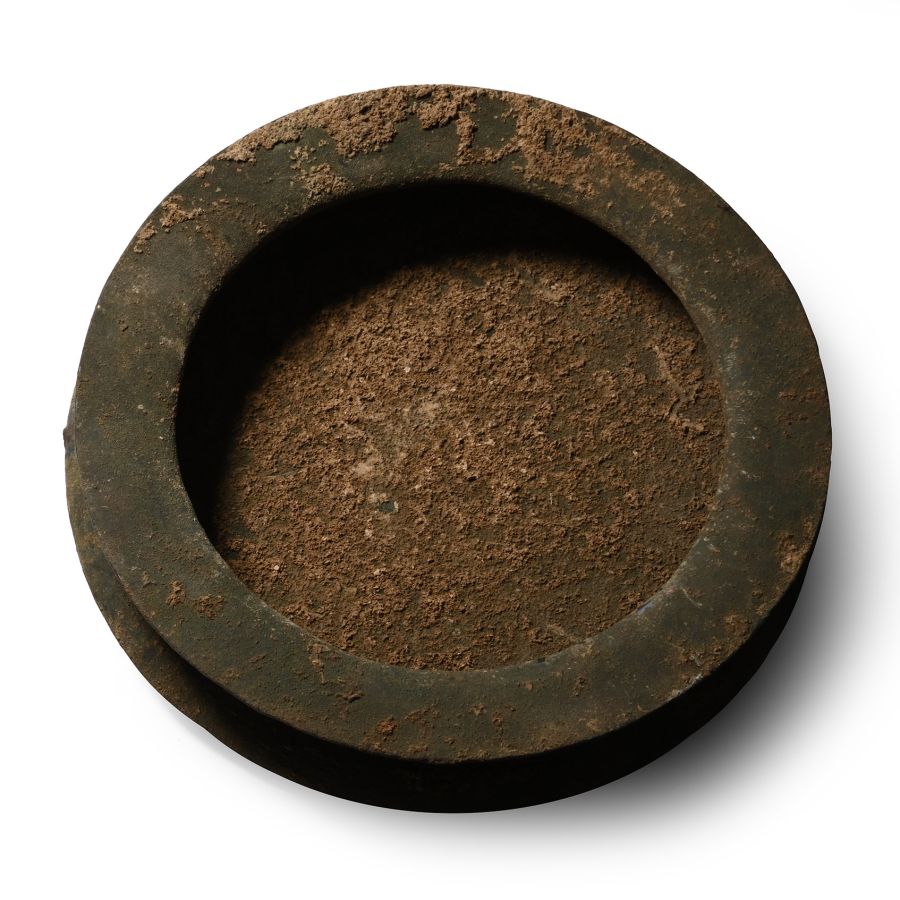
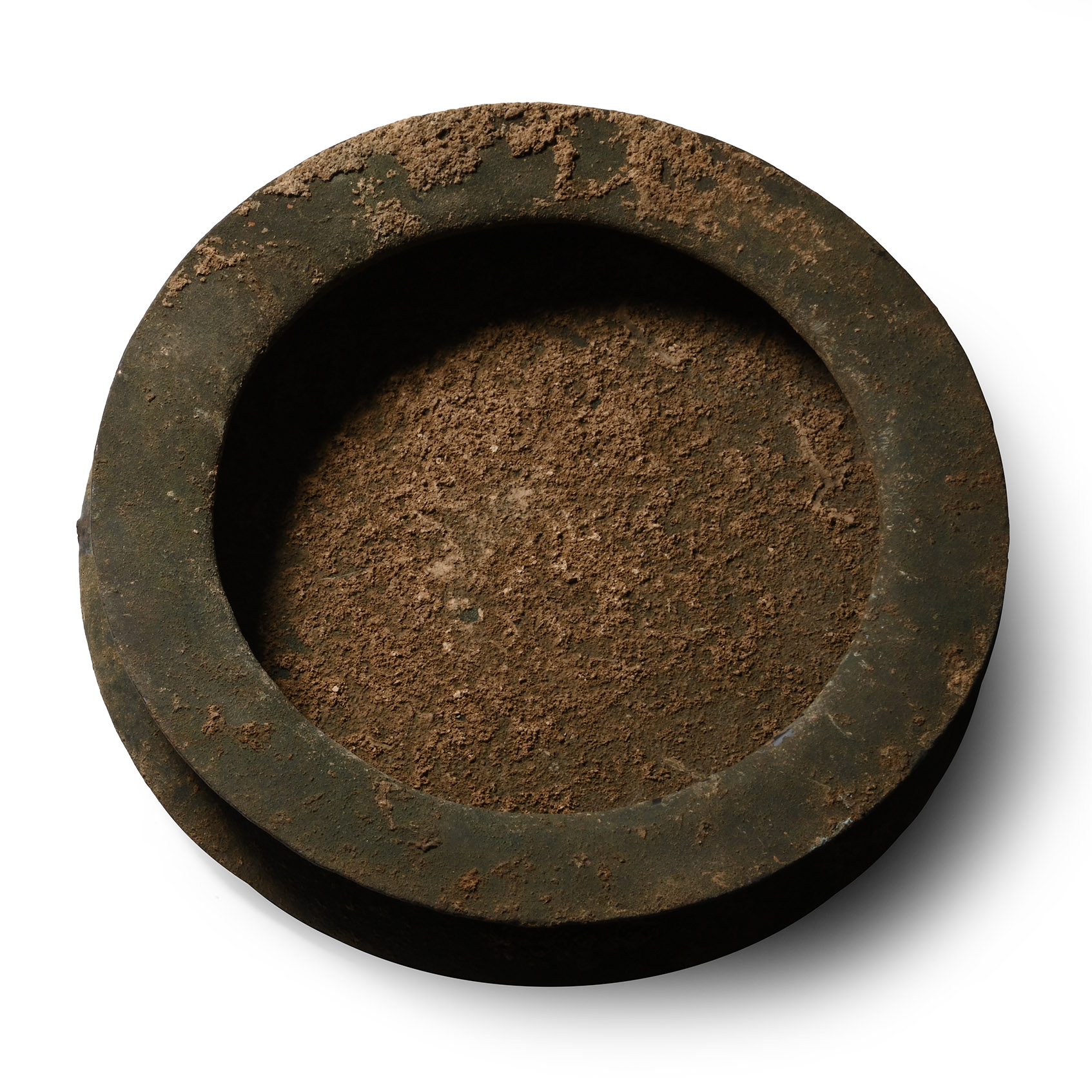
Heavy Luristan Bronze Dish
13TH-7TH CENTURY B.C.
7 3/4 in. (712 grams, 19.5 cm).
Comprising a shallow body with sharply sloping walls and wide, everted rim.
ProvenanceAcquired 1980-2015.
Ex Abelita family collection.
This lot has been cleared against the Art Loss Register database, and is accompanied by an illustrated lot declaration signed by the Head of the Antiquities Department, Dr Raffaele D'Amato.
TimeLine Auctions follows a vetting process to ensure the authenticity and legality of all items, reinforcing our commitment to integrity and responsible trading. Each antiquity, antique, and coin lot undergoes thorough examination by a vetting committee of at least ten external specialists, professional trade association members, scientists, and archaeologists: Our Vetting Process
AUCTIONS:
TimeLine is a leading auction house specialising in antiquities, ancient art, collectables, natural history, coins, medals, and books. Our auctions offer museums, collectors, historians, and enthusiasts the opportunity to acquire unique and historically significant pieces.
LOT 1248
Heavy Luristan Bronze Dish
Estimate £180 - 240€210 - 280 (for guidance only)$240 - 320 (for guidance only)
-
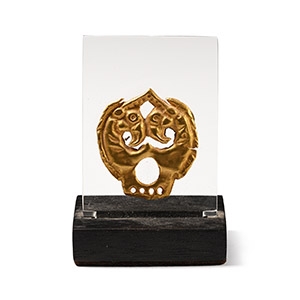
Western Asiatic Gold Appliqué with Gryphon Heads
8th-7th century B.C.Sold for (Inc. bp): £364
D-shaped with openwork and repoussé design of opposed gryphons; mounted on a custom-made stand. 25.61 grams total, head: 30 mm
Acquired before 2000. Ex Mayfair, London, UK, collection reference no.172. Private collection, London, UK. This lot has been cleared against the Art Loss Register database, and is accompanied by an illustrated lot declaration signed by the Head of the Antiquities Department, Dr Raffaele D'Amato. -
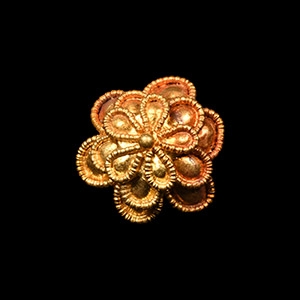
Cypriot Type Gold Flower Bead
4th-3rd century B.C.Sold for (Inc. bp): £338
Formed of three domed layers of petals with applied filigree edges, small pellet to the centre, loop to the reverse; not found in Cyprus. 0.72 grams, 10 mm
Ex property of a late Japanese collector, 1970-2000s. This lot has been cleared against the Art Loss Register database, and is accompanied by an illustrated lot declaration signed by the Head of the Antiquities Department, Dr Raffaele D'Amato. -
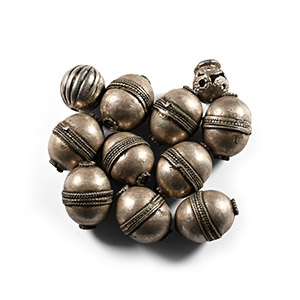
Western Asiatic Silver-Coloured Metal Bead Group
Circa 18th-19th century A.D.Sold for (Inc. bp): £46
Comprising nine beads with central filigree collar and beaded collar to each end, one melon bead and one openwork bead. 38 grams total, 13-21 mm
Ex collection of a late London, UK, collector, 1970s. This lot has been cleared against the Art Loss Register database, and is accompanied by an illustrated lot declaration signed by the Head of the Antiquities Department, Dr Raffaele D'Amato.
