
Loading, please wait...
LOT 0011
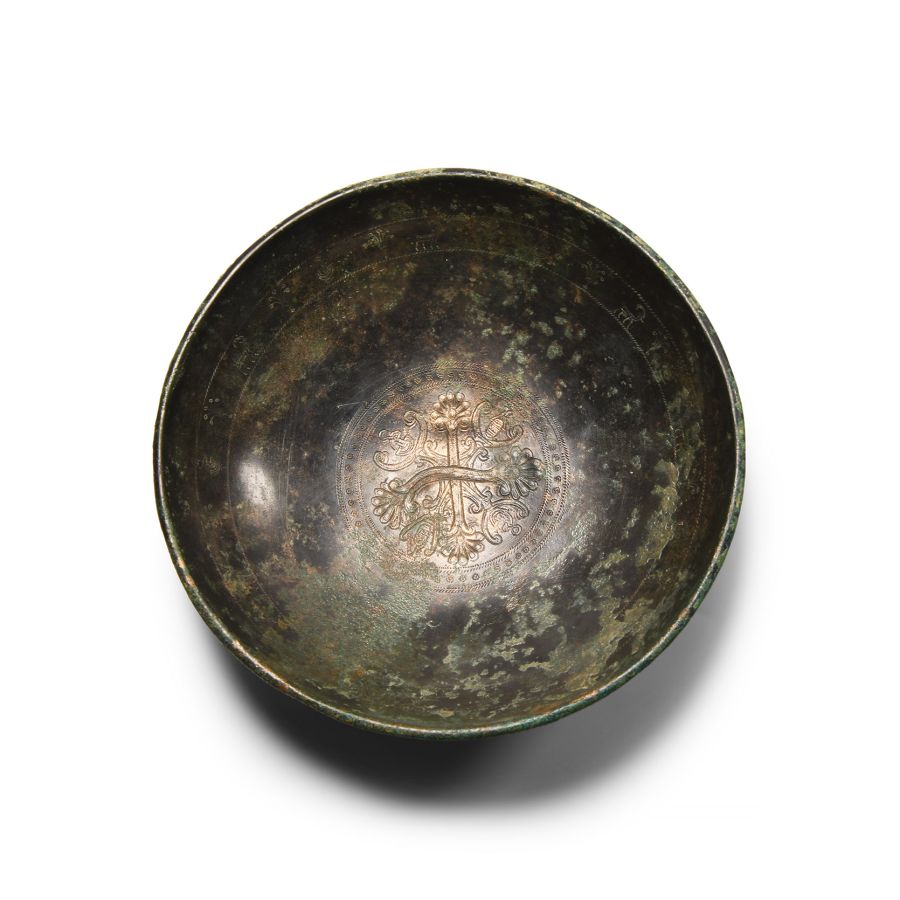
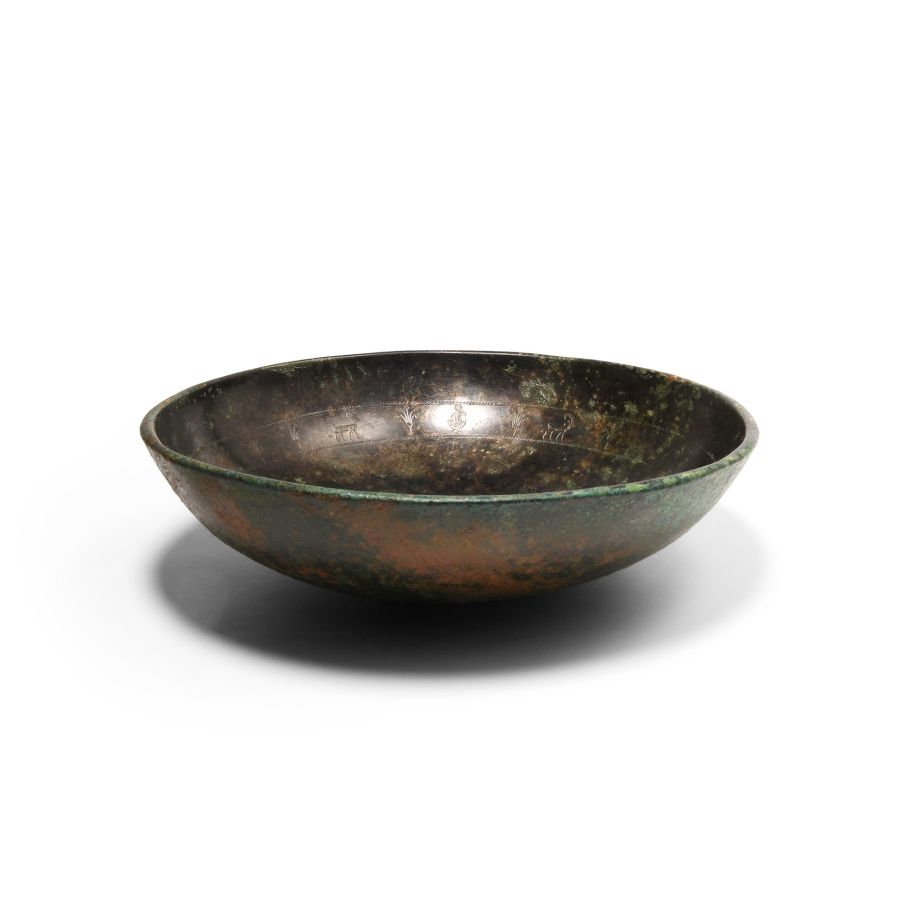
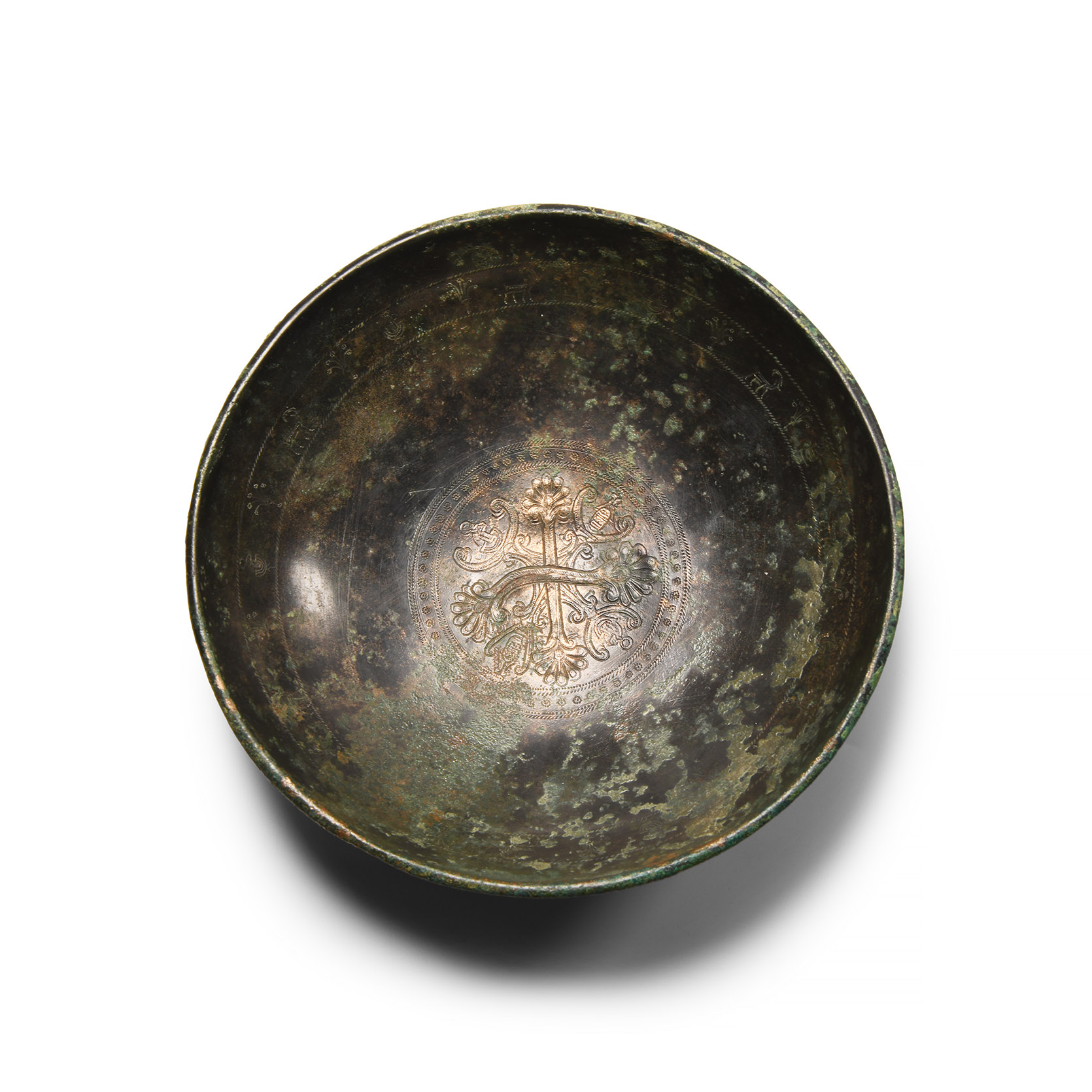
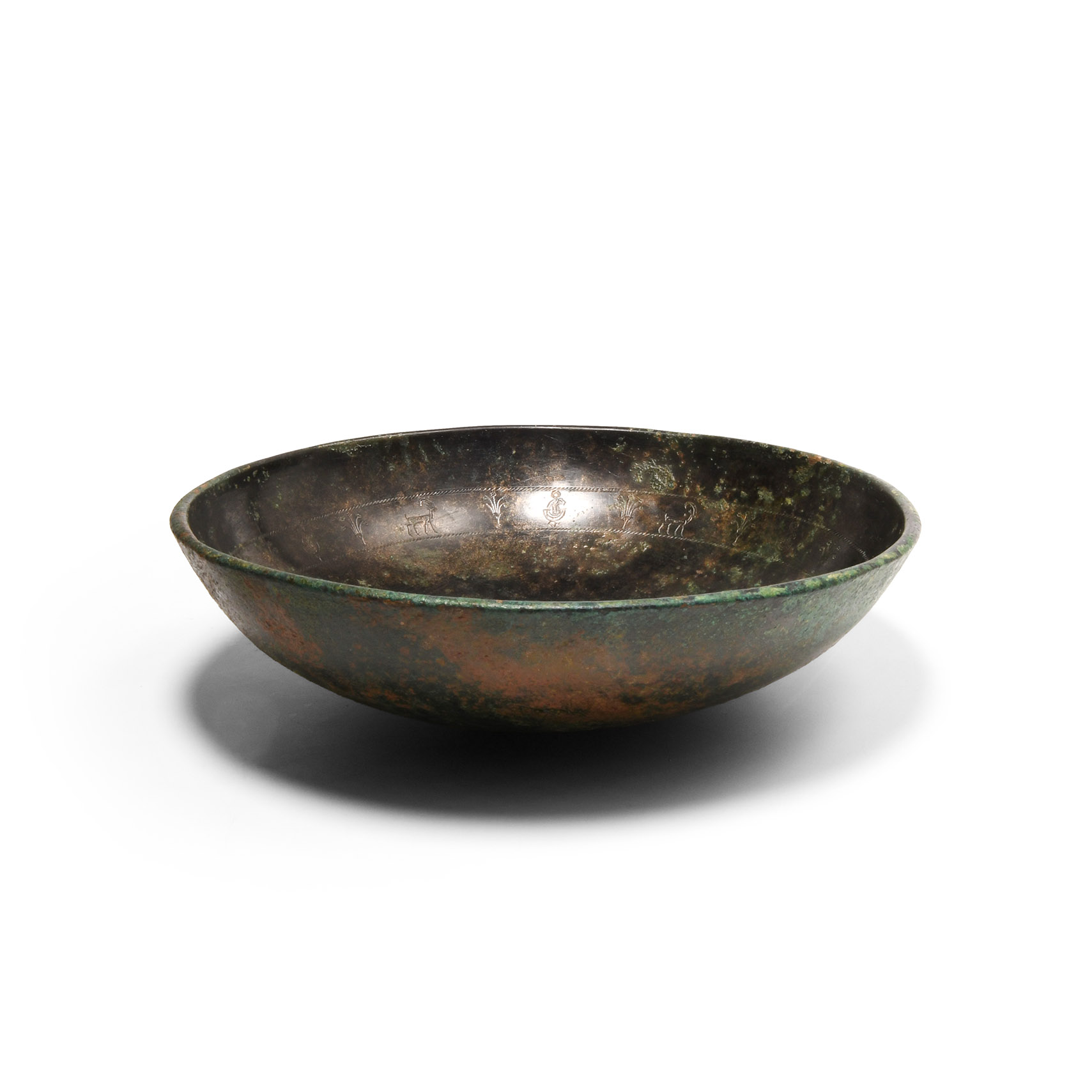
Heavy Egypto-Persian Bronze Phiale with Ibexes, Leonine-Headed Aegis, Pseudo-Cartouches, and Lotus Flowers
CIRCA 7TH-4TH CENTURY B.C.
5 3/4 in. (256 grams, 14.7 cm wide).
Shallow profile with rounded underside and rounded rim; underside with central impressed cruciform motif with one eccentric arm; inner face with two ropework bands flanking stamped images (advancing ibex, lotus in blossom, leonine-headed aegis (perhaps Sekhmet); central ring of pellets with herringbone borders, cruciform design of four lotus plants above stems with leonine-headed aegis and pseudo cartouches topped with Maat-feather plumes.
ProvenanceFrom a private UK collection since the 1980s.
Acquired mid 2000s.
Property of a London gentleman.
Accompanied by a scholarly report by Egyptologist Paul Whelan.
Cf. similar phiale (offering bowl) lacking the detailed stampwork in the collection of the Metropolitan Museum of Art, New York, under accession number 1989.11.7.
CONDITIONTimeLine Auctions follows a vetting process to ensure the authenticity and legality of all items, reinforcing our commitment to integrity and responsible trading. Each antiquity, antique, and coin lot undergoes thorough examination by a vetting committee of at least ten external specialists, professional trade association members, scientists, and archaeologists: Our Vetting Process
AUCTIONS:
TimeLine is a leading auction house specialising in antiquities, ancient art, collectables, natural history, coins, medals, and books. Our auctions offer museums, collectors, historians, and enthusiasts the opportunity to acquire unique and historically significant pieces.
LOT 0011
Heavy Egypto-Persian Bronze Phiale with Ibexes, Leonine-Headed Aegis, Pseudo-Cartouches, and Lotus Flowers
Estimate £1,800 - 2,400€2,090 - 2,780 (for guidance only)$2,430 - 3,240 (for guidance only)
-
Egyptian Faience Bead Necklace
New Kingdom, 1569-1081 B.C.Sold for (Inc. bp): £221
Composed of gently tapering biconical beads of various shades of turquoise and blue, interspersed with coin-shaped and spherical beads; restrung. 6.43 grams, 66 cm long
From an early 20th century UK collection. -
Egyptian Schist Double Bird Palette
Predynastic Period, circa 3500 B.C.Sold for (Inc. bp): £910
The crescentic body with stylised bird head ends; eyes pierced; central stem with single hole. 59 grams, 13.5 cm wide
Acquired prior to 2000 from a UK collection. Canadian private collection of Mr A.K. of Montreal. -
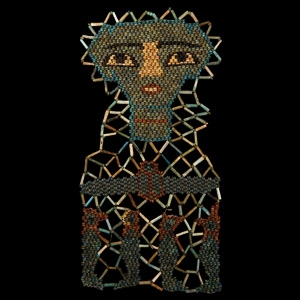
Egyptian Faience Bead Mummy Face Mask
Ptolemaic Period, 332-30 B.C.Sold for (Inc. bp): £390
Restrung; a netted beadwork panel of annular and tubular glazed composition beads in blues, greens, black, cream and red-brown colours, depicting a mummy face mask with false beard, a scarab with extended wings below, the 'Four Sons of Horus’ beneath the scarab, joined together with areas of open netting of tubular beads. 67 grams, 24 cm high
Acquired 1990s. Ex Mariaud des Serres, Paris, France.
The 'Four Sons of Horus' protected the internal organs of the deceased. Depicted from left to right: the falcon-headed Qebhesenuef protected the intestines; human-headed Imsety, the liver; baboon-headed Hapi, the lungs; jackal-headed Duamutef, the stomach.
