
LOT 3717
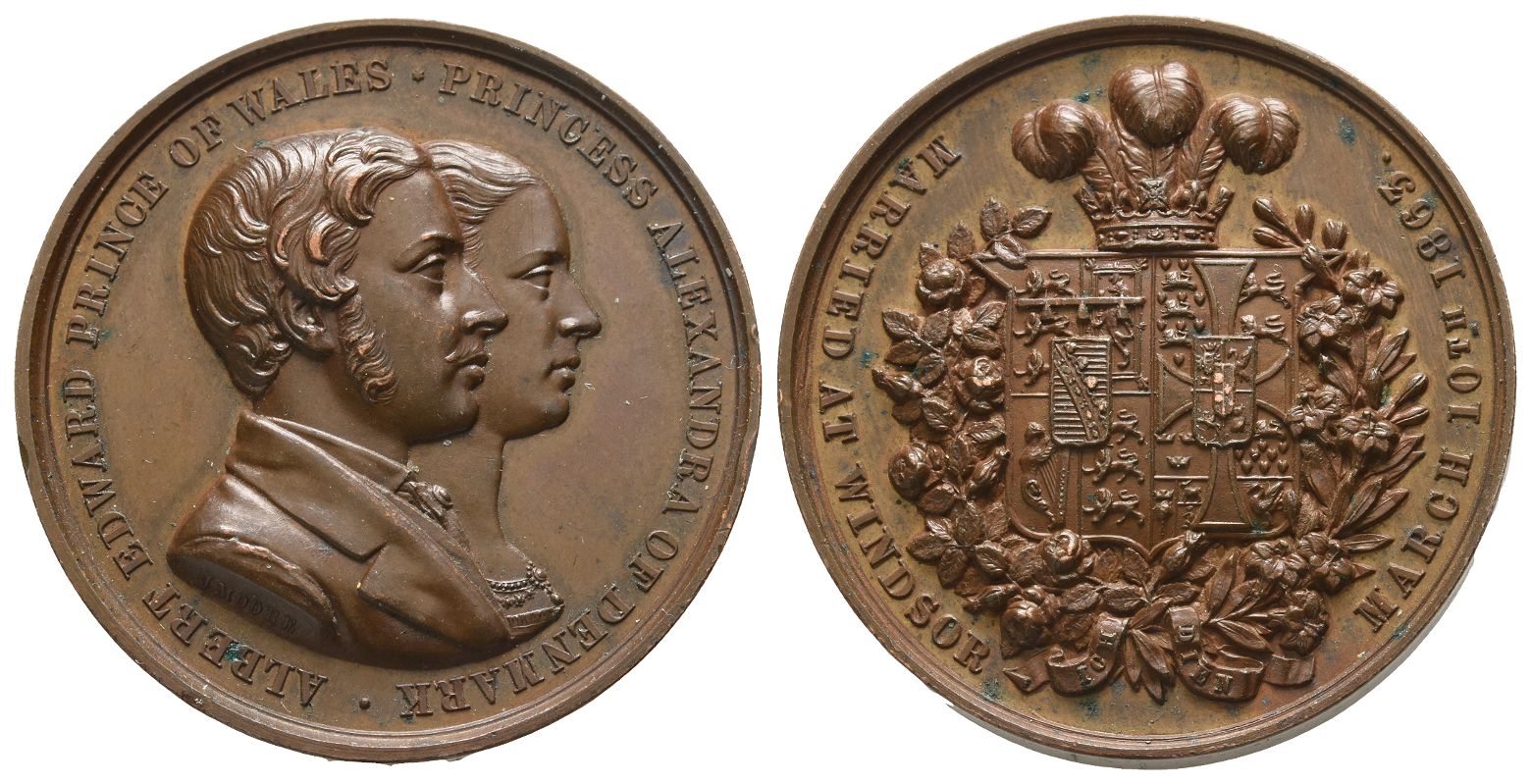
Hanover. Prince of Wales Albert Edward, AE Commemorative Medallion. 1841-1901.
Design by J. Moore. Commemorating the marriage of Albert Edward, Prince of Wales, and Princess Alexandra of Denmark. Dated 10 March 1863. ALBERT EDWARD PRINCE OF WALES PRINCESS ALEXANDRA OF DENMARK., conjoined busts to right / MARRIED AT WINDSOR MARCH 10TH 1863, Arms of the Prince and Princess, beneath Prince of Wales plumes. Extremely Fine. Rare.(38.48gr, 38mm, 12h). [No Reserve]
ProvenanceProperty of a Cambridgeshire, UK, gentleman.
TimeLine Auctions follows a vetting process to ensure the authenticity and legality of all items, reinforcing our commitment to integrity and responsible trading. Each antiquity, antique, and coin lot undergoes thorough examination by a vetting committee of at least ten external specialists, professional trade association members, scientists, and archaeologists: Our Vetting Process
AUCTIONS:
TimeLine is a leading auction house specialising in antiquities, ancient art, collectables, natural history, coins, medals, and books. Our auctions offer museums, collectors, historians, and enthusiasts the opportunity to acquire unique and historically significant pieces.
LOT 3717
Hanover. Prince of Wales Albert Edward, AE Commemorative Medallion.
Sold for (Inc. bp): £33
-
.jpg)
Great Britain. George V and Queen Mary, Jubilee Medal Group. 1910-1935.
Sold for (Inc. bp): £33
Comprising: three medals commemorating the silver jubilee of George V and Queen Mary; two medals commemorating their coronation in 1911. 53.29gr total, 44-53 mm excluding ribbons
Fine - Good Very Fine.
Acquired on the UK art market; Property of an Essex, UK, collector -
.jpg)
Great Britain. Hanover, George V AR Jubilee Medal. 1910-1935.
Sold for (Inc. bp): £26
Design by Percy Metcalfe. VI. MAII. MCMX MCMXXXV, crowned and draped conjoined busts to left / STET FORTUNA DOMUS, view of Windsor Castle. W&E 5668A.3; Eimer 2029a; BHM 4249. 15.00gr, 32mm, 12h
Near Mint State.
Acquired on the UK art market; Property of an Essex, UK, collector. -
.jpg)
Great Britain. Edward VIII, AE Medal Group. 1937 A.D.
Sold for (Inc. bp): £169
Comprising: silver Edward VIII coronation medal dated 1937 with ribbon, clasp and pin; bronze example with remains of gilding; an 'EMPIRE DAY MAY 24TH - BRITISH EMPIRE UNION' medal; and one other. 52.30gr total, 38-26mm excluding ribbon
Very Fine - Good Very Fine.
Acquired on the UK art market; Property of an Essex, UK, collector.
