
Loading, please wait...
LOT 1884
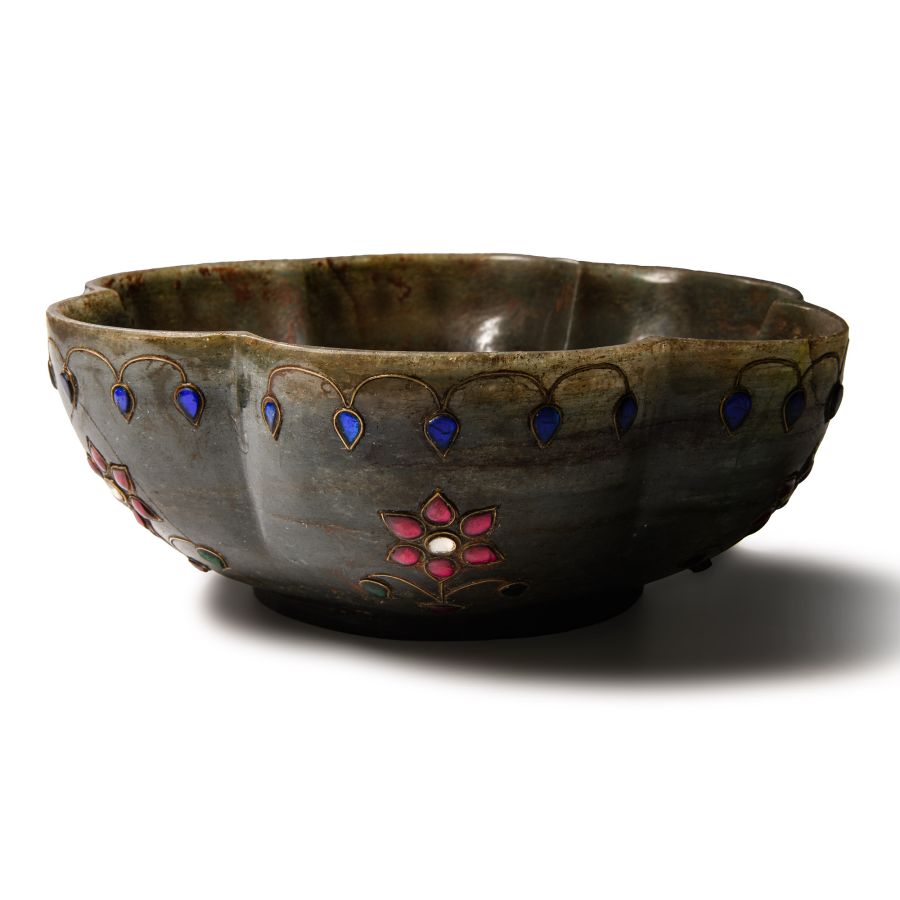
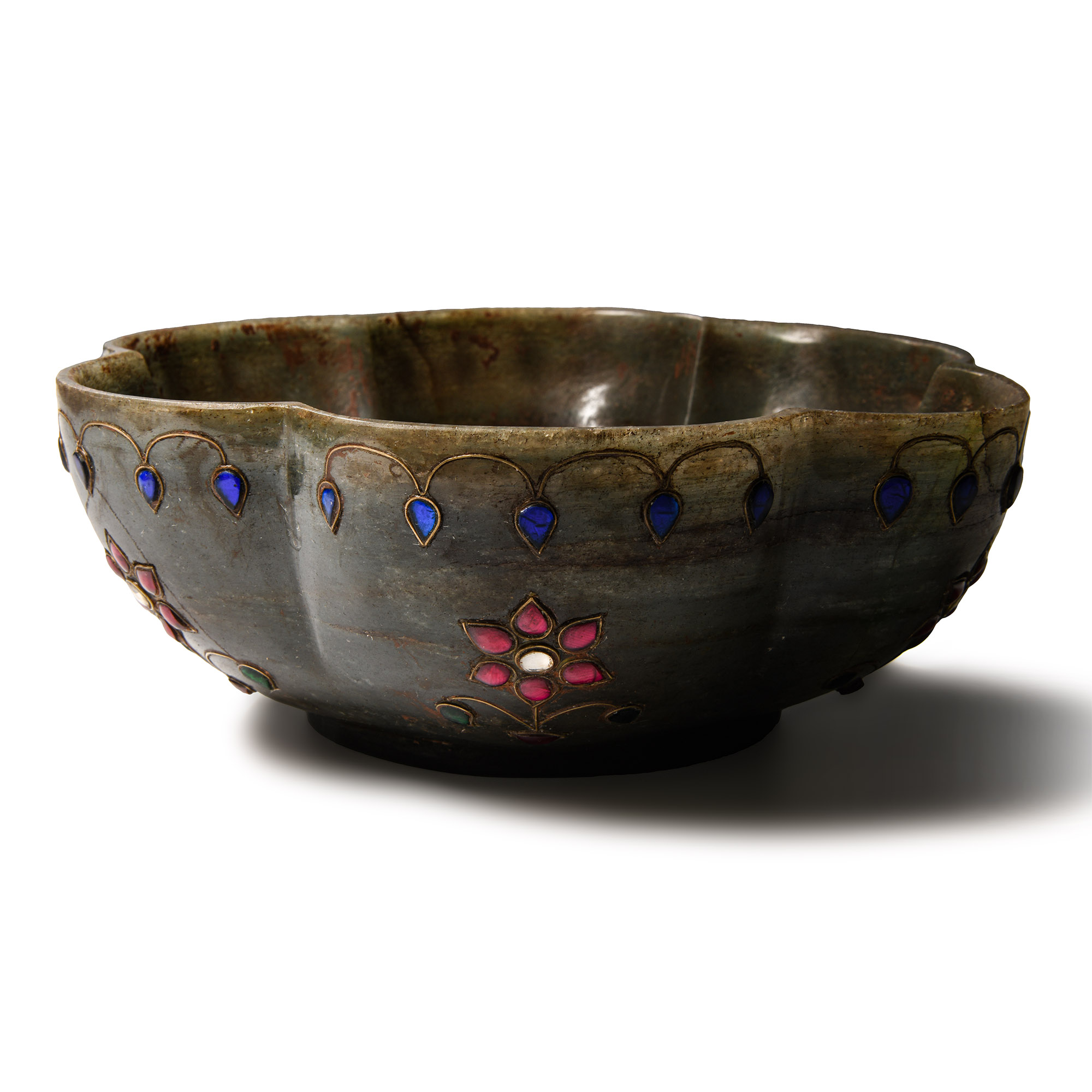
Green Stone Flower Bowl with Rubies
20TH CENTURY A.D.
7 1/4 in. (995 grams, 18.5 cm wide).
Hexafoil bowl with a band of inset blue teardrop inlays on an inlaid wire stem; below, a flower with inset rubies and other inlays, inlaid wire frame. [No Reserve]
ProvenanceProperty of a South West London gentleman.
CONDITIONTimeLine Auctions follows a vetting process to ensure the authenticity and legality of all items, reinforcing our commitment to integrity and responsible trading. Each antiquity, antique, and coin lot undergoes thorough examination by a vetting committee of at least ten external specialists, professional trade association members, scientists, and archaeologists: Our Vetting Process
AUCTIONS:
TimeLine is a leading auction house specialising in antiquities, ancient art, collectables, natural history, coins, medals, and books. Our auctions offer museums, collectors, historians, and enthusiasts the opportunity to acquire unique and historically significant pieces.
-
Incense Pendant Group
20th century A.D.Sold for (Inc. bp): £46
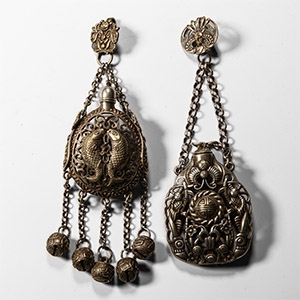
Group of two silver-coloured metal pomanders comprising: bat-shaped suspender with two short chains, openwork pomander with chained stopper, sun-wheel design flanked by flowers and robed female supporters; floral suspender with two short chains, openwork pomander with chained stopper, two fishes modelled in the half-round on a field of openwork scrolls, five chains below with rumbler-bell finials. 137 grams total, 15-16.5 cm
Property of a South West London gentleman. -
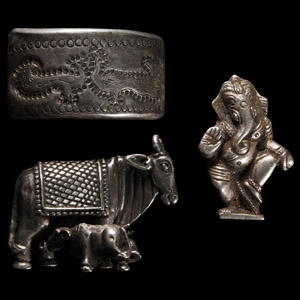
Mixed Animal Group
20th century A.D.Sold for (Inc. bp): £20
Mixed group of silver-coloured metal fittings including a hollow-formed model of the Nandi cow and calf, a belt-fastener with pointillé peacocks, and an appliqué of Ganesha. 89 grams total, 51-57 mm
Property of a South West London gentleman. -
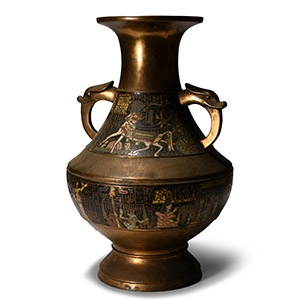
Champleve Enamel Bronze Vessel with Egyptian Procession Scenes
Late 19th century A.D.Sold for (Inc. bp): £78
Urn with socle base, rounded body, scooped shoulder and trumpet-shaped neck and mouth, lateral handles formed as beast-heads; the body with polychrome champ levé frieze depicting Egyptian gods and courtly scenes with panels of hieroglyphs, the shoulder with similar frieze of a procession with chariots, horses and objects in the field, row of seated figures above; reserved maker's chop seal to the underside. 3.4 kg, 36 cm
From a UK collection, 1990s. Ex property of a London gentleman.
