
Loading, please wait...
LOT 2166
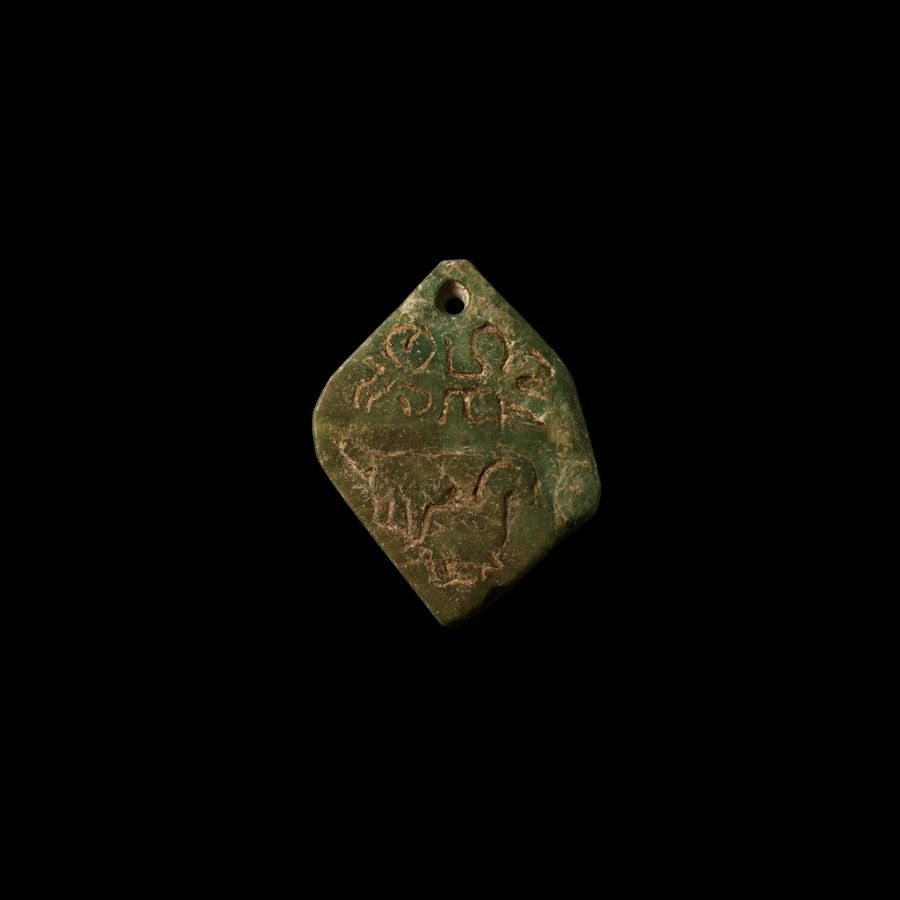
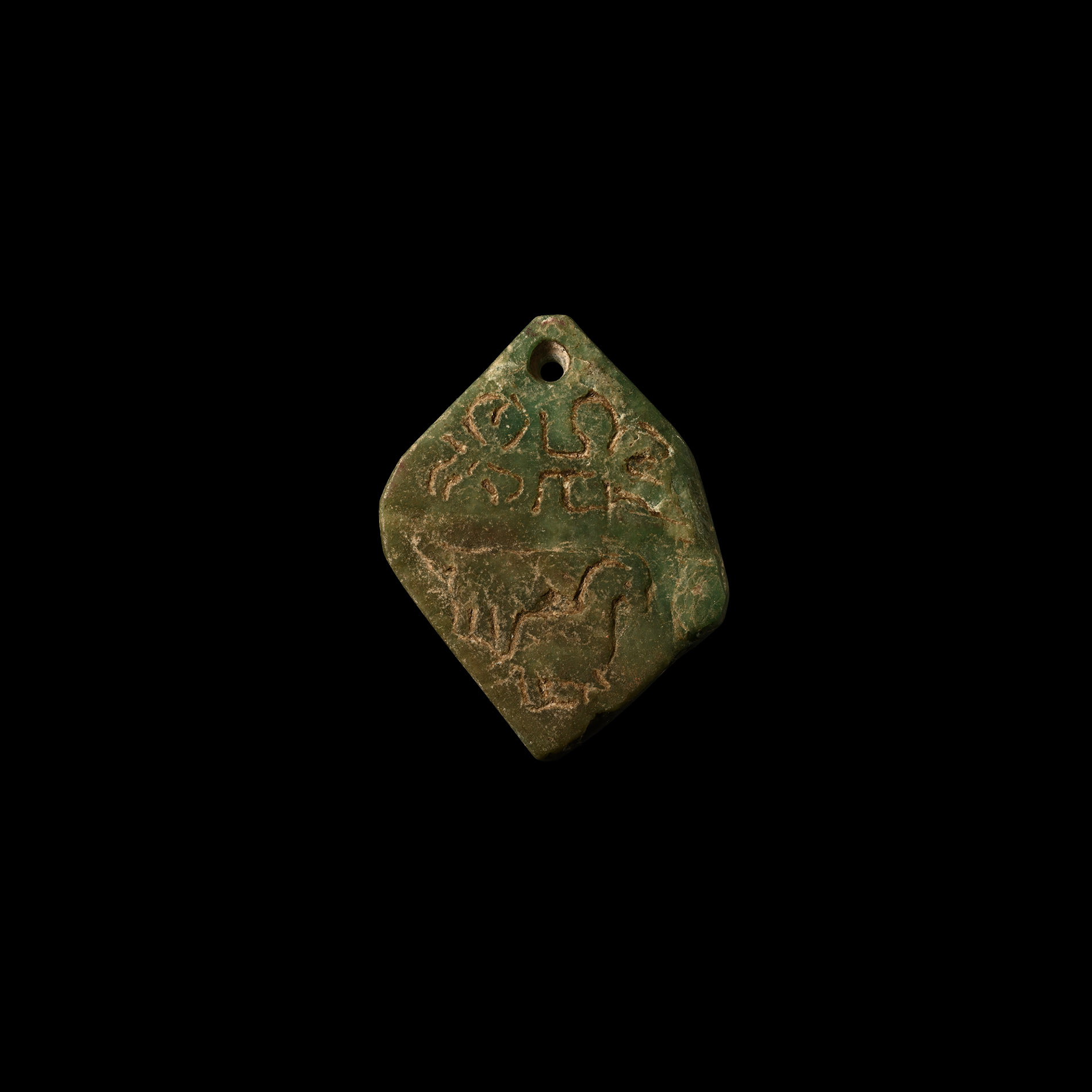
Green Glass Amuletic Plaque with Inscription in Greek
19TH CENTURY A.D.
1 1/2 in. (18.2 grams, 37 mm).
Roughly lozengiform in plan with apex piercing for suspension, displaying human figures, a snake and Greek inscription 'IAW'. [No Reserve]
ProvenanceFrom the private collection of the late Mr S.M., London, UK.
CONDITIONTimeLine Auctions follows a vetting process to ensure the authenticity and legality of all items, reinforcing our commitment to integrity and responsible trading. Each antiquity, antique, and coin lot undergoes thorough examination by a vetting committee of at least ten external specialists, professional trade association members, scientists, and archaeologists: Our Vetting Process
AUCTIONS:
TimeLine is a leading auction house specialising in antiquities, ancient art, collectables, natural history, coins, medals, and books. Our auctions offer museums, collectors, historians, and enthusiasts the opportunity to acquire unique and historically significant pieces.
-
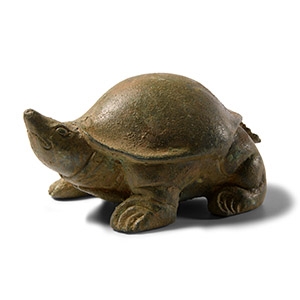
Chinese Han Style Bronze Turtle
20th century A.D.Estimate: £200 - 300 (+bp*)
Opening Bid: £100
With semi-naturalistic detailing, ornate tail; oval void to base giving access to hollow body; possibly a scroll weight. 223 grams, 93 mm
Acquired 1980-1990s. Ex West Country, UK, collection. -
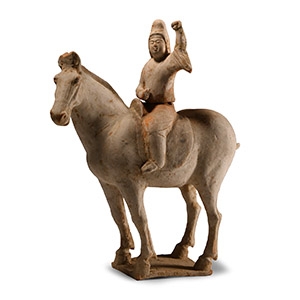
Chinese Tang Horse with Rider
Tang Dynasty, 618-907 A.D.Sold for (Inc. bp): £650
Modelled in the round with semi-naturalistic anatomical detailing, the horse standing on a rectangular base, its stocky neck and head slightly turned to the right, ears pricked forwards, cropped mane and short, dressed tail; the separate rider seated in saddle wearing a knee-length robe, hood and riding boots, one arm held in front of his body, the other raised above his head, detailing to his face; remains of polychrome pigmentation; the upper half of the rider's body modelled separately. 1.75 kg, 32 cm high
From the R.M.Hicks OBE private collection, UK. Accompanied by an original thermoluminescence analysis report no.C106u29 from Oxford Authentication.
A symbol of military strength and social status, the horse was ever a potent mythological and symbolic animal in China. During the Tang Dynasty, both polo and hunting from horseback became fashionable for men and women. It was also during the Tang Dynasty period that female court attendants on horses appeared in art and in tomb sculpture. The fruits of China's relationship with the horse include three of the most important innovations in equestrian history: the horse collar, the stirrup and harnesses based on the breast strap. The failure of China's domestic horse breeding programmes forced them to artificially inflate the price of tea (the production of which was controlled by China), so that tea could be traded for horses from their neighbours. -
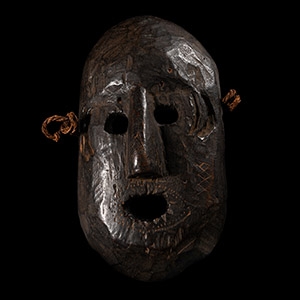
Nepalese Wooden Mask
19th century A.D.Sold for (Inc. bp): £780
Representing a male face with detailing around the mouth possibly representing a beard or lips, other incised geometric detailing to the cheek; rope attachment for display and remains of a wax seal to reverse. 306 grams, 23.5 cm high
Acquired in the 1970s. Danish private collection.
