
Loading, please wait...
LOT 0583
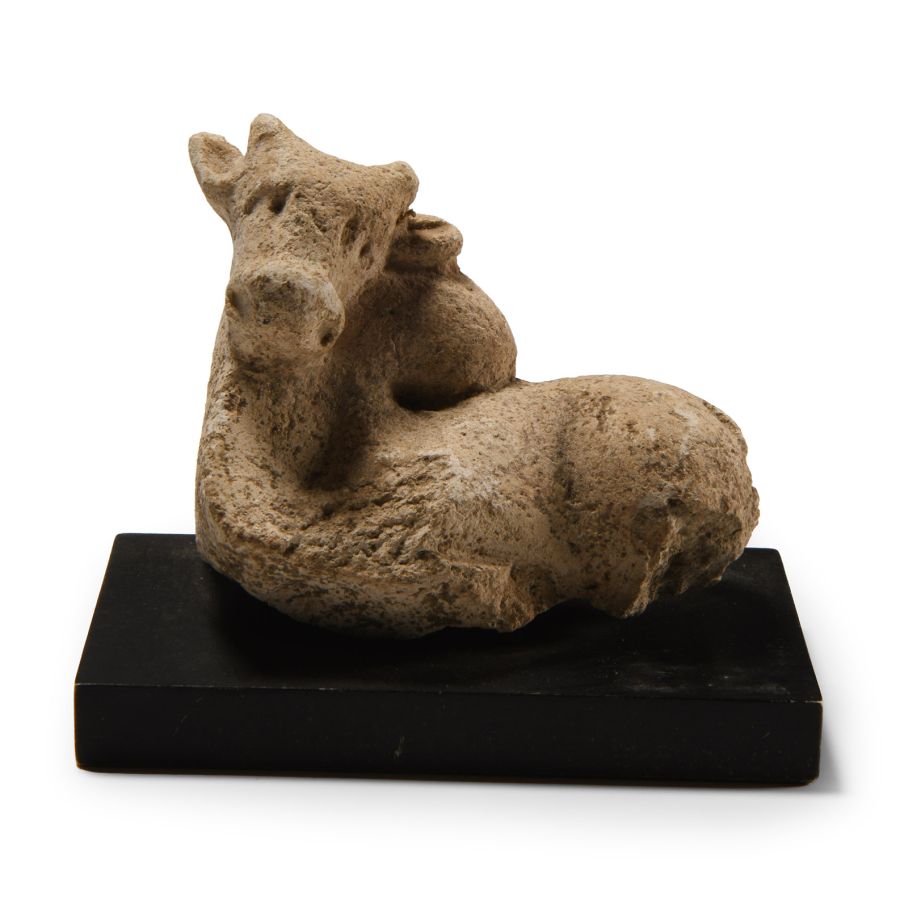
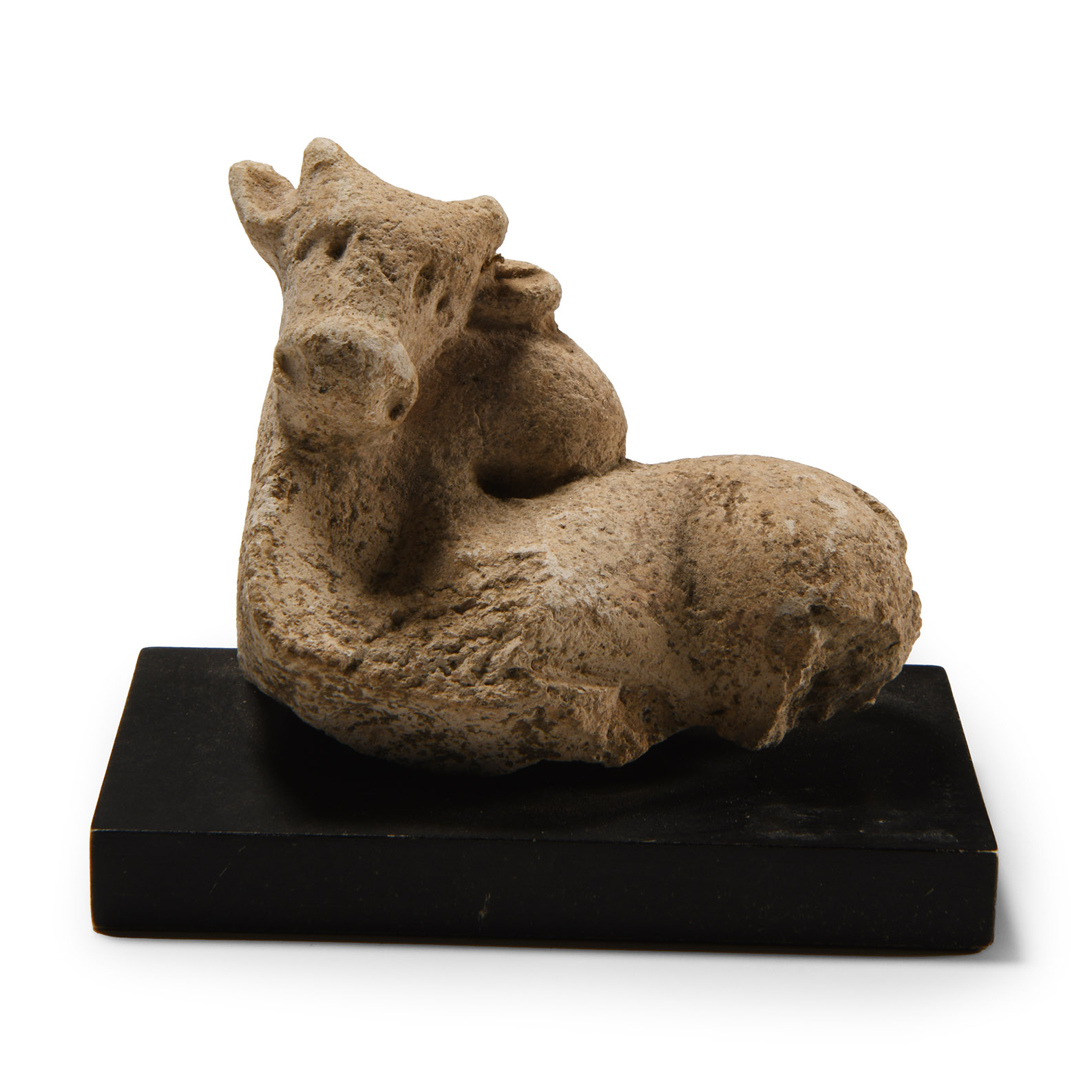
Greek Terracotta Zebu Statuette
CIRCA 4TH-2ND CENTURY B.C.
3 1/4 in. (145 grams total, 83 mm wide including stand).
Modelled with the head turned to one side, hump behind the shoulders. rounded rump; mounted on a custom-made stand. [No Reserve]
ProvenanceFrom a collection acquired on the UK art market from various auction houses and collections mostly before 2000.
From an important Cambridgeshire estate; thence by descent.
TimeLine Auctions follows a vetting process to ensure the authenticity and legality of all items, reinforcing our commitment to integrity and responsible trading. Each antiquity, antique, and coin lot undergoes thorough examination by a vetting committee of at least ten external specialists, professional trade association members, scientists, and archaeologists: Our Vetting Process
AUCTIONS:
TimeLine is a leading auction house specialising in antiquities, ancient art, collectables, natural history, coins, medals, and books. Our auctions offer museums, collectors, historians, and enthusiasts the opportunity to acquire unique and historically significant pieces.
-
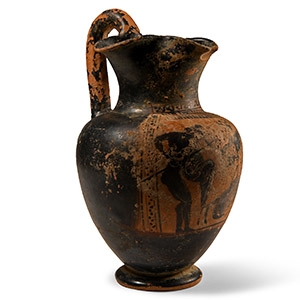
Greek Black-Figure Oinochoe
6th century B.C.Estimate: £1,800 - 2,400 (‡+bp*)
Opening Bid: £1,000
With pinched three-lobe mouth and strap handle; threads and details highlighted in purple; decorated scene in square metope comprising two dancing figures, one male and the other female, probably symposiasts; the male naked, holding a stick in his right hand and with the other arm carrying his coat; the female, a hetaera, dancing and running to the right, wearing a long chiton and a coat. 423 grams, 20.3 cm
Acquired in the mid 1980s-1990s. From the family collection of Mr S.A., Switzerland, thence by descent. Private collection since the late 1990s. This lot has been checked against the Interpol Database of stolen works of art and is accompanied by a search certificate number no.12089-218152. -
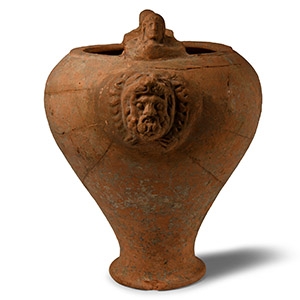
Greek Terracotta Situla
4th century B.C.Sold for (Inc. bp): £1,170
Piriform in profile with broad shoulder, slightly raised rim, two raised lugs each formed as a male bust with crimped headdress, mask of Hercules below wearing the lionskin hood. 1.19 kg, 25 cm high
Ex Marinescu-Roth-Virzi collection, Switzerland, 1970-1993. Accompanied by a copy of a photograph of the artefact on display. -
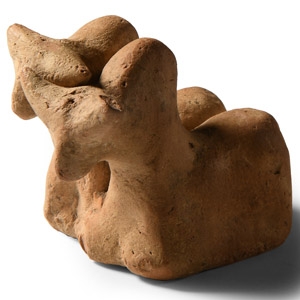
Greek Terracotta Twin Bull Statuette
4th-2nd century B.C.Sold for (Inc. bp): £59
Terracotta figurine of two zebus side-by-side with bodies conjoined. 74 grams, 59 mm
From a collection acquired on the UK art market from various auction houses and collections mostly before 2000. From an important Cambridgeshire estate; thence by descent.
