
Loading, please wait...
LOT 0052
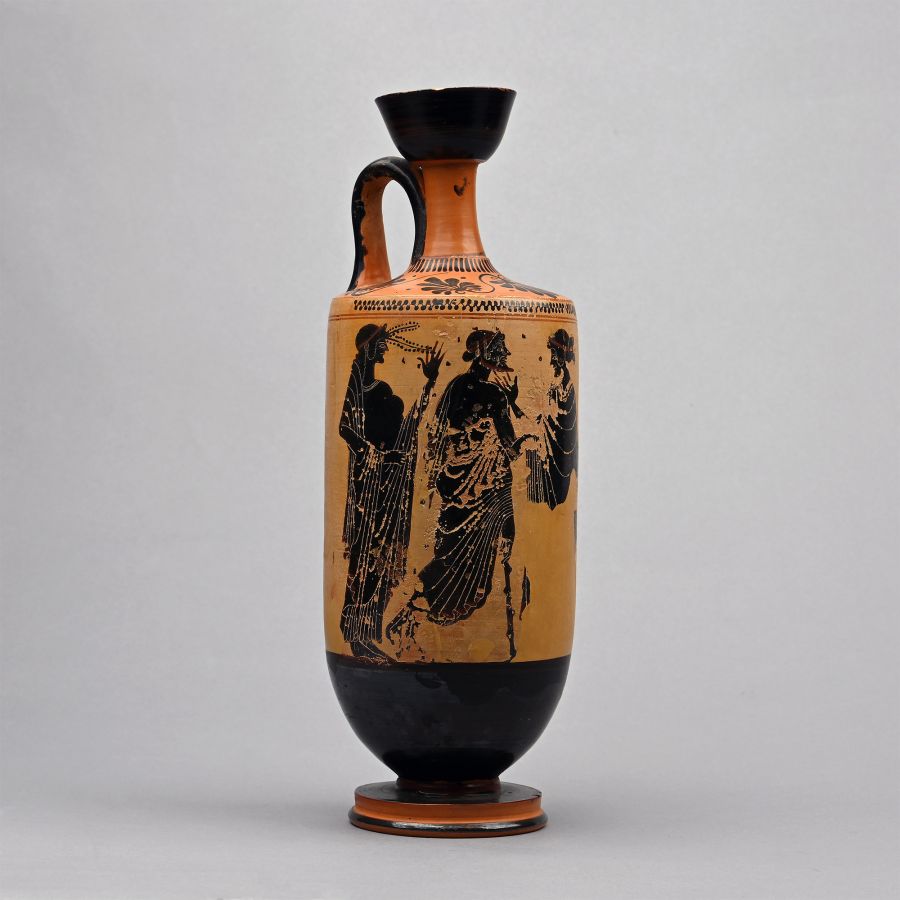
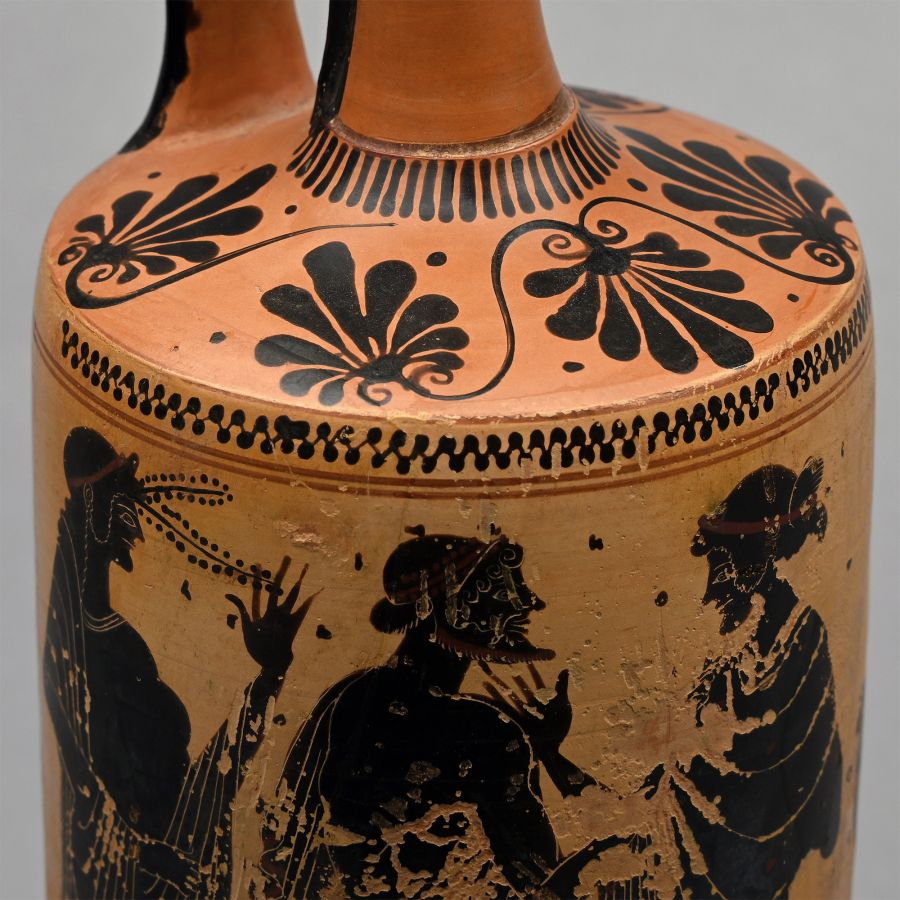
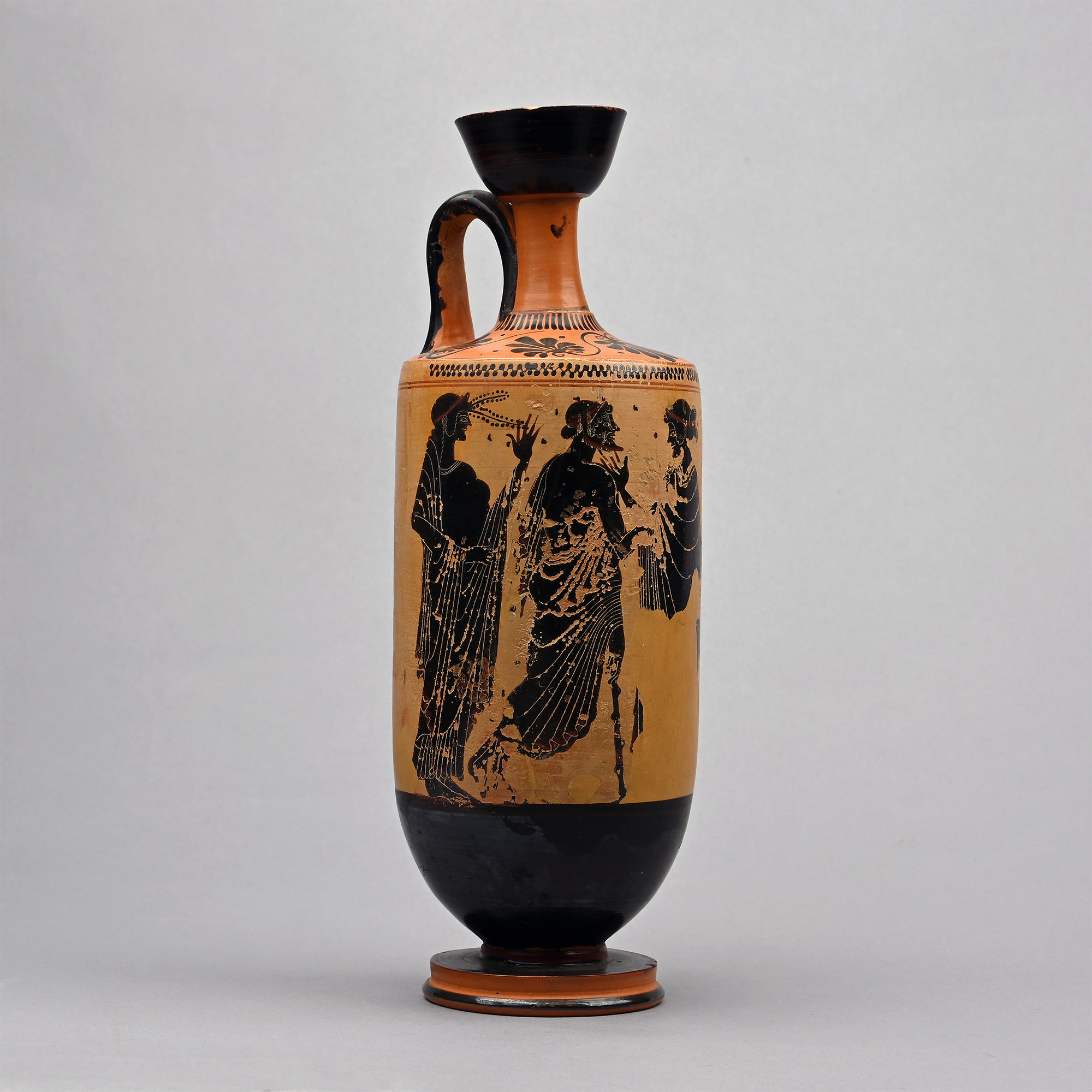
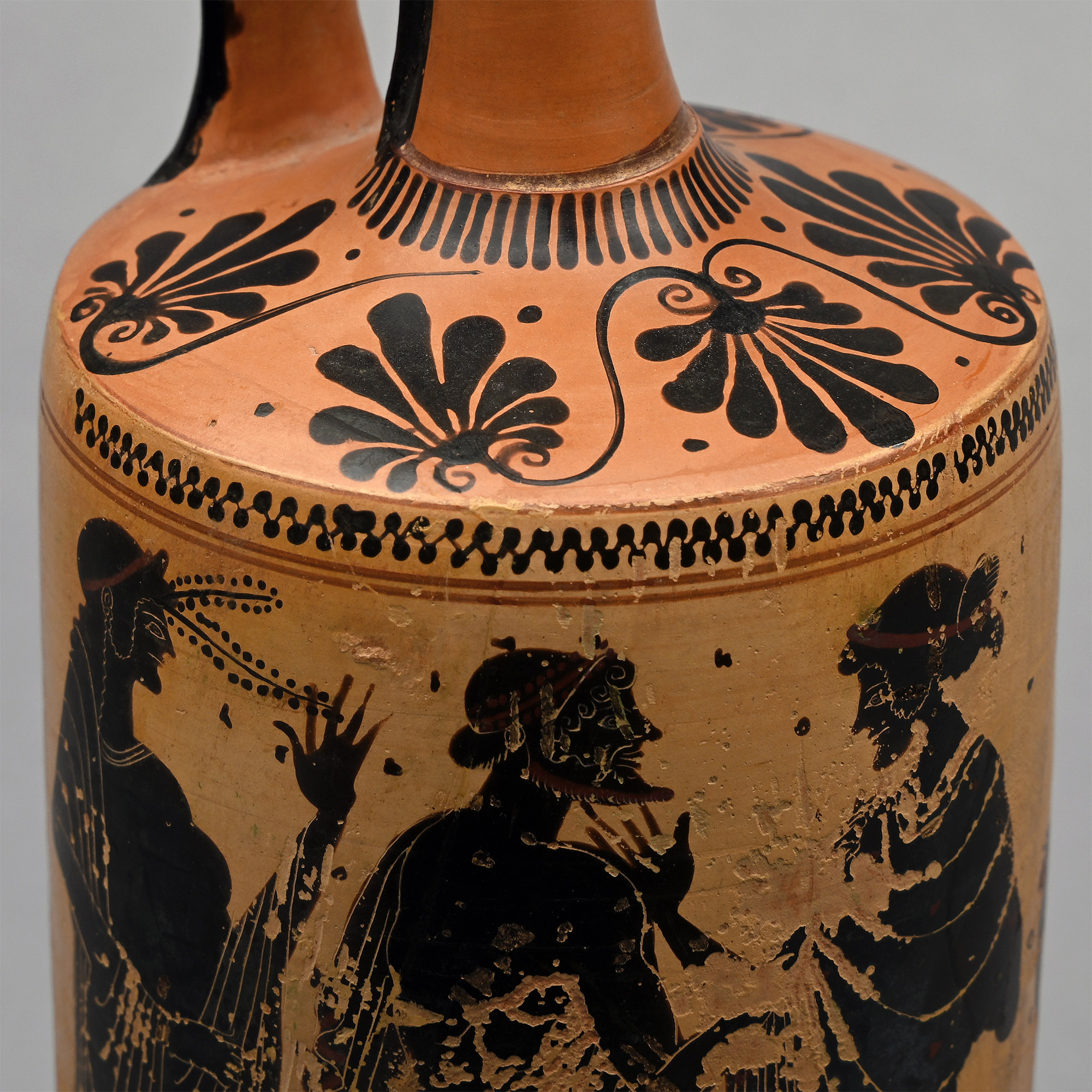
Greek Terracotta White-Ground Painted Lekythos Attributed to the Athena Painter
CIRCA 510-500 B.C.
10 3/8 in. (459 grams, 26.4 cm).
Cylindrical with stepped foot, five palmettes above the shoulder, dynamic frieze of two men visiting two hetairai, each of the figures dressed in long pleated garments, at the centre of the scene, a hetaira on the right reaching towards the bearded male and gently touching his chin with her open hand, a tall draped table behind her with an amphora underneath and a standing bird on the top.
ProvenanceH.A.C. (Herbert A. Cahn), 19 October 1979.
Private collection, Bern, Switzerland.
Accompanied by an original thermoluminescence analysis report no.N125q45 by Oxford Authentication.
This lot has been checked against the Interpol Database of stolen works of art and is accompanied by a search certificate number no.12644-236376.
Cf. Haspels, C.H.E., Attic black-figured lekythoi, Paris 1936, pp. 41–165, 254–262.
FootnotesThe Athena Painter is known as the painter who designed several Greek black-figure pottery works using the 5th-century BC white-ground technique. He specialized in lekythoi and refers to Athena as his main subject in his works. Together with the Theseus Painter, they continued the tradition of painting large lekythoi. His black figures are of high quality, and in addition to lekythoi, he decorated other potteries such as oenochoai. Some archaeologists say that he may have been the same person as the Bowdoin Painter of red-figure pottery, although they may have just worked in the same workshop.
CONDITIONTimeLine Auctions follows a vetting process to ensure the authenticity and legality of all items, reinforcing our commitment to integrity and responsible trading. Each antiquity, antique, and coin lot undergoes thorough examination by a vetting committee of at least ten external specialists, professional trade association members, scientists, and archaeologists: Our Vetting Process
AUCTIONS:
TimeLine is a leading auction house specialising in antiquities, ancient art, collectables, natural history, coins, medals, and books. Our auctions offer museums, collectors, historians, and enthusiasts the opportunity to acquire unique and historically significant pieces.
LOT 0052
Greek Terracotta White-Ground Painted Lekythos Attributed to the Athena Painter
Estimate £5,000 - 7,000€5,800 - 8,120 (for guidance only)$6,750 - 9,450 (for guidance only)
-
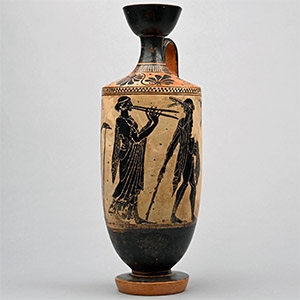
Greek Attic Terracotta Black-Figure Lekythos Attributed to the Athena Painter
Circa 490 B.C.Sold for (Inc. bp): £9,100
Nearly cylindrical body with a slightly sloping shoulder with five palmettes and eight dots in between; main image showing a Dionysian procession with two advancing nude satyrs facing a young male playing a double pipe, each of the satyrs leaning on a walking stick and having a long garment draped over their shoulders and wearing a fillet and a large wreath on their heads. 649 grams, 29.2 cm
Münzen und Medaillen A.G., H. Cahn, Basel, 24 April 1989. Private collection, Bern, Switzerland. Accompanied by an original thermoluminescence analysis report no.N125q44 by Oxford Authentication. This lot has been checked against the Interpol Database of stolen works of art and is accompanied by a search certificate number no.12641-236375.
The Athena Painter is known as the painter who designed several Greek black-figure pottery works using the 5th-century BC white-ground technique. He specialised in lekythoi and refers to Athena as his main subject in his works. Together with the Theseus Painter, they continued the tradition of painting large lekythoi. His black figures are of high quality, and in addition to lekythoi, he decorated other potteries such as oenochoai. Some archaeologists say that he may have been the same person as the Bowdoin Painter of red-figure pottery, although they may have just worked in the same workshop. -
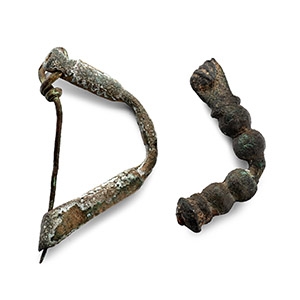
Greek Bronze Bow Brooch Group
4th-2nd century B.C.Sold for (Inc. bp): £13
Each comprising a thick segmented bow with an integral coiled spring to one end, developing to a sturdy pin; to the other end, a U-section lobed catchplate on a single-coil spring. 25.5 grams total, 43-53 mm
Previously in a European collection formed prior to 1980. From a private collection formed in the Netherlands. From the property of a late Lincolnshire, UK, gentleman. -
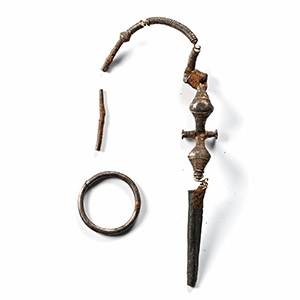
Greek Silver Wire Fibula
6th-4th century B.C.Estimate: £250 - 350 (‡+bp*)
Opening Bid: £120
With coiled spring and lateral lugs; tapering shank and separate ring. 9.11 grams total, 1.8-12.4 cm
Private collection, Switzerland, 1992. Thence by descent. Private collection, since the late 1990s.
